

The end of 2015 will mark the 15th anniversary of the release of Skies of Arcadia. Originally created for the shortlived Sega Dreamcast, it was one of the few RPGs ever made for the console. And Skies of Arcadia also has the honour of being the last traditional RPG made by Sega for their own hardware.

Back in 2000, the PlayStation 2 was just launching, the still separate Square and Enix had yet to bring their flagship series out on the latest machines, and fully polygonal RPGs were a rarity. Skies of Arcadia was conceived partly as a way to display the power of the Dreamcast and was ambitious in scope, which is easily forgotten all these years later.
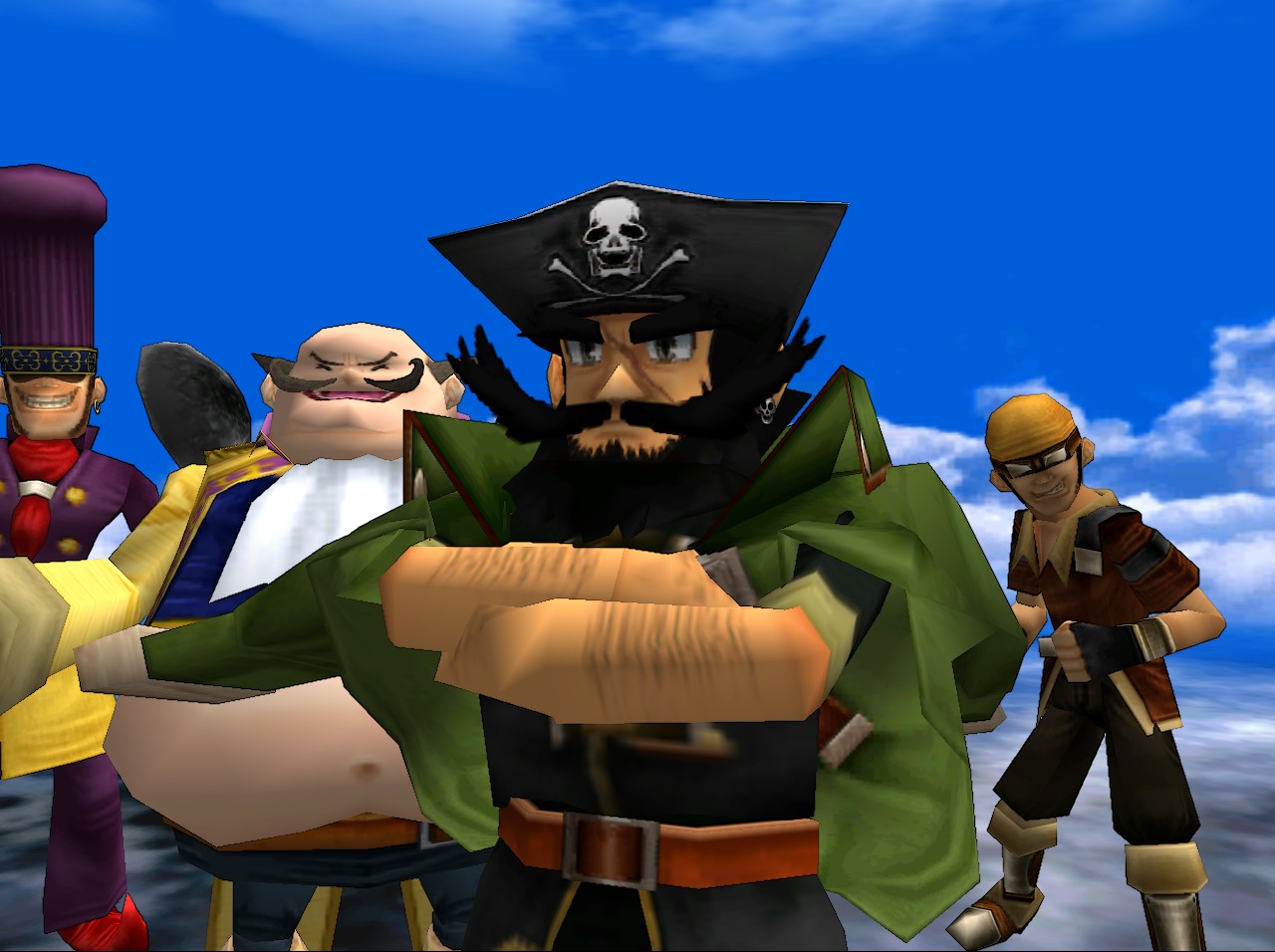
Yet for all the ambition and graphical prowess, Skies was a largely traditional game in that it functioned much the same way RPG games had for two decades. As a result it can feel like a 2d top-down Japanese RPG that has just been converted into the third dimension. Yet Skies of Arcadia ends up delivering much more and in a somewhat unique way. It makes a mockery of the mathematical metaphor by being far more than the sum of its parts.
The flaws of Skies of Arcadia
Before jumping into the long-lasting appeal of the game, it’s worth acknowledging the many legitimate criticisms that could still turn you away from trying this Dreamcast classic.

- The random battles are famously maligned for their frequency.
- The game looks strange with odd graphical results. Sometimes simple shapes of huge scope stretch out impressively, with fairly highly-detailed textures applied repetitively on the surface of the vast objects, reminding one of carved ancient obelisks. Sometimes pixilated grins are pasted clumsily on the blocky heads of villagers.
- The storyline often ignores logical sense, with some strange dialogue exaggerated by some muffled and over-the-top voice acting.
- And while the music tends to vary between satisfactory and exceptional, it’s also frequently just slightly out of tune.
But despite all these obvious flaws, its impossible to maintain criticism in the face of a tidal wave of positivity. To dislike it on logical grounds would be like trying to debate philosophy with an over-excited puppy. Cynicism is useless. The only course of action is acceptance, and to join the fun. Even if it can be hard to quantify exactly why that is?
How to describe the charm of the game?
Probably the most tangible appeal is the setting. The floating continents and archipelagos of Arcadia constitute one of the most unique and enticing worlds ever created in video gaming. The vast expanses of fantastic geography peppered with ancient high-tech ruins, unknown cultures, and otherworldly flora and fauna to explore summon a thrilling romanticised vision of an age of exploration.
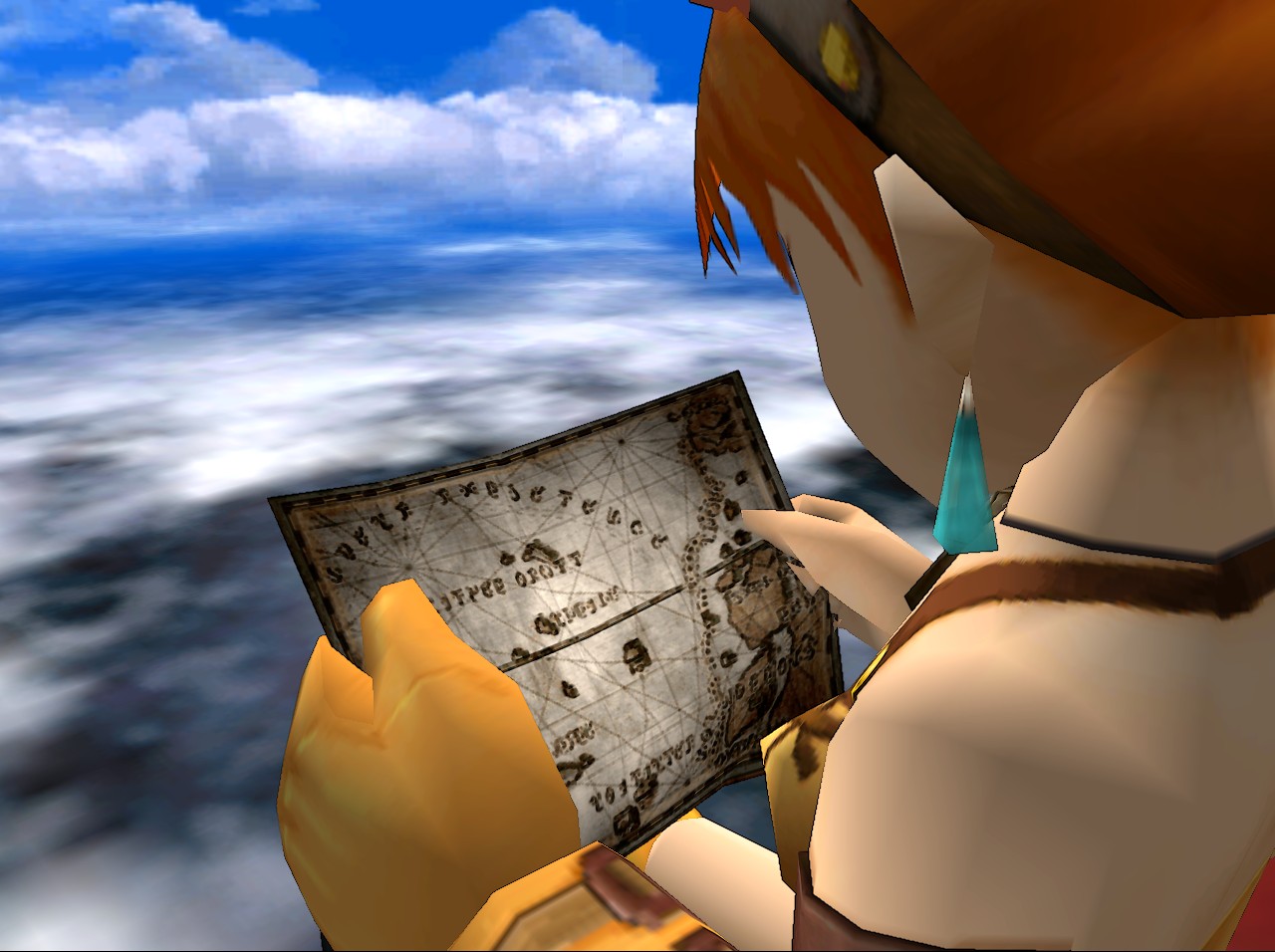
The “discoveries” system encourages the player’s involvement in the world, offering scores of short stories, myths and tiny fables that give a rich and rewarding sense of a living world, giving character to all the locales in every corner of the map. The sense of exploration is palpable, almost corporeal, so much so that every time I travel somewhere new and far away in the real world, residual memories of Skies of Arcadia are reanimated and filtered back in to the forefront of my consciousness.
The unapologetic traditionalism is also part of the appeal. In a time when RPGs were beginning to evolve, and many games in the genre were trying to assert their independence, Skies feels somewhat unique in mostly adhering to established formulae, but doing it magnificently well.
Battles do offer some joy. The learning of magic is mildly compelling, and the switching of weapon alignments with a single button press is a simple pleasure. The time-consuming and dramatic ship battles still offer a unique attraction even 15 years later, and present some of the greatest challenges in the game.

For the most part, Skies of Arcadia is an ordinary and traditional game with an extraordinary spirit, one that holds a rare and special emotional attachment for its fans.
No legacy for Skies of Arcadia?
Unfortunately the traditional gameplay may be once reason why Skies of Arcadia remains semi-forgotten, and unplayable on modern hardware. Not only did it enjoy a limited audience on the ill-fated Dreamcast, but an enhanced port with additional content arrived in 2003 on the similarly niche Nintendo Gamecube. Meanwhile the PC and PlayStation 2 versions were cancelled just before the Nintendo release. Would Skies of Arcadia have a greater legacy with the reach of the Sony console, and the fact that a PC version could still be accessible today?
There have been rumours of a sequel in the works, but it was apparently abandoned before any public confirmation. That leaves the appearance of characters Vyse and Aika in the 2008 Valkyria Chronicles strategy RPG, and Sumo’s Social And All Stars Racing Transformed, which featured Vysa and an entire course based on Skies of Arcadia.
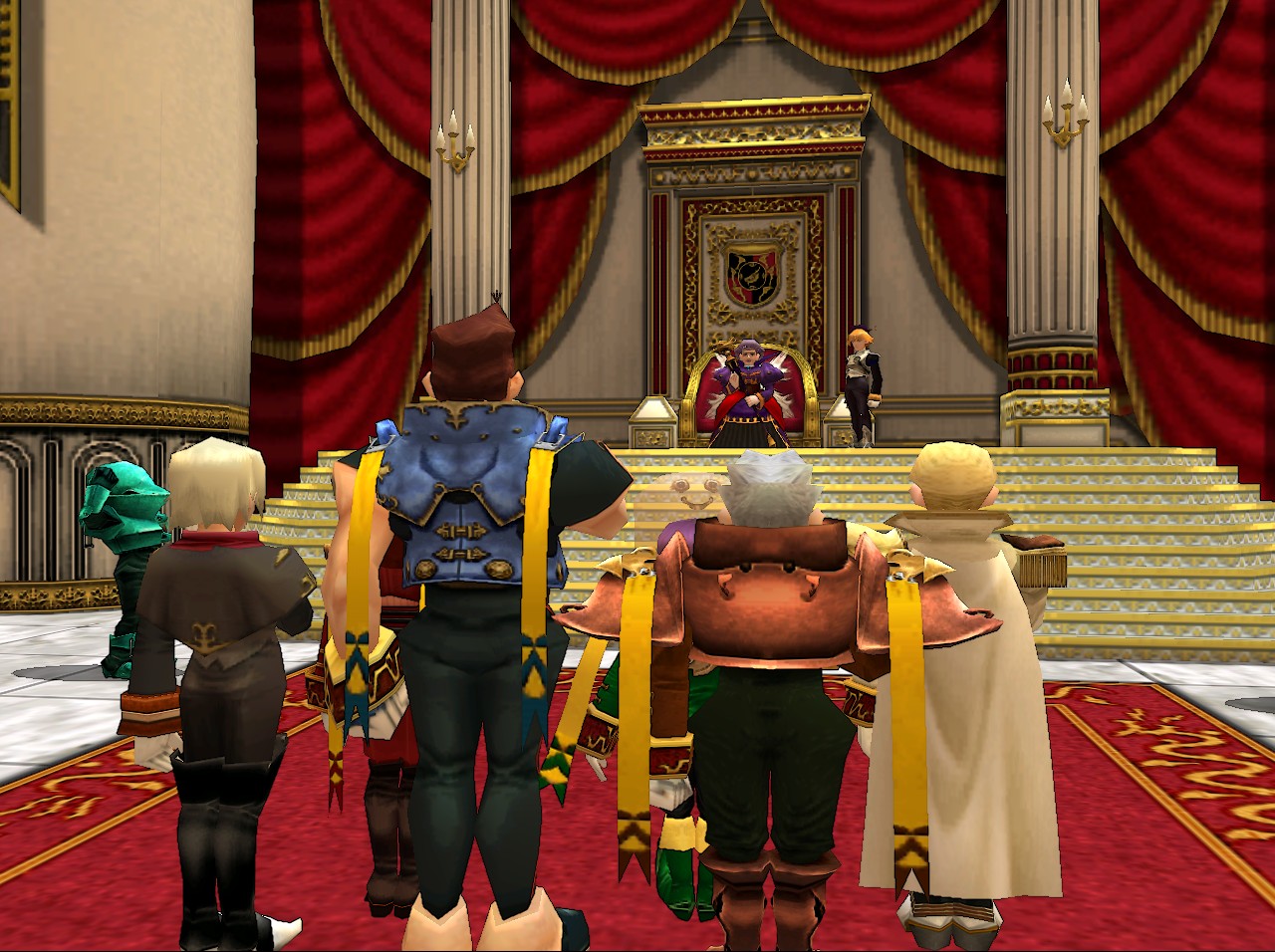
A letter of very dubious authenticity did surface online, in which the head of Sega allegedly responds to a fan pleading for a sequel by questioning whether Sega should be in the game business. And stating any attempt at a sequel would be as disappointing as NiGHTS’ long-awaited return.
Some classics have returned with varying degrees of success. Jet Set Radio and NiGHTS Into Dreams were somewhat fortunate to be revived for modern consoles, and in a world where a Shenmue 3 and a Final Fantasy 7 remake are being made, anything could be possible.
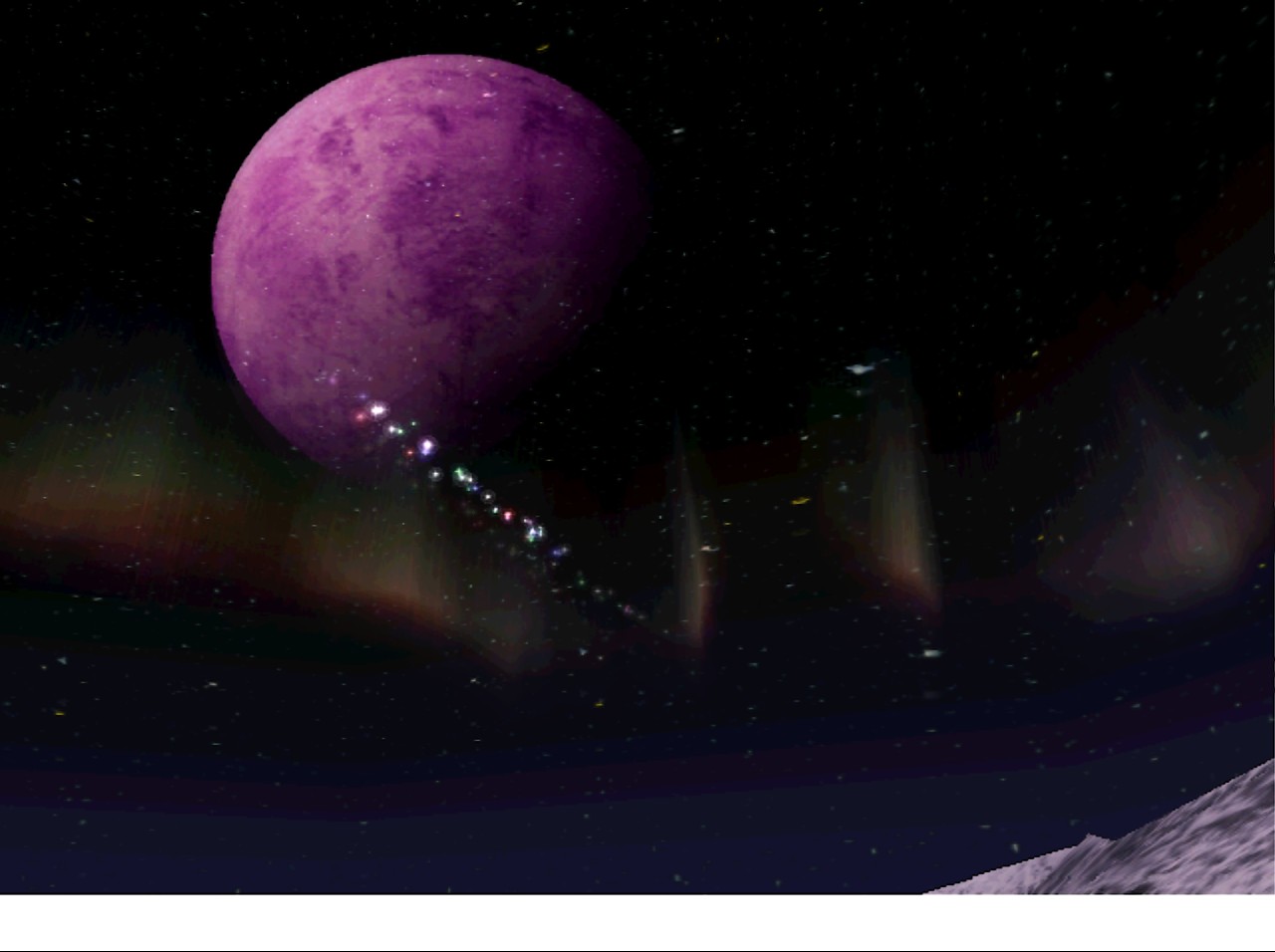
But for now as far as Skies of Arcadia is concerned, there’s nothing on the horizon. But that sadness is nothing like the one I feel each time I complete the game. It’s a fantasy world which leaves me with a sense of loss and emptiness when I depart, and a resentment that reality doesn’t match up to the imaginative fictions created for an ill-fated console all those years ago.