Disposable Media

Art, Music, Games, Life

  • Art And Literature
    • Comics
  • Music
  • TV & Film
  • Games
    • Tabletop Games
  • Technology
  • Life
  • Events
  • Magazine Downloads
You are here: Home / Archives for Dreamcast

The thing that nobody tells you about Jet Set Radio

9th December 2023 By Qazimod Leave a Comment

In the early 2000s I was still a poor student, and gamers were deep in the console wars of the sixth generation. The main competition took place between the PlayStation 2, Microsoft’s Xbox and the Nintendo Gamecube – with Sega‘s Dreamcast ending up as an early casualty. Here in the UK, shelves of DC hardware and games were quickly cleared out to make way for more PS2, Gamecube and Xbox games. In fact, this is actually how I bought my Dreamcast – a used console was in the bargain bin for around £20 of your early 2000s money, and as I never had the patience to save for the newest tech, I was content with staying one generation behind the curve. That being said, this meant that I already knew which games I wanted to try when I bought the console: Sonic Adventure, Space Channel 5, Virtua Tennis, Soul Calibur… Jet Set Radio. Magazine coverage had made the cel-shaded skating game look impossibly cool, and adverts naturally cast it in the best light. I was being sold the idealistic vision of what the game was trying to be, and I became that guy who tells you about Jet Set Radio. I was rambling about the game to my friends on the bus into college – even though they all played games on Xbox or PS2 – and I had fully bought into the dream. The thing is, it’s much easier to appreciate a game like Jet Set Radio when you’re a carefree youth without adult responsibilities and with plenty of free time, and playing the games today definitely requires a certain mindset.

Nobody tells you about Jet Set Radio and its intended gameplay

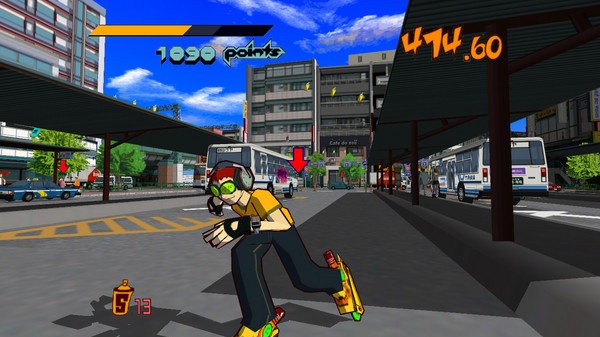
In Jet Set Radio you control one of several characters and complete missions where you skate around open urban areas, collecting spray cans and finding locations where you can tag graffiti through a QTE minigame or a single button press. When a given number of tags have been put down, police units will drop in and attack you – resulting in a game over when your health is drained. If you put down all of the required tags in a stage without running out of time or being defeated by the police, you complete the stage and move on. Later on in the game you unlock new maps to explore and new characters to use, and the story escalates until you have a showdown with the main antagonist. If you have youth and lots of spare time, the original game can be a fun waste of an afternoon – but what nobody tells you about Jet Set Radio is that failure is a natural symptom of the game’s design, and you’ll be hitting some excruciating lows before reaching the highs. From a developer’s point of view, the goal of every stage is to put down the tags before the time runs out – but from a player’s point of view, the objective is more like trying to create that euphoric run promised in the pre-release coverage where you’re flying down the street evading cops and completing tags. You know, instead of wrestling with the camera, running out of spray cans at the worst moments and failing to snap onto a rail that you needed to grind on, as you now fall down to street level and lose a chunk of health. Again.
The thing that nobody tells you about Jet Set Radio - image 1

For all the fronting of the characters being hip streetwise youths, the player drops into each new stage having to become familiar with the map layout, the placement of the tags, the requirements of the tags (which tags require one can and a single button press, and which tags require long QTE sequences in two places after you’ve restocked your spray cans), the locations of the spray cans and health pickups, and the timing of the scripted moments where the authorities arrive on the scene. Then, all of this needs to be pieced together in a route that covers everything whilst beating the clock. You’re not a carefree rebel moving to your own rhythm – you’re a member of Ground Force (a garden makeover show that aired on TV over here until the mid 00s, for our younger readers) meticulously crafting a plan to decorate an environment in the window of time you’ve been granted. And this might not be so frustrating if the rest of the game didn’t have such inconsistent quality, but this is a sixth-gen 3D game with all of the camera issues, clipping nightmares, twitchy analogue control and cheap environment transitions (later on in the game various zones are connected and you “travel between” them by skating into a flat image of the road leading into the horizon, as if Wile E. Coyote is trying to send you speeding into a wall) that come with that classification. Even when things are going to plan, the pacing of each stage shatters the dream of hi-octane action – with moments of slick tag placement and fleeing the authorities broken up with lengthy trips back to where the health and graffiti cans would spawn. It’s an experience where resource management and engaging gameplay are permanently at odds with one another. For the longest time, I just didn’t get it – why was this game looked back on so fondly when a player has to wrestle with so many dissatisfying interactions?

Nobody tells you about Jet Set Radio and its loop of failure

Today, I think I kind of understand. Earlier this year I finally managed to reach the end credits of Jet Set Radio. I failed stages many times along the way, but each failure brought knowledge with it – how many tags you can complete before the authorities arrive, which tags require the most amount of cans, where the cans respawn, how to reach certain areas of the map. I ended up making plans for each stage – Shibuya GG, Benten Boogie, Monster of Kogane… all the way up to the likes of Fight or Flight. And with each failure, I refined my plans. By the time I’d nailed an approach for every stage in the Steam copy I was gifted, I was so confident in my knowledge that I did it all over again on the Vita version I had bought years ago. This is what nobody tells you about Jet Set Radio – it’s intended as an experience of learning through failure and repetition right up until you know how to complete each stage, and then all of the associated frustration evaporates and you wonder what you were even complaining about. Which is why anyone familiar with Jet Set Radio will think that those who raise similar issues with the game are exaggerating – from their point of view, the issues don’t exist.
The thing that nobody tells you about Jet Set Radio - image 2

I’m confident that with a few variants of maps and mission goals, 90% of my “issues” with Jet Set Radio would never have existed. Let the player practice the same mission but with an unlimited timer. Let them practice a mission with infinite health, or without the police escape sequences. There was a time when Jet Set Radio Future used to be in my list of all-time favourite games, and its improvements over the original – the absence of a timer allowing for more pleasant exploration, the denser maps that were able to be designed, the one-button tagging preventing any lapse in momentum – shone through. Everyone’s had the experience of going to a new town or city for the first time in their lives and finding out where certain stores or attractions are, but they’ve usually been able to book the time they think they’ll need – rather than having to do everything in 900 seconds before returning home.

The revival

However, there’s still hope. Earlier this week, a new Jet Set Radio game was unveiled as one of several teases for “revivals” of classic Sega IP (including Crazy Taxi, Golden Axe, Shinobi and Streets of Rage.) To many people, the return of Jet Set Radio represents another sequel to one of their favourite games. To me, it represents another chance. I believe that the gameplay loop of Jet Set Radio can be harnessed into something both challenging and satisfying; something that can be admired by veterans and newcomers. More than two decades later, I’m still waiting – but I hope that the next game proves me right.

Filed Under: Games Tagged With: Dreamcast, games, jet set radio, jet set radio future, microsoft xbox, Sega, Sega Dreamcast, smilebit, xbox

2D Vertical Shooter Fast Striker Offers PS4 & Vita Action

11th October 2018 By Dan Thornton Leave a Comment

We love a bit of retro 2D shooting at Disposable Media. And the release of Fast Striker for the PlayStation 4 and PS Vita definitely ticks all our boxes. It was originally developed for the NeoGeo MVS by NGDev, arrived as one of the last games released for the Sega Dreamcast, and will now be available as a download or rare Limited Edition physical release for the PS4 and Vita.

Fast Striker All Physical Product Releases - PS4, Vita and Soundtrack

So Fast Striker covers pretty much everything a retro vertical schmup obsessive could desire. But somehow Qazimod hasn’t had time to write about it, so I’m stepping in!

Quick history lesson first. NGDEV was founded as an indie game developer back in 2001 by German brothers Timm and Rene Hellwig. And they’ve specialised in 2D shooters and arcade-style games for 17 years including the likes of Last Hope, Gunlord, Razion and Neo XYX. The original versions of Fast Striker arrived for the Neo Geo and Dreamcast back in 2010, and on iOS in 2011. Play-Asia still have the listings for the regular and Limited Edition Dreamcast versions with positive reviews from all those years ago, even if the games are obviously out of stock now.

Fast Striker Screenshot Main Menu

Now back to the present. NGDEV and publisher eastasiasoft are releasing PlayStation 4 and PS Vita editions of Fast Striker based on the latest updated version of the game, which is version 1.5. And it features cross-buy support when it’s available on October 17th as a download for €6.99. Which is a good way to experience the six stages, four game modes and constant 60 fps action.

Fast Striker Screenshot Action 2

But there’s more. Just 2,200 copies are being created of a physical Limited Edition release for the PlayStation 4 and PS Vita. In addition to a region free copy of the game and manual, you’ll also get the Fast Striker Collector’s Box, an Original Soundtrack CD, and a Numbered Certificate.

The Fast Striker Playstation 4 Limited Edition physical release is only available through Play-Asia. And the same is true of the Fast Striker PlayStation Vita physical Limited Edition, which might well be the rarer version if you’re looking to buy it as an investment.

Fast Striker Screenshot Action 3

Obviously we’d never encourage someone to invest in video games that weren’t worth playing. So what’s Fast Striker actually like as a game?


Fast Striker Trailer:


Fast Striker: The Game:

The fast-paced, reaction-led vertical shoot ’em up is set in 2020, a year that’s not far away now. Machines constructed to protect and serve mankind in Hyper Blues City have run amuck. And their inventor Samial Salival has disappeared without a trace. Now the robots are building a weapon to completely destroy the city, protected by a flight squad led by the City Guardian. And the only hope is you aboard the Fast Striker FX-1 Prototype.

Fast Striker Screenshot Action 4

Which means selecting a difficult level from Novice, Original, Maniac and Omake modes. And to accommodate beginners and expert shooter addicts, each mode has a different playable ship, features and scoring system. So in Novice mode you shoot the enemies and collect gold stars. Whereas other difficulties let you spread your shots, fire rocket attacks and use an energy beam to multiply your score. As well as rewarded you for being closer to the enemies before you kill them.

Fast Striker Screenshot Action 5

There are a total of six stages to survive and save your city. And more than 40 unique enemy types to destroy.

If that’s not enough, completing the game on a single credit will let you take on a hidden boss. And to discover the true ending of Fast Striker.

Fast Striker Screenshot Action 6

“We’re thrilled to bring our unique twist on the classic vertical shoot ’em up to PlayStation 4 and PS Vita owners,” said René Hellwig, Game Designer at NGDEV. “Fast Striker will test the hand-eye coordination of even the most experienced arcade players.”

You do get the options to map your control buttons. And to use the adjustable screen settings, giving yourself the optimal chance of victory.

The physical Fast Striker Limited Editions for the PlayStation 4 and PlayStation Vita can be viewed now on the Play-Asia site and you can save them for when they’re available to pre-order, or sign up for an email alert as soon as you can grab a copy before they sell out.

Filed Under: Games Tagged With: Dreamcast, eastasiasoft, Fast Striker, Neo Geo, NGDEV, PlayStation 4, PlayStation Vita, ps vita, shoot 'em up

Skies of Arcadia Retrospective

17th September 2015 By Chris Walton Leave a Comment

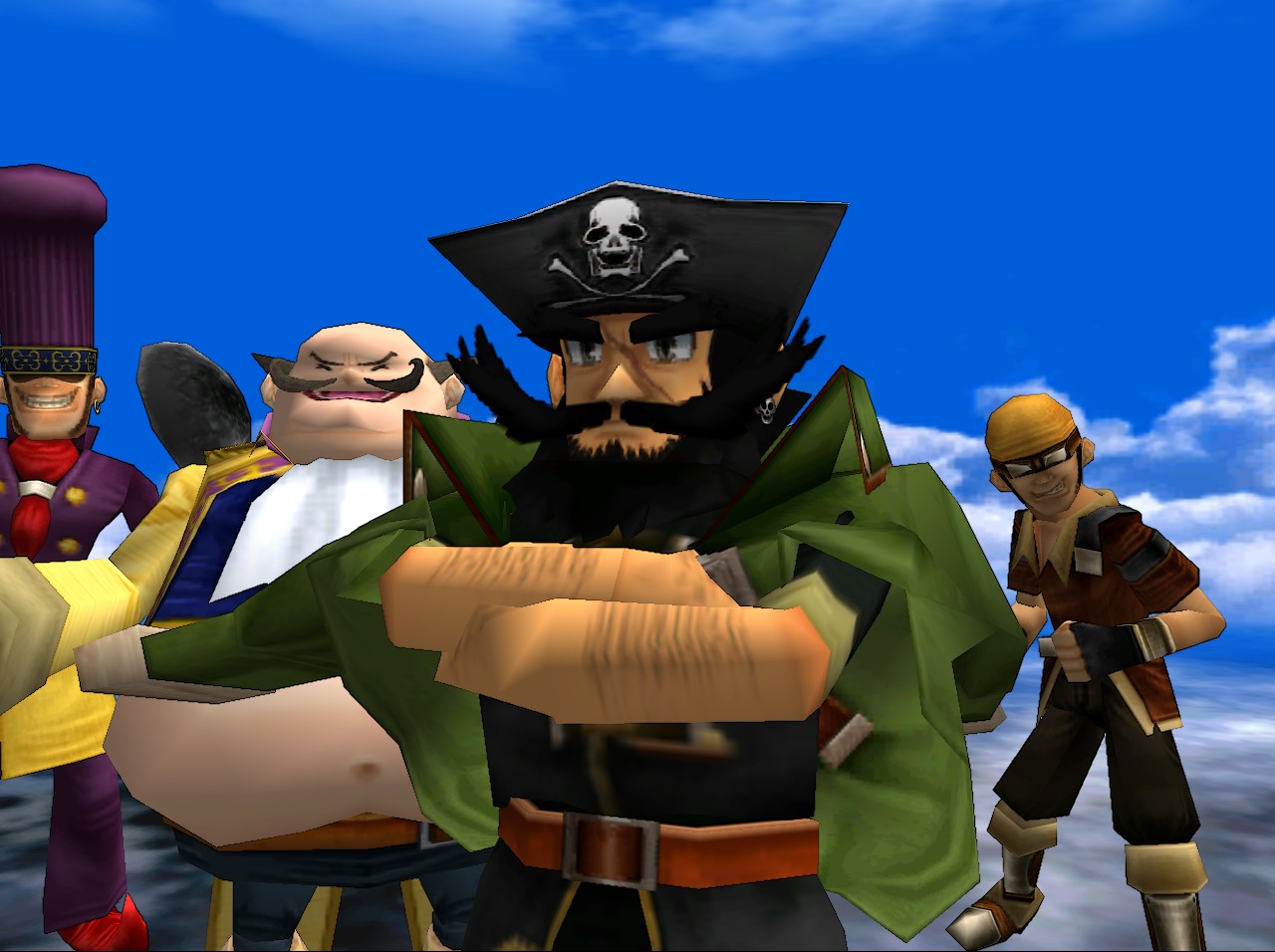
The end of 2015 will mark the 15th anniversary of the release of Skies of Arcadia. Originally created for the shortlived Sega Dreamcast, it was one of the few RPGs ever made for the console. And Skies of Arcadia also has the honour of being the last traditional RPG made by Sega for their own hardware.

Skies Of Arcadia

Back in 2000, the PlayStation 2 was just launching,  the still separate Square and Enix had yet to bring their flagship series out on the latest machines, and fully polygonal RPGs were a rarity. Skies of Arcadia was conceived partly as a way to display the power of the Dreamcast and was ambitious in scope, which is easily forgotten all these years later.

Skies Of Arcadia

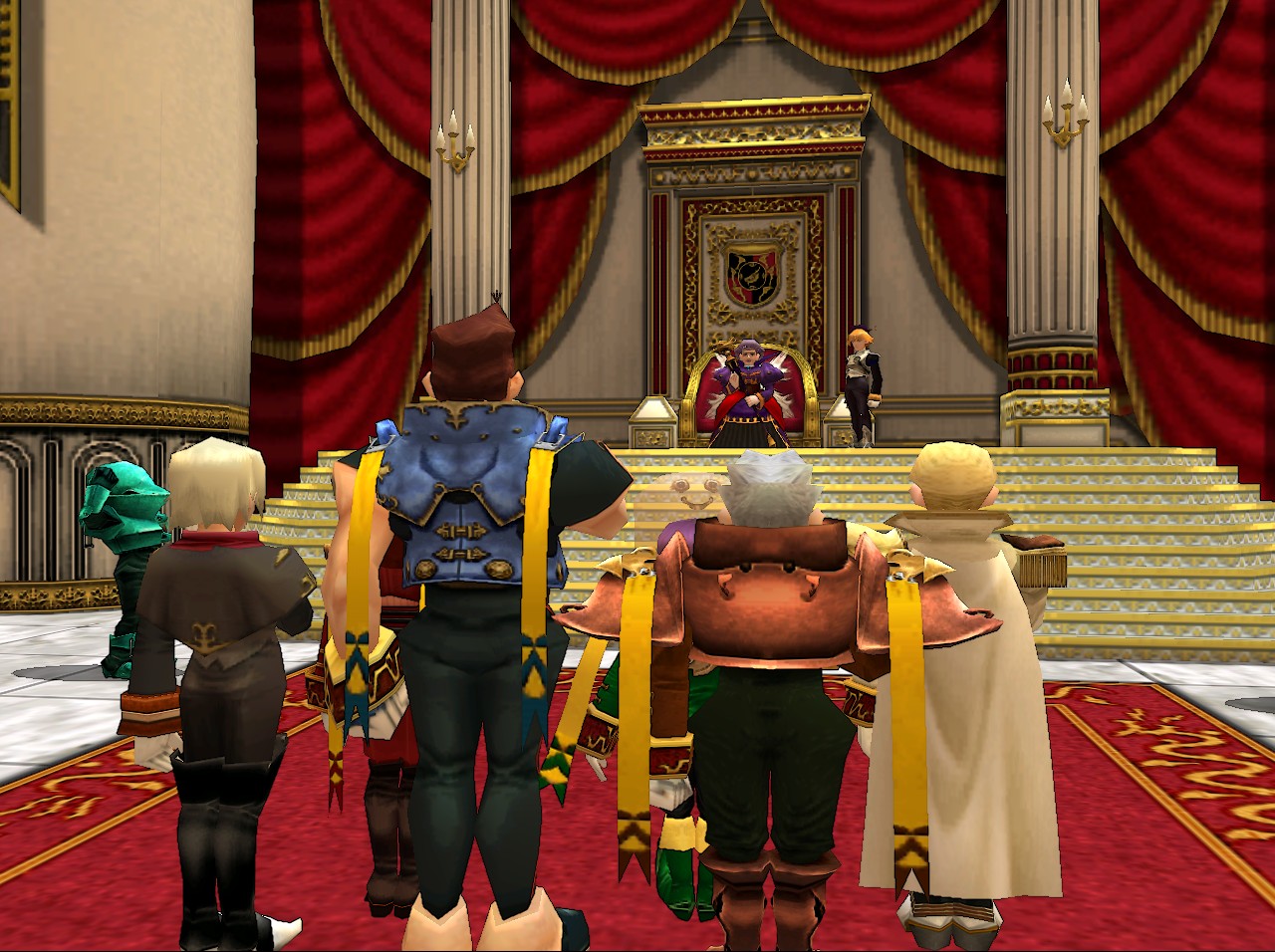
Yet for all the ambition and graphical prowess, Skies was a largely traditional game in that it functioned much the same way RPG games had for two decades. As a result it can feel like a 2d top-down Japanese RPG that has just been converted into the third dimension. Yet Skies of Arcadia ends up delivering much more and in a somewhat unique way. It makes a mockery of the mathematical metaphor by being far more than the sum of its parts.


The flaws of Skies of Arcadia

Before jumping into the long-lasting appeal of the game, it’s worth acknowledging the many legitimate criticisms that could still turn you away from trying this Dreamcast classic.

Skies Of Arcadia

  • The random battles are famously maligned for their frequency.
  • The game looks strange with odd graphical results. Sometimes simple shapes of huge scope stretch out impressively, with fairly highly-detailed textures applied repetitively on the surface of the vast objects, reminding one of carved ancient obelisks. Sometimes pixilated grins are pasted clumsily on the blocky heads of villagers.
  • The storyline often ignores logical sense, with some strange dialogue exaggerated by some muffled and over-the-top voice acting.
  • And while the music tends to vary between satisfactory and exceptional, it’s also frequently just slightly out of tune.

But despite all these obvious flaws, its impossible to maintain criticism in the face of a tidal wave of positivity. To dislike it on logical grounds would be like trying to debate philosophy with an over-excited puppy. Cynicism is useless. The only course of action is acceptance, and to join the fun. Even if it can be hard to quantify exactly why that is?


How to describe the charm of the game?

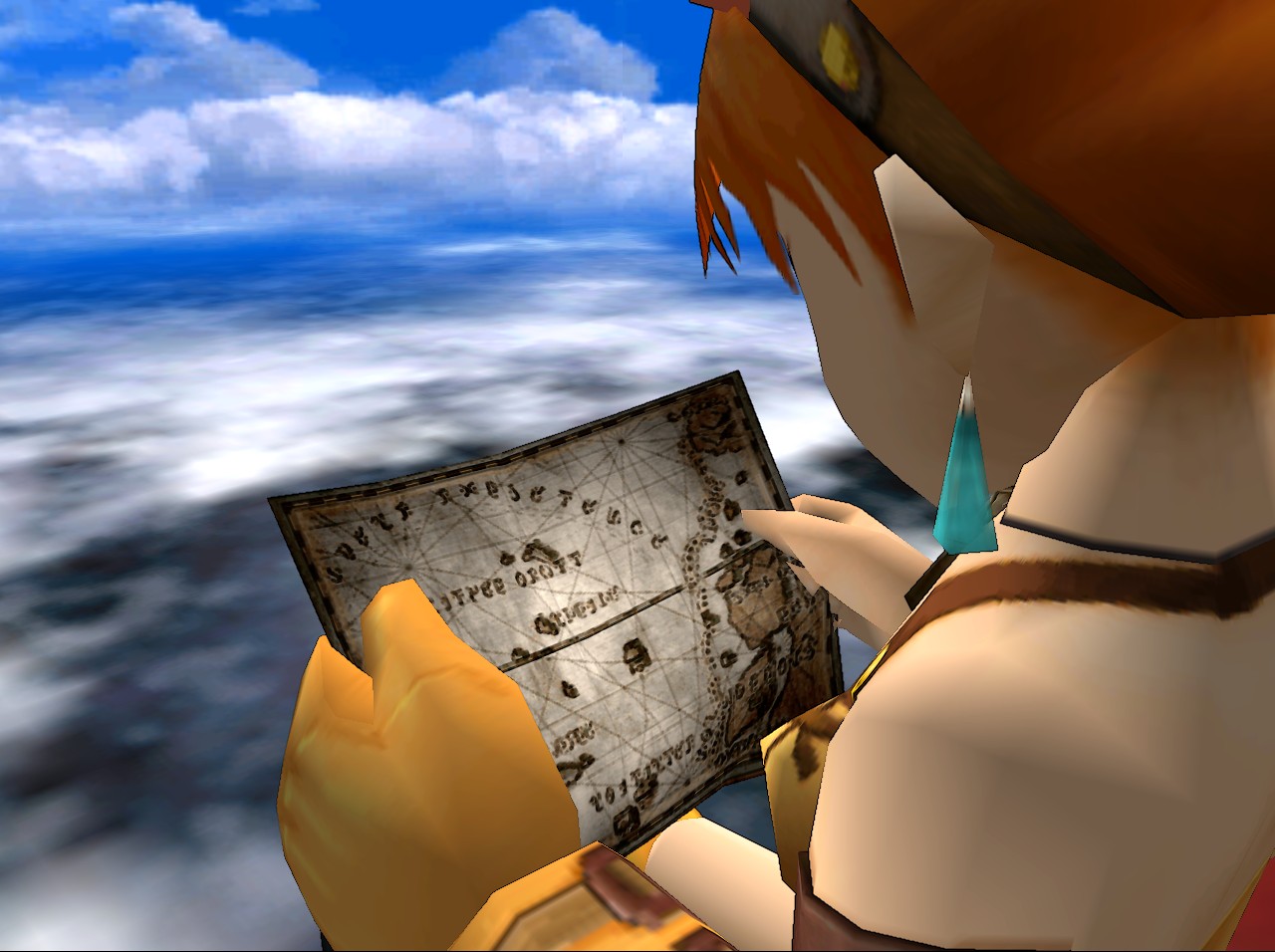
Probably the most tangible appeal is the setting. The floating continents and archipelagos of Arcadia constitute one of the most unique and enticing worlds ever created in video gaming. The vast expanses of fantastic geography peppered with ancient high-tech ruins, unknown cultures, and otherworldly flora and fauna to explore summon a thrilling romanticised vision of an age of exploration.

Skies Of Arcadia

The “discoveries” system encourages the player’s involvement in the world, offering scores of short stories, myths and tiny fables that give a rich and rewarding sense of a living world, giving character to all the locales in every corner of the map. The sense of exploration is palpable, almost corporeal, so much so that every time I travel somewhere new and far away in the real world, residual memories of Skies of Arcadia are reanimated and filtered back in to the forefront of my consciousness.

The unapologetic traditionalism is also part of the appeal. In a time when RPGs were beginning to evolve, and many games in the genre were trying to assert their independence, Skies feels somewhat unique in mostly adhering to established formulae, but doing it magnificently well.

Battles do offer some joy. The learning of magic is mildly compelling, and the switching of weapon alignments with a single button press is a simple pleasure. The time-consuming and dramatic ship battles still offer a unique attraction even 15 years later, and present some of the greatest challenges in the game.

Skies Of Arcadia

For the most part, Skies of Arcadia is an ordinary and traditional game with an extraordinary spirit, one that holds a rare and special emotional attachment for its fans.


No legacy for Skies of Arcadia?

Unfortunately the traditional gameplay may be once reason why Skies of Arcadia remains semi-forgotten, and unplayable on modern hardware. Not only did it enjoy a limited audience on the ill-fated Dreamcast, but an enhanced port with additional content arrived in 2003 on the similarly niche Nintendo Gamecube. Meanwhile the PC and PlayStation 2 versions were cancelled just before the Nintendo release. Would Skies of Arcadia have a greater legacy with the reach of the Sony console, and the fact that a PC version could still be accessible today?

There have been rumours of a sequel in the works, but it was apparently abandoned before any public confirmation. That leaves the appearance of characters Vyse and Aika in the 2008 Valkyria Chronicles strategy RPG, and Sumo’s Social And All Stars Racing Transformed, which featured Vysa and an entire course based on Skies of Arcadia.

Skies Of Arcadia

A letter of very dubious authenticity did surface online, in which the head of Sega allegedly responds to a fan pleading for a sequel by questioning whether Sega should be in the game business. And stating any attempt at a sequel would be as disappointing as NiGHTS’ long-awaited return.

Some classics have returned with varying degrees of success. Jet Set Radio and NiGHTS Into Dreams were somewhat fortunate to be revived for modern consoles, and in a world where a Shenmue 3 and a Final Fantasy 7 remake are being made, anything could be possible.

Skies Of Arcadia

But for now as far as Skies of Arcadia is concerned, there’s nothing on the horizon. But that sadness is nothing like the one I feel each time I complete the game. It’s a fantasy world which leaves me with a sense of loss and emptiness when I depart, and a resentment that reality doesn’t match up to the imaginative fictions created for an ill-fated console all those years ago.

Filed Under: Games Tagged With: Dreamcast, RPG, Sega, Skies Of Arcadia

Get Social

  • Facebook
  • Instagram
  • LinkedIn
  • Medium
  • Pinterest
  • RSS
  • Twitter
  • YouTube

Top Posts & Pages

  • Total War Adds Dynasty Mode and Chinese Distribution
  • The horrors of Double Dragon on C64: a retrospective
  • Total War Battles: Kingdom Viking Explorers Update
  • The Courteeners @ The Met Lounge, Thursday January 31, 2008
  • Total War: Three Kingdoms Adds Han Warlord Dong Zhuo
  • Best Ever Vanilla Cupcake Recipe
  • Noisia & The Upbeats: Dead Limit EP Review

Ads

Join Us…

  • Facebook
  • Instagram
  • LinkedIn
  • Medium
  • Pinterest
  • RSS
  • Twitter
  • YouTube


Privacy Policy

Cookie Policy

© 2026 Hot Mod Media · Design & Marketing TWOTW

Disposable Media · FPSPrestige · OnlineRaceDriver · The Guitar List · Rescars · Rescogs

We use cookies to ensure that we give you the best experience on our website. If you continue to use this site we will assume that you are happy with it.