There’s often a debate over what counts as retro, classic or vintage in something as new as videogames. Should it be when a console ceases production, or is there a definitive cut-off date? How good does an older game have to be in order to be revered now? And is it crazier to be trawling secondhand shops and boot fairs for original copies, or to be using an emulator to play a facsimile? Either way, I’m sticking with the headline “Vintage adventure Syberia coming to Nintendo Switch in October” as fairly accurate.
What’s undeniable is that Microids is releasing a version of adventure game Syberia as a physical edition and via the Nintendo eShop on October 20th, 2017 for the Nintendo Switch. And that the original game was released for the PC in January 2002, followed by PS2 and Xbox versions in 2003, Nintendo DS in 2008, and then Android, PS3, Xbox 360, OS X and iOS versions in 2013-2014.
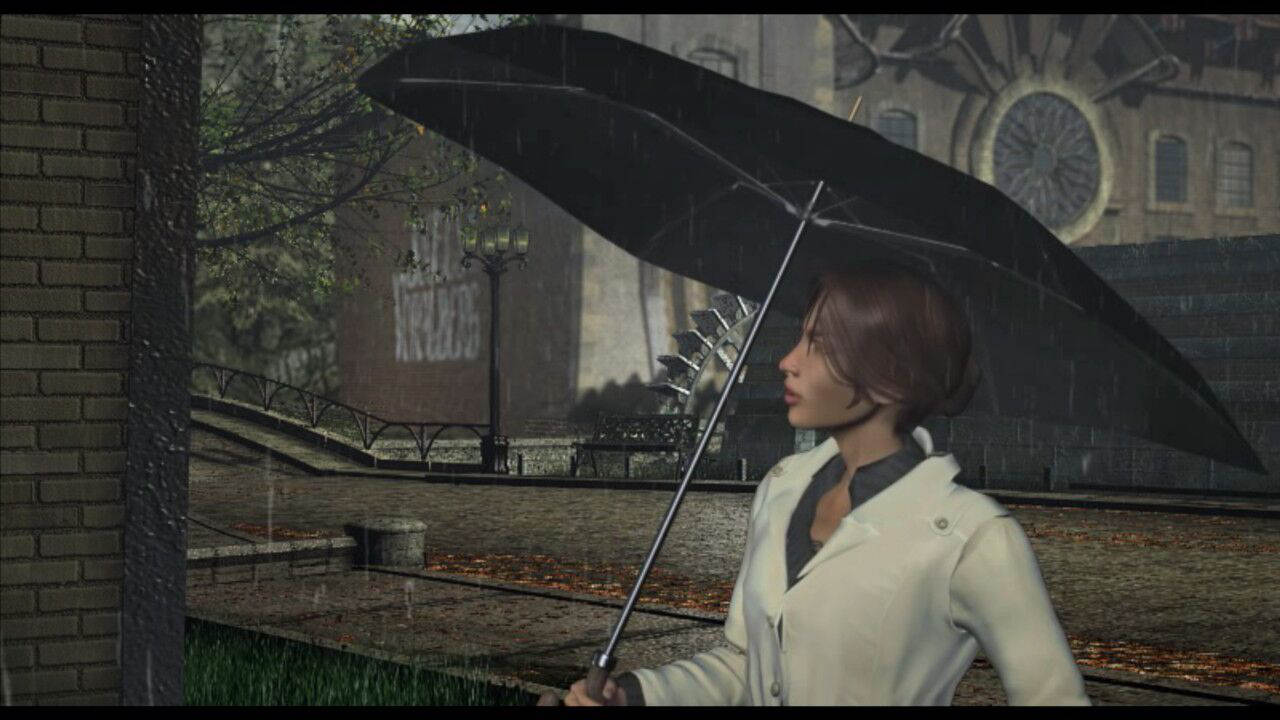
So what exactly is Siberia? It’s the first of 3 games (Syberia 2 appeared in 2004, and Syberia 3 in April 2017. Both are also coming to the Switch at the end of 2017 and start of 2018). It’s a graphical, third-person, mouse-driven game originally developed and published by Microids. And it’s been praised for the design, and the script. It was directed by Belgian comic book artist and game developer Benoit Sokal and the first title was written by Catherine Peyrot.
The game allows you to decide the actions of American lawyer Kate Walker as she travels to a remote French village to complete the take-over of a toy factory. Finding the owner dead, she then has to locate a brother somewhere in North East Europe. And to find him involves a lifesize clock work train which has an animatronic man named Oscar, a Communist-era mining complex, an elderly opera singer and more.
Obviously you can find older copies of the game on a variety of formats for a low price, but there’s probably not going to be an overabundance of classic style graphical adventure games for the new system, so it might be worth picking up a new copy to introduce younger and newer gamers to the problem solving that challenged us at the turn of the century…


Leave a Reply