Disposable Media

Art, Music, Games, Life

  • Art And Literature
    • Comics
  • Music
  • TV & Film
  • Games
    • Tabletop Games
  • Technology
  • Life
  • Events
  • Magazine Downloads
You are here: Home / Archives for Qazimod

Review: Kuttin Edge – Turn Style EP

3rd June 2026 By Qazimod Leave a Comment

Every so often during the week I go through various YouTube channels and social media accounts so that I’m able to catch up with news of any music releases that I may otherwise miss – such is the life of somebody who deleted their Spotify account and let their Tidal account lapse for a while. I’ll admit that it has become a bit of a ritual to cram a bunch of tracks into the evening and see what lands, and sometimes the answer is “nothing”. On the other hand, there are a few instances where more time is needed for something to truly make a strong impression; whether that’s because I need a few listens to truly appreciate something or because tracks of an EP or album are being drip-fed before a new release. The point I’m trying to make is that I wasn’t intending to write words about Turn Style EP – but now that I’ve given it some time, I think that it deserves a recommendation.

Turn Style EP – music for vibing

Art featured on the Bandcamp page for Turn Style by Kuttin Edge

Turn Style EP was released on Kuttin Edge’s Bandcamp page at the end of May, and consists of four tracks – around 17 minutes – of lively electronic music. Before the full release, a couple of the tracks were available to listen to on Bandcamp – with a third track later being published on YouTube via the likes of Drum&BassArena. The initial teases were promising, and I can report that the final EP has a lot to recommend. “Don’t You Know” provides an opening salvo that feels effervescent and alive. Bright drum effects and purposeful beeps immediately capture the imagination and act as wonderful background ambience when you’re locked into an activity or just vibing. Well-placed transitions keep the track fresh and avoid repetition, and the track doesn’t overstay its welcome. “Overthinking” then presents a gorgeous vocal number with some suitably earworm-y lyrics supported by a subdued bass and some charismatic twangs. Of all of the tracks here, it’s an early favourite of mine and I‘m still not bored of listening to it.

“Mood board”

Despite a captivating intro, the title track “Turn Style” initially gives you the impression that it’s not really going anywhere – you’re tapping your foot at the beginning but simultaneously waiting for the layers to build up, or you’re expecting a big beat drop, but nothing’s happening. However, it slowly finds its own identity with some cute zappy sound effects, a few organ-like keys being jabbed and effects in the background that rise and fade like waves crashing on the shore. It didn’t instantly grab me in the same way that “Overthinking” did, but I think that it succeeds in creating an admirable collage of moods and sounds. To close out Turn Style EP, Fox features on the track “Catch Flight” – a mesmerising dance between hypnotic melodies, driving rhythm and solid vocals. It’s a great contrast to the previous vocal offering of “Overthinking” and is a fine way to conclude the EP.

Turn Style EP – sound of the summer

If you have a few spare minutes to enjoy something different – maybe whenever we get a chance to enjoy more sunshine in the summer months – Turn Style EP is a nice way to kill some time. It’s a lot more chilled than the breakneck insanity I might otherwise listen to, and it might not have the energy of something like a soulful Makoto number (maybe try the recent “It’s Alright, I Feel It” for that) but at the same time it has a unique identity that I feel has been lacking in other mellow releases that I’ve tried recently. In a year where so far I’ve been nonchalant towards a lot of new electronic music (Logistics’ “Earthling” made an impression during March, but I might cover that during the annual round-up), it’s a pleasure to recommend something like this.

Turn Style EP is available now and can be found on the Kuttin Edge Bandcamp at this location

Filed Under: Music, Reviews Tagged With: kuttin edge, music, turn style, turn style ep

Late to the party: Clair Obscur: Expedition 33

31st March 2026 By Qazimod Leave a Comment

It’s easy to be sceptical when a particular piece of media is held up as the saviour of a dead genre – especially when that “death” is an exaggeration in itself. Despite covering a few turn-based RPGs on this website, I don’t think that I’m the most avid consumer of the genre; nevertheless, I still raised an eyebrow when Clair Obscur: Expedition 33 was a focal point in conversation that would make you believe that the genre hasn’t moved forward since Final Fantasy VII. As I’ll explain later on, there were a lot of things I enjoyed in Sandfall’s game – but I think that there have been enough critical success stories through the years to suggest that the genre is doing just fine. The world is subjective, and it’s genuinely hard to keep track of all of the quality RPGs being released when so many of them command tens of hours of your time – so I can forgive a certain degree of surface level ennui when people don’t look much further than trailers and blurb. Personally, I’m not here to make too many comparisons – I already try and keep other notable games on my radar and discuss them on their own terms – so I’d like to try and do the same for Expedition 33.

Expedition 33 – L’histoire

In a story that follows a group of expeditioners on a mission to slay an entity named The Paintress, Expedition 33 initially feels comfortingly familiar. The game is broadly structured as a series of objectives where you travel an open environment (following waypoints shown on a map) and enter dungeons that have various enemy encounters to overcome and loot to collect. Enroute, there will be light conversations between party members, and each dungeon will typically culminate in a boss battle, a cutscene, or both. What’s most striking is that so much of Expedition 33 is captivating and engaging – on the field, regular battle encounters demand your attention as you are tasked with studying attack patterns that can be dodged or parried with real-time button presses. Meanwhile, the main characters in your party are beautifully realised – they feel like regular people on an extraordinary mission, and not like actors in a dramatic storyline. When you set up camp you regularly have an opportunity to watch a heart-to-heart with the party members (not unlike “Drink Links” in Like A Dragon) – moments that often show an admirably human side to our heroes. Mechanically, these conversations are fairly shallow and it can feel like you’re going around the camp making sure that all interactions are exhausted – but they’re a fun inclusion nonetheless. Sometimes actions speak louder than words, however, as the characters truly shine once they begin a combat encounter. Expedition 33 has some of the most involving and demanding turn-based battles I’ve experienced in the genre for a while, and this approach to an RPG staple is something that could be very polarising: something that could make players shut the game off in frustration, or stay locked into the experience as they rise to each challenge.

“En garde”

The battle encounters generally combine turn-based decision making for your party’s actions, and real-time responses to enemy attack patterns. When it’s your turn, Expedition 33 feels a lot like other RPGs – you’re choosing to heal allies, provide buffs, or cast magic. (There is no mana or MP system in the game – instead, each special command costs Action Points, which can be replenished with each turn or by performing defensive actions.) However, as the enemy prepares their own action, you’ll notice that there are still commands that your party can use: a parry, a dodge, a jump. (The parry in particular grants a large counter-attack if you can parry everything in an attack string, but it often carries the most risk.) In a similar vein to Like A Dragon: Infinite Wealth (or various Mario RPGs), you can nullify enemy attacks by reacting with the appropriate button press at the right time. However, this regularly feels like an essential part of your toolkit rather than an excuse to show off – the vast majority of enemy attacks in the game can outright kill a party member from full health (unless you’ve put time into increasing party health, have set up defence buffs or are deliberately exploring a low-level area.)

Consequently, mastering the timing of these defensive actions ends up being the primary means of survival. You do end up obtaining certain skills that grant health to allies or revive them, but when you can be wiped out in a single combo then it can feel like you’re merely postponing the inevitable. There are two things that I took from this design philosophy. Firstly, the encounters are some of the most elaborate rhythm puzzles you’ve seen in a modern RPG. If you know the timings of the necessary jumps, parries and counters then you no longer have to worry about a particular puzzle. Secondly – players would have much less patience for this kind of system if not for the fact that, upon death, you can instantly restart the battle (rather than having to return to the title screen or reload a save.) The instant restart is nothing new – Metaphor uses it brilliantly when players are attempting its tougher encounters – but it’s an essential tool in Expedition 33. (Whilst writing my rough thoughts, I also played devil’s advocate and considered the alternative – if the battles weren’t as punishing as they end up being, I imagine that players would just eat the damage and be less inclined to engage with the defensive systems. So I can kind of see what they’re going for – but it’s a very particular mindset to demand from players.)

A still from a cutscene in Clair Obscur: Expedition 33

Supporting the combat of Expedition 33 is an admirable amount of customisation. Skill trees let characters open up new abilities to use in combat (although each character can only select a maximum of six), whilst Luminas activate bonus perks for characters during encounters – performing an extra attack in a combo string, for instance, or granting a chance for a status effect on enemies (such as Burn.) There are also more advanced effects that come to fruition through several turns – one of my favourite skills required a Burn status to be inflicted on an enemy so that a party member could enter a unique “stance” that opened up a damage bonus; another skill caused ice damage to enemies whilst automatically healing the party for a number of rounds. The generous freedom you have in customising your party takes a lot of the edge off the brutal battle encounters, as you will often walk away from a defeat wondering if there is a different setup that you could attempt for a given encounter. The aforementioned Action Points system plays into a lot of the skill properties, as some skills can grant AP back to party members, allowing them to re-use costly actions sooner rather than waiting for AP to build over multiple rounds. In addition to health, enemies and allies also have a “Break” gauge, and if this is filled then it will stall the subsequent action for one round. This becomes another essential part of the team strategy, as it offers a little more breathing room to build AP. Ultimately, the variety of builds available can inspire players to devise solutions that suit the occasion… but it’s an experience that you have to be prepared to throw yourself into. If this philosophy – the thought of going into encounters you aren’t familiar with, dying, and then building around the encounter – is something that interests you, there’s a lot to enjoy here.

Expedition 33 – Le monde

Outside of the story and combat, Expedition 33 has a great world to sink into. Environments have an abstract and painterly quality to them, and the music is captivating without being overpowering. The architecture is fairly static and you’re rarely doing anything more complex than finding objects to shoot or grapple points that zip you across the landscape, but it serves as a game-wide arena for the main attraction: the combat encounters. Exploring the world map can be somewhat quaint as it often feels like a series of waypoints with a handful of curios and roaming encounters, but I always found the destinations more enticing than the journeys. When so many encounters have party members being KO’d, a lot of the content of Expedition 33 comes from the battles, and it wasn’t uncommon for me to come away from a session with no progress in the story but more knowledge gained about attack patterns and parry timings. After watching the closing scenes and credits, my final save at the end of the game had just under 53 hours on the clock, and I feel like the merciless battles padded out a lot of that hour count. (The intended destinations of Act 3 in particular felt like a steep rise in difficulty across many areas, after what had otherwise been a gradual increase in challenge, and it gives the impression that the player should take advantage of the sizeable experience rewards you receive at that point.) However, they were compelling enough for me to continue to the game’s conclusion, and I would recommend Expedition 33 if you have enough patience and a desire for this kind of ruthless experience.

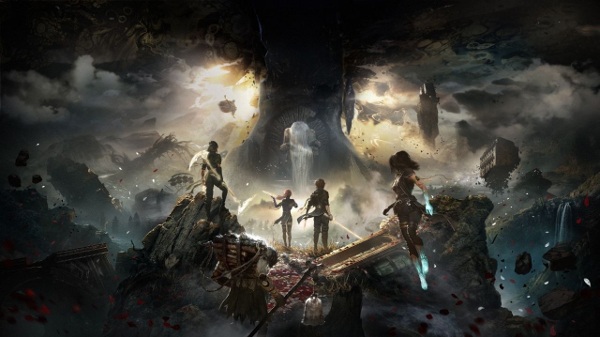
Key art for Clair Obscur: Expedition 33

Disclaimer: it was reported that Clair Obscur: Expedition 33 originally contained placeholder assets created with generative AI, and that these were subsequently patched out. Whether this is an excusable practice is something consumers have to decide for themselves. Qazi ended up buying a pre-owned copy of the game for the purposes of playing it and writing this article. (Although to be honest, there’s hardly anywhere left in his local area where he can buy games new…)

Filed Under: Games, Reviews Tagged With: Clair Obscur: Expedition 33, games, pc, PS5, sandfall interactive, xbox series

Home cinema review: Good Fortune

2nd February 2026 By Qazimod Leave a Comment

For more than a decade, Keanu Reeves has been a bit of a long-term fixture in this household. 2014’s John Wick was an incredible action movie and a compelling tale of revenge, and despite that series becoming increasingly silly and high-stakes through the various sequels, it provided an appreciable baseline of entertainment that kept me invested in the overarching story. Even before those films I was a big fan of earlier works such as Speed and The Matrix trilogy (as well as the more recent “The Matrix Resurrections”), so I had always enjoyed his on-screen performance – however, I essentially lived through about a decade of seeing Reeves adopt the familiar role of the legendary assassin. It was kind of weird to see adverts for movies that featured him in an entirely different role, but that brings us to Good Fortune. Even before the film was released (in October 2025), the streets around my local area were promoting the film (and its other stars, Seth Rogan and Aziz Ansari) so it was kind of hard to avoid. I’m not a massive cinema-goer – I’m terrible at arranging things with people, and generally I’d prefer to wait and pick up a disc that I can replay as many times as I like – but I had been keeping Good Fortune in mind as something to pick up when it was released on DVD and Blu-Ray in January of this year. And so I begin Disposable Media’s 2026 content with a tale of divine hijinks between three individuals…

Good Fortune – the trade

A still from Good Fortune. Arj and Gabriel are facing each other in front of a Denny's.

Good Fortune follows the life of an angel named Gabriel (played by Reeves) who has a specific job protecting the people of Earth – saving careless individuals from accidents that would potentially be caused by texting while driving. Gabriel finds himself longing to do something more meaningful in his line of work, and is subsequently asked to act as a guardian angel for a down-on-his-luck character named Arj (Ansari). Just like Gabriel, Arj is looking for more from life and struggles to find opportunities to make a living. Gabriel meets Arj and seeks to prove to him that a life of material wealth and easy living doesn’t result in happiness, and that true fulfilment must come from the self. To do this, a trade is proposed – Gabriel swaps Arj’s general lifestyle with that of a man of wealth, Jeff (Rogan) – but the trade doesn’t work out as well as he imagined, with the life lesson failing to be conveyed… In all honesty I didn’t realise that Good Fortune was a body-swap (or “lifestyle-swap”) movie, and although it’s not a subgenre I explore a lot in film (unless you want to include things like John Travolta and Nicolas Cage blasting each other in 1997’s Face/Off) I can appreciate the entertainment value held in such a premise. For most of the runtime, Good Fortune is a robust framework for Arj and Jeff to be placed in various silly scenarios where they must try and adapt to their new lives – and all the while Gabriel is trying to adjust to life on Earth.

Heaven can wait

The film gets some good mileage out of this premise – we see Jeff (and later Gabriel) having to get used to rough living and sleeping in the car; meanwhile, we’re transported to scenes of Arj throwing lavish parties and flaunting his newfound wealth and success – and in-between these moments, Gabriel is letting the “pleasures” of Earth distract him from his goal of “saving” Arj, as he discovers fast food and the brainrot of online content for the first time. Out of all of the various character arcs, I personally enjoyed the chemistry between Jeff and Gabriel the most – the premise of someone having everything taken away from them whilst accompanied by an incompetent divine being provides a lot of easy material for amusing scenes throughout. Reeves’ other roles have played to the strength of some dry, sauceless line deliveries – John Wick and Neo (or Thomas Anderson) are rarely allowed to crack a smile in their adventures, as they generally let their actions do most of the talking – but this “vanilla” personality kind of works in Good Fortune’s favour when the character of Gabriel is built around being righteous but naïve as he adapts to his new life. Arj’s full character arc ends up being a little more conventional, as he ultimately completes a journey to (hopefully) discover that boundless wealth, comfort and stability aren’t necessarily a flawless panacea – and whilst I found that Jeff and Gabriel had more “funny” scenes between them, all three stars definitely manage to have a lot of fun with their roles.

Good Fortune – life lessons

A still from Good Fortune. Jeff and Gabriel are eating fast food together.

The comedy does take a backseat for some moral messaging towards the conclusion – and the film has been setting up the eventual moralising for a while, so it’s to be expected – but once it happens it feels natural rather than being too heavy-handed. We already live a day-to-day existence where those in power aren’t always making the best decisions, living in a world where those less well-off continue to struggle, but the film manages to find some light humour in both of these lifestyles. For most of the 97 minutes I enjoyed myself with Good Fortune; I don’t think that it was an evening of wall-to-wall side-splitting laughs, but it was still comfortable viewing. I personally enjoyed an opportunity to see Reeves in a more light-hearted tale… and despite the themes of guardian angels, pretty much everything else going on in the story felt relatively grounded. After Gabriel loses his wings, the audience is watching a film depicting the various (mis)adventures of a regular man with little knowledge of life on Earth. I don’t object to supernatural nonsense in comedy (I own the two Shazam! movies, not to mention Space Jam), but Good Fortune chooses to enjoy comedy through inexperience instead of magic and fantasy – and in doing so it presents a fun but heartwarming tale, and a pleasant examination of how people of different backgrounds adapt to unexpected circumstances.

Good Fortune (15) is available now on DVD and Blu-Ray at all good retailers.

Filed Under: Reviews, TV & Film Tagged With: Aziz Ansari, films, Good Fortune, Keanu Reeves, Seth Rogan, TV and Film

Qazi’s Disposable 2025 – Highlights

31st December 2025 By Qazimod Leave a Comment

When I brought 2024’s entertainment round-up to a close, I told myself that I wouldn’t have a whole lot of bold new plans for the subsequent year – maybe some new hardware would be purchased, but I wasn’t pointing at notable 2025 videogames and films as things that I would be eager to check out. Subsequently, as I write the inaugural Qazi’s Disposable 2025 draft, I realise that the last twelve months have been as much about tackling my bucket list as they’ve been about following current news – however, I feel like there have still been some notable things worth talking about.

Qazi’s Disposable 2025: Watching

Qazi’s Disposable 2025

My film-watching time this year has admittedly been taken up with a number of rewatches; my long-standing admiration for the Robocop and Back to The Future films will inevitably make me postpone any “new” viewings to a later date. However, I still managed to make time for some first-time viewings; I watched a TV broadcast of Top Gun: Maverick that delivered on emotive relationships as effectively as it showcased hi-octane dogfights – whilst not the most cerebral movie, it was a fitting follow-up to the original, and impressed me enough to buy the two-film box set about a month later. (It also has a sizeable runtime stretching over two hours, but uses the time well.) Similarly, I watched the recent Naked Gun reboot in late November, and admired the rapid-fire nature of its continuous gags and punchlines. Neeson adopted the role of Drebin better than I could have imagined, and whilst some jokes were a bit weak, the standouts more than made up for any lapse in entertainment. (Five words: “did you get all that?”)

Another first-time viewing that I caught on Prime Video was 2008’s Wanted, or “what happens when a director watches Jeff Lew’s Killer Bean animations and has access to Angelina Jolie, Morgan Freeman and James McAvoy.” It was delightfully absurd but impressive in its spectacle – with bullets deflecting one another and bending around corners, it could have seemed so phony and fantastical. However, the fact that the story plays it straight means that you remain engaged in the nonsense. Elsewhere, perhaps one of the most curious films I watched for the first time was Lost In Translation. Following the lives of two individuals (played by Bill Murray and Scarlett Johansson) who cross paths and slowly develop an unexpected bond, the story is very loose – it could almost be a montage of short films that someone decided to stitch together into a full movie – but it manages to remain touching and bittersweet. Every conversation and chance meeting was interesting, and I enjoyed following the pair; wondering where the events of the day would take them. I totally understand the criticisms of there being “no story”, but I still think that it has compelling characters and emotions that are capable of drawing you in.

(I’d also like to give an honourable mention to Ballerina – the spin-off movie from the John Wick universe – which I only got around to watching shortly before submitting this article. I had already watched the four main movies in the series with mixed admiration for them, and even though Ballerina cast the spotlight on a new protagonist, it offered a compelling revenge tale that was every bit as engaging as the mainline Wick movies. I’d definitely be keen to see more movies with de Armas as the lead…)

Qazi’s Disposable 2025: Listening

Qazi’s Disposable 2025

In 2025 I cancelled my Tidal subscription in an effort to reduce the amount of monthly digital services I’m paying for online, and instead I’ve just been following accounts of artists, DJs and labels on social media – as well as visiting my favourite specialist channels on YouTube. Generally speaking, it hasn’t been a huge loss for me; I guess I miss the high quality output of Tidal in comparison to playing tracks from YouTube, but in terms of discovery I’ve still been able to find lots of new music without being subscribed to a streaming platform. (Also, the better YouTube videos tend to link to Bandcamp and Soundcloud URLs in the description, so it’s not like I’ve had to tolerate YouTube quality and adverts all of the time.) In my round-up for last year I mentioned Vision Radio – the radio show available on the Vision Recordings YouTube channel – and the show has continued to be a great resource for discovering new bass music. The channel for Fokuz Recordings has also offered lots of chilled drum ‘n’ bass music – but I’ll admit that when I’m trying to catch up with all of their uploads in one sitting it can be hard for a single track to really stand out and make an impression.

I listened to a few albums with varying results – Flava D’s Here & Now had plenty of fun vibes with genuinely great vocals on the tracks; in contrast, Royksopp’s True Electric was a bit forgettable – that being said, I listened to way more EPs and singles. In particular, Vodkah and Dr. Khan released some excellent drum ‘n’ bass tunes with After Midnight and Habanera; the combined efforts of Mitekiss, Subten and Charlotte X dropped a gorgeous vocal D&B offering with Golden Hour, and Phil:osophy evoked the Chrono Trigger soundtrack with its dreamy Xanadu. I would never have imagined that the forest music from Square’s RPG would complement a D&B rhythm so well, but it’s incredibly effective. And whilst these aren’t technically albums, I’ll offer honourable mentions to a couple of other releases. For one, we had 3RMX82 – this followed the Machinedrum album 3FOR82 and includes brilliant instrumentals of tracks such as Zoom and Rise. (When I think about how desperate I used to be for instrumental versions of those two songs, I’ll consider this a win.) I’ll also give props to Planet Mu 30, a compilation of music from artists on the Planet Mu label, containing various tunes from 1995 to 2025 and releasing on physical media as well as MP3 – so I was fortunate enough to pick this up on CD. All of my listening has been possible with the same tech I mentioned in my 2024 round-up, but there’s nothing that I really consider old or broken enough to change at the moment.

Qazi’s Disposable 2025: Playing

Qazi's Disposable 2025

At the end of 2024, my round-up of the year in gaming covered a few fresh new RPGs as well as some older classics – this year, my main focus has been drawn solely towards the classics. There hasn’t really been a massive hit game from 2025 that has caught my attention (I still struggle with Hades 1 too much to justify considering the sequel, and I have this irrational fear that I just won’t vibe with whatever Clair Obscur: Expedition 33 has to offer) – I played Shinobi: Art of Vengeance for a while, but even that got a bit tiresome thanks to some lengthy boss sequences and a move away from the classic linear levels. Instead, I’ve been making up for lost time by getting around to some older hits, and it’s generally helped me to enjoy the year at my own pace. You know, instead of chasing the latest trends at launch day prices so that I can throw meaningless contributions into The Discourse. Ahem.

If nothing else, I’m pleased that I’ve removed a few more games from my lifetime bucket list. I bought Final Fantasy IX in a sale after seeing some excellent retrospectives, and I was immediately captivated by the charming characters, the fantasy setting and the way that equipment can unlock abilities. The difficulty was generally perfect for my own pace, and the music had some standout tracks such as the brash Iifa Tree theme. I finally experienced Earthbound – I’ve wanted to play through this ever since I’ve been able to emulate SNES games, and over June I ultimately faced Giygas and watched the credits. (I honestly found some elements of the game a struggle, such as the inventory limit and a few of the status ailments, but pushing enemies into the instant-kill threshold makes progress smoother.) And in December I managed to squeeze in a first playthrough of Transistor – it had some tough encounters, but the narration, soundtrack and presentation kept drawing me back.

And of course, there was Dark Souls Remastered. This was a game that had been built up by fans for over a decade, and even though I disliked some of the runs from bonfire to boss – that, and I generally prefer the vibe of something like Bloodborne – I’ll admit that there is something to enjoy in this game. I still find the repeat trips through the Undead zones kind of fatiguing at the start of the game, but eventually the pacing and variety improves… even if it does peak early at Anor Londo. It’s telling that I’m already considering yet another playthrough in 2026 – the more you play the game, the more you get to know the boss battles… and so challenges that seemed insurmountable become mere formalities as you enjoy the journey.

Bonus content: Streaming in 2025

With Twitch imposing its 100hr limit for highlights, I haven’t really been keen to stream long games over the year. I know that last year I set up the streaming bit of “Qazi’s Disposable 2025” by hinting at ambitious plans – I wanted to do a full livestream of Castlevania: Aria of Sorrow, even though I know that the game can be a bit grindy in places – but these were duly cancelled. I have been considering YouTube as a home for streaming, but I would want to set up a dedicated channel rather than stream to an existing one. I’ve also been trying to think of other games that would be short enough to justify streaming, but I haven’t made any definite plans for the moment. (Aside: my streaming setup has generally been well-behaved this year; my bitrate and quality settings have prevented any dropped frame catastrophes, and I’m happy with the current solution for audio offset. Of course, part of the setup will inevitably break for no reason in the future, but I just want to enjoy this while it lasts.)

2026 in entertainment

With the ceremonies for Qazi’s Disposable 2025 drawing to a close, I have a few things that I’d like to do over the next twelve months. For starters, I want to try and have another relatively cheap year, so I may continue to look at older games and films. I’d like to play some “7 out of 10”s such as Sonic Frontiers and Stranger of Paradise, my usual group of music channels on YouTube will continue to receive regular visits, and I may consider the Blu-Ray releases of the Nobody and M3GAN sequels. At the same time, I’ll still want to follow current news (the more Persona 4 Revival media is revealed, the better) so I hope you’ll join me in celebrating the new and the… slightly old, in 2026. Until then, thanks for any time you’ve spent reading our articles, and make sure that you check out Dan’s Disposable 2025 as well.

Filed Under: Games, Life, Music, TV & Film Tagged With: Ballerina, dark souls, Dark Souls Remastered, Earthbound, FFIX, Final Fantasy IX, Flava D, Lost In Translation, machinedrum, Mitekiss, Phil:osophy, Planet Mu, Royksopp, Shinobi: Art of Vengeance, The Naked Gun, Top Gun: Maverick, Transistor, Vodkah, Wanted

The 1999 of dance music: with Surrender and Rhythm and Stealth

29th October 2025 By Qazimod Leave a Comment

We love to reminisce. Throughout the history of entertainment and culture, we always look back on moments in time that represent significant periods where our lives were moulded by the media we were consuming at the time. Occasionally there are sentiments that can resonate across the internet, but today I want to highlight a fairly short but important journey through a few years of my life enjoying dance music. (A private joke I make to myself today is that my reminiscence of the 90s is no different to me as a 90s kid listening to adults reminisce about the 60s. Cultural impact aside, all generations are as guilty of living in the past as each other – but I digress…) This was going to be a broader love-in that started from 1995 and ended at the turn of the millennium – and rest assured, we’re still going there – but in my mind I sharpened my focus on two albums that made 1999 the 1999 of dance music.

Preface – the club era, and Wipeout

In 1994 I hadn’t yet started secondary school, and I was starting to make my own discoveries in the world of music. We had no streaming media and we didn’t really have the internet as we know it now, so I was listening to the top 40 music chart on the radio every Sunday. Armed with a stereo recorder and cellophane-wrapped blank cassettes, I would record all manner of genres – but I particularly grew to like dance music, and through much of 1994-1996 I would enjoy bold, brash club hits such as Livin’ Joy’s “Dreamer” or Baby D’s “Let Me Be Your Fantasy”. I was never too selective about my favourite artists through this early period of discovery; I just enjoyed the vibe of the dance scene around that three year period, and so instead of looking for albums I would often look for compilations – Dance Mania 3, Dance Tip ‘95 and In The Mix ‘96. These releases provided an instant variety selection of – hopefully – the best of what the genre had to offer in the year, and so I didn’t have to worry about looking for one artist’s album and realising that the single whose vibe and hook disrupted the UK chart was also the only song of note in the subsequent album.

However, in the late 90s I found myself being introduced to new sounds. The Prodigy would release “Firestarter” and their album “The Fat of The Land” – an album that presented brooding moments in “Climbatize” alongside rap offerings via “Diesel Power”. Sony and Psygnosis would release Wipeout 2097, featuring music from The Prodigy, Future Sound of London, Leftfield and The Chemical Brothers. I’d discover electronic music that wasn’t just designed to fill a dancefloor and be easily digestible – it would explore different moods, tempos and vibes. There was definitely a point where the club music of the mid 90s just wasn’t holding the same appeal for me that it used to, and I was looking for more music like The Fat of the Land, or like the Wipeout OST representatives. (That’s not to say that there weren’t timeless classics amongst those compilation selections; In the Mix ’96 Vol. 3 featured Underworld’s “Born Slippy”, for instance.) At the same time, I was still listening to the radio and following music news on TV, and in the late 90s there were special radio programmes previewing new tracks from those very representatives. I remember making time to set up my stereo in preparation to record exclusive reveals of songs from Leftfield’s “Rhythm and Stealth”, and also “Surrender” by The Chemical Brothers. Things were changing in my world – at home, the mix and dance compilations were being left behind, and even something like “The Fat of the Land” felt like a singular moment of raw punk ethos that few would try to emulate.

The 1999 of dance music – a psychedelic surrender

A still from the music video for Let Forever Be, for the article The 1999 of dance music

Forget the 1998 of gaming; the 1999 of dance music cemented this change in me – when both “Surrender” and “Rhythm and Stealth” would be released in June and September respectively. At this point in time I still hadn’t listened to Leftism or the earlier albums from The Chemical Brothers – I was only interested in buying the Brand New Thing I had heard about. However, even without that frame of reference (or perhaps because I lacked the frame of reference), each album opened my ears to new ways of thinking about the dance and electronic genres. “Surrender” still had urgent, energetic tracks such as “Under The Influence” and the timeless single “Hey Boy Hey Girl”, but it also explored other avenues of sonics. “Orange Wedge” was a deliberately slower groove that combined harsh twangs with a reassuring bassline; elsewhere, “Asleep From Day” offered a gorgeous and dreamy vocal track to begin side B of the cassette album – a mood that would return with the closing track, “Dream On”. Even tracks like “The Sunshine Underground” combined a dancefloor-friendly tempo with a euphoric melody that was like nothing else I was listening to in the prior years. This was dance music via psychedelia – grooves and vibes sharing company with bleeps and beats. It didn’t have to be listened to whilst stood up and jumping in a crowd – it was something you could sink into as your headphones closed off the world around you. I remember at first I felt myself stirring impatiently when listening to the album and waiting for the next club banger, but over time those bangers were the ones that I ended up skipping. I find value in all of the tracks, of course, but if I’m curating highlights from albums in my media library, “Orange Wedge” will be my first selection from the album.

(In 2019 The Chemical Brothers would celebrate the 20th anniversary of “Surrender” by releasing several new editions of the album. Firstly, a box set for CD or vinyl fans that came with additional remixes, a DVD, art prints, a photo book and more. Additionally, a cheaper edition which included a second CD with remixes curated by The Chemical Brothers. I skipped the box set, but I picked up the 2 CD edition.)

Rhythm and Stealth in the 1999 of dance music

A still from the music video for Afrika Shox, for the article The 1999 of dance music

Leftfield’s “Rhythm and Stealth” followed a similar template – yes, there were high energy offerings in “Phat Planet” and “Double Flash”, and bold vocal showpieces courtesy of “Afrika Shox”, but this was a different way of enjoying the genre. Slow, complex soundscapes were painted across the likes of “Dub Gussett”, delivering steady rhythm and an almost “industrial” quality to the melody. Meanwhile, “6/8 War” was exactly as it sounded – a rhythmic march to an unconventional beat. One of my favourite tracks on the album, “El Cid”, is beautifully soothing and serene experience that almost feels embarrassed to introduce any rhythm – it already does so much with so little. (As you’d imagine from my poor student life, I originally bought both albums on cassette and listened to them religiously on my personal stereo, but the digital treatment from CD releases definitely revitalised them.) If “Surrender” from The Chemical Brothers was dance music via psychedelia, I thought of Leftfield’s album as something more meditative; even so, it was still unafraid to be outspoken when it wanted to. If you’re looking for some music that’s going to get people on their feet and busting their moves, you probably won’t be doing it by including “Chant of a Poor Man” in the playlist, but that’s almost the point. My perception of dance music had changed; it wasn’t just about the safe bops; it was about tunes that made you think – that made you feel. The 1999 of dance music has kind of become a distant memory for the moment as my tastes have shifted again (towards drum and bass), but these two albums still activated something inside that was dormant, and I still enjoy more complex, weirder electronica whenever I come across it.

(Unlike “Surrender”, there were no special re-releases of “Rhythm and Stealth” to coincide with recent anniversaries. However, following the release of their subsequent album “Alternative Light Source”, “Rhythm and Stealth” was reissued. “Alternative Light Source” was released more than a decade after the original release of “Rhythm and Stealth.”)

When I first started thinking of ideas for this article, I was going to talk about how the Wipeout series shaped my tastes in dance music… but the truth was that it merely brought my attention to some names I hadn’t heard of. It was the exclusive radio plays that did more work than anything else, and that spirit of discovery can still be felt today. Streaming services will try and push personalised playlists to you every week, but curation is performed by specialist podcasts, blogs and YouTube channels. I’m probably discovering more album releases now than I ever was in 1999, but this article wasn’t just about media consumption – it was about the influence on my own interests. Again, this piece could have documented a longer journey through the end of the 90s… but the more I want to cover, the more that needs to be said, and then the size of this article becomes unreasonable. Besides, I didn’t want to dilute the impact of a very specific point in time. I think that these two albums serve as fine representatives for a particular moment in the genre’s history, and I only hope that I’ve done them justice with this personal journey through “the 1999 of dance music”. They’re not necessarily my favourite albums from The Chemical Brothers and Leftfield, but they came around at a time when I still didn’t know what kind of “dance music” was out there. I’d also like to make it clear that I’m by no means claiming that these two albums were the only notable releases in 1999, but I only knew so much at the time, through my limited exposure to radio shows and the like. Even today I still wouldn’t say I know everything, but it’s moments such as my own 1999 that awaken these kind of discoveries, and I think that’s something worth celebrating.

Rhythm and Stealth was released by Leftfield under the Hard Hands label in 1999; Surrender was released by The Chemical Brothers under the Freestyle Dust label in 1999. Both albums are available to listen to on all good streaming services.

Filed Under: Life, Music Tagged With: chemical brothers, leftfield, music, rhythm & stealth, Rhythm and Stealth, surrender, the chemical brothers

Late to the party: Dark Souls Remastered

20th July 2025 By Qazimod Leave a Comment

Spoiler warning: this article is an account of my experience with Dark Souls Remastered and may contain references to characters, locations, items and/or concepts from the game.

It’s no secret that FromSoftware have made some of the most celebrated action RPGs of recent times, with Demon’s Souls, Dark Souls, Bloodborne and Elden Ring proving to be particularly popular with fans and critics alike. I’ve made attempts to try some of these games but with varying results. I ended up with two copies of the original Dark Souls for Xbox 360 (the second was a giveaway from Xbox Live) and never really saw anything beyond the Capra Demon. However, I reached the credits of the game’s sequels, earned the platinum in Bloodborne and dedicated nearly 200 hours to completing Elden Ring. With this in mind, Dark Souls Remastered was always something I wanted to pick up, and this year’s Steam Summer Sale provided the perfect opportunity. I particularly wanted to own a PC copy because it’s more likely to remain accessible when compared to the download that’s on an Xbox 360 in an attic somewhere, and I do a lot of browsing and streaming on my PC so it’s often running anyway. Thus, I’ve been pouring tens of hours into Dark Souls Remastered – and I’m delighted to report that the experience has been much more agreeable.

The plan

Whilst I have written words about how other From games should be celebrated for their individuality, I can’t pretend that my experiences with those games hasn’t helped me to enjoy this one. However, I can also feel a distinct lack of compromise in Dark Souls Remastered. Dark Souls 3 and Bloodborne were snappier and more varied, and really allowed you to have fun in the environments. Dark Souls 2 was pretty bloated and you could feel a few cut corners, but there were concessions for players – such as limited enemy respawns if you were genuinely struggling in one area. Dark Souls Remastered is slower and more deliberate than Bloodborne or Dark Souls 3, and is less keen on compromising its experience than Dark Souls 2. However, this also made it one of the hardest games for me to get into, because I had to play on the game’s terms and not my own. Well, for a while. You do quickly level up and improve if you can retain your souls, and this helps to mould your character. Soon you can take more hits, carry heavier equipment and benefit more from damage scaling – as long as you can keep a firm grip on the souls you’re carrying. And whilst I’m usually terrible at memorising geography in 3D environments, I will say that the repeated runs through the same areas do help me internalise a map to an extent.

As with most of my other playthroughs of FromSoft’s games, I opted to build a tanky Strength character (my final stats had Endurance and Strength at 33, with Vitality bumped up to 35.) I would sacrifice a fast roll for sturdier armour, give myself the equip load to carry bulkier kit, and sometimes I even embraced the two-handed approach to fighting. My best friends were the Claymore, Zweihander, Man-serpent Greatsword and (once I could finally wield it) the fantastic Great Club, which seemed to be pretty good at flattening most things in its path. I also enjoyed the Elite Knight’s set and Gargoyle’s Shield for a bit, although I was compromising my roll of course. To its credit, Dark Souls Remastered does do a great job of making you feel empowered if you have been putting the work into your upgrades and levels. When you’re making significant dents in a boss health bar because you put the time into saving for those upgrade materials, or when you finally reach the stat requirements for a new weapon, it never stops feeling exciting. It’s like the loop of levelling and improving gear is its own secondary game that runs underneath the adventure.

The developing journey in Dark Souls Remastered

Dark Souls Remastered promotional image, showing the player character at a bonfire.

And what an adventure. Having finally progressed past the Capra Demon I can see what everyone was raving about, because the experience really does get better and better. The Undead zones at the start are a slog, and Blighttown and Sen’s get frustrating, but Ornstein & Smough was an unbelievable encounter (I discovered that letting Ornstein come to me whilst Smough chilled at the back helped a lot) and I felt like the subsequent zones flew by as I just wanted to see more and more. The likes of Nito and Seath were really nicely-tuned challenges, and the Four Kings saw me start eating Humanity towards the end as I just needed a little more from my items to push me over the finish line. Whilst writing this article I hadn’t quite beaten the game yet, but in the middle of drafting I went back in and dealt with the final boss – albeit in a bit of a haze as it was past midnight. (Said final boss was a bit anticlimactic as I kept getting his pathfinding stuck on a little tree in the arena, and would wait for him to whiff his command grab before punishing.) Looking at the whole experience, one thing that comes to mind is that the middle of the game was so much fun and some effort needs to be made in order to get past the first few zones, but the payoff definitely makes the effort worthwhile. After Ornstein & Smough, the likes of Nito, Seath and Sif were perfectly pitched in terms of challenge and I saw myself making a lot of progress; as if the game is at its most arduous at the beginning, but eventually accelerates towards the finish line. I’m even willing to criticise Bloodborne a bit for the same kind of feeling; those first few hours can be miserable. When you’re still getting used to that game and spending so long in that Central Yharnam map – running past the same bonfire and the same enemies – it can feel more like work than it really needs to. And the Undead zones in Dark Souls Remastered are just as repetitive and uninspiring.

It’s another one of those games where the satisfaction of making progress and switching off for the night battles with the desire to keep going and finding out what’s up next. I would have thought that the entire game would have been spoiled to death by now, but the firsthand experience still held value. The discoveries you don’t know about – a new blacksmith around the corner, a bonfire behind a secret wall – feel great, and even the things you’ve been spoiled on are shaped by your own skill and character building. My tank character can withstand a few blows in a skirmish, but he wasn’t elegantly rolling out of danger in any of the encounters, and any panicked escape from something like a Hellkite Drake’s fire breath was a comedic sight. On the other hand, my character was lopping chunks off the health bars of Ornstein and Smough, so the investment was worthwhile. I think Bloodborne’s the only game where I’ve really been invested enough to go through it again with different builds, but there’s plenty in Dark Souls Remastered to invite replay too, as long as you’re finding the experience enjoyable and worth the replay.

Enabling easy mode

And here’s where I make a confession – I’ve been getting a bit of help with my Dark Souls Remastered experience, and making it less of a struggle. I made two decisions pretty early on; one that was kind of tame and something a little spicier that could invite the rage-clicks. My first decision was that I would use the Notes app in Steam’s overlay to write down anything that I may forget after I put the game down. Weapons I need to upgrade, areas I need to explore, even notes on enemy attack patterns. It’s a bit awkward because my shortcut to open the Steam overlay shares keys with some in-game functionality and sometimes has me inadvertently healing my character, but if I open my inventory beforehand I can prevent this erroneous input. I do think that there’s an interesting discussion to be had about games that limit information and knowledge, and players that might not have a brilliant memory – one of the best features of Elden Ring wasn’t just the map you could open, it was the selection of symbols that you could stamp on the map for future reference. The equivalent in Dark Souls Remastered was me writing directions as if I was operating Google Maps. So that was the tame modifier. Next is the spicy decision: I started making backups of my saves. Particularly at a bonfire, or when finishing a play session – and I did this purely to keep my experience from falling apart. I had heard the horror stories of characters getting cursed and being in one-hit kill thresholds and not having a Lordvessel (allowing players to warp between bonfires), and I sympathised with players losing tens of hours of progress as their only option is to start the game from the beginning again. After playing more of the game I found that the threat of being “soft-locked” does diminish over time as you open up more shortcuts and obtain powerful items, but in the early game it can be brutal. Fans of Dark Souls want to evangelise the experience to newcomers, but if there’s anything that will ensure that a player won’t touch the game again, it’s the feeling of being permanently punished after what has been a large investment of personal time. Generally, however, the notes proved to be more useful than the backups as time went on, and the idea of quitting, copying a backup over, and reloading was so tedious that it quickly became a last resort.

(Addendum: whilst drafting this article I did some research and found that making backups in this manner will also protect players from hackers who can supposedly invade a game and start killing NPCs, and this practice of backing up saves was generally encouraged on Steam discussion boards, so even without my personal stipulations it seems to be worth considering if you’re intending to dive into the online experience.)

Not that the backups were really needed in the end. During the early game of Dark Souls Remastered you quickly unlock the Female Undead Merchant who sells items for curing curse, and if you have a few of those and a homeward bone or two then you can compensate for the situation. Another instance where I would just about forgive a backup save includes racing towards the next bonfire you can see and being too underpowered for whatever you’ve walked into, but the player has to take a bit of blame for that. It’s the kind of thing where you still have to be expected to take some responsibility for how you manage your experience with a game – and if a player misuses that responsibility, that’s on them. “You cheated yourself”, etc.

Dark Souls Remastered – in summary

Dark Souls Remastered promotional image, showing a view of Anor Londo

If anyone’s still here after reading such blasphemy, you’re probably keen to know what I thought about the experience as a whole. I feel like this playthrough has been thirteen or fourteen years in the making, and has been one of the largest outstanding items on my hypothetical “gaming bucket list” for a while. Ultimately, I probably liked this more than Dark Souls 2, but would be more willing to replay Bloodborne or Dark Souls 3 because of the way both games provide a challenge whilst also offering enough breadcrumbs to ensure that I remain engaged. (And Elden Ring is almost its own conversation, but it’s still a brilliant entry point and one of the better games.) At the same time, I can see this totally blowing minds if it’s someone’s first introduction to From’s “dark fantasy action RPG” formula. I think that picking favourites is always going to be a matter of personal preference; after all, the appeal of shared experiences is why I’ve published all of this – and why you’ve been reading it.

Also, I feel like any measures a player takes to be able to continue enjoying the game they want to play should be encouraged. Some players create safeguards against the fear of having to restart the entire game; others could spend time running up and down a zone for experience so that their character gets stronger, or they could summon help at every opportunity, or try to perfect a skip so that they can ignore part of a game, or – yes – download external tools and mods to tailor the experience. A conversation with someone who took steps to continue enjoying something is far more interesting than the conversation with someone who only saw a fraction of the experience. Furthermore, if a player isn’t skilled at the base experience, taking these measures will at worst change the experience from “impossible” to “challenging”, rather than “challenging” to “easy”. Anyway, that’s how I stumbled through Dark Souls Remastered, how I completed my adventure with the Dark Souls trilogy, and how I finally got to see everything beyond that Capra Demon who halted my progress more than a decade ago.

Dark Souls Remastered is available now for PS4, Xbox One, PC and Nintendo Switch.

Filed Under: Games, Reviews Tagged With: dark souls, Dark Souls Remastered, From Software, games, Nintendo Switch, pc, PS4, xbox one

Marvel Tōkon: Fighting Souls announced for PS5 and PC

5th June 2025 By Qazimod Leave a Comment

In 2024, Marvel vs. Capcom Fighting Collection: Arcade Classics reignited a passion for the versus fighter series that many felt had faded away with the aftermath of 2017’s Marvel vs. Capcom Infinite. Last year’s compilation saw the dedicated players and casual audiences reunite for these beloved games that had previously been locked away in places such as Xbox Live Arcade. However, the cause for celebration extended beyond the opportunity to play these games again. If a collection like this exists then it shows that the suits at Marvel are still open to the idea of offering their name to versus fighters. Immediately, the doors were open once more to the possibility of a new numbered title, Marvel vs. Capcom 4. However, Sony’s State of Play presentation on the 4th of June revealed something that nobody was ready for. The trailer for MARVEL Tōkon: Fighting Souls unveiled a new 2D tag fighter starring a roster of Marvel favourites, with none other than Arc System Works at the helm. Disposable Media has experience with ASW’s gorgeous fighting games in the past, and I’ve gushed about Dragonball FighterZ and Persona 4 Arena Ultimax across several articles. Combined with the longing for a return to form for Marvel fighting games, this was one of the most exciting announcements of the State of Play presentation.

Brawling for eight

With the new game players will enjoy a roster comprising solely of Marvel characters, echoing vibes of 1995’s CPS-2 game Marvel Super Heroes. As with Dragon Ball FighterZ, the trailer shows off a heavy emphasis on movement and impact – from the players closing in and clashing at the centre of the screen, to Captain America launching Iron Man before super jumping to continue the combo. Team members join the action in a very smooth and swift manner, and the fighting carries plenty of flair with its giant slash effects and bold explosions as characters are punted into cars and debris. In addition to the game’s own trailer, the State of Play showed a behind the scenes segment with short interviews describing how this game came to be – from PlayStation approaching Marvel and Arc System Works to try and make a new tag fighter happen, to Arc System Works being encouraged to put their own identity on these character designs, and the agreement to design the gameplay around a 4v4 format. Generally, recent tag fighters have adopted a 2v2 format (Marvel vs. Capcom Infinite) or 3v3 (Dragonball FighterZ, Marvel vs. Capcom 3), so the team felt like this was the next logical evolution. (People are already speculating about whether this means that each individual character will have a simplified moveset, but this remains to be seen.)

Marvel Tōkon: Fighting Souls – or, Marvel Super Heroes 2

Personally, I’m entertained by the idea of this serving as a Marvel Super Heroes sequel, and the beautiful animation and fluidity on display suggests that this is being treated with as much love for the IP as something like Dragonball FighterZ. I may be long past the point of being able to play fighting games with any kind of skill, but I still enjoy the design, the spectacle, and the hype – and I found that the MARVEL Tōkon: Fighting Souls trailer was one of the most exciting announcements to come out of the State of Play presentation. In terms of a release date, the trailer offered nothing more specific than a “Coming 2026” (and logos for PS5, Steam and the Epic Store) but I’ll be happy to wait for something that looks as good as this does. Hopefully we’ll share more thoughts about the game when we know more, and as always let us know what you think of the announcement in the comments.

Filed Under: Games Tagged With: Arc System Works, games, MARVEL Tōkon: Fighting Souls

Neo-cinema: that time I watched Swordfish and Equilibrium

20th April 2025 By Qazimod Leave a Comment

Whilst I enjoy looking at upcoming film announcements and keeping up with new Blu-Ray and DVD releases, I’ve always found enjoyment from getting into older films that I missed first time around. It’s kind of what led me to write about watching Oppenhemier and Barbie in February of last year – they were part of a cultural trend I had missed, so I wanted to find out more. If you’re on a strict diet of streaming video service providers, there’s a sense that you’re at the mercy of whatever they’re able to provide… but it’s also a little bit like a treasure hunt in the same way that you could lose a lot of your Saturday morning perusing the films on sale in a physical store. Online, there’s a feeling that you need to have the inclination to seek something out in the first place – which is how I ended up watching Swordfish and Equilibrium – but you can just as easily look at the front page of Prime Video or YouTube Movies and find something of interest that you otherwise might not have thought about watching. I’m going to be going into a little more detail about why I picked these two movies to critique in a moment, but sometimes it can be fun to spend time with some (let’s be honest) also-rans without the fear of cinema expense. A quick timeline places The Matrix’s release at 1999, Swordfish’s at 2001 and Equilibrium’s at 2002 (the next Matrix movie wouldn’t be released until 2003) – moving from a hacker who can make gunfights look cool, to two movies with hacking and cool gunfights respectively. It takes a special kind of dedication to watch two less-than-stellar feature films which split the appeal of Neo’s journey, but that’s why I’m here. Don’t worry about the fact that I still waited more than two decades to be done with all of this.

Swordfish and Equilibrium – the hack job

A still from Swordfish, for an article about Swordfish and Equilibrium

Swordfish and Equilibrium had been on my film bucket list for a while, although they don’t really have a whole lot in common. Whilst in the middle of drafting this article I tried to find out when I watched Swordfish, and I could only find a post online where I talked about it in 2018, so it’s been a minute. Anyway, Swordfish could best be described as an espionage thriller – a hacker takes a job to create a program codenamed “hydra” to take money from the government – and it caught my attention when I found that it was being produced by Joel Silver, who was the producer on the first three Matrix movies. And, you know, it’s a film about a hacker… so I thought that there might be something in there for Neo fans? Having now watched Swordfish and Equilibrium (and The Matrix), I feel as though Swordfish is the easier film to watch. Everyone can grasp the idea of the movie, and the premise had enough substance to keep me watching. That being said… outside of the producer link, it’s more like a typical thrill ride than a Matrix wannabe.

There are a bunch of scenes where keyboards are tapped and software is wrestled with, but the immediate draw comes from the back and forth between Stanley and Gabriel, our hero and villain. Motives are laid out, plans are set in motion, and then the double-crosses and trust issues begin as everything escalates to a more intense climax. It’s definitely a film that gets carried by its stars – Hugh Jackman, John Travolta and Halle Berry are all trying to do the best with what they have – but I can see why it didn’t set the world alight. Performing hacks on computers doesn’t make for exciting cinema (although you can tell that they were trying to contrive ways to make it exciting), and the plot feels increasingly daft as you quickly get the impression that this is something you don’t have to overthink.

Swordfish and Equilibrium – the emotional void

A still from Equilibrium, for an article about Swordfish and Equilibrium

Equilibrium was a film I watched more recently, and without the producer connection it has even less in common with The Matrix, but when I first saw trailers of the film – where people were waxing philosophical, dressing sharply and having stylish dual pistol battles – it was hard not to assume that the film was influenced by “vibes” from Neo’s adventures. More directly, you could argue that Equilibrium shares themes of obedience and free will – the film takes place in a world where emotions are prohibited, art is pretty much illegal and people take injections of “Prozium” as emotional suppressants. Our hero, Preston, is someone who accidentally skips one of their Prozium doses but finds it a liberating experience and ultimately joins a resistance group. While this can be loosely compared to Neo “waking up” and joining the resistance of Morpheus, the action scenes are more directly comparable.

Instead of bullet-time and kung fu, the unique selling point is “gunkata”; fighting with firearms and calculating angles and trajectories for optimal offence. In theory, the desired result is that the expert in gunkata looks unstoppable on the big screen – dispatching enemies with style and avoiding incoming attacks. In practice, it’s a bit far-fetched. As Preston stands in place making fancy poses I couldn’t help but wonder why anyone at a distance hadn’t been able to riddle a stationery target with holes. Again, it’s something that you shouldn’t be overthinking. The story of control and free will is cute, but doesn’t have a lot of substance and feels a bit stretched; meanwhile, Swordfish just had a bit more of a compelling thriller narrative, as ridiculous as it was. Too many of the scenes of exposition in Equilibrium felt kind of uninteresting; if I watched this in a cinema I could probably feel the vibe of people stirring as they wait for the next gunkata duel.

Having time to waste

It would be easy to say that Swordfish and Equilibrium are laughable contributions to cinema – and if I was more invested in them around their original release, then I might feel more disappointed at having so much of my time wasted – but when the stakes are lower you can have some fun with films like this and enjoy them as windows into the past. I watched both movies in digital form but I wouldn’t be opposed to picking them up on disc eventually. (Update from the future: as of May 6th 2025, used Blu-Ray copies of both films are in my possession.) I can’t say that I’d be begging anyone to greenlight follow-ups to either movie, but if anybody wanted to then I wouldn’t rush to stop them either. The Matrix was something that I feel like I watched – continue to watch – to death, and Swordfish at the very least might be a serviceable palate cleanser. It doesn’t have the virtual simulation or the sharp suits, and there’s less focus on close-quarters combat, but it’s the kind of thing that I could leave playing on a second screen. Meanwhile, Equilibrium was a bit more po-faced than Swordfish and The Matrix, but it can be enjoyed as a fun series of fight scenes. Maybe both films are a waste of time that could be spent with better movies, but sometimes you’ve watched the better movies already and you’re left with time to waste – whether it’s wasted with a plucky hacker not knowing what to believe or a resistance fighter freed from emotional limbo. As always, leave a comment below if you have any thoughts about Swordfish and Equilibrium or the Matrix series, and thanks for being on board with this adventure through two smaller curios of cinema’s past.

Filed Under: Reviews, TV & Film Tagged With: equilibrium, films, swordfish, the matrix, TV and Film

The worth of your entertainment

16th March 2025 By Qazimod Leave a Comment

Despite being deep into a digital future (which is pretty much a digital present now) I still enjoy physical media, and if you were to pay me a visit you’d see my music, films and games on display. If you cast your eyes over my small shelf of games you’d eventually spot a handful of Game Boy Advance titles, and right between Donkey Kong Country and (squints) some Tales game, is my copy of Wario Ware Inc. Not the copy I originally bought in 2003, but something I went out of my way to re-purchase online in 2010. I had sunk hours into my original copy of Wario Ware, and the massive regret I felt over flogging it (to fund a DS) prompted me to go and buy someone’s copy of the game – with the box, and manual, and in reasonably good condition. Not something I’d bother doing for a lot of old physical media I pick up, but sometimes I can make an exception. And now that you know about my own questionable purchasing decisions, let me talk to you about the worth of your entertainment and what it should mean.

The worth of your entertainment (for consumers)

Image from Wario Ware Inc, with Kat in front of the silhouette of Boneheads. Uploaded for the Disposable Media article "The worth of your entertainment".

What something is worth is a question that isn’t resolved simply by going to PriceCharting and searching for the going rate of your videogame collection – because if we just started measuring worth by potential monetary gain then we’d be living with the people who keep shrink-wrapped copies of their rare vinyl and obscure videogames. Worth isn’t just defined by an equivalent monetary exchange; “worth” can apply to an investment – monetary or not – that someone is willing to make in order to pursue a desired outcome; in this case, personal entertainment. In the seventh generation I had no interest in multiplayer shooters, so I would get much less out of a Halo 3 or a Call of Duty 4 – in contrast, I have tens of hours in Hotline Miami; a game that’s comparatively cheaper and yet is over in seven or eight hours according to the playthrough-tracking website HowLongToBeat. I’m not necessarily saying that people can’t wring more worth from those multiplayer shooters, but everyone finds different ways to enjoy their time with games, and so the “worth” is a much more personal aspect of an experience compared to the money you handed over in order to have that experience.

It extends even further beyond the people who play games for fun – there are professional gamers who wouldn’t want to waste their time with a product that is buggy, broken or imbalanced, and there are professional streamers and Youtube creators who will value something that they can wring precious “content” from. Sometimes the worst reaction from those people won’t be pointing and laughing at the game; it will be the lack of any reaction whatsoever. If a popular streamer is playing your game and visibly looks bored, will it really be worth their time to stream more of the game in future?

The worth of your entertainment (for businesses)

I bring this up not just to shed light on my questionable purchasing habits, but because I feel like this is something that the entertainment industry frequently risks losing sight of. We’re already in an environment where the service providers want to have a continuous stream of funds from your wallet. Movie streaming subscription fees, music streaming subscription fees, fees to remove adverts, downloadable content and season passes for videogames. (In the writing space, the feeling is magnified if you’re writing for free and buy all of the entertainment you review.) No amount of money you part with is enough for the people selling things to you… but for a consumer, certain amounts of money will be enough, and everyone has a threshold that can’t be crossed. The business dream of generating more revenue than last year – every year – only works if the entertainment is worth the increasing demands you make on those you sell to. Businesses will still chase the dream of infinite growth, but the amount a consumer can invest in a product or service is finite and often quite limited. And with that kind of caveat in mind we can find as much worth in the smaller scale productions as we do in the more ambitious releases – so now I’m going to make a point of including a picture of that Sonic meme below because I’ll forget by the time this is ready to publish.

Image of the Sonic meme where he is reclined and has a speech bubble: "I want shorter games with worse graphics made by people who are paid more to work less and I'm not kidding.". Uploaded for the Disposable Media article "The worth of your entertainment".

(Credit: X users Jordan_Mallory and MsFeliciaRondo (Knowyourmeme))

The obvious point

I guess what I’m trying to say is that “worth” should be more important than revenue? If people sink hours into your product or service and feel compelled to buy future additional content and tell their friends how much fun they’re having, it’s an outcome that has lasting positive effects. To a lot of people most of this should be obvious – of course people only have so much time and money – but you wouldn’t think so if you look at the business practices of selling less and asking for more. There is only so much lasting positivity that can come from bleeding funds from your audience, and if it begins to negatively affect their enjoyment then it tanks the worth of whatever you’re providing. And I guess I’m also trying to say that you should go and play Wario Ware Inc. again (cartridge battery permitting.)

Filed Under: Games, Music, TV & Film Tagged With: film, games, music, streaming, subscriptions, tv

Qazi’s Disposable 2024 – Highlights

31st December 2024 By Qazimod Leave a Comment

With the conclusion of my entertainment round up in 2023, I outlined some vague plans for these twelve months – catching up on my library, buying some new tech and doing some more streaming. And so when I started collecting my notes filed under “Qazi’s Disposable 2024”, In all honesty I probably didn’t get as much done with my plans as I would have liked, but I’m still content with the year in entertainment.

Qazi’s Disposable 2024: Watching

Qazi’s Disposable 2024

In my round up for last year I mentioned that I never got around to Barbie or Oppenhemier, so I made a point this year to watch both and write my thoughts on the films. Scheduling a block of two days to watch the two films, I began with Oppenhemier and enjoyed the atmosphere and tension; less so the nonlinear storytelling which came across as a bit clumsy and unnecessary. Barbie, on the other hand, was a fun commentary on identity and self-image, but was light-hearted enough for anyone to enjoy it. I also took some time to watch Fallout, the Prime Video series based on the popular post-apocalyptic RPGs. Whilst I haven’t played the games myself, I enjoyed the dark humour and the contrast of the three main characters, but also the moralising and the depth of emotion in the scenes. Purnell, Moten and Goggins were a joy to watch, and despite being talked into watching the series I ended up looking forward to each of the episodes.

Elsewhere, I did more catching up on older films, and I think I explored both ends of the emotional scale. The Mike Judge film “Idiocracy” had been on my bucket list for a while and I finally rented it in June. A fantasy comedy which follows two individuals into a stupider future, it’s a brilliant commentary on our own sense of intelligence, and I enjoyed it so much that I searched around for somewhere to order it on disc the next day. The other bucket list film – on the other end of the emotions – was “Hachi: A Dog’s Tale.” I vaguely knew about the story of Hachikō and so I had a general idea of how the film would play out, but it still got me pretty choked up. It inverts your typical animal tragedy by framing the dog as the one continuing life after the passing of their owner, and even though it gets a little bit samey in the middle, the last half hour or so was genuinely moving. I figured that as I grew older I wouldn’t have the same emotional reactions to tear-jerkers with cute animals, but this film managed it.

I don’t have any massive regrets about movies I missed, but I can’t deny that I’m falling behind on a few long-running series. The third Sonic movie was being talked about this year and I still haven’t got around to watching the second one – meanwhile, there are around four Avengers movies now and I think that I’ve only watched up to Age of Ultron. Oops.

Qazi’s Disposable 2024: Listening

Qazi’s Disposable 2024

Conveniently enough, I’m drafting this article on the same day that Tidal has published my “Most Listened” of 2024, although its summary of the year’s music isn’t too surprising – I ended up listening to plenty of EPs and singles in 2024, and a lot of “high energy” genres such as drum & bass. Under Influence Records, Bungle continued to deliver some dreamy D&B vibes with things like the Black Waves EPs. Squarepusher made a return with “Dostrotime”, his follow-up to 2020s “Be Up A Hello” (I particularly liked the “Arkteon” acoustic pieces that served as nice interludes between the more intense tracks) and even the dubstep producer Sharks decided to pivot into a high tempo number with (checks notes) “watching everything burn right in front of me”. However, if I were to settle on one standout I’d probably pick something from the Bungle EPs, because each one absolutely dials into the kind of vibes that I enjoy in electronic music.

(Although it isn’t a genre I typically follow, I also need to give a special mention to the feud between Drake and Kendrick Lamar – it’s been highly entertaining and captured the attention of all kinds of people who weren’t keeping up with the modern rap scene.)

I’ve also been revising and refining the sources of music discovery available to me – making regular visits to the Vision Recordings YouTube channel and their radio show (the show has a lot of exclusive early reveals and I often end up having to write myself reminders to hunt down tracks when they’re released for purchase and streaming), bookmarking the channels for Liquicity and Night Bass for my liquid and house needs, and keeping my one dormant X account alive just so that I still have a list of musicians, labels and DJs I can continue to follow. And of course, I’ve been insufferable on social media – filling Bluesky timelines and Discord channels with links to whatever tune has dominated my attention span on a given day. To everyone’s credit, I haven’t been met with any resistance and all of my mutuals and contacts seem pretty tolerant of my enthusiasm. The one thing that’s kind of remained dormant in 2024 has been my listening tech – I got some Marshall Mode EQ earphones in a sale, but that’s about it. Then again, not much is wrong with my current setup – I’ve generally covered my needs for home and portable listening. The only possible future purchase would probably be an optical drive for my desktop that actually works… but even then I have a dedicated CD player…

Qazi’s Disposable 2024: Playing

Qazi’s Disposable 2024

I was pretty excited going into this year. The inaugural Qazi’s Disposable 2024 article would have so many good things to say with Final Fantasy VII Rebirth being released and Metaphor: Refantazio finally making an appearance. What was more surprising, however, was that my favourite RPG was neither of these games. Like A Dragon: Infinite Wealth wasn’t just a riot from beginning to end – it’s probably provided me with the most fun over an RPG’s hour count since Persona 4 Golden. It filed the rough edges of the seventh game’s pacing whilst also making nearly every interaction fun and rewarding. The instant takedowns and pursuit of job skills made combat incredibly satisfying, the playground of minigames and side-stories managed to provide hours of distractions, and there are no difficulty spikes as notorious as chapter 12 in the predecessor. Did I enjoy it more than P4G? Not really, but in my mind – in my world of likes and dislikes – it’s one of the first games that’s comparable to P4G in terms of polish and quality. Tellingly, I’m already considering buying it again on Steam.

However, in a year without Infinite Wealth, Rebirth and Metaphor would still be remarkable achievements as well – one an extravagant celebration of FFVII’s world and characters; the other a stunning entry into the fantasy genre from a studio that leans more towards modern urban settings. Both impressed me to the extent that I’m already keen for news about the next game in the FFVII Remake trilogy and the next Metaphor game.

Finally, I was able to get around to some classics that I always wanted to play – I managed to complete Super Metroid at last (I enjoyed the adventure but I will never forgive how vague the in-game map is. I know that it’s nice to give the player room to speculate, but the map could at least colour-code the pink, green and orange doors on the map once I’ve seen them! In the end, I actually created my own map in Google Drive, but it’s likely to be full of errors…) and set aside four or five hours for Doki Doki Literature Club – the sugary-sweet visual novel which I… can’t really talk about. Just like Undertale, it’s the kind of experience you enjoy more if you know less beforehand.

As with most years, I wish I had more time to play more things, but I already have gaming plans outlined for 2025. Oh, and I didn’t play the Elden Ring DLC because I lent my disc to someone – so that’s why we haven’t covered it this year.

Qazi’s Disposable 2024: Streaming

I don’t have much streaming news to reflect on this year, save for one long-term project; I played through Final Fantasy V Advance on stream. I’ve streamed a few highlights from RPGs before, and I’ve previously streamed a full “Hero” playthrough of the charming Half-Minute Hero, but in terms of total hours streamed for a single game this is easily the most – 13 hours of stream footage over 16 sessions. I even streamed a separate window with the pages of notes I had written from a previous playthrough, so that I had something to refer to and so that anyone watching could see my inner madness. And although FFV Advance actually took more than twice that many hours to finish once the stream was done, I wasn’t going to broadcast all of my grinding. Personally I’m really happy with how much I was able to stream, and I have a more ambitious stream planned for next year…

Future adventures

As ever, I don’t know how much any kind of life stuff is going to affect me and the time I have to enjoy my favourite entertainment, but I’ll have some things lined up for when opportunities present themselves. For instance, I’d like to check out the new Monster Hunter but also get into a few older games, I’ll continue to grow my digital music library and look at more films to stream, and I’m considering some new hardware too. For now, I’ll just say thanks to anyone who has clicked on any of our articles this year, or followed us on social media – your support is always appreciated, and we hope you have a great 2025 planned. And while you’re here, don’t forget to take a look at Dan’s Disposable 2024 highlights as well.

Filed Under: Games, Life, Music, Technology, TV & Film Tagged With: barbie, bungle, doki doki literature club, drake, fallout, ffv, FFVII, hachi: a dog's tale, idiocracy, kendrick lamar, like a dragon, Metaphor: ReFantazio, oppenheimer, sharks, squarepusher, super metroid

  • 1
  • 2
  • 3
  • …
  • 22
  • Next Page »

Get Social

  • Facebook
  • Instagram
  • LinkedIn
  • Medium
  • Pinterest
  • RSS
  • Twitter
  • YouTube

Top Posts & Pages

  • Free Mobile Pixel Art DayZ released - Mini DAYZ
  • Garou: Mark of the Wolves review (PS4)

Ads

Join Us…

  • Facebook
  • Instagram
  • LinkedIn
  • Medium
  • Pinterest
  • RSS
  • Twitter
  • YouTube


Privacy Policy

Cookie Policy

© 2026 Hot Mod Media · Design & Marketing TWOTW

Disposable Media · FPSPrestige · OnlineRaceDriver · The Guitar List · Rescars · Rescogs

We use cookies to ensure that we give you the best experience on our website. If you continue to use this site we will assume that you are happy with it.