Disposable Media

Art, Music, Games, Life

  • Art And Literature
    • Comics
  • Music
  • TV & Film
  • Games
    • Tabletop Games
  • Technology
  • Life
  • Events
  • Magazine Downloads
You are here: Home / Archives for PS5

Late to the party: Clair Obscur: Expedition 33

31st March 2026 By Qazimod Leave a Comment

It’s easy to be sceptical when a particular piece of media is held up as the saviour of a dead genre – especially when that “death” is an exaggeration in itself. Despite covering a few turn-based RPGs on this website, I don’t think that I’m the most avid consumer of the genre; nevertheless, I still raised an eyebrow when Clair Obscur: Expedition 33 was a focal point in conversation that would make you believe that the genre hasn’t moved forward since Final Fantasy VII. As I’ll explain later on, there were a lot of things I enjoyed in Sandfall’s game – but I think that there have been enough critical success stories through the years to suggest that the genre is doing just fine. The world is subjective, and it’s genuinely hard to keep track of all of the quality RPGs being released when so many of them command tens of hours of your time – so I can forgive a certain degree of surface level ennui when people don’t look much further than trailers and blurb. Personally, I’m not here to make too many comparisons – I already try and keep other notable games on my radar and discuss them on their own terms – so I’d like to try and do the same for Expedition 33.

Expedition 33 – L’histoire

In a story that follows a group of expeditioners on a mission to slay an entity named The Paintress, Expedition 33 initially feels comfortingly familiar. The game is broadly structured as a series of objectives where you travel an open environment (following waypoints shown on a map) and enter dungeons that have various enemy encounters to overcome and loot to collect. Enroute, there will be light conversations between party members, and each dungeon will typically culminate in a boss battle, a cutscene, or both. What’s most striking is that so much of Expedition 33 is captivating and engaging – on the field, regular battle encounters demand your attention as you are tasked with studying attack patterns that can be dodged or parried with real-time button presses. Meanwhile, the main characters in your party are beautifully realised – they feel like regular people on an extraordinary mission, and not like actors in a dramatic storyline. When you set up camp you regularly have an opportunity to watch a heart-to-heart with the party members (not unlike “Drink Links” in Like A Dragon) – moments that often show an admirably human side to our heroes. Mechanically, these conversations are fairly shallow and it can feel like you’re going around the camp making sure that all interactions are exhausted – but they’re a fun inclusion nonetheless. Sometimes actions speak louder than words, however, as the characters truly shine once they begin a combat encounter. Expedition 33 has some of the most involving and demanding turn-based battles I’ve experienced in the genre for a while, and this approach to an RPG staple is something that could be very polarising: something that could make players shut the game off in frustration, or stay locked into the experience as they rise to each challenge.

“En garde”

The battle encounters generally combine turn-based decision making for your party’s actions, and real-time responses to enemy attack patterns. When it’s your turn, Expedition 33 feels a lot like other RPGs – you’re choosing to heal allies, provide buffs, or cast magic. (There is no mana or MP system in the game – instead, each special command costs Action Points, which can be replenished with each turn or by performing defensive actions.) However, as the enemy prepares their own action, you’ll notice that there are still commands that your party can use: a parry, a dodge, a jump. (The parry in particular grants a large counter-attack if you can parry everything in an attack string, but it often carries the most risk.) In a similar vein to Like A Dragon: Infinite Wealth (or various Mario RPGs), you can nullify enemy attacks by reacting with the appropriate button press at the right time. However, this regularly feels like an essential part of your toolkit rather than an excuse to show off – the vast majority of enemy attacks in the game can outright kill a party member from full health (unless you’ve put time into increasing party health, have set up defence buffs or are deliberately exploring a low-level area.)

Consequently, mastering the timing of these defensive actions ends up being the primary means of survival. You do end up obtaining certain skills that grant health to allies or revive them, but when you can be wiped out in a single combo then it can feel like you’re merely postponing the inevitable. There are two things that I took from this design philosophy. Firstly, the encounters are some of the most elaborate rhythm puzzles you’ve seen in a modern RPG. If you know the timings of the necessary jumps, parries and counters then you no longer have to worry about a particular puzzle. Secondly – players would have much less patience for this kind of system if not for the fact that, upon death, you can instantly restart the battle (rather than having to return to the title screen or reload a save.) The instant restart is nothing new – Metaphor uses it brilliantly when players are attempting its tougher encounters – but it’s an essential tool in Expedition 33. (Whilst writing my rough thoughts, I also played devil’s advocate and considered the alternative – if the battles weren’t as punishing as they end up being, I imagine that players would just eat the damage and be less inclined to engage with the defensive systems. So I can kind of see what they’re going for – but it’s a very particular mindset to demand from players.)

A still from a cutscene in Clair Obscur: Expedition 33

Supporting the combat of Expedition 33 is an admirable amount of customisation. Skill trees let characters open up new abilities to use in combat (although each character can only select a maximum of six), whilst Luminas activate bonus perks for characters during encounters – performing an extra attack in a combo string, for instance, or granting a chance for a status effect on enemies (such as Burn.) There are also more advanced effects that come to fruition through several turns – one of my favourite skills required a Burn status to be inflicted on an enemy so that a party member could enter a unique “stance” that opened up a damage bonus; another skill caused ice damage to enemies whilst automatically healing the party for a number of rounds. The generous freedom you have in customising your party takes a lot of the edge off the brutal battle encounters, as you will often walk away from a defeat wondering if there is a different setup that you could attempt for a given encounter. The aforementioned Action Points system plays into a lot of the skill properties, as some skills can grant AP back to party members, allowing them to re-use costly actions sooner rather than waiting for AP to build over multiple rounds. In addition to health, enemies and allies also have a “Break” gauge, and if this is filled then it will stall the subsequent action for one round. This becomes another essential part of the team strategy, as it offers a little more breathing room to build AP. Ultimately, the variety of builds available can inspire players to devise solutions that suit the occasion… but it’s an experience that you have to be prepared to throw yourself into. If this philosophy – the thought of going into encounters you aren’t familiar with, dying, and then building around the encounter – is something that interests you, there’s a lot to enjoy here.

Expedition 33 – Le monde

Outside of the story and combat, Expedition 33 has a great world to sink into. Environments have an abstract and painterly quality to them, and the music is captivating without being overpowering. The architecture is fairly static and you’re rarely doing anything more complex than finding objects to shoot or grapple points that zip you across the landscape, but it serves as a game-wide arena for the main attraction: the combat encounters. Exploring the world map can be somewhat quaint as it often feels like a series of waypoints with a handful of curios and roaming encounters, but I always found the destinations more enticing than the journeys. When so many encounters have party members being KO’d, a lot of the content of Expedition 33 comes from the battles, and it wasn’t uncommon for me to come away from a session with no progress in the story but more knowledge gained about attack patterns and parry timings. After watching the closing scenes and credits, my final save at the end of the game had just under 53 hours on the clock, and I feel like the merciless battles padded out a lot of that hour count. (The intended destinations of Act 3 in particular felt like a steep rise in difficulty across many areas, after what had otherwise been a gradual increase in challenge, and it gives the impression that the player should take advantage of the sizeable experience rewards you receive at that point.) However, they were compelling enough for me to continue to the game’s conclusion, and I would recommend Expedition 33 if you have enough patience and a desire for this kind of ruthless experience.
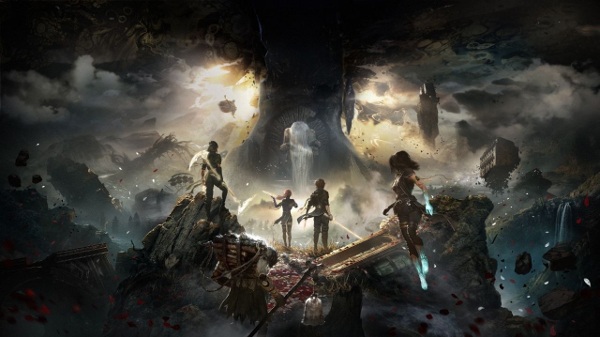
Key art for Clair Obscur: Expedition 33

Disclaimer: it was reported that Clair Obscur: Expedition 33 originally contained placeholder assets created with generative AI, and that these were subsequently patched out. Whether this is an excusable practice is something consumers have to decide for themselves. Qazi ended up buying a pre-owned copy of the game for the purposes of playing it and writing this article. (Although to be honest, there’s hardly anywhere left in his local area where he can buy games new…)

Filed Under: Games, Reviews Tagged With: Clair Obscur: Expedition 33, games, pc, PS5, sandfall interactive, xbox series

FFVII Rebirth – late impressions

11th March 2024 By Qazimod Leave a Comment

They didn’t need to do this. I said this at the start of my FFVII Remake late impressions, but the sentiment is true here also. Picking up directly where that game concluded, FFVII Rebirth is a another chunk of reimagined adventures with Cloud Strife and friends, and the second part of a planned trilogy of games based on the 1997 classic. Following the escape from Midgar and Destiny’s Crossroads, the game covers most of the rest of the first disc of the original game – from the flashback at Kalm to the Forgotten Capital. It’s kind of refreshing to see such an honest continuation that picks up almost exactly where you would expect and feels like a genuine extension of Remake’s adventure (the 2020 game came in at around 37 hours for me (plus around 5 hours for Intermission if you beeline the main story); my FFVII Rebirth save at the final boss was about 49 hours.) However – just like Remake, this is a game that fleshes out many of those story beats and battle encounters to something much more involved. Again: they didn’t need to commit to such elaborate new sequences, but it does turn this into a genuinely new adventure.

FFVII Rebirth – event square

FFVII Rebirth

Since I had already played the original game a bit, I had a vague memory about the general locations and events that a player goes through between Kalm and the capital, and so I could feel myself making a mental checklist of story beats and encounters that I wanted to see. And generally, I think that FFVII Rebirth manages to cover most of the memorable sequences. You still take part in the Junon parade, you still find time for fun at the Gold Saucer, you still go through some pivotal sequences at the Temple of the Ancients. The events won’t play out exactly like they did in the PS1 game, but most of the time the interpretations in Rebirth remain enjoyable. And even outside of the events, it’s hard not to appreciate the feeling of walking through what used to be a couple of screens of pre-rendered backdrops, or a handful of NPCs – the bustle and chatter that goes on as you move from one waypoint to the next adds a lot to locations such as Costa Del Sol. Some of those NPCs might have quests for you to pick up, but it’s more likely that they will be keen to play you in a game of Queen’s Blood. A new minigame added to FFVII Rebirth, this duel of card decks has a deceptively simple score-based goal but enough depth behind it to make each play satisfying, and is definitely worth getting to grips with (not that the story lets you ignore the minigame for long…)

2024’s new balance update

Rebirth does feel a lot more challenging than the 2020 game, but I don’t know if that’s because I’m more familiar with Remake’s battles. When you were taking Cloud on a journey to escape from Midgar, I felt like there were only a small handful of compulsory battles that really stretched your abilities and demanded that you make the most of the systems on offer. In FFVII Rebirth, it seems like every other forced miniboss encounter is doing that. I ended a lot of battles with my whole party in the red and near-death, and I’ve been playing both this and Remake on Normal difficulty with active battles. (I did try one or two battles on different difficulties, but generally I liked to reload and retry encounters on Normal difficulty.) The game regularly puts me in situations where I feel like I have eight things to “fix” on the party and only one or two ATB stocks that are ready. I admit that a lot of this may be due to my own knowledge and experience of the battles (I’m already planning to go back to older saves and take a second look at some of the late-game encounters), but the learning curve still felt gentler in the previous game. That being said, I loved taking the time to break down a battle encounter and determine exactly what I need to be looking out for in each of the enemy’s phases. Also, your own offense is supported by a new system of skill unlocks, comparable to a licence board in FFXII, or perhaps the weapon upgrade screen in Remake. Each party member can unlock anything from HP boosts and increased attack stats, to new unique elemental attacks that don’t cost MP – which are especially welcome after Remake had you entering boss battles with the wrong elements equipped.

FFVII Rebirth – environmental awareness

FFVII Rebirth

Whilst I can appreciate an increase in challenge with most of the encounters, I was more disappointed with the environments of the late game – and this stems from something that many Final Fantasy games suffer. When stakes are raised, environments shift from relatable towns and factories and beaches to epic fractured apocalypse backdrops, and even though there’s still another game planned for this trilogy, I already feel like I’m kind of done with it as a late-game staple. Some games have successfully delivered these kind of environments with less bombast – a purely narrative sequence in the Streets of Madness chapter of Final Fantasy XVI was particularly memorable – but I am concerned about what the third game will do to “one-up” the late-game of Remake and Rebirth.

Outside of pure environmental design, the engine sometimes struggles in places. With the previous game, the graphics had difficulty rendering detail in time, leading to memes such as That One Door. Here, the lighting is the most curious aspect of Rebirth. The party can sometimes walk forward into total darkness before the lighting “wakes up” a few seconds later, and some slight camera movements in the wrong place seem to turn the lighting on and off like a lightswitch. It’s never frequent enough to ruin the experience, but it still seems a bit silly whenever it happens.

Despite those observations, this is a great extension and expansion of what FFVII Remake originally set up, and I’m excited by the idea of a conclusion that could expand the hour count of the “trilogy” into triple-digits. If you didn’t like FFVII Remake then there probably isn’t much for you here – if you did, you probably already made up your mind about picking this up. They didn’t need to do this, but I still appreciate the ambition.

FFVII Rebirth is available now for PS5. You can find out more about the game here.

Filed Under: Games, Reviews Tagged With: FFVII, final fantasy, games, PS5, square enix

In pursuit of Infinite Wealth

8th February 2024 By Qazimod Leave a Comment

As a casual follower of the Like A Dragon series (formerly the Yakuza series until you look at the spine of the eighth game’s box), I was pleasantly surprised by Ichiban’s first outing in 2020. The move to a turn-based format was a perfect fit for a combat system that already encouraged a methodical rhythm of waiting, blocking and countering, and the supporting cast were generally a great bunch of virtual characters to hang out with. For the most part, the game was a fun twist on a formula that may have risked becoming overfamiliar, but I felt like it stumbled a bit in the later chapters. Whether you were meandering through a slower part of the narrative or hitting a wall with one of the notorious bosses found in the late game, such moments were blemishes on something that could have been a future classic with a little more balance and tweaking. And so when I’m deep into the last chapter of Infinite Wealth and considering the journey the game has taken, I’m torn – because I can’t decide if this is simply better than the previous game or if it’s rivalling some of my all-time JRPG favourites.

Fair fights

Like A Dragon: Infinite Wealth - in battle

The truth is, I’ve found it really hard to tear myself away from Infinite Wealth. It’s another adventure through dungeons of turn-based encounters set against the backdrop of a modern urban open world, and whilst the characterisation, story, job system, minigames and battle mechanics are as good as they were before, the previous game had conditioned me into thinking that the high wouldn’t last forever. Sooner or later I’d be cursing a forced encounter that’s far more challenging than whatever I was fighting five minutes ago, and I’d walk back to one of the grind spots so that I can make some cash for gear and maybe level up my party. However, I’m currently at the doorstep of the final boss and most of the mandatory challenges have felt surprisingly fair. It’s still not a game where you can waltz through every boss battle on the first attempt, but your party is well catered for with the material and upgrade system, a satisfying selection of character classes in the job system and a couple of “optional” underground dungeons that fill the gap between the encounter you just completed and the one causing you problems right now. There always seems to be something that you can do to develop your party in some way, and it’s offered as a path that you’ve always had the chance to revisit, rather than something you’re thrown into because completing it is the only way you’ll see anything past chapter 12 of the previous game.

Infinite Wealth – recommended

Even Persona isn’t immune to questionable pacing, whether it came from the notorious party wipes experienced when you first attempt the next mandatory boss in 3 or 4, or the extended bespoke mazes introduced in 5’s palaces. Infinite Wealth, however, is performing an admirable balancing act of being just challenging enough. I’ve had a few tough battles in a couple of earlier chapters – as well as this last chapter I’m trying to complete (note from future self; train up a dedicated healer role, and save your Extreme skills and Tag Team moves to blow through the latter “phase” as soon as possible) – but they’re only tough in the way that JRPGs have their challenging bosses; there hasn’t been a “chapter 12 of the previous game” moment in Infinite Wealth. For the moment, it’s just provided a solid challenge and has been responsible for a lot of late nights and lost sleep as I’m desperate to see the next battle, the next dungeon floor, or the next story sequence.

And outside of the business of story progress, it’s just a fun game to be absorbed in. When you’re not busying yourself with upgrades and job levels, the move to Hawaii works as a new change of scenery for the player and the foundation for much of the game’s levity. Returning hero Ichiban plays the role of the bemused outsider exceptionally well, and exploring the streets and venues is enhanced with what is essentially a summonable Segway (that moves you through the streets faster, but needs to be recharged at stations for a small fee) and even a dedicated “aloha” button to greet passers-by. Furthermore, regular enemy encounters in the open city environments are engaging without taking up too much of your time, and encounters with low-level groups can be ended in an instant with a squeeze of a shoulder trigger. The usual abundance of minigames and amusements provide a welcome break from the fighting, and loading between the transitions is fast and painless (unless you’re walking into a lengthy FMV). The usual taxis are in place to send you between notable locations, and the map is continually an invaluable resource (although I do find myself hopping between multiple stores to find the one that has a particular piece of gear,)

This had previously shared the company of Final Fantasy VII Rebirth as one of my most anticipated games of 2024, but Square Enix will have to deliver something exceptional in order to match this. If you have any interest in modern turn-based RPGs with impressive production, lots of optional distractions and customisation, and what seems to be a decent challenge for fans of the genre, consider this a confident recommendation.

Like A Dragon: Infinite Wealth - cinematic finish to battle

Like A Dragon: Infinite Wealth is available now for PS4, PS5, Xbox One, Xbox Series and PC. For more information, visit https://infinitewealth.sega.com/

Filed Under: Games, Reviews Tagged With: like a dragon, pc, PS4, PS5, Ryu Ga Gotoku Studio, Sega, xbox one, xbox series, Yakuza, yakuza: like a dragon

New Persona series ports announced

13th June 2022 By Qazimod Leave a Comment

Disposable Media is updated by enthusiastic fans of games, music, film and TV, but we’re doing this out of passion. We don’t have exclusive press access to the people who bring this entertainment to your screens and speakers, but that doesn’t stop us from asking questions that we’ve never really had answers for. For instance: what, exactly, goes on with Atlus, P-Studio and their decisions to publish their games on selected platforms? We don’t know of any exclusivity agreements with platform holders that would otherwise force such decisions, so it may be a simple matter of development costs. However, we do know that they’ve been happy to develop new versions of Catherine and Persona 4 Arena Ultimax, not to mention the Steam version of Persona 4 Golden, so they have already demonstrated that they’re willing to release some classic games on different formats. And now this – new Persona series ports for Windows and Xbox announced during the Xbox and Bethesda Games Showcase 2022.

New Persona series ports – Signs of Love towards fans

New Persona series ports

My history with Persona began with me picking up P3 for PS2 as an impulse purchase and then following the series from there. New releases in the series were already influencing my decisions to buy new generations of hardware – Persona 4 Golden effectively sold a Vita to me – and so I’ll admit that I enjoy the series enough to buy consoles for new entries. However, the new Persona series ports indicate an exciting future for the series; potentially introducing entire new audiences to the games, and – with the Windows ports – giving the games a home on a platform that isn’t dependent on generational cycles and new-gen remakes. What we know so far is that Persona 3 Portable, Persona 4 Golden and Persona 5 Royal will release on Xbox One, Xbox Series and Windows PC, with Persona 5 Royal being the first of these releases on October 21st of this year. (It wasn’t until four months after publishing this article that we would find out release dates for Persona 3 Portable and Persona 4 Golden – they are due to be available on January 19th 2023.)

With Royal and Golden essentially being deluxe editions of the original P5 and P4, this will open up the best versions of these games to new players. Opinion is divided on Persona 3 Portable, as it lacks some of the content from PS2’s “FES” release, but a new female protagonist and direct commands in battles (as opposed to AI tactics selected in the original) make it a great edition of the game. We reported on the Steam release of Persona 4 Golden when that originally came out, and if it’s any indication of the quality we can expect from the new Persona series ports I’d be pretty happy (provided my PC specification can handle the new ports.)

New Persona series ports – a Last Surprise

New Persona series ports

Furthermore: as we were drafting this article, we also received word that Atlus has confirmed PS5 releases of the three games, and so even if you had been following the RPGs on older PlayStation platforms, it hopefully won’t be long before you can enjoy Persona 3 Portable or Persona 4 Golden on the big screen. And the news didn’t stop there – on June 28th, an announcement during Nintendo Direct confirmed that the games would also come to the Nintendo Switch.

Of course, this leaves the future of the series open to question. Atlus have a couple more Persona-related announcements due this year, and (from comments regarding a new recruitment drive) they’ve already expressed an intent to deliver a sixth game in the future. With these new Persona series ports announced, it invites speculation over where the next game will go. I feel like most people are expecting the Atlus announcements to culminate in a Persona 6 reveal, but that remains to be seen. In the meantime, people can look forward to Persona 5 Royal in October 21st, with the releases of the other games to be confirmed at a later date.

Study Time

New Persona series ports

If you’d like to read some impressions of the three games, I covered the original Persona 5 and the Royal update, I published news on the Steam release of Persona 4 Golden and I celebrated the original Persona  3 turning 10 in Japan. Whether I pick up Royal again could depend on the PC requirements, but I’m sure there will be more Persona-related events to cover later this year. As always, let us know what you think of the new Persona series ports in the comments below.

Filed Under: Games Tagged With: Atlus, games, pc, Persona, persona 3, persona 3 portable, Persona 4, Persona 4 Golden, persona 5, persona 5 royal, PS5, xbox

Elden Ring: Choose your own death

25th March 2022 By Qazimod Leave a Comment

“I could be doing something better with my time” – it’s a mantra I find myself recalling when playing certain games. They tend to be older games from the 80s and 90s, when everything was built around the free time and unlimited patience of a younger gamer. If you try to play something like Ghosts ‘n’ Goblins today you’ll die to things you weren’t mentally prepared for, and will have to take a more considered approach next time. The only problem is that these deaths happen all of the time… not that much of an issue if you have the aforementioned luxury of free time and patience, but when life commitments and other interests begin to intrude on your gaming time, you start to think that you’d be better off playing something else. Elden Ring changes this, however: in delivering such a densely-packed open world, you can simply choose to do something else in the game.

Elden Ring – map it yourself

Elden Ring

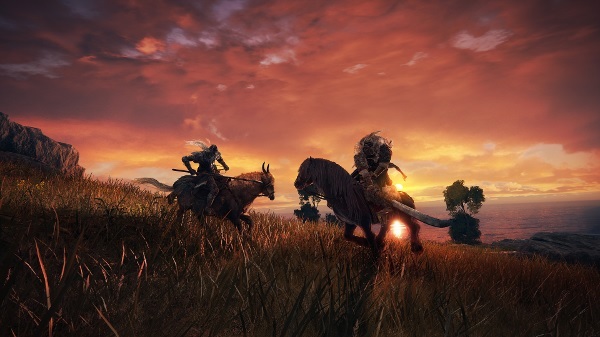
Other dark fantasy action RPGs by From Software have had intricate interconnected worlds before, but even those tended to leave you choosing between the critical path and a few supplementary diversions. In Elden Ring there are times when you feel like if you just point your character in a given direction and ride into the unknown, you’ll find an entirely new zone, or a new boss encounter, or an underground catacomb. In a more linear game, you might make a mental note of the mistakes you made on your way to – and during – the next compulsory boss blocking your progress. With Elden Ring, you’re not just learning from the critical path; you’re mapping out your deaths and discoveries. Sometimes quite literally – the incredible map in the game lets you add custom markers, and every time I die, I can add a skull icon right next to where I fell and dropped my runes. I don’t need to tell myself where my runes are (the game stamps its own unique symbol on the map for this) – the skull icon is my way of telling myself that I will die if I head into that area. After enough hours, more and more icons litter the map screen. More skull icons pointing out unfinished business I have with a boss, or diamond icons in areas where I can quickly make thousands of runes if I can survive in a particular area.

Elden Ring does present a critical path of sorts – many of the checkpoints offer a general direction for the player to go in if they want to make new discoveries. It’s a welcome inclusion that prevents players feeling totally lost; at the same time, you can choose to ignore them. The game is filled with loot and riches and chests that offer awesome gear and items, but some of the best things I’ve found in the gameworld have been the “map fragments” that reveal more detail in the player’s map – more new places to explore, with enough illustrated detail for a player to (hopefully) work out how to get there. After digging around I’ve found that I’m pretty much at the end of the core story (although there are still optional things to go back to) and my map is peppered with checkpoints, merchants, NPCs and more. I couldn’t possibly recall how I got around the map or the order of the bosses I defeated (although I imagine PSN’s trophy list would help) but this simply wouldn’t be possible in one of the earlier, more linear games.

Your new favourite fighting game

Elden Ring

When I played the Elden Ring beta last November I summarised my impressions with a hope that the open world could keep players busy if they’re not ready for the tougher battles. And so far, the full game is… well, it’s doing its best. There are still mandatory boss encounters that feel intimidating even when you think you can’t possibly be any more prepared, but you often have enough resources at your disposal to come up with potential solutions. The character I’m using has been levelled up in such a way that he has a high Strength stat, meaning that he performs well when given a slow but hard-hitting weapon. I’ve also pushed the Endurance stat up a lot so that he can carry a big shield and block plenty of attacks before there’s any risk of a “guard break” (each blocked attack costs stamina – which can be regenerated by lowering your shield – and at zero stamina the shield arm will fly back and the character will be vulnerable.) Consequently, when I’m in a battle I’m looking for opportunities where an enemy can’t do anything – when they’ve performed their own attack and have to return to a “neutral” position before their next action – and bringing out my slow attacks in these instances. This style of play brings to mind some of the fundamentals of the fighting game genre (Street Fighter, Tekken, Killer Instinct): in those games you’re always waiting for opportunities to capitalise on the bad decisions made by an opponent, and it’s no different in From Software’s action RPGs, except your opponent isn’t Ryu or Kazuya, but a horrific yeti creature several times your size, or an agile human enemy on horseback. Even so, the gameplan remains the same – be patient, wait for openings and strike back. And afterwards, your reward might simply be a chest item or a dropped weapon, but the real rewards are those scenes that show another new path opening up.

Elden Ring – a new standard

Earlier this month my Twitter feed would occasionally show a retweeted news item about Elden Ring that mentioned another broken sales record or a new milestone in units shifted and positive review scores, and that can only be a good thing. Elden Ring isn’t just setting the bar for any developer that chooses to put an open-world in their game: it’s throwing out over a decade of From Software’s own more restrictive game design and providing what is arguably a more accessible experience (compared to From’s other action RPGs, at least) through its open world. Yes, there are still roadblocks in the form of mandatory encounters, but you can go in a different direction and make progress in another way… eventually, that initial roadblock will be less intimidating. Developers have been trying to capture the success of From’s action RPGs for years – in the meantime, From have stepped into the crowded field of open-world gaming and set a new standard on their first try.

You can find out more about Elden Ring on Bandai Namco’s website.

Filed Under: Games Tagged With: elden ring, from sotware, pc, PS4, PS5, xbox one, xbox series

Preview: Babylon’s Fall beta impressions

17th November 2021 By Qazimod Leave a Comment

Earlier this week I took part in the Babylon’s Fall beta that ran from November 15th to November 17th, giving me an opportunity to finally find out more about the nature of Platinum’s forthcoming action RPG. You may remember me talking about this game in my E3 2018 coverage, when it was first unveiled during Square Enix’s showcase. Since then, I haven’t seen a lot of information revealed about the game – we were treated to minor blog updates and a few images and gifs, but I don’t really feel like there was anything of substance to enjoy until Square Enix’s E3 2021 presentation, where they reminded us that the game still existed. I was still intrigued about the game in the years that passed, but I never felt like I was given enough information to really justify publishing any kind of “progress update” article on this site. Consequently, I was quite pleased to receive an invite to the recent Babylon’s Fall beta session – not least because it would finally give me a chance to understand what kind of gameplay Platinum would be going for, and whether or not it was even worth maintaining my interest in this title.

Beginning the Babylon’s Fall beta

Babylon's Fall beta

The experience I had with the missions in the Babylon’s Fall beta mainly reminded me of old 3D Phantasy Star games, but only if those missions were accessed via the kind of elaborate hub seen in some hunting games, or maybe certain F2P MMOs I tried many years ago. The hub here is known as the meeting area, and whilst it felt like a few parts of the meeting area were disabled for beta purposes, you were still able to buy and sell equipment at a vendor, visit a different character to see daily challenges (defeat 100 enemies, complete a quest using Quick Match, etc.), go and talk to someone who could change your character’s appearance, and find a chest which acts as storage for your character’s excess belongings. I had just set up my character and I didn’t exactly have currency to spend, so instead I found a billboard that I could interact with to start my first quest.

This is where the Phantasy Star comparison comes in. My memories of Phantasy Star Online: Blue Burst and Phantasy Star Portable 2 amount to recollections of time spent in walled arenas fending off waves of samey enemies – the Babylon’s Fall beta isn’t a massive improvement. You’ll step into an open area and then you’ll be locked in, as foes begin spawning in. You can attack with light and heavy swings (or bow shots, or whatever you’re using) to build up a meter, and then spend that meter casting magic projectiles (not unlike the magic seen in the original Nier.) The catch is that the magic attacks feel more effective than the regular weapons in terms of dealing damage, but you’re spending meter to use them. So I assume the intention is to alternate between building meter with your equipped weapons and casting magic to cause significant damage. It’s a nice idea in theory and it encourages a certain “rhythm” when playing, but (like Phantasy Star) you have to work through a lot of spawning enemies before you’re allowed to move forward. Consequently, what begins as a fun exercise can lead to your patience waning.

Sponge life

If the respawning enemies were the only disappointing aspect of the combat in the Babylon’s Fall beta, it might still be excused – after all, this is a Platinum game, so you’d expect some exciting combat. Unfortunately, I was kind of disappointed when it came to the moment-to-moment action as well. I found that health bars of regular enemies were long enough to make them feel like damage sponges – not only that, but a lot of enemies had “super armour” where their own animations couldn’t be interrupted with your attacks. I feel like this is another misstep in the general experience: if they were damage sponges that could be interrupted more, the player’s attacks would feel satisfying… and if they had super armour but could be dispatched quickly, they’d be less of a nuisance. However, the combination of these two things leads to a slightly dull experience, and this feeling is exacerbated by the amount of new enemy spawns that arrive before you’re allowed to move on.

Babylon’s Fall beta – room for change

Babylon's Fall beta

Things are made worse when you’re playing a beta and you can’t find enough available players to fill a party – leaving you slogging away on your own – so the game really wants you to go in with a full team. Completing a mission rewards you with new gear that can increase the stats and level of your character, allowing you to take on harder missions. However, if missions tuned for characters at the “intended” level are this much of an ordeal, I can’t imagine the core combat loop becoming that much more satisfying. Hopefully I’m proven wrong, but we’ll only know after more tuning and tweaking is done by the developers.

Find out more about Babylon’s Fall at Square Enix’s website

Filed Under: Games Tagged With: Babylon's Fall, games, platinum games, PS4, PS5, square enix

Delivering street justice like a dragon

10th November 2020 By Qazimod Leave a Comment

Everything feels familiar at first. There are the similar exploration and interaction controls, there’s the urban backdrop, and the wealth of stats and sidequests – I’m definitely playing a Yakuza game. I’ll admit that I kind of dropped off the series after a while; I think after the first couple I fell behind and didn’t stand a chance of catching up, but the newest instalment – Yakuza: Like A Dragon – seemed interesting. Even after such a long break, however, everything feels familiar. That is until trouble begins to brew and the only way to settle things is with a classic Yakuza brawl. Or not. The headline feature of Like A Dragon’s combat arguably comes from the new format which adopts a turn-based approach and a party system, much like classic and modern RPGs, and it was the feature that interested me enough to want to get back into the series again.

I don’t know if we’ll end up covering this game in the form of a full review, because traditionally Yakuza games are bursting with content, sidequests and other features – it could be weeks before I’m done. However, the combat deserves a mention, hence this article. To be honest, when I first found out about this new turn-based approach I wasn’t even that surprised – the early games that I did try already felt like they force the player to wait and respond during battle. In the PS2 games, simply button-bashing would quickly land you in trouble; it was wiser to block, let your opponent attack and wait for an appropriate opening when you were able to respond with your own moves. So before the game was even in my hands I had allowed my mind to make sense of this new system.

Like A Dragon’s Meta-protagonist

Like A Dragon - Ichi

Part of the framing for the battles reveals that our hero, Ichiban Kasuga, seems himself as a hero akin to the protagonists of the videogames he played growing up. As a result, when you enter a classic Yakuza random encounter, the allies and enemies visibly transform into whatever Ichiban imagines them to be in his mind. It’s all satisfyingly meta – videogames are a pleasant escape and allow players to pretend to embark on an epic journey, and Like A Dragon sees Ichiban referring to his street justice as an ongoing “quest”, and frequently making comparisons between his predicaments and the plights that faced the heroes of his favourite videogames. Better still, it means that he can actually talk about levelling up without it sounding out of place – because it’s what’s happening in his head and what’s happening as a result of the player’s actions.

Risky beatdowns

The battles themselves are snappy and satisfying – like modern Persona games, they are initiated quickly and smoothly, and if your tactics are on point then they don’t need to last more than a handful of seconds (unless you’re facing a boss character, or entering a new zone with levelled-up encounters.) To take some examples of the fundamental battle mechanics that are simple yet satisfying – Like A Dragon lets you guard enemy attacks to reduce the damage you take, but it also offers a “perfect guard” window if you guard just as an enemy’s attack connects with your party member. Perfect guards reduce damage further and help prevent things like knockdowns, and so they keep you engaged even in a turn-based format, and encourage you to learn the timings and animations of attacks. Similarly, the opportunities available after an enemy is knocked down encourage quick decision making – enemies can take time standing up from a blow that knocks them to the ground, and if another party member executes a follow-up attack whilst an opponent is still “knocked down”, they take bonus damage. It’s an interesting way to invite risk-taking – you may have a healer in your party and you’re waiting for their turn to come around so that some life can be recovered… but if you end up knocking an enemy down, it might be better to spend their turn on a follow-up attack instead.

Like A Dragon and other battle formats

Like A Dragon - Battle

Other traditional staples of RPG battles introduce themselves as the game continues – available special actions eventually include buffs and nerfs for attack and speed, status effects similar to bleed, poison or charm, gear upgrades and material exchange, enemies calling in reinforcements and prolonging a battle – but I keep returning to my first thought – Like A Dragon still feels like a Yakuza game, and so there’s no need for people to be penning angry letters about how the series has been ruined. As mentioned in my opening paragraph, there was always a bit of a turn-based rhythm to combat in the early games, and other titles in the series have played with stats, levels and allies – this is just being a little more honest about everything. And even though this may look like a typical Yakuza battle format in RPG dressing, the combat system is still worthy of praise alongside the systems used in other RPGs I’ve played this year – I feel like it finds a happier medium between real-time response and turn-based action than something like Final Fantasy VII Remake, although Remake has more polish elsewhere. Equally, Like A Dragon’s battle system sits well next to Persona 5’s own system of weakness exploitation and follow-ups, but both suffer from a few moments where the pacing dips; in Like A Dragon’s case, this could come from a situation where you’re underlevelled, or perhaps where a particular story thread is overstaying its welcome and you’re waiting for something more interesting to happen. Even so, these moments aren’t ruinous, and Like A Dragon’s map is fairly quick to open up – so it’s easy to find distractions if you’re not interested in chipping away at the main quest.

I haven’t finished the game just yet, and I’m probably pretty far away from doing that, but I don’t think the combat is ruinous at all, and I’d love to see it either in future mainline games or in their own spin-offs. (Of course, there’s always a chance that this game could still throw a massive difficulty spike at me, but that would be more of a balancing issue rather than anything problematic with the battle system itself.) As ever, let me know what you think of Yakuza: Like A Dragon and its combat below.

Yakuza: Like A Dragon is out now for eighth-gen systems and Xbox Series platforms; a PS5 version is reportedly coming in 2021.

Filed Under: Games Tagged With: like a dragon, pc, PS4, PS5, Ryu Ga Gotoku Studio, Sega, xbox one, Xbox Series S, Xbox Series X, Yakuza, yakuza: like a dragon

Get Social

  • Facebook
  • Instagram
  • LinkedIn
  • Medium
  • Pinterest
  • RSS
  • Twitter
  • YouTube

Top Posts & Pages

  • You can now enjoy Ed for SFV in new DLC
  • The Geeky Chef Cook Books Review
  • Victor Frankenstein 'Undead Monsters' TV Advert
  • New Halo Vapour Co. Shortfill Vape Liquid Reviews
  • The Best Ever Neil Young Covers
  • Sekiro finale impressions (spoilers)
  • SFV September update out now
  • Indivisible (Lab Zero Games) review
  • Garou: Mark of the Wolves review (PS4)
  • Affordable New Trust GXT 488 Forze Headset

Ads

Join Us…

  • Facebook
  • Instagram
  • LinkedIn
  • Medium
  • Pinterest
  • RSS
  • Twitter
  • YouTube


Privacy Policy

Cookie Policy

© 2026 Hot Mod Media · Design & Marketing TWOTW

Disposable Media · FPSPrestige · OnlineRaceDriver · The Guitar List · Rescars · Rescogs

We use cookies to ensure that we give you the best experience on our website. If you continue to use this site we will assume that you are happy with it.