Disposable Media

Art, Music, Games, Life

  • Art And Literature
    • Comics
  • Music
  • TV & Film
  • Games
    • Tabletop Games
  • Technology
  • Life
  • Events
  • Magazine Downloads
You are here: Home / Archives for PS4

Late to the party: Dark Souls Remastered

20th July 2025 By Qazimod Leave a Comment

Spoiler warning: this article is an account of my experience with Dark Souls Remastered and may contain references to characters, locations, items and/or concepts from the game.

It’s no secret that FromSoftware have made some of the most celebrated action RPGs of recent times, with Demon’s Souls, Dark Souls, Bloodborne and Elden Ring proving to be particularly popular with fans and critics alike. I’ve made attempts to try some of these games but with varying results. I ended up with two copies of the original Dark Souls for Xbox 360 (the second was a giveaway from Xbox Live) and never really saw anything beyond the Capra Demon. However, I reached the credits of the game’s sequels, earned the platinum in Bloodborne and dedicated nearly 200 hours to completing Elden Ring. With this in mind, Dark Souls Remastered was always something I wanted to pick up, and this year’s Steam Summer Sale provided the perfect opportunity. I particularly wanted to own a PC copy because it’s more likely to remain accessible when compared to the download that’s on an Xbox 360 in an attic somewhere, and I do a lot of browsing and streaming on my PC so it’s often running anyway. Thus, I’ve been pouring tens of hours into Dark Souls Remastered – and I’m delighted to report that the experience has been much more agreeable.

The plan

Whilst I have written words about how other From games should be celebrated for their individuality, I can’t pretend that my experiences with those games hasn’t helped me to enjoy this one. However, I can also feel a distinct lack of compromise in Dark Souls Remastered. Dark Souls 3 and Bloodborne were snappier and more varied, and really allowed you to have fun in the environments. Dark Souls 2 was pretty bloated and you could feel a few cut corners, but there were concessions for players – such as limited enemy respawns if you were genuinely struggling in one area. Dark Souls Remastered is slower and more deliberate than Bloodborne or Dark Souls 3, and is less keen on compromising its experience than Dark Souls 2. However, this also made it one of the hardest games for me to get into, because I had to play on the game’s terms and not my own. Well, for a while. You do quickly level up and improve if you can retain your souls, and this helps to mould your character. Soon you can take more hits, carry heavier equipment and benefit more from damage scaling – as long as you can keep a firm grip on the souls you’re carrying. And whilst I’m usually terrible at memorising geography in 3D environments, I will say that the repeated runs through the same areas do help me internalise a map to an extent.

As with most of my other playthroughs of FromSoft’s games, I opted to build a tanky Strength character (my final stats had Endurance and Strength at 33, with Vitality bumped up to 35.) I would sacrifice a fast roll for sturdier armour, give myself the equip load to carry bulkier kit, and sometimes I even embraced the two-handed approach to fighting. My best friends were the Claymore, Zweihander, Man-serpent Greatsword and (once I could finally wield it) the fantastic Great Club, which seemed to be pretty good at flattening most things in its path. I also enjoyed the Elite Knight’s set and Gargoyle’s Shield for a bit, although I was compromising my roll of course. To its credit, Dark Souls Remastered does do a great job of making you feel empowered if you have been putting the work into your upgrades and levels. When you’re making significant dents in a boss health bar because you put the time into saving for those upgrade materials, or when you finally reach the stat requirements for a new weapon, it never stops feeling exciting. It’s like the loop of levelling and improving gear is its own secondary game that runs underneath the adventure.

The developing journey in Dark Souls Remastered

Dark Souls Remastered promotional image, showing the player character at a bonfire.

And what an adventure. Having finally progressed past the Capra Demon I can see what everyone was raving about, because the experience really does get better and better. The Undead zones at the start are a slog, and Blighttown and Sen’s get frustrating, but Ornstein & Smough was an unbelievable encounter (I discovered that letting Ornstein come to me whilst Smough chilled at the back helped a lot) and I felt like the subsequent zones flew by as I just wanted to see more and more. The likes of Nito and Seath were really nicely-tuned challenges, and the Four Kings saw me start eating Humanity towards the end as I just needed a little more from my items to push me over the finish line. Whilst writing this article I hadn’t quite beaten the game yet, but in the middle of drafting I went back in and dealt with the final boss – albeit in a bit of a haze as it was past midnight. (Said final boss was a bit anticlimactic as I kept getting his pathfinding stuck on a little tree in the arena, and would wait for him to whiff his command grab before punishing.) Looking at the whole experience, one thing that comes to mind is that the middle of the game was so much fun and some effort needs to be made in order to get past the first few zones, but the payoff definitely makes the effort worthwhile. After Ornstein & Smough, the likes of Nito, Seath and Sif were perfectly pitched in terms of challenge and I saw myself making a lot of progress; as if the game is at its most arduous at the beginning, but eventually accelerates towards the finish line. I’m even willing to criticise Bloodborne a bit for the same kind of feeling; those first few hours can be miserable. When you’re still getting used to that game and spending so long in that Central Yharnam map – running past the same bonfire and the same enemies – it can feel more like work than it really needs to. And the Undead zones in Dark Souls Remastered are just as repetitive and uninspiring.

It’s another one of those games where the satisfaction of making progress and switching off for the night battles with the desire to keep going and finding out what’s up next. I would have thought that the entire game would have been spoiled to death by now, but the firsthand experience still held value. The discoveries you don’t know about – a new blacksmith around the corner, a bonfire behind a secret wall – feel great, and even the things you’ve been spoiled on are shaped by your own skill and character building. My tank character can withstand a few blows in a skirmish, but he wasn’t elegantly rolling out of danger in any of the encounters, and any panicked escape from something like a Hellkite Drake’s fire breath was a comedic sight. On the other hand, my character was lopping chunks off the health bars of Ornstein and Smough, so the investment was worthwhile. I think Bloodborne’s the only game where I’ve really been invested enough to go through it again with different builds, but there’s plenty in Dark Souls Remastered to invite replay too, as long as you’re finding the experience enjoyable and worth the replay.

Enabling easy mode

And here’s where I make a confession – I’ve been getting a bit of help with my Dark Souls Remastered experience, and making it less of a struggle. I made two decisions pretty early on; one that was kind of tame and something a little spicier that could invite the rage-clicks. My first decision was that I would use the Notes app in Steam’s overlay to write down anything that I may forget after I put the game down. Weapons I need to upgrade, areas I need to explore, even notes on enemy attack patterns. It’s a bit awkward because my shortcut to open the Steam overlay shares keys with some in-game functionality and sometimes has me inadvertently healing my character, but if I open my inventory beforehand I can prevent this erroneous input. I do think that there’s an interesting discussion to be had about games that limit information and knowledge, and players that might not have a brilliant memory – one of the best features of Elden Ring wasn’t just the map you could open, it was the selection of symbols that you could stamp on the map for future reference. The equivalent in Dark Souls Remastered was me writing directions as if I was operating Google Maps. So that was the tame modifier. Next is the spicy decision: I started making backups of my saves. Particularly at a bonfire, or when finishing a play session – and I did this purely to keep my experience from falling apart. I had heard the horror stories of characters getting cursed and being in one-hit kill thresholds and not having a Lordvessel (allowing players to warp between bonfires), and I sympathised with players losing tens of hours of progress as their only option is to start the game from the beginning again. After playing more of the game I found that the threat of being “soft-locked” does diminish over time as you open up more shortcuts and obtain powerful items, but in the early game it can be brutal. Fans of Dark Souls want to evangelise the experience to newcomers, but if there’s anything that will ensure that a player won’t touch the game again, it’s the feeling of being permanently punished after what has been a large investment of personal time. Generally, however, the notes proved to be more useful than the backups as time went on, and the idea of quitting, copying a backup over, and reloading was so tedious that it quickly became a last resort.

(Addendum: whilst drafting this article I did some research and found that making backups in this manner will also protect players from hackers who can supposedly invade a game and start killing NPCs, and this practice of backing up saves was generally encouraged on Steam discussion boards, so even without my personal stipulations it seems to be worth considering if you’re intending to dive into the online experience.)

Not that the backups were really needed in the end. During the early game of Dark Souls Remastered you quickly unlock the Female Undead Merchant who sells items for curing curse, and if you have a few of those and a homeward bone or two then you can compensate for the situation. Another instance where I would just about forgive a backup save includes racing towards the next bonfire you can see and being too underpowered for whatever you’ve walked into, but the player has to take a bit of blame for that. It’s the kind of thing where you still have to be expected to take some responsibility for how you manage your experience with a game – and if a player misuses that responsibility, that’s on them. “You cheated yourself”, etc.

Dark Souls Remastered – in summary

Dark Souls Remastered promotional image, showing a view of Anor Londo

If anyone’s still here after reading such blasphemy, you’re probably keen to know what I thought about the experience as a whole. I feel like this playthrough has been thirteen or fourteen years in the making, and has been one of the largest outstanding items on my hypothetical “gaming bucket list” for a while. Ultimately, I probably liked this more than Dark Souls 2, but would be more willing to replay Bloodborne or Dark Souls 3 because of the way both games provide a challenge whilst also offering enough breadcrumbs to ensure that I remain engaged. (And Elden Ring is almost its own conversation, but it’s still a brilliant entry point and one of the better games.) At the same time, I can see this totally blowing minds if it’s someone’s first introduction to From’s “dark fantasy action RPG” formula. I think that picking favourites is always going to be a matter of personal preference; after all, the appeal of shared experiences is why I’ve published all of this – and why you’ve been reading it.

Also, I feel like any measures a player takes to be able to continue enjoying the game they want to play should be encouraged. Some players create safeguards against the fear of having to restart the entire game; others could spend time running up and down a zone for experience so that their character gets stronger, or they could summon help at every opportunity, or try to perfect a skip so that they can ignore part of a game, or – yes – download external tools and mods to tailor the experience. A conversation with someone who took steps to continue enjoying something is far more interesting than the conversation with someone who only saw a fraction of the experience. Furthermore, if a player isn’t skilled at the base experience, taking these measures will at worst change the experience from “impossible” to “challenging”, rather than “challenging” to “easy”. Anyway, that’s how I stumbled through Dark Souls Remastered, how I completed my adventure with the Dark Souls trilogy, and how I finally got to see everything beyond that Capra Demon who halted my progress more than a decade ago.

Dark Souls Remastered is available now for PS4, Xbox One, PC and Nintendo Switch.

Filed Under: Games, Reviews Tagged With: dark souls, Dark Souls Remastered, From Software, games, Nintendo Switch, pc, PS4, xbox one

In pursuit of Infinite Wealth

8th February 2024 By Qazimod Leave a Comment

As a casual follower of the Like A Dragon series (formerly the Yakuza series until you look at the spine of the eighth game’s box), I was pleasantly surprised by Ichiban’s first outing in 2020. The move to a turn-based format was a perfect fit for a combat system that already encouraged a methodical rhythm of waiting, blocking and countering, and the supporting cast were generally a great bunch of virtual characters to hang out with. For the most part, the game was a fun twist on a formula that may have risked becoming overfamiliar, but I felt like it stumbled a bit in the later chapters. Whether you were meandering through a slower part of the narrative or hitting a wall with one of the notorious bosses found in the late game, such moments were blemishes on something that could have been a future classic with a little more balance and tweaking. And so when I’m deep into the last chapter of Infinite Wealth and considering the journey the game has taken, I’m torn – because I can’t decide if this is simply better than the previous game or if it’s rivalling some of my all-time JRPG favourites.

Fair fights

Like A Dragon: Infinite Wealth - in battle

The truth is, I’ve found it really hard to tear myself away from Infinite Wealth. It’s another adventure through dungeons of turn-based encounters set against the backdrop of a modern urban open world, and whilst the characterisation, story, job system, minigames and battle mechanics are as good as they were before, the previous game had conditioned me into thinking that the high wouldn’t last forever. Sooner or later I’d be cursing a forced encounter that’s far more challenging than whatever I was fighting five minutes ago, and I’d walk back to one of the grind spots so that I can make some cash for gear and maybe level up my party. However, I’m currently at the doorstep of the final boss and most of the mandatory challenges have felt surprisingly fair. It’s still not a game where you can waltz through every boss battle on the first attempt, but your party is well catered for with the material and upgrade system, a satisfying selection of character classes in the job system and a couple of “optional” underground dungeons that fill the gap between the encounter you just completed and the one causing you problems right now. There always seems to be something that you can do to develop your party in some way, and it’s offered as a path that you’ve always had the chance to revisit, rather than something you’re thrown into because completing it is the only way you’ll see anything past chapter 12 of the previous game.

Infinite Wealth – recommended

Even Persona isn’t immune to questionable pacing, whether it came from the notorious party wipes experienced when you first attempt the next mandatory boss in 3 or 4, or the extended bespoke mazes introduced in 5’s palaces. Infinite Wealth, however, is performing an admirable balancing act of being just challenging enough. I’ve had a few tough battles in a couple of earlier chapters – as well as this last chapter I’m trying to complete (note from future self; train up a dedicated healer role, and save your Extreme skills and Tag Team moves to blow through the latter “phase” as soon as possible) – but they’re only tough in the way that JRPGs have their challenging bosses; there hasn’t been a “chapter 12 of the previous game” moment in Infinite Wealth. For the moment, it’s just provided a solid challenge and has been responsible for a lot of late nights and lost sleep as I’m desperate to see the next battle, the next dungeon floor, or the next story sequence.

And outside of the business of story progress, it’s just a fun game to be absorbed in. When you’re not busying yourself with upgrades and job levels, the move to Hawaii works as a new change of scenery for the player and the foundation for much of the game’s levity. Returning hero Ichiban plays the role of the bemused outsider exceptionally well, and exploring the streets and venues is enhanced with what is essentially a summonable Segway (that moves you through the streets faster, but needs to be recharged at stations for a small fee) and even a dedicated “aloha” button to greet passers-by. Furthermore, regular enemy encounters in the open city environments are engaging without taking up too much of your time, and encounters with low-level groups can be ended in an instant with a squeeze of a shoulder trigger. The usual abundance of minigames and amusements provide a welcome break from the fighting, and loading between the transitions is fast and painless (unless you’re walking into a lengthy FMV). The usual taxis are in place to send you between notable locations, and the map is continually an invaluable resource (although I do find myself hopping between multiple stores to find the one that has a particular piece of gear,)

This had previously shared the company of Final Fantasy VII Rebirth as one of my most anticipated games of 2024, but Square Enix will have to deliver something exceptional in order to match this. If you have any interest in modern turn-based RPGs with impressive production, lots of optional distractions and customisation, and what seems to be a decent challenge for fans of the genre, consider this a confident recommendation.

Like A Dragon: Infinite Wealth - cinematic finish to battle

Like A Dragon: Infinite Wealth is available now for PS4, PS5, Xbox One, Xbox Series and PC. For more information, visit https://infinitewealth.sega.com/

Filed Under: Games, Reviews Tagged With: like a dragon, pc, PS4, PS5, Ryu Ga Gotoku Studio, Sega, xbox one, xbox series, Yakuza, yakuza: like a dragon

Elden Ring: Choose your own death

25th March 2022 By Qazimod Leave a Comment

“I could be doing something better with my time” – it’s a mantra I find myself recalling when playing certain games. They tend to be older games from the 80s and 90s, when everything was built around the free time and unlimited patience of a younger gamer. If you try to play something like Ghosts ‘n’ Goblins today you’ll die to things you weren’t mentally prepared for, and will have to take a more considered approach next time. The only problem is that these deaths happen all of the time… not that much of an issue if you have the aforementioned luxury of free time and patience, but when life commitments and other interests begin to intrude on your gaming time, you start to think that you’d be better off playing something else. Elden Ring changes this, however: in delivering such a densely-packed open world, you can simply choose to do something else in the game.

Elden Ring – map it yourself

Elden Ring

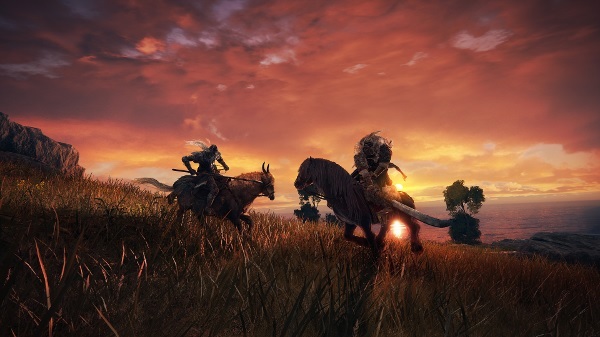
Other dark fantasy action RPGs by From Software have had intricate interconnected worlds before, but even those tended to leave you choosing between the critical path and a few supplementary diversions. In Elden Ring there are times when you feel like if you just point your character in a given direction and ride into the unknown, you’ll find an entirely new zone, or a new boss encounter, or an underground catacomb. In a more linear game, you might make a mental note of the mistakes you made on your way to – and during – the next compulsory boss blocking your progress. With Elden Ring, you’re not just learning from the critical path; you’re mapping out your deaths and discoveries. Sometimes quite literally – the incredible map in the game lets you add custom markers, and every time I die, I can add a skull icon right next to where I fell and dropped my runes. I don’t need to tell myself where my runes are (the game stamps its own unique symbol on the map for this) – the skull icon is my way of telling myself that I will die if I head into that area. After enough hours, more and more icons litter the map screen. More skull icons pointing out unfinished business I have with a boss, or diamond icons in areas where I can quickly make thousands of runes if I can survive in a particular area.

Elden Ring does present a critical path of sorts – many of the checkpoints offer a general direction for the player to go in if they want to make new discoveries. It’s a welcome inclusion that prevents players feeling totally lost; at the same time, you can choose to ignore them. The game is filled with loot and riches and chests that offer awesome gear and items, but some of the best things I’ve found in the gameworld have been the “map fragments” that reveal more detail in the player’s map – more new places to explore, with enough illustrated detail for a player to (hopefully) work out how to get there. After digging around I’ve found that I’m pretty much at the end of the core story (although there are still optional things to go back to) and my map is peppered with checkpoints, merchants, NPCs and more. I couldn’t possibly recall how I got around the map or the order of the bosses I defeated (although I imagine PSN’s trophy list would help) but this simply wouldn’t be possible in one of the earlier, more linear games.

Your new favourite fighting game

Elden Ring

When I played the Elden Ring beta last November I summarised my impressions with a hope that the open world could keep players busy if they’re not ready for the tougher battles. And so far, the full game is… well, it’s doing its best. There are still mandatory boss encounters that feel intimidating even when you think you can’t possibly be any more prepared, but you often have enough resources at your disposal to come up with potential solutions. The character I’m using has been levelled up in such a way that he has a high Strength stat, meaning that he performs well when given a slow but hard-hitting weapon. I’ve also pushed the Endurance stat up a lot so that he can carry a big shield and block plenty of attacks before there’s any risk of a “guard break” (each blocked attack costs stamina – which can be regenerated by lowering your shield – and at zero stamina the shield arm will fly back and the character will be vulnerable.) Consequently, when I’m in a battle I’m looking for opportunities where an enemy can’t do anything – when they’ve performed their own attack and have to return to a “neutral” position before their next action – and bringing out my slow attacks in these instances. This style of play brings to mind some of the fundamentals of the fighting game genre (Street Fighter, Tekken, Killer Instinct): in those games you’re always waiting for opportunities to capitalise on the bad decisions made by an opponent, and it’s no different in From Software’s action RPGs, except your opponent isn’t Ryu or Kazuya, but a horrific yeti creature several times your size, or an agile human enemy on horseback. Even so, the gameplan remains the same – be patient, wait for openings and strike back. And afterwards, your reward might simply be a chest item or a dropped weapon, but the real rewards are those scenes that show another new path opening up.

Elden Ring – a new standard

Earlier this month my Twitter feed would occasionally show a retweeted news item about Elden Ring that mentioned another broken sales record or a new milestone in units shifted and positive review scores, and that can only be a good thing. Elden Ring isn’t just setting the bar for any developer that chooses to put an open-world in their game: it’s throwing out over a decade of From Software’s own more restrictive game design and providing what is arguably a more accessible experience (compared to From’s other action RPGs, at least) through its open world. Yes, there are still roadblocks in the form of mandatory encounters, but you can go in a different direction and make progress in another way… eventually, that initial roadblock will be less intimidating. Developers have been trying to capture the success of From’s action RPGs for years – in the meantime, From have stepped into the crowded field of open-world gaming and set a new standard on their first try.

You can find out more about Elden Ring on Bandai Namco’s website.

Filed Under: Games Tagged With: elden ring, from sotware, pc, PS4, PS5, xbox one, xbox series

Persona 4 Arena Ultimax returns in 2022

10th December 2021 By Qazimod Leave a Comment

Persona 4 Arena Ultimax deserved better. Looking at it today, it feels like a late classic of the seventh-gen fighter library, at a time before we were blown away by newer Arc System Works titles such as Dragonball FighterZ. Gamers in Europe didn’t get to see Persona 4 Arena Ultimax reach their Xbox 360s and PS3s until November 2014 – about a year after the Xbox One and PS4 had launched.  Those who left it behind missed out: Ultimax followed up the original Persona 4 Arena in style, offering several new characters, “shadow” alternates of most characters that have tweaked movesets, another generous Story mode, the excellent Golden Arena mode, and a few other adjustments and balances across the game to make the experience balanced and satisfying.

The generosity of Persona 4 Arena Ultimax

Persona 4 Arena Ultimax

Even as someone who wasn’t playing competitively online as much as I used to, I still had a lot of fun with Ultimax – the Golden Arena alone devoured many spare evenings, as I’d fight through a gauntlet of matches and “level up” my chosen character so that they would stand a better chance against stronger foes later on. (In fact, my Xbox Live subscription lapsed and I still found enjoyment in Golden Arena, so the game definitely holds value for solo fighters as well as multiplayer fans.) It was one of the most generous fighting game upgrades seen during the seventh generation, released at a time when people were moving on from that generation. However, it seems that it may be getting a second chance.

A surprise announcement

During The Game Awards, Geoff Keighley’s round up of announcements, recognitions, and – let’s be honest – thinly-veiled advertisements, it was announced that Persona 4 Arena Ultimax would be released for PC, PS4 and Nintendo Switch on March 17th of next year. The announcement came from an animated Teddie (a key character in the Persona 4 games) and was accompanied with short snippets of gameplay footage and music from the game. However, this seems like nothing more than a confirmation at the moment – the announcement was around a minute long, and so there were no details of any additional features, netcode improvements, or anything aside from the intended platforms and the release date. I imagine that fans might look at the Steam release of Persona 4 Golden to get an idea of how the new release of Ultimax might be handled, but a fighting game brings added complexities surrounding netcode and matchmaking, so it will be interesting to see if the treatment of online play is done with the care and attention needed for a modern fighting game release.

Persona 4 Arena Ultimax – a second chance

Personally, I don’t play fighting games online as much as I used to – it’s hard to keep up with the discoveries of new tech, my internet connection isn’t the best for fighters, and I have a bunch of other games vying for my attention. However, I can certainly see myself picking up Persona 4 Arena Ultimax for a second time, if only to lose myself in the single-player content that’s on offer. At the moment the media shelves chez qazimod hold a mixture of games across multiple consoles and generations, but Persona 4 Arena and its sequel Ultimax are some of the only Xbox 360 games I’ve bothered to keep, because until this announcement the only way someone could play Ultimax was if they still had a 360 or PS3 and a copy of the game. More old games coming to PC can only be a good thing (although I’ll take re-releases for newer consoles as well), and hopefully the game will receive new fans once it re-emerges next year.

Persona 4 Arena Ultimax releases on PC, PS4 and Nintendo Switch on March 17th 2022.

Filed Under: Games Tagged With: Arc System Works, Atlus, games, Nintendo Switch, pc, Persona, persona 4 arena ultimax, PS4

Preview: Babylon’s Fall beta impressions

17th November 2021 By Qazimod Leave a Comment

Earlier this week I took part in the Babylon’s Fall beta that ran from November 15th to November 17th, giving me an opportunity to finally find out more about the nature of Platinum’s forthcoming action RPG. You may remember me talking about this game in my E3 2018 coverage, when it was first unveiled during Square Enix’s showcase. Since then, I haven’t seen a lot of information revealed about the game – we were treated to minor blog updates and a few images and gifs, but I don’t really feel like there was anything of substance to enjoy until Square Enix’s E3 2021 presentation, where they reminded us that the game still existed. I was still intrigued about the game in the years that passed, but I never felt like I was given enough information to really justify publishing any kind of “progress update” article on this site. Consequently, I was quite pleased to receive an invite to the recent Babylon’s Fall beta session – not least because it would finally give me a chance to understand what kind of gameplay Platinum would be going for, and whether or not it was even worth maintaining my interest in this title.

Beginning the Babylon’s Fall beta

Babylon's Fall beta

The experience I had with the missions in the Babylon’s Fall beta mainly reminded me of old 3D Phantasy Star games, but only if those missions were accessed via the kind of elaborate hub seen in some hunting games, or maybe certain F2P MMOs I tried many years ago. The hub here is known as the meeting area, and whilst it felt like a few parts of the meeting area were disabled for beta purposes, you were still able to buy and sell equipment at a vendor, visit a different character to see daily challenges (defeat 100 enemies, complete a quest using Quick Match, etc.), go and talk to someone who could change your character’s appearance, and find a chest which acts as storage for your character’s excess belongings. I had just set up my character and I didn’t exactly have currency to spend, so instead I found a billboard that I could interact with to start my first quest.

This is where the Phantasy Star comparison comes in. My memories of Phantasy Star Online: Blue Burst and Phantasy Star Portable 2 amount to recollections of time spent in walled arenas fending off waves of samey enemies – the Babylon’s Fall beta isn’t a massive improvement. You’ll step into an open area and then you’ll be locked in, as foes begin spawning in. You can attack with light and heavy swings (or bow shots, or whatever you’re using) to build up a meter, and then spend that meter casting magic projectiles (not unlike the magic seen in the original Nier.) The catch is that the magic attacks feel more effective than the regular weapons in terms of dealing damage, but you’re spending meter to use them. So I assume the intention is to alternate between building meter with your equipped weapons and casting magic to cause significant damage. It’s a nice idea in theory and it encourages a certain “rhythm” when playing, but (like Phantasy Star) you have to work through a lot of spawning enemies before you’re allowed to move forward. Consequently, what begins as a fun exercise can lead to your patience waning.

Sponge life

If the respawning enemies were the only disappointing aspect of the combat in the Babylon’s Fall beta, it might still be excused – after all, this is a Platinum game, so you’d expect some exciting combat. Unfortunately, I was kind of disappointed when it came to the moment-to-moment action as well. I found that health bars of regular enemies were long enough to make them feel like damage sponges – not only that, but a lot of enemies had “super armour” where their own animations couldn’t be interrupted with your attacks. I feel like this is another misstep in the general experience: if they were damage sponges that could be interrupted more, the player’s attacks would feel satisfying… and if they had super armour but could be dispatched quickly, they’d be less of a nuisance. However, the combination of these two things leads to a slightly dull experience, and this feeling is exacerbated by the amount of new enemy spawns that arrive before you’re allowed to move on.

Babylon’s Fall beta – room for change

Babylon's Fall beta

Things are made worse when you’re playing a beta and you can’t find enough available players to fill a party – leaving you slogging away on your own – so the game really wants you to go in with a full team. Completing a mission rewards you with new gear that can increase the stats and level of your character, allowing you to take on harder missions. However, if missions tuned for characters at the “intended” level are this much of an ordeal, I can’t imagine the core combat loop becoming that much more satisfying. Hopefully I’m proven wrong, but we’ll only know after more tuning and tweaking is done by the developers.

Find out more about Babylon’s Fall at Square Enix’s website

Filed Under: Games Tagged With: Babylon's Fall, games, platinum games, PS4, PS5, square enix

Preview: Elden Ring beta impressions

14th November 2021 By Qazimod Leave a Comment

Over the weekend I was fortunate enough to take part in the Elden Ring beta and take a look at From Software‘s latest dark fantasy action RPG. I’ve always had mixed experiences with their other games, but there have been enough enjoyable experiences to keep me interested in whatever they do next. Elden Ring will be released on last-gen and current-gen consoles – as well as PC – in 2022, and I don’t doubt that it will devour hundreds of hours of fans’ lives as they pick apart the world and face whatever challenges await them. I don’t own a current-gen console yet, and my PC will be able to run the game in theory, but if I can enjoy it on a last-gen platform like the PS4 I was using this weekend, that will be more than enough. What follows is a short account of my experiences with the Elden Ring beta (during the hours when I was able to play) – I’ll try not to use too many references to other From games so that readers don’t get too lost, but stop reading now if you want to go into the final game blind.

Guidance in the Elden Ring beta

Elden Ring beta

As you start the Elden Ring beta, your journey as the “Tarnished” begins quite abruptly. You configure your options and pick your player class (classes are essentially initial “character builds” with stat points distributed between various attributes – although you’ll gain more points to spend as you level up throughout the game), and then you’re dropped into the first environment and discover your first site of grace – essentially a checkpoint that you can activate to replenish health, level up (when possible) and manage certain aspects of your character’s belongings. The first location you’re in is a well-lit cave area, and after a few run-ins with enemies, you open the door to Limgrave and get your first chance to explore part of the game’s striking open world. It’s here where you discover a site of grace that reveals a “grace guidance” system – golden rays that flow from a site of grace and give a vague hint of where players might want to direct themselves. It’s a nice way of giving players a gentle nudge in a particular direction, but since the Elden Ring beta was broken up into limited time slots I imagine a lot of players wanted to find their own paths.

The open world provided in the Elden Ring beta was more of a chunk of the open world than a full experience – players eventually found themselves rubbing up against impassable walls – but there was still plenty to see and do. A map is available from the outset and highlights various points of interest. Furthermore, players are able to place markers on the map that act as custom waypoints. When your character dies in Elden Ring, they have the option to respawn at the last site of grace that the player visited. The experience points gained from battle are lost if not spent, but can be retrieved if a player navigates from the site of grace to the location where they died. Not only does this emphasise the importance of studying the map for safe routes between a site of grace and a player’s unspent experience, but it also encourages players to know their surroundings. I would often pre-emptively create custom markers close to where I wanted to go, if I could see various enemies patrolling and didn’t rate my chances of survival. At least this way, I had a record of where I was trying to go, and I prevented myself from blindly wandering about the place.

Trusty steed

Elden Ring beta

As you explore the world, you can run into enemies hanging out on their own, “patrols” of enemies that need to be approached methodically, and larger enemies that feel more like mini-bosses. The basics of combat have you equipping armour, weapons and shields, attacking and blocking as necessary, or manoeuvring and rolling to create space for your character. The class I used was an “Enchanted Knight” and had limited magic projectiles in addition to their armour, shield and sword. The resource management and the large groups of enemies can lead to overwhelming situations, but the open world allows players to plan their attacks more carefully, whether that means avoiding enemies entirely or taking them by surprise. Players also have access to a “spectral steed”, which is essentially a horse that can be summoned to allow greater mobility around the world. Sometimes this is useful when you just want to get to a custom marker you’ve placed, but it also helps players who want to make a quick retreat. Whether you’re retreating or just covering ground, there are various items that can be discovered, such as upgrade materials or things that can be traded. In a way, I can say that I rarely felt like my time spent with the Elden Ring beta was “wasted” – even when I wasn’t figuring out a particular enemy encounter, I was still finding new areas as I explored the map, or picking up things that I found on the ground.

One aspect of the open world that I find most interesting is the presence of various caves and catacombs. Sprinkled around the environment are entrances where you can head underground and explore what’s essentially a self-contained dungeon – one where you can navigate your way around, deal with enemy encounters, maybe find items and ultimately face a boss for a chance to grab more rewards. I found that the range of challenge presented on the plains of the open world could be overwhelming at times – maybe I’d just be dealing with a few human enemies, but then I’d head in a different direction and run into a dragon. The caves and catacombs, on the other hand, can be treated as something to be taken in isolation. They’re tight and satisfying challenges and I hope that completing more catacomb experiences will allow players to explore the open world with more confidence. When the full game is released and those impassable walls fall, I’m already considering the possibility of seeking out more of these underground entrances and building my character through these experiences.

The Elden Ring beta – a positive start

I think that if you’ve never been too keen on From’s games because of their reputation for challenge, it might be worth considering Elden Ring. No matter what I was struggling to do in one area, it wasn’t long before I found myself being distracted by another part of the map. The map and custom markers prevent players from being completely on their own (and as mentioned, they’re a great “mental checkpoint” if you don’t rate your chances of surviving an area), and there will surely be a healthy community for co-op multiplayer when the full game is out. If the open world is dense enough to keep players busy with manageable activities as they build up their characters in preparation for more formidable ordeals, it could be a great experience.

The Elden Ring beta was played on PS4 for this article – the full game will be released on February 25th 2021 for PS4, PS5, Xbox One, Xbox Series and PC. More information can be found at Bandai Namco’s website.

Filed Under: Games Tagged With: elden ring, From Software, games, pc, PS4, xbox one

NEO: TWEWY and getting what you want

3rd August 2021 By Qazimod Leave a Comment

I’ve been playing a lot of NEO: The World Ends With You lately. Officially released on 27th July for Nintendo Switch and PS4, it’s the sequel to the Nintendo DS game from the late 00s; a game which threw away the JRPG rulebook to deliver one of the more intriguing entries for the genre. With a modern urban backdrop and active battles that used touchscreen gestures and directional inputs, it stood out as a contrast from the typical template of turn-based politeness and medieval fantasy. It was far from perfect – some people found that the battles were a mess, and some of the activities outside of battle were kind of forgettable – but it made such a strong impression that fans welcomed the recent arrival of NEO: TWEWY.

NEO: TWEWY – player synergy

NEO: TWEWY

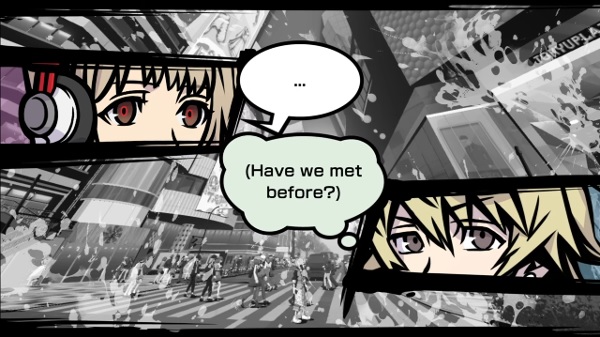
The game follows a group of youths embroiled in a dangerous “Reaper’s Game” where they must fight battles, solve riddles and overcome rival groups so that they avoid facing “erasure.” In gameplay, this sees the player moving around the streets of Shibuya, talking to NPCs, engaging in minigames and fighting hostile creatures known as Noise. It’s pretty standard RPG fare, but a few smart decisions elevate NEO: TWEWY above the competition. For instance, battles against Noise are often player-instigated unless the story demands that a battle takes place. This means that you can grind as much or as little as you like… although typically you will need to maintain a strong party for when you’re forced into combat.  Furthermore, a lot of time can be spent customising gear for the best team synergy – every battle ability in the game exists as a “pin” that can be equipped on your party members, and each pin’s ability is mapped to a controller button. These abilities have independent cooldowns to maintain the sense of a turn-based system, so it’s up to the player to find a working combination of offence and support, or to equip a variety of elemental attacks. Further stat tweaks can be made by purchasing different “threads” (essentially armour and accessories) for your party, or going to diners and restaurants and ordering food that offers stat boosts.

Feel the Groove

When you’re in a fair fight, this customisation sees NEO: TWEWY at its best. Elemental weaknesses and bonus effects provide more agonising over pin configurations, and the “pass the puck” system of the original (where you would be encouraged to switch between directional commands for one character and touch commands for the other) is substituted for a “drop the beat” mechanic, where you’re given a small window of time to start using a different character’s ability. Do this within that window, and you’ll build up your Groove – and when your Groove is at certain thresholds, you can unleash a super move. It encourages the player to make sure their other pins aren’t in cooldown at the wrong time, and adds just enough depth to ease any fears that this is dumbed down from the DS game’s equivalent system. Certainly, the later missions and bosses demand that you’re paying attention to attack patterns whilst also managing your Groove (and if you haven’t dropped the beat for a while, the Groove will begin to decrease.) Meanwhile, encounters with regular enemies can start and end pretty quickly if you know what you’re doing – movement around each battle arena is much smoother than the awkward stylus dragging in the first game, and it’s satisfying to string together combos. NEO has even retained the original game’s ability to “level down”, sacrificing character levels for increased pin drops. This is particularly helpful if you feel like you could have more options open to you in combat.

Outside of battles you can expect to roam the streets gathering information from NPCs, “scanning” zones to read people’s thoughts and gain extra information, performing a thumbstick-twiddling minigame to jog memories of key characters, or sometimes “diving” into characters who have been influenced by Noise (which leads to a forced battle, or series of battles.) There’s enough variety to stop things getting stale, and even outside of the minigames and battles you’ll want to keep gaining experience and earning money for food and gear. Besides, these minigames definitely feel like an improvement over some of the activities in the DS game (you’ll finish the main story and will have never been asked to play “Reaper Creeper” – a minigame in the original where you slowly nudged objects with your mind in order to fool people into believing in spiritual intervention – so that’s reason enough to recommend NEO: TWEWY.)

NEO: TWEWY – a cautious recommendation

NEO: TWEWY

Generally there’s enough in NEO: TWEWY to keep fans happy – the things that worked in the first game are left intact, whilst there are enough new elements to stop this feeling like a reskin. Somehow it has retained its hip stylings (although it may look a bit silly in a few years) and wraps a satisfying blend of combat and investigation in a catchy soundtrack and vibrant backdrop. It’s pretty much exactly what I hoping for in a new TWEWY game… but sometimes what I think I want isn’t always what’s best for the game. Those battles forced upon players by the story can occasionally leave you feeling a bit underpowered if you’ve been running to the next plot-critical location without bothering to fight anything – sometimes you’ll be given objectives before a route is unlocked (defeat Noise in a chain of three battles; defeat Noise whilst wearing threads of a certain brand), which can help keep your skills sharp… but it’s easy to run into a boss (or miniboss) encounter and feel overwhelmed. If anything, I would have preferred more gating of progress so that the pace was dictated more by the game and the player was forced to improve their party – even with the compulsory battles that are there, you’re still expected to do a lot of the work yourself.

Happily, these moments are fairly short-lived – I’ve caught myself ranting on Twitter about a particular encounter one day, and then completing it shortly after… but it’s still not a feeling you want for an extended length of time. I published this before the credits rolled, but it turns out I was at the final encounter anyway, and so a lot of my initial observations remain true. (That final encounter turned out to be another moment where the player can feel underpowered, but given that my rematch after one grinding diversion was successful, I don’t think I was that underpowered.) Beyond this, a post-game bonus chapter offers an amusing side story and a few returning boss battles, but progress is a lot smoother during this additional chapter. If you liked the original game, you should absolutely pick up NEO: TWEWY – and if you missed the DS title, there’s a demo of NEO: TWEWY available via your console’s storefront which should give you a small idea of what to expect.

Neo The World Ends With You is out now for PS4 and Switch – you can find our news article about the game’s announcement here.

Filed Under: Games, Reviews Tagged With: games, PS4, Switch, The World Ends With You, TWEWY

NEO: The World Ends With You revealed

23rd November 2020 By Qazimod 2 Comments

Despite covering a number of JRPGs on this site, I hadn’t really considered it a genre that I really got into – however, The World Ends With You was one of the early exceptions. A fellow DS owner had recommended it to me, and at first I was sceptical because the concepts and ideas described in the game seemed so unfamiliar, but overall I think that it was worth sticking with in the end. The game used the typical JRPG format of “dialogue sequences broken up by turn-based battles” (well, sort of turn-based  – you moved around freely but were restricted by cooldowns) and yet it seemed desperate to reinvent the genre’s conventions, with input sequences and touch gestures replacing a typical command menu during battle. It presented a modern urban backdrop that was a contrast to the medieval fantasy tropes so often used in the genre, and the music was filled with catchy pop and hip-hop sounds rather than the grand orchestral score one might expect from an RPG. Even today, the only RPGs with comparable aesthetics might be things like SMT or Yakuza. It was far from flawless – the touch gestures made combat a bit scrappy, certain chapters got rather samey and not everyone thought that the characters were that great – but it wasn’t afraid to break the mould, and after several ports and updates, fans are finally getting a new game in the form of NEO: The World Ends With You.

NEO: The World Ends With You – the teaser

NEO: The World Ends With You

On Tuesday 17th November, a PR Twitter account for Square Enix’s primary development HQ tweeted the words “TIMELIMIT WITHIN 7DAYS” and a link to a teaser page with a countdown timer. The style of the music playing on that teaser page had a similar vibe to the classic TWEWY tunes, and the specific decision to create a seven-day timer seemed like a reference to the “Reaper’s Game” that was central to the storyline of the DS original. It wasn’t long before the questions changed; people didn’t need to know what game was being teased – instead, they were wondering what TWEWY-related thing might be revealed on the page. (Personally I kept my expectations low, but I was kind of hoping for a new soundtrack release because I don’t have one…) Today, we have our answer – more than a decade after the DS game launched, it’s getting its first proper sequel in the form of NEO: The World Ends With You.

New faces

NEO: The World Ends With You

Well, sort of. Despite being in a similar world and having a similar premise, NEO: TWEWY follows a brand new cast of characters who are taking on the “Reaper’s Game”; the deadly challenge established in the original game which Neku and co. experienced. I remember when people even questioned how a sequel could work (the original was wrapped up quite neatly), and I always had the feeling that a new game needn’t follow the same characters because there’s so much untapped potential in that “Reaper’s Game” premise – supposedly it’s something that many characters in the game were partaking in, so there was always an opportunity to show a fresh perspective. That said, the trailer does show off some returning faces such as Kariya and Minamimoto, so their return will be welcomed.

NEO: The World Ends With You – coming next year

The battle gameplay now takes place in 3D environments but on a “single screen”, with no sign of the QTE-style commands that Shiki, Joshua and Beat had to use in the DS game, so I imagine that most of the commands may end up being motion-based, but that’s just my speculation. It’ll be interesting to find out how (or if) allies work together in battle, since there was a lot of battle footage where you could see multiple allies facing the enemy (as opposed to the two partners of the original.) Meanwhile, the aesthetic survives the transition to 3D, with plenty of bold colours and swinging camera motions making the battles feel more alive than ever. The trailer ends with a “Summer 2021” date and logos for the PS4 and Nintendo Switch, so it looks like I won’t be retiring Sony’s last-gen machine any time soon…

You can find the official page for the game here. While you wait for its release, why not track down the original The World Ends With You for Nintendo DS, or try the Final Remix port on Nintendo Switch?

Filed Under: Games Tagged With: games, PS4, Switch, The World Ends With You, TWEWY

Delivering street justice like a dragon

10th November 2020 By Qazimod Leave a Comment

Everything feels familiar at first. There are the similar exploration and interaction controls, there’s the urban backdrop, and the wealth of stats and sidequests – I’m definitely playing a Yakuza game. I’ll admit that I kind of dropped off the series after a while; I think after the first couple I fell behind and didn’t stand a chance of catching up, but the newest instalment – Yakuza: Like A Dragon – seemed interesting. Even after such a long break, however, everything feels familiar. That is until trouble begins to brew and the only way to settle things is with a classic Yakuza brawl. Or not. The headline feature of Like A Dragon’s combat arguably comes from the new format which adopts a turn-based approach and a party system, much like classic and modern RPGs, and it was the feature that interested me enough to want to get back into the series again.

I don’t know if we’ll end up covering this game in the form of a full review, because traditionally Yakuza games are bursting with content, sidequests and other features – it could be weeks before I’m done. However, the combat deserves a mention, hence this article. To be honest, when I first found out about this new turn-based approach I wasn’t even that surprised – the early games that I did try already felt like they force the player to wait and respond during battle. In the PS2 games, simply button-bashing would quickly land you in trouble; it was wiser to block, let your opponent attack and wait for an appropriate opening when you were able to respond with your own moves. So before the game was even in my hands I had allowed my mind to make sense of this new system.

Like A Dragon’s Meta-protagonist

Like A Dragon - Ichi

Part of the framing for the battles reveals that our hero, Ichiban Kasuga, seems himself as a hero akin to the protagonists of the videogames he played growing up. As a result, when you enter a classic Yakuza random encounter, the allies and enemies visibly transform into whatever Ichiban imagines them to be in his mind. It’s all satisfyingly meta – videogames are a pleasant escape and allow players to pretend to embark on an epic journey, and Like A Dragon sees Ichiban referring to his street justice as an ongoing “quest”, and frequently making comparisons between his predicaments and the plights that faced the heroes of his favourite videogames. Better still, it means that he can actually talk about levelling up without it sounding out of place – because it’s what’s happening in his head and what’s happening as a result of the player’s actions.

Risky beatdowns

The battles themselves are snappy and satisfying – like modern Persona games, they are initiated quickly and smoothly, and if your tactics are on point then they don’t need to last more than a handful of seconds (unless you’re facing a boss character, or entering a new zone with levelled-up encounters.) To take some examples of the fundamental battle mechanics that are simple yet satisfying – Like A Dragon lets you guard enemy attacks to reduce the damage you take, but it also offers a “perfect guard” window if you guard just as an enemy’s attack connects with your party member. Perfect guards reduce damage further and help prevent things like knockdowns, and so they keep you engaged even in a turn-based format, and encourage you to learn the timings and animations of attacks. Similarly, the opportunities available after an enemy is knocked down encourage quick decision making – enemies can take time standing up from a blow that knocks them to the ground, and if another party member executes a follow-up attack whilst an opponent is still “knocked down”, they take bonus damage. It’s an interesting way to invite risk-taking – you may have a healer in your party and you’re waiting for their turn to come around so that some life can be recovered… but if you end up knocking an enemy down, it might be better to spend their turn on a follow-up attack instead.

Like A Dragon and other battle formats

Like A Dragon - Battle

Other traditional staples of RPG battles introduce themselves as the game continues – available special actions eventually include buffs and nerfs for attack and speed, status effects similar to bleed, poison or charm, gear upgrades and material exchange, enemies calling in reinforcements and prolonging a battle – but I keep returning to my first thought – Like A Dragon still feels like a Yakuza game, and so there’s no need for people to be penning angry letters about how the series has been ruined. As mentioned in my opening paragraph, there was always a bit of a turn-based rhythm to combat in the early games, and other titles in the series have played with stats, levels and allies – this is just being a little more honest about everything. And even though this may look like a typical Yakuza battle format in RPG dressing, the combat system is still worthy of praise alongside the systems used in other RPGs I’ve played this year – I feel like it finds a happier medium between real-time response and turn-based action than something like Final Fantasy VII Remake, although Remake has more polish elsewhere. Equally, Like A Dragon’s battle system sits well next to Persona 5’s own system of weakness exploitation and follow-ups, but both suffer from a few moments where the pacing dips; in Like A Dragon’s case, this could come from a situation where you’re underlevelled, or perhaps where a particular story thread is overstaying its welcome and you’re waiting for something more interesting to happen. Even so, these moments aren’t ruinous, and Like A Dragon’s map is fairly quick to open up – so it’s easy to find distractions if you’re not interested in chipping away at the main quest.

I haven’t finished the game just yet, and I’m probably pretty far away from doing that, but I don’t think the combat is ruinous at all, and I’d love to see it either in future mainline games or in their own spin-offs. (Of course, there’s always a chance that this game could still throw a massive difficulty spike at me, but that would be more of a balancing issue rather than anything problematic with the battle system itself.) As ever, let me know what you think of Yakuza: Like A Dragon and its combat below.

Yakuza: Like A Dragon is out now for eighth-gen systems and Xbox Series platforms; a PS5 version is reportedly coming in 2021.

Filed Under: Games Tagged With: like a dragon, pc, PS4, PS5, Ryu Ga Gotoku Studio, Sega, xbox one, Xbox Series S, Xbox Series X, Yakuza, yakuza: like a dragon

FFVII Remake – late impressions

9th May 2020 By Qazimod 1 Comment

They didn’t need to do this. It’s not a criticism of the product, but even after the credits rolled I couldn’t help thinking that this was above and beyond what certain Final Fantasy VII fans may have wanted from a “remake”. I would have settled for a few more polygons on the character models, a better display resolution and less of the soundtrack’s MIDI screeching… however, FFVII Remake represents an impressive amount of work, with full environments explored in third-person, numerous sidequests, expanded content, an entirely new battle system and more besides. It’s a surreal feeling when a game is tapping into your nostalgic memories from decades ago and – at the same time – playing in a way that can’t be compared to the older game. Structurally, the game isn’t too dissimilar; the world may be big but you’re still going to specific locations in a specific order (as indicated here with some helpful waypoints)… however, the original was every bit as linear. I played the 1997 game again in late February and there really weren’t many opportunities to deviate from the defined path, so this isn’t a bad thing. Besides, it’s a path worth taking – the environments look excellent, and when you combine that with some great character models it pushes all of the right nostalgia buttons. However, it’s the overhauled gameplay that may prove to be more divisive.

FFVII Remake – throwing down

FFVII Remake

Aside from your minigames, fetch quests and light puzzling, you’ll be spending a lot of time fighting. Characters in your party have default attacks that can be mashed out for easy combos but they can build up ATB to use other skills and spells. A stagger gauge builds with prolonged attacks on a single enemy, and when it’s full the party can inflict bonus damage for a limited amount of time. Meanwhile, status ailments return, and elemental weaknesses play a big part in defeating certain enemies. The “divisive” bit comes from the feeling that elemental weaknesses feel more important here… and in a game where all of your special abilities are governed by how many materia orbs you can slot in your gear, it’s easy to run into a battle with the wrong elements. In practice, it’s not too bad – one orb ability lets you “Assess” an enemy’s strengths and weaknesses, and once you’ve done this you can go in with the correct elements. I do have some other minor gripes about the combat – some arenas feel too small and fiddly, and the realtime moments can make it hard to keep an eye on what everyone is doing, but most sticking points were overcome after only a few attempts. On a more positive note, the stagger gauge is a great addition, and it’s fun to devise optimal combinations of moves between characters in order to quickly stagger the more problematic enemies.

Tonal expectations

I won’t speak about the story too much, but I will talk about the tone. After various spin-offs and associated media, it was easy to think that people would lose sight of FFVII’s beautifully jumbled mood, but there is so much that FFVII Remake gets right with regard to its tone. Take the Turks; they’re slick, cool and professional, but their presence also comes with an air of absurdity and comedic relief in certain scenes, and you know that they’ve nailed the Turks in this game as soon as you see Rude get his shades cracked by an attack, before throwing them away and pulling out an identical pair from his pocket. The zenith of the game’s tonal victories is seen in the Honey Bee Inn, where instead of watering down the notion of cross-dressing humour in today’s climate, they fully embrace Cloud’s transformation in a positive way that genuinely made me smile – and will probably end up being one of my standout gaming highlights of 2020. Everyone from the main party members to various side-characters behaves almost exactly how you want them to in this game, and even random bros such as Johnny end up becoming likeable in their own silly way.

FFVII Remake – a promising entry

FFVII Remake

Most importantly, this was a gameworld I honestly enjoyed coming back to, because I appreciated the characters, locations and the tone so much. I’ll admit that some of the sidequests were kind of forgettable, and the infamous Mysterious/Enigmatic Spectres feel like the dullest Arbiters of Fate around… but the combat and the events did enough to keep me coming back. I will challenge the notion that the remake needed to move away from the old combat style (Persona proves that classic turn-based combat is still relevant), but I’m open to new gameplay styles and appreciate what they went for here. (As a disclaimer, I played this on the Normal Difficulty – there is a “Classic” difficulty where you only need to choose ATB actions, but sometimes this feels too much like you’re letting the game play itself.) So that’s FFVII Remake – my own final play time was just under 37 hours so there’s plenty of RPG for your money, and I’m keen to see what the future of FFVII holds. Even if the rest of the story is never recreated, I feel like FFVII Remake has covered enough notable events to be a truly engaging experience in itself. They didn’t need to do this, but I welcome it all the same.

FFVII Remake is available now for PS4. You can find out more about the game here.

Filed Under: Games, Reviews Tagged With: FFVII, final fantasy, games, PS4, square enix

  • 1
  • 2
  • 3
  • …
  • 7
  • Next Page »

Get Social

  • Facebook
  • Instagram
  • LinkedIn
  • Medium
  • Pinterest
  • RSS
  • Twitter
  • YouTube

Top Posts & Pages

  • You can now enjoy Ed for SFV in new DLC
  • The Geeky Chef Cook Books Review
  • Victor Frankenstein 'Undead Monsters' TV Advert
  • New Halo Vapour Co. Shortfill Vape Liquid Reviews
  • The Best Ever Neil Young Covers
  • Sekiro finale impressions (spoilers)
  • SFV September update out now
  • Indivisible (Lab Zero Games) review
  • Garou: Mark of the Wolves review (PS4)
  • Affordable New Trust GXT 488 Forze Headset

Ads

Join Us…

  • Facebook
  • Instagram
  • LinkedIn
  • Medium
  • Pinterest
  • RSS
  • Twitter
  • YouTube


Privacy Policy

Cookie Policy

© 2026 Hot Mod Media · Design & Marketing TWOTW

Disposable Media · FPSPrestige · OnlineRaceDriver · The Guitar List · Rescars · Rescogs

We use cookies to ensure that we give you the best experience on our website. If you continue to use this site we will assume that you are happy with it.