Disposable Media

Art, Music, Games, Life

  • Art And Literature
    • Comics
  • Music
  • TV & Film
  • Games
    • Tabletop Games
  • Technology
  • Life
  • Events
  • Magazine Downloads
You are here: Home / Archives for Grant Rencourt

Sicario: a review

14th January 2016 By Grant Rencourt Leave a Comment

How do you fight an un-winnable war? Surely it’s a bit like that age old puzzler that Iain Banks raised in his novel Walking on Glass. In the book, he posed the question: ‘What happens when an unstoppable force meets an immoveable object?’. The answer he gave was that the unstoppable object stops and the immovable object moves.

In Sicario (a word meaning ‘hitman’ in Spanish), the unstoppable force takes the form of the Mexican drug cartels – an affiliation of ruthless gangsters who are directly responsible for the continually escalating violence and murder in an effort to protect their lucrative trade and ensure a steady supply across the border to the “20% of Americans who consume drugs daily”.

Sicario Final Poster 480w un
However, the very fact that the appalling violence that taints Mexican streets on a near daily basis is now spilling across the border into the good old US of A is what compels the formation of an elite task force in an effort to combat this disturbing trend. Matt Graver (Josh Brolin), who heads up the operation, is responsible for recruiting agents to this task force which results in an idealistic FBI agent called Kate Macer (Emily Blunt) being brought to his attention.

Sicario
The reason this occurs is outlined as the movie opens, where we are given an intimate insight into the nature of the operations that Kate performs with her FBI ‘clean up’ squad as they carry out an investigation of a house near the Mexican border which is suspected to be related to cartel activity. A short time after this tense encounter, Kate is introduced to Matt Graver and asked if she wants to make a real difference to this bloody, never-ending drug war by joining the team on a voluntary basis.

Emily Blunt in Sicario
One of the early missions she is asked to act as an observer on brings her into contact with a shadowy figure called Alejandro (Benicio Del Toro) who is terse and non-committal when questioned by Kate as to his role in the operation. However, this is far from her only concern as during the team’s first operation to escort a key Mexican prisoner across the US border, a tense stand-off arises at the border point which not only results in bloodshed but also causes Kate to question what exactly the group is trying to achieve. Their seemingly ‘carte blanche’ violent approach to dealing with any opposition to their plans results in Kate furiously confronting Matt Graver about the group’s true objectives.
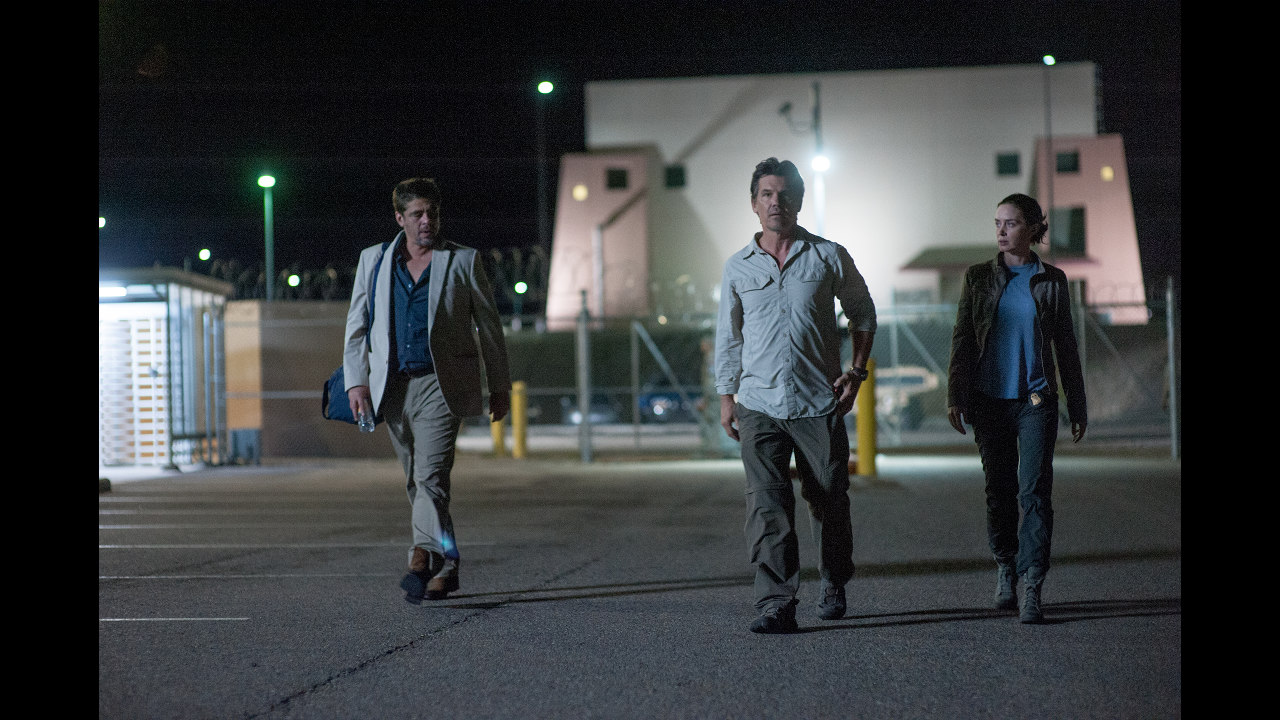
Benicio Del Toro, Josh Brolin and Emily Blunt in Sicario
Sicario is very much a study in morality, justice and vengeance. It is an elegant character portrayal of two key opposing figures. Kate represents a sense of ordered morality and justice – someone who is willing to follow due procedure and legal channels as much as possible. However, she becomes troubled and conflicted due to what she experiences during the course of the movie while part of this dubious operation she volunteered for.

Benicio Del Toro in Sicario
On the opposite side of the chess board, sits the mysterious Alejandro, whose true role and motives are revealed as the film progresses. His world is very simple: he is willing to work for the US goverment because it gives him license to hunt down his enemies and exact revenge. Kate’s ordered world is thrown into chaos as she tries to comprehend how a government agency could recruit such a shadowy, morally dubious individual.

To the audience, it probably makes a lot of sense but to Kate it represents getting into bed with the devil. Matt Graver asks her the question: how do you expect to win this war using the same weak, bureaucratic methods for years on end? They’re ineffective, he argues. To bring the devil to his knees, you not only have to know his methods intimately, but ultimately be prepared to use them against him.
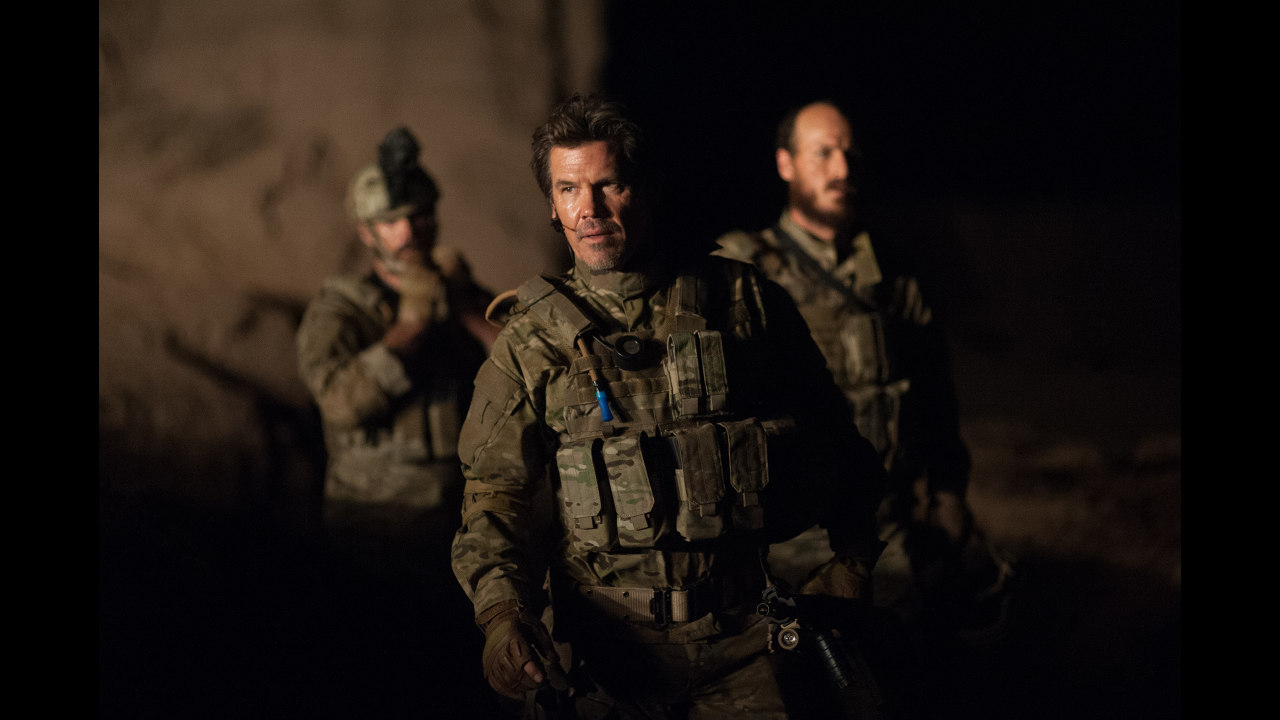
Sicario 06
Sicario is a tense thriller, meticulously shot and laden with stark, disturbing imagery. What stops it from being a movie that is too difficult to endure are some truly outstanding performances. Del Toro steals the show again as a man who can say more with one slightly raised eyebrow than several other so-called A-list actors can manage with a mountain of dialogue.

Emily Blunt at first looks like someone completely miscast in such a traditionally masculine role but it is to her credit that she not only makes the role believable but completely owns it as well. Clearly, the writers and director were trying to subvert a well-defined stereotype and it is because Emily Blunt is such a skilled and capable actress that she manages to do this admirably and convincingly.

Credit should also be given to the supporting cast, especially Daniel Kaluuya who plays Kate’s partner Reggie Wayne. He’s a mistrusting but loyal friend to Kate who accompanies her as she is drawn further and further into this murky and dangerous world.


This is a significant movie in many ways as it asks some important questions not only about human nature but also government motives and methods in fighting such a brutal, complex and seemingly never-ending drug war.  More importantly, it is prepared to ask difficult questions about what drives us and makes us human. Is it our sense of morality, our sense of right and wrong or is it something deeper, something that is at the core of each and every one of us…?

Filed Under: TV & Film Tagged With: Benicio Del Toro, Denis Villeneuve, Emily Blunt, Jon Bernthal, Josh Brolin, Sicario

David Bowie: Citizen Extraordinaire

12th January 2016 By Grant Rencourt Leave a Comment

Every so often, people are born who create a wave which ripples through the creative world, crossing generations in the process. David Bowie was one such man; a crazy, creative genius who had the talent and foresight to translate the abstract ideas in his head into real, theatrical performances and movements, changing the face of music and popular culture in the process.

Bowie was an innovator and a risk taker at a time when Britain was still coy and conservative, struggling to create a real post war identity for itself both in terms of popular culture and society at large. Bowie’s rise to prominence in the early 1970’s coincided with a time of hardship, national depression and daily struggle. For many people, David Bowie’s brave attempts to subvert traditional ideas of gender and sexual identity were a genuine light at the end of a very dark tunnel, a tunnel where the train of cultural progress had ground to a stuttering halt some time ago.

Of course, being disruptive and challenging in this way also drew a lot of savage criticism. Many deeply conservative commentators mocked what they saw as his completely OTT effeminate characteristics. He was not a man and couldn’t be further from traditional masculinity if he tried. But many spectacularly missed the point of what Bowie was aiming for. He was an actor playing a role, as much as he was a musician inhabiting the stage. He created personas like Ziggy Stardust to prove that it wasn’t about him (David Bowie) being a rock n’ roll star at all. After all, he sings:

Ziggy played guitar
With Weird and Gilly,
And the spiders from Mars

The persona of Ziggy was carried along by Bowie’s creative vision and when that vision no longer served a purpose he symbolically “killed” him off in a mock assassination, leaving him free to create another musical persona to give to the people.

Soon, however, Bowie became the persona; the musician, the artist, the rock n roll star. By the mid 1970’s Bowie had become established enough to feel comfortable in exploring who he really was in this newly inherited role – determined to be free of the damaging affects of his drug and alcohol use. This famous Berlin period coincided with some of the greatest works he produced: resulting in the albums Low, Heroes and Lodger. All of these albums are highly regarded by both fans and music critics alike. His association with the city of Berlin also had the result of raising its artistic profile, and this reputation remains firmly intact to this day. Berlin was always a culturally rich city but sometimes it takes a conjunction of events and the ripples of a certain time and place to enhance the perception of what a city really is.

Much has been written in detail about Bowie’s music and I don’t want to dwell too much on that, except to say that it is very rare that an artist has the creative intelligence and foresight to not only stay relevant culturally but also stay ahead of the curve in many ways. On social media, after his death, many contemporary artists have come out to say how much listening to Bowie in their formative years influenced them as musicians and inspired them to dedicate themselves to music as a career and a life. This is unsurprising really as Bowie had that strong persona which resulted in him being portrayed as more than just a musician, but, as I have alluded to, an artist, a cultural signifier, a movement in himself. He was a well read and highly intelligent man who took a lot of what he consumed and disseminated it throughout his work, often in a challenging and provocative manner, especially during the first half of his career. Later on, as he matured and aged, so did his music, it became more reflective, more personal and introspective. Yet he was still a keen student and follower of contemporary trends in both music and art. He applied his unique, chameleon like gifts to make sure his music sounded completely grounded in the zeitgeist; never dated and most importantly of all, never fake.

Bowie has spoken of certain periods of his career as being less “inspiring” than others. In particular, he has referred to the new romantic sounds of the early to mid 80s as one of his less favourite times as an artist. And yet, listening to works such as Modern Love and Let’s Dance from this period reminds me that, despite his own misgivings, these are still great songs. And it is a credit to his skill as an artist that even his bad works are still on a level which is higher than a lot of his contemporaries.

David Bowie’s final gift to the world was the album Blackstar. An impressive mish-mash of different musical styles from jazz to funk and traditional pop, laden with rich, dark and highly portentous lyrics pointing at his own acceptance of the end that was drawing ever nearer. Listening to the album is a difficult experience but, like a lot of his work, the more time you give it the more it reveals itself to you.

David Bowie will be remembered as a Citizen Extraordinaire – one of those one in a million people who are born to do great things, in his case challenge the tired pop culture establishment by rewriting the rule book, then throwing it away and doing his own unique thing. Time and time again we watched as he tried to progress and develop his talent, break down the norms and create something new. While he didn’t always succeed as an artist he left the world with a valuable gift; namely the ability to see that anything was possible and, if it was possible, it was worth trying.

Filed Under: Life, Music Tagged With: David Bowie, Spiders from Mars, Ziggy Stardust

The Man in the High Castle – review

12th January 2016 By Grant Rencourt Leave a Comment

Have you ever wondered what life would be like if things were different? Of course you have. Everyone wonders at some point what their life would be like if they hadn’t stopped at that service station on the M4 on a wet Tuesday in February and spent 30 minutes getting their brains reduced to a pile of boredom induced sludge by an appliance salesman called Dave from Swindon.

Or what about mysterious encounters, lost opportunities in love and work? Many of us dwell on our past mistakes and the road less traveled. It’s a natural and very human thing to do.

The Road less traveled

But what happens when these personal ‘What ifs?’ become global in scale? What happens when we apply them to history and the big turning points of world events? Well, what we get is a work like ‘The Man in the High Castle’ – a novel by Philip K Dick which posits a very interesting scenario: What if the Axis powers had actually won the second world war? In his novel, Dick takes this question and imagines the result of this twist of fate to be a nightmarish post-war world where America is divided between two occupying forces – the Nazis who control most of the continent and the Japanese who preside over a slice of the western, pacific territories with a shakily maintained ‘Neutral’ zone between the two powers.

This scenario is carried over into the television adaptation of the novel which is one of the first few Amazon exclusive productions and seems to carry an impressive budget as no expense is spared on creating an authentically believable America under Japanese and Nazi rule. As you can imagine, this is no post-war Utopia or land of promise. It is is very much a land where fear, suspicion and paranoia become a part of everyday life for a lot of citizens.

The Grasshopper Lies Heavy

At the centre of the story are two main characters. Juliana Crane (Alexa Davalos) is a thirty something woman living in San Francisco and learning Japanese martial arts in her spare time. She seems to be happily involved in a relationship with her boyfriend Frank (Rupert Evans) until her sister Trudy urgently drops a number of subversive films in her lap, quite literally, one evening, a few minutes before getting shot by the Japanese secret police.

A distraught Juliana watches the films and is shocked to see that they reveal an alternative history in which the Allies actually did win the war. Although she and Frank are unable to comprehend exactly what the films mean she becomes determined to find out, even going as far as being willing to travel across the country to the Neutral Zone to meet a mysterious contact who she must hand the films over to.

Running in parallel with this story, over in east coast New York, Joe Blake seeks out an underground resistance leader who needs a courier himself to take copies of the same films across country. Only it doesn’t turn out to be quite as simple as that. After all, this is effectively a police state very much in the Orwellian mold and there are eyes everywhere. As you can quickly imagine, the fates of Joe (Luke Kleintank) and Juliana soon become entangled as they meet in the mysterious Canon City in the middle of the aforesaid neutral zone. Each is unaware of the others true motives but they find themselves drawn together as the pilot episode moves to a close.

As I mentioned above, this is a chilling American dystopia which does a great job at creating a plausible, living and breathing alternate view of history. However, what it manages so well visually it doesn’t quite manage so well in other areas. The story is very flimsy, paper thin even. But to be fair, the book has some even wilder ideas about this ‘What if?’ post-war scenario so maybe that isn’t greatly surprising .

Whilst the pilot ticks along at a good, even pace which keeps the story moving, the premise that the resistance would be routing these films through a complicated network of spies doesn’t really add up. The films are titled ‘The Grasshopper Lies Heavy’ which we learn is a reference to a Bible passage (Ecclesiastes).  However, In the Dick book, the films are not films but actually a “book” by someone called Hawthorne Abendsen and while this change makes sense in a more visual medium like television it still doesn’t change the fact that it isn’t really a powerful enough notion to carry a whole series on. A series we assume will incorporate multiple seasons.

The impression that you get from the pilot is that while the concept of a Nazi and Japanese-ruled America makes for an intriguing premise and allows writers to present a number of engaging sub-plots, the central theme doesn’t seem strong enough to keep audiences interested in the long term. Lost suffered from a similar issue but was able to lift initially apparent sub plots and minor characters into the foreground in order to build a compelling narrative and story arc.

The sub plots in TMITHC do introduce some intriguing characters, such as the Japanese trade minister who, concerned about the fate of the Japanese territories in the event of Hitler’s death (yes, Hitler is still alive and well in this reality), reads ominous signs in his I Ching predictions and confides in a sympathetic renegade Nazi officer Rudolph Wegener (Carsten Norgaard). Also, the Japanese chief of police, Inspector Kido, is suitably well drawn as is Juliana’s fiance Frank Frink (Rupert Evans) and we are certainly lead to believe that they will feature more prominently as the series progresses.

With this in mind, it is distinctly possible that The Man in the High Castle will take a similar direction creatively to shows such as Lost by building a mythos or message that lasts beyond its initially simple scope. It is a show that promises to engage and entertain despite its flaws and even by deviating from the source material by such a large degree it still has the potential to succeed on its own merits. 

The Man in the High Castle is an original Amazon series and is available to stream as a complete series via Amazon Video / Amazon Prime. Amazon is currently offering a 30 Day free trial, which is long enough to binge watch The Man in the High Castle!
There’s also a re-issue of the Philip K. Dick novel to tie in with the series.

Filed Under: TV & Film Tagged With: Amazon Prime, Phillip K Dick, The Man In The High Castle

Heaven Adores You – a documentary review

14th October 2015 By Grant Rencourt Leave a Comment

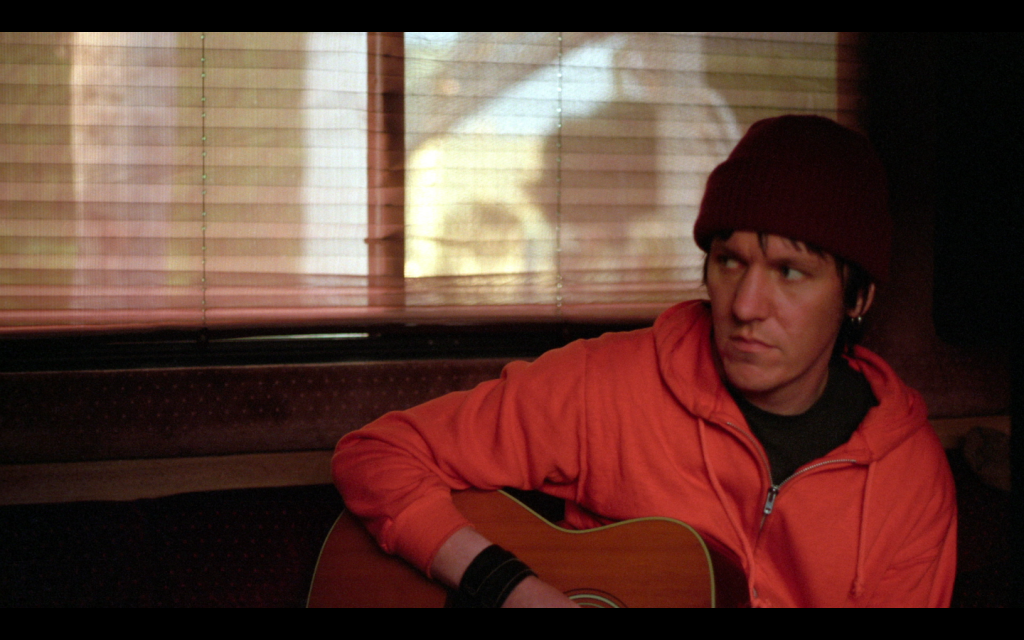
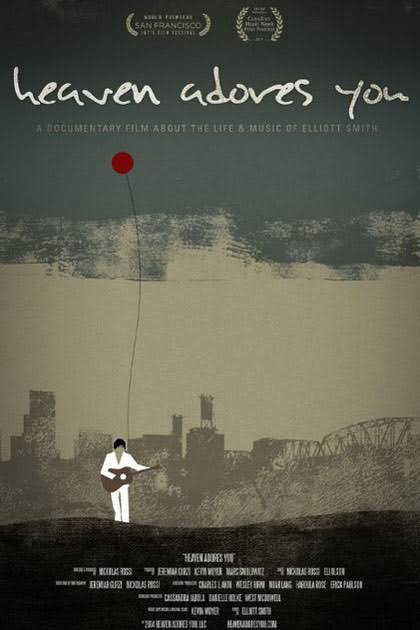
Who is Elliott Smith? That seems to the central question of Heaven Adores You. The documentary film paints itself as an “intimate, meditative inquiry into the life of the singer songwriter” and it mostly achieves its goal by not veering too far into hyperbole, idle speculation or idolatrous fan worship. Whilst it is patently clear that director Nickolas Rossi is a big fan of Smith, he does at least attempt to paint a balanced picture of the life of a complex individual who was never truly at peace with himself.

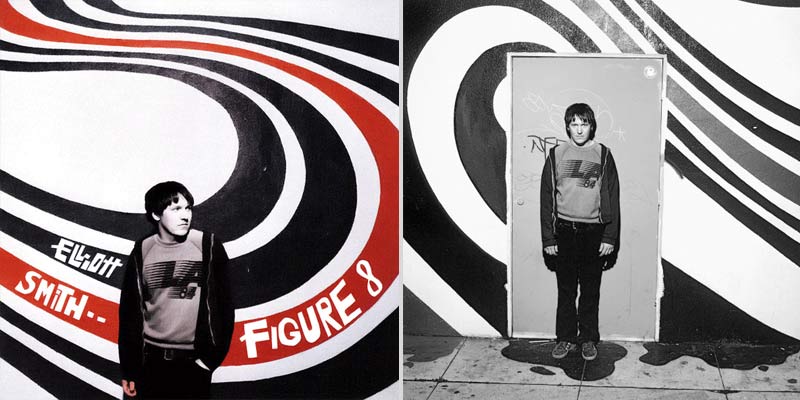
elliott-figure-8

Elliott Smith was that rare breed of songwriter – a man blessed with an immense talent for creating beautiful, timeless music that really resonated with a stark, emotional clarity. His lyrics were sometimes painfully and brutally honest but he never turned away from difficult subject matter. Often, despite a tendency for some fans to interpret his lyrics literally, he would use metaphors in his songs such as using motifs of drug addiction to explore issues of codependence (‘Needle in the Hay’) or a favourite theme of his was referencing the army or using war metaphors (‘LA’, ‘Colorbars’) to delve into the ongoing battle he seemed to have with himself; an internal struggle to stay sane and well in a chaotic world.

During one of several interviews with close friends and family in the documentary, there is speculation as to whether Smith’s search for the truth in his music contributed to his inevitable slide into chronic depression, alcoholism and (later) drug addiction. The question is pondered, turned over but never really answered. Some reply that music was Smith’s saviour, his light in the darkness. The documentary hints at the true root cause of his immense struggle to survive in a world he found troubling was due to his difficult childhood, notably the relationship with his stepfather. To his credit, Rossi is not afraid to try and look at issues such as this and delve into the more complex aspects of Smith’s psyche but the problem is that we never really get any clear answers. Frustratingly, when an answer appears to be offered, it is rather glibly glazed over and pushed aside and we get a fast edit or fade into another topic or area of Smith’s life.


Watching Heaven Adores You is a strange experience because you would think that it would be something tough to negotiate. However, this really isn’t the case. It is actually a curiously uplifting experience, precisely because of the way Rossi uses gentle, lyrical tracking shots of the views above the different landscapes Smith inhabited through the majority of his career – namely, Portland (Oregon), New York and Los Angeles. This is the film’s true masterstroke. The director wants to take us on a journey through Smith’s past and, by using a voiceover that switches between that of Elliott himself as well as close friends and family, we are left with a sense of being as near as it is possible to get to the singer by way of this visual and auditory canvas. It’s a very poetic and moving motif and it helps to leave a positive imprint of Smith’s memory.

Elliott Smith is often mistakenly labelled as a morose, navel gazing, misery obsessed singer-songwriter when, in fact, he was nothing of the sort in reality. Some of his songs were low key, downbeat and dealt with difficult subject matters such as addiction, suicide and abuse, but the balance of his output was generally more up tempo than a lot of people and critics give him credit for.

Elliott Smith died far too young (34) and didn’t quite achieve the sort of mainstream success that he seemed destined for. In the latter half of 1997, after linking up with director Gus Van Sant to write a song for the movie Good Will Hunting, he received a surprise Oscar nomination for the resulting release ‘Miss Misery’. He performed the song at the 1998 Oscars ceremony in a striking white suit, which gave a massive boost to his public profile. In a lot of ways, this sudden public scrutiny and being bundled into the headlights like a startled rabbit may have precipitated his downfall as he struggled to handle the pressures that it bought. He was in demand, was quickly signed to a major new record label (Dreamworks) and expected to deliver the goods.

HeavenAdoresYou_ElliottSmith3

In the Pearl Jam song “Immortality” Eddie Vedder utters the line “Victims in demand for public show”. Elliott Smith was a victim of his own public show. In one of the final songs he wrote before he died – A Distorted Reality is Now a Necessity to be Free – Smith sings:

fit poorly and arrange the sight
dollared up in virgin white

A reference not only to how ill at ease he felt in the artificial glare of the Oscars spotlight, but also the bright lens of fame overall. He was a man who didn’t belong in that world.

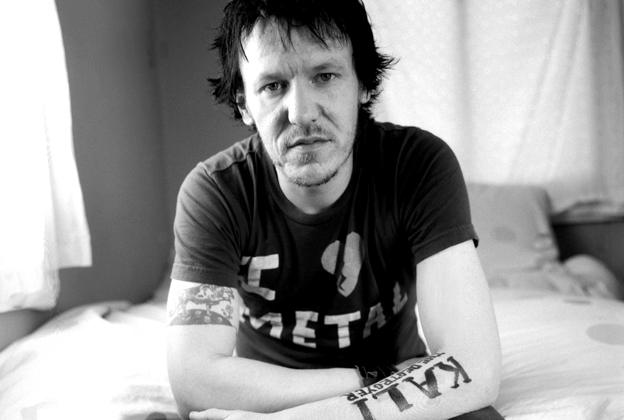
Heaven Adores You starts off asking the question: Who is Elliott Smith? It ends up answering the question – Who was Elliott Smith? The distinction is important, but the truth revealed is a half truth, clouded in uncertainty. Like a sketch that’s incomplete, Elliott’s life and work showed us something of himself that was tragic, deeply sad and, at times, difficult to fathom.

elliott-rolling-stone-2003

“It’s just, I’m the wrong kind of person to be really big and famous,” Elliott once said to a Dutch interviewer. And whilst that may have sounded odd to the public watching on at the time, a public that is used to seeing celebrities grow big and adapt to the limelight, for Smith and, most importantly, his friends, they knew the real story behind this statement. A story that ‘Heaven Adores You’ lays bare for all of us to see, even if it doesn’t quite give us the complete picture.

Director: Nickolas Dylan Rossi

Stars: Madonna, Gus Van Sant, Conan O’Brien, Rossie Harris, Elliott Smith, Jon Brion

images

‘Heaven Adores You’ is available on DVD and Blu-Ray from all good internet retailers such as Amazon.co.uk


Filed Under: Life Tagged With: Documentary, Elliot Smith

The Gamechangers Review

22nd September 2015 By Grant Rencourt Leave a Comment

“We see America for what it is because we’re outsiders.”
– Sam Houser, Rockstar Games

The Gamechangers uses a pivotal time in the history of video games to deliver a curious character study and comparison between two different people. The focal point is the ‘battle’ that occurred following the release of the groundbreaking and controversial Grand Theft Auto: Vice City, and the follow-up Grand Theft Auto: Sand Andreas.


Pass me some gravitas…

The videogame business offers up Daniel Radcliffe as head of Rockstar Games and Producer on the GTA series, Sam Houser. Facing him is Bill Paxton (who couldn’t have been more wooden if he was carrying a can of Cuprinol).

Paxton plays the part of campaigning lawyer Jack Thompson, who attempts to represent the recently bereaved families of three police officers in litigation against Rockstar Games and their parent company, Take-Two Interactive. The reason for his ‘no win, no fee’ approach is that they were killed by a young man named Devin Moore. Brought in for car theft, he shot his way out of the police station and attempted to escape in a stolen squad car.

When he was apprehended, he compared life to a videogame, and had played Vice City. That allowed Thompson to argue that Moore’s crimes were a direct result of playing GTA:Vice City

Grand Theft Auto Vice City 0001 | Disposable Media
Grand Theft Auto: Vice City or ‘The Peace, Love and Harmony Simulator’. Tommy Vercetti scopes out his local Yoga group before committing to paying the full seven weeks upfront.

Thompson believed that GTA gave Moore direct inspiration to commit the actions he performed in the game. Just in case we are in any doubt about the parallels, visiting Moore, Thompson quotes the young man’s chillingly detached words: “Life is like a video game – you’ve got to die some time.”

Meanwhile at Rockstar Games, Houser is keen to get his burnt-out staff kick-started on another GTA title – only this time with more violence, realism and titillation. Plus some RPG bits!

A sidelined debate…

Even in the early 2000s, the debate on the link between video game violence and real-life murder was hardly new. However, this case (Strickland vs Sony) is significant in pop culture history. It was the first time a huge lawsuit had been filed against a video game developer for direct causation between a game and what, in this case, was the tragic deaths of three police officers.

“Come on, guys – we want full-on sex and RPG customisation… but no hairy elves!”
– Sam Houser, Rockstar Games

The Gamechangers could have really delved into the arguments surrounding videogames and violence. Instead the focus turned to the motivations behind Houser and Thompson’s actions and increasing opposition. This might have been interesting, had it not been for the unfortunately lacklustre script and one-dimensional performances. In the end, we never really learn much of interest.

In the case of Sam Houser (Radcliffe), at one point he is shown musing and desperately striving to find artistic credibility as he simultaneously commissions the next installment in his porn and murder simulator.

This slideshow requires JavaScript.

Meanwhile, Jack Thompson (Paxton) becomes increasingly lost in what he believes is his moral crusade to save Society from the evils of ‘depraved’ video games – focussing all of his efforts on Rockstar and the GTA series. Although it is already pretty clear that Thompson is an outlandish individual consumed by extreme views of modern culture, we fail to really understand his motivations due to the script’s insistence in painting him as an absurd, clown-like figure consumed by self-importance.

If anything can be gained from these scenes, it is little more than a contrast of motivations – the money-centred free-for-all of Houser’s work played off against Thompson’s judgement-fuelled willingness to combine or confuse correlation and causation.

Things fall apart…

Ultimately, instead of being an interesting, dramatic and engaging portrayal of a key area of games culture and its history, The Gamechangers stumbles with character issues and script inconsistencies. While it’s nice to see the discovery of the ‘Hot Coffee Mod’ in Holland, it feels like an unnecessary filler to spend so much time following PatrickW.

This slideshow requires JavaScript.

Add poor dialogue and unconvincing lead performances  lacking in so many areas, and the sum is no more than its parts.

Far too often, I genuinely cringed in reaction to events such as these:

  • When Jack Thompson declares himself the messianic saviour of decent, ordinary folk and promises to rescue them from the depravity of “these violent video games”. I felt like I was transported to some nightmare, B-movie dystopia!
  • When Radcliffe, dressed like he’s acting in a pantomime version of Boyz n the Hood, meets a gang member and they bond over the guy’s love of GTA. This felt far too contrived.
  • Radcliffe’s petulant outbursts failed to carry any weight. They sounded like the rantings of a frustrated man-child who desperately wants to appear like his uncompromising attitude is the only way to propel the company up to a higher level. Assertion and aggression are not the same thing and it didn’t look like his staff were impressed by these outbursts either.
  • The depiction of the San Andreas ‘crunch’ period ended up looking like a bad 1990’s pop video. I half expected Natalie Imbruglia to show up at one point and ask where she left her oversized jumper.
  • What was going on with Sam’s beard? Aside from looking like it had been stuck on, it also looked ready to audition for a role in The Hobbit.
  • “We need a new game engine!”
    (New scene) “Here’s our new game engine!” Continuity guys, please?

You got me…

In truth, there were moments in The Gamechangers when it felt that things were heading in a genuinely interesting direction.

Early on, it seemed that the producers had gone to great lengths to capture the zeitgeist of the period and give the show a sense of time and place. Framing shots of Houser and Thompson seeking each other out via on-line searches reminded me of some modern day, digital version of a Wild West pursuit (minus the air of menace and true drama!).

This slideshow requires JavaScript.

There were some genuinely fine performances within the film, including that of Jack Thompson’s wife (Fiona Ramsay). Despite Patricia Thompson having a tendency to sound like a living, breathing version of ‘101 Inspirational Quotes’, the role was carried with conviction. Also, Joe Dempsie as Jamie King deserves praise both in the honest way he stood as the counterpoint to Sam Houser’s crazed pursuit of “mainstream plus artistic success” and also because he seemed to be one of the few completely realised characters in the piece.

Although…

The Gamechangers was a valiant attempt to draw a reference point around an interesting subject at a time when the debate it raises is still very relevant and in the media spotlight. Sadly, it ended up being way off the mark in so many ways – mostly because of a poor script and the failure of Daniel Radcliffe and others to appear convincing and believable in lead roles. Something I almost feel bad about.

Almost but… not quite.


The Gamechangers starred Daniel Radcliffe, Bill Paxton, Joe Dempsie and Fiona Ramsay. It was first broadcast on 15th September on BBC2 and is available on iPlayer until 15th October.

Grand Theft Auto poster adapted from an image at gta.wikia.com and used under Creative Commons CC-BY-SA.

Filed Under: TV & Film Tagged With: bbc, Bill Paxton, Daniel Radcliffe, grand theft auto, gta, Jack Thompson, rockstar, Sam Houser

Get Social

  • Facebook
  • Instagram
  • LinkedIn
  • Medium
  • Pinterest
  • RSS
  • Twitter
  • YouTube

Top Posts & Pages

  • Forgotton Anne Is Now Coming To The Nintendo Switch
  • Investigating the Dauntless console release
  • Persona 4 Golden is available on Steam today
  • New Amazon Series Follows Le Mans Racers
  • Retro Racer Voidspeed Outlaw Looks Interesting
  • New Persona games revealed: Q2, P3D, P5D
  • ARK/8 Destiny Europa Collection Celebrates Beyond Light
  • New Sonic Forces Gameplay Video Shows Casino Forest
  • Noisia's "Closer" out now
  • New - A Total War Saga: Thrones of Britannia Gaelic Kingdom Trailer

Ads

Join Us…

  • Facebook
  • Instagram
  • LinkedIn
  • Medium
  • Pinterest
  • RSS
  • Twitter
  • YouTube


Privacy Policy

Cookie Policy

© 2026 Hot Mod Media · Design & Marketing TWOTW

Disposable Media · FPSPrestige · OnlineRaceDriver · The Guitar List · Rescars · Rescogs

We use cookies to ensure that we give you the best experience on our website. If you continue to use this site we will assume that you are happy with it.