Disposable Media

Art, Music, Games, Life

  • Art And Literature
    • Comics
  • Music
  • TV & Film
  • Games
    • Tabletop Games
  • Technology
  • Life
  • Events
  • Magazine Downloads
You are here: Home / Archives for deKay

Sonic Mania Review (Switch)

17th August 2017 By deKay 3 Comments

The Sonic Cycle is well documented and understood: Sega announce a new Sonic game, fans are hopeful it’ll be a return to form, as release day nears more and more terrible decisions have been made, and finally, it’s out and as bad as it ever was. How could a new 2D Sonic game, made by fans rather than Sega, possibly push a stick in the cycle’s spokes?

Fan made Sonic clones, rom hacks and mods have been around for a long time. Where Nintendo are quick to stomp on any such thing for their IP, Sega have been more relaxed with these existing. When Christian Whitehead – who made excellent ports of the original Sonic and Sonic CD to various platforms – was joined by two teams who have built some of the best fan made Sonic titles, there was a glimmer of hope that something good could happen.

Between them, this combined team know everything about 2D Sonic games. How they work, how they play, what makes them great and what fans want from them. They’re probably closer to the subject matter, and understand it better, than the original Sega development staff. But still, the Sonic Cycle has never been defeated.

Until now.

Sonic Mania

Sonic Mania opens with a repeat of Sonic 3’s flight onto Angel Island. Instead of running into Knuckles as previously, Eggman’s henchmen are waiting. Using a Chaos Emerald, Sonic is transported to the original Sonic 1 Green Hill Zone Act 1. Only… things are a little different. Not far into the stage, changes become apparent: Items are gone or replaced, some routes have changed, there are bats from Marble Zone. Your layout knowledge will only get you so far.

And this is how much of the game goes. Zones from previous games appear. Some are mashed together (there are parts of Emerald Hill in Green Hill, Labyrinth permeates Hydrocity, Hill Top pops up in Lava Reef), some are new but are channeling old zones (Studiopolis is a little bit Carnival Night). Bosses are a mixture of old – but subverted – and new. There are so many nods to previous games it’s a wonder it doesn’t get a sore neck. A special mention must be made for the inspired Chemical Zone Act 2 boss. You’ll know when you get there.

Then there’s the music. Just like how the levels morph from their ancestors, so does the music. Tunes like the unmistakable Chemical Plant Zone music get remixed. Other tracks have snippets of similar zones weaved in, in the same way the levels do graphically. Everything sounds 16-bit, but meatier, bassier, thumpier. Again, just like the levels.

As with the original Sonic games, there’s the side mission of collecting all the Chaos Emeralds. Similar to Sonic 3, special stages are entered by discovering giant rings hidden (and hidden really well) throughout the zones. Each special stage is akin to the 3D Mode 7 style UFO catching stages from Sonic CD, but much better organised and implemented. The idea is to chase down a UFO as flies around a Mario Kart-like track. The time you have remaining is incremented by collecting rings, and your speed is increased by picking up blue balls. It’s hard. Very hard.

Sonic Mania

Back in the main stages, if you trigger any checkpoint lamppost with enough rings you’re taken to a bonus stage. Gone are the gumball and spinning spheres (although their ghosts haunt a level later), as they’re replaced with the Blue Sphere game. As before, you have to touch all the blue spheres to make them red, avoid the red spheres, and collect the rings. In Sonic Mania, if you get all the blue spheres you’re awarded a silver medal. Collect all the rings too, and it’s gold. As you rack up the medals, you unlock modes and features, such as a level select and Sonic’s “run on the spot” from Sonic CD. There’s also the from-the-internet “& Knuckles” mode, where you can play as Sonic & Knuckles, Tails & Knuckles, and ridiculously, Knuckles & Knuckles. Because of course you can.

All this sounds great, but the important thing is how Sonic Mania plays. After all, Sonic 4 (akin to swearing in some areas of Sonic fandom) initially looked the part, but see how that turned out. Incredibly, Sonic Mania makes that game look like a fan-led Game Maker project, irony abound considering how Sonic Mania came to be. Important lessons were learned from missteps in the past: The physics model is spot on. The level gimmicks work. It’s not “hold right to win”. No level outstays its welcome, and no level feels weirdly out of place. Sonic’s friends and foes are kept to a bare minimum.

It’s a little confused as to whether it’s a sequel or a remake, but the gameplay hits the mark exactly. As a bonus, the always stupid but fun two player mode from Sonic 2 returns, squashed screens and all. Nice, especially since with the Switch version you can play it wherever your mates are.

Sonic Mania

If there has to be a negative, it’s perhaps that the later zones are not as well designed as the earlier ones. The replacement for Scrap Brain/Death Egg is maybe not in the same league as those, for example. There are also a few bugs, mainly involving the fire shield or being squished where you shouldn’t be squished, but nothing to damage the experience.

It’s a greatest hits. A remix. A compilation. A remaster. Sonic Mania is new, it’s old, and feels just like Sonic should. After all these years of waiting, so many revolutions of the Sonic Cycle, it’s finally time to say: This is a good Sonic game. No, this is a bloody great Sonic game.

And all it took was for Sega to let someone else do it for them.

Sonic Mania is out now on the Switch, Xbox One and PlayStation 4 digital stores for £15.99. The PC version is due on the 29th August.
Filed Under: Games, Reviews Tagged With: sonic mania, Sonic The Hedgehog, Switch

Lumo Review (PS4)

24th February 2017 By deKay Leave a Comment

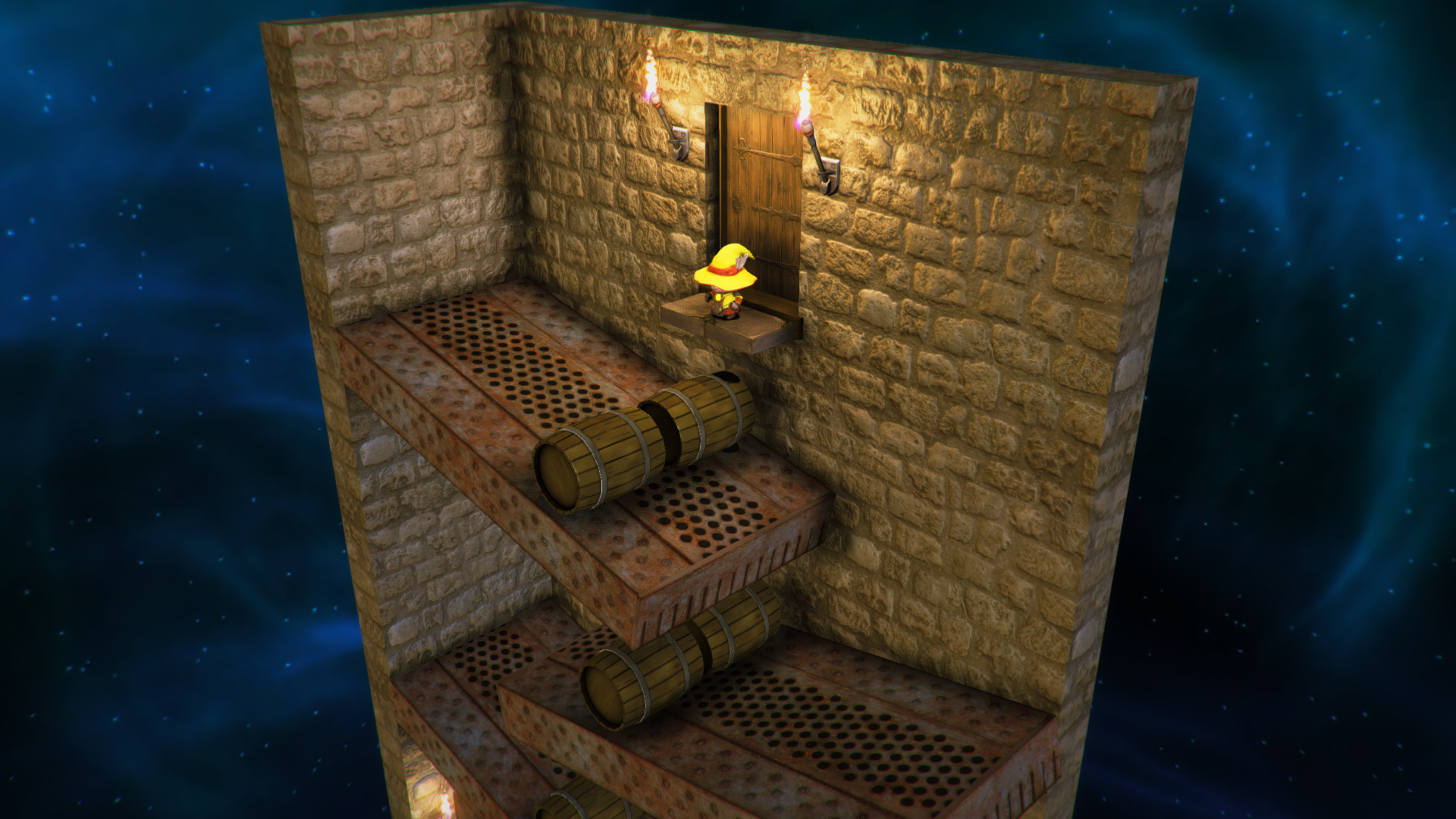
Lumo is how you remember old Spectrum isometric games played. You know the ones, like Batman and Head over Heels and Knightlore. Only you remember wrong. Because although we all loved them back then, they were a pig to control and the hardest things ever.

Take the idea of these games and view them through a rose-tinted lens, and you have Lumo; it both pays homage to and lampoons the 8-bit isometric arcade adventure genre.

You begin in “the real world”, visiting a small-time retro gaming event. One of the machines on display malfunctions, and you’re sucked into a world where you’ve become a super-deformed wizard and electrified floors and hidden cassette tapes are the order of the day. You move from room to room, overcoming platforming challenges or puzzles, collecting four artefacts. Collect them all and you just might return home.

Lumo

Where Lumo succeeds is in evoking the feeling of those old games. Not just in the viewpoint, but in the sort of objects, room layouts and traps you encounter. Several rooms are almost carbon copies of classic ones, triggering the retro glands. Some rooms contain more front-and-centre references, literally including sprites or screenshots. There are nods to 80s computer games and UK gaming culture of the time everywhere. In one section, you ride a lift and the music playing is Your Sinclair’s very own Whistlin’ Rick Wilson and his classic “Hold My Hand Very Tightly (Very Tightly)”. They played it on Radio 1 once, you know.

Sometimes the game will deviate from the Ritman/Drummond/Ultimate template into other areas. There’s a minecart section, and several bonus areas that ape Ballblazer, Zaxxon, Horace Goes Skiing and Nebulus amongst others. Some of these work well in isometric, some (*cough* Horace *cough*) do not.

Lumo

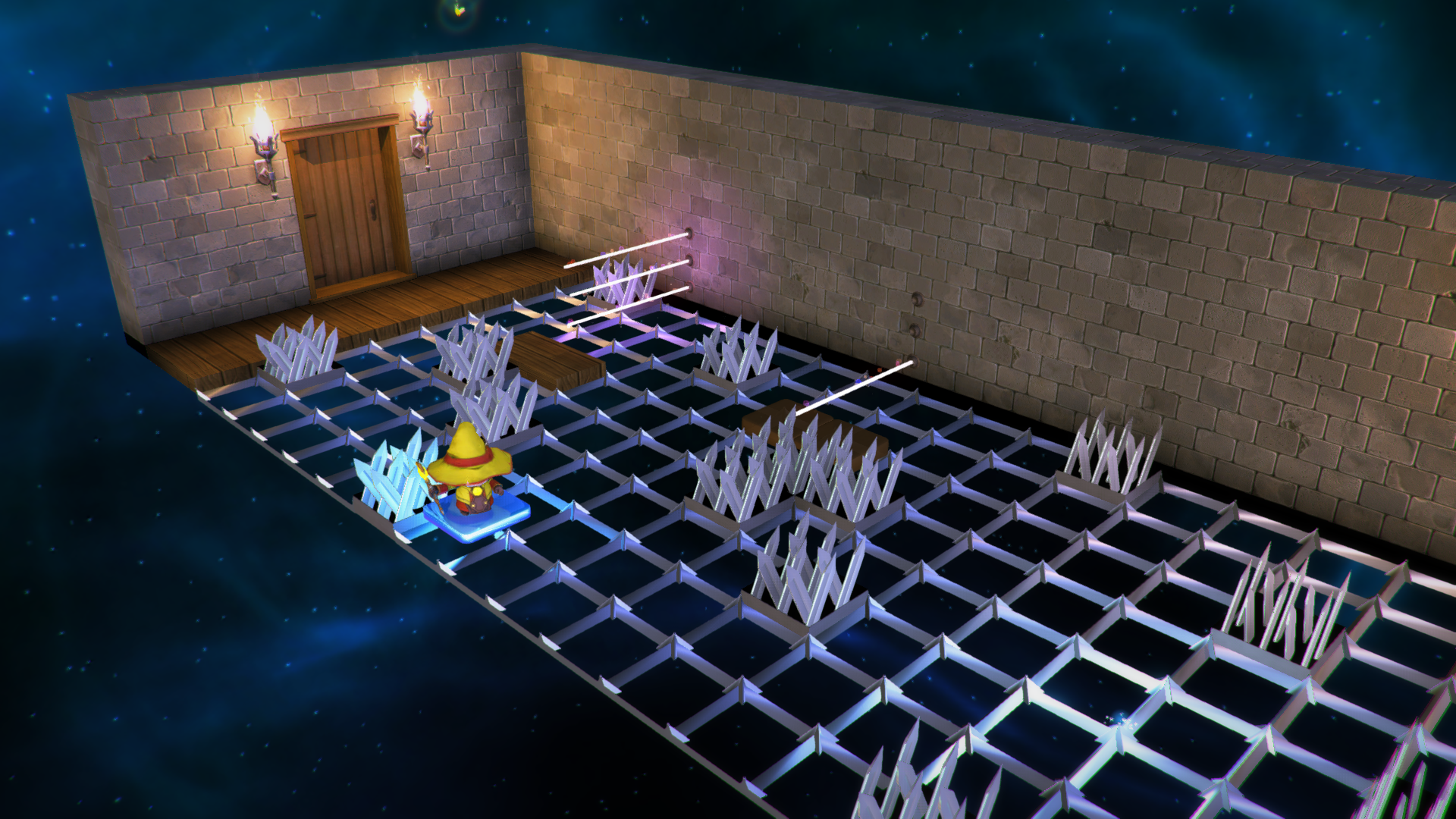
Where Lumo performs less well is mainly due to this 45 degree viewpoint. Also a complaint with many of the classic titles, seeing where you are in space relevant to platforms you need to land on can be a struggle. One particular section in a later area of the game has you navigating a bubble between spikes, and it’s near impossible to determine where it will actually pass. Failing a screen because your pixel-perfect jumping isn’t up to scratch is one thing, but because it looks like the landing area is in front of you when it’s actually up in the sky several squares away? Not great.

Thankfully, and unlike isometric titles of yore (unless you cheated!), infinite lives help stave off throwing your gaming device through a window. Some of the more tricky, long, or “perspectively challenged” areas still cause the red mist after several dozen deaths, but these are rare.

It’s definitely a game aimed at 80s Speccy kids, and is worth playing for the nostalgia if nothing else. In itself it’s pretty decent too. It may lack a little polish perhaps. And maybe a few rooms should have been tweaked to reduce the viewpoint issues a tad, but there’s a lot to like here anyway. Oh, just one more thing: Make sure you install the update before you play. There are nasty save game bugs otherwise!

Filed Under: Games, Reviews Tagged With: lumo, PS4, review

Decksplash Preview (PC)

1st February 2017 By deKay 1 Comment

The latest game from concept-over-control specialists Bossa Studios (see Surgeon Simulator and I Am Bread) looks like it was created based on the outcome of a random game design generator. Two games were picked from a hat: Tony Hawk’s Pro Skater and Splatoon, and Decksplash was the result. I suspect there were hooting high-fives all round when they came up with the name, too.

This week, I was able to get in on a multiplayer beta test. Unfortunately, the lobbies took ages to fill so much of the time was spent noncompetitively pootling around the test arena with my riderless skateboard, but it was enough to get a taste of how the game plays.

As you’d expect, points are scored by pulling tricks on objects. It’s a slimmed down Tony Hawk’s game in this respect, with flips, spins and grinds providing the bulk of the action. There’s no manualing, lip tricks, reverts or grabs, but then there’s no skater either. Chaining tricks adds to the multiplier and landing cashes it in – how well you land determining how much of your score you get to “bank”. This is pretty much all that happens in the lobby while you wait for the game to fill up and start, or wait a seemingly inconsistent length of time before it allows you to take part with fewer than the maximum six players.

decksplash

Grinding is easy, and doesn’t require you to balance like you do in THPS.

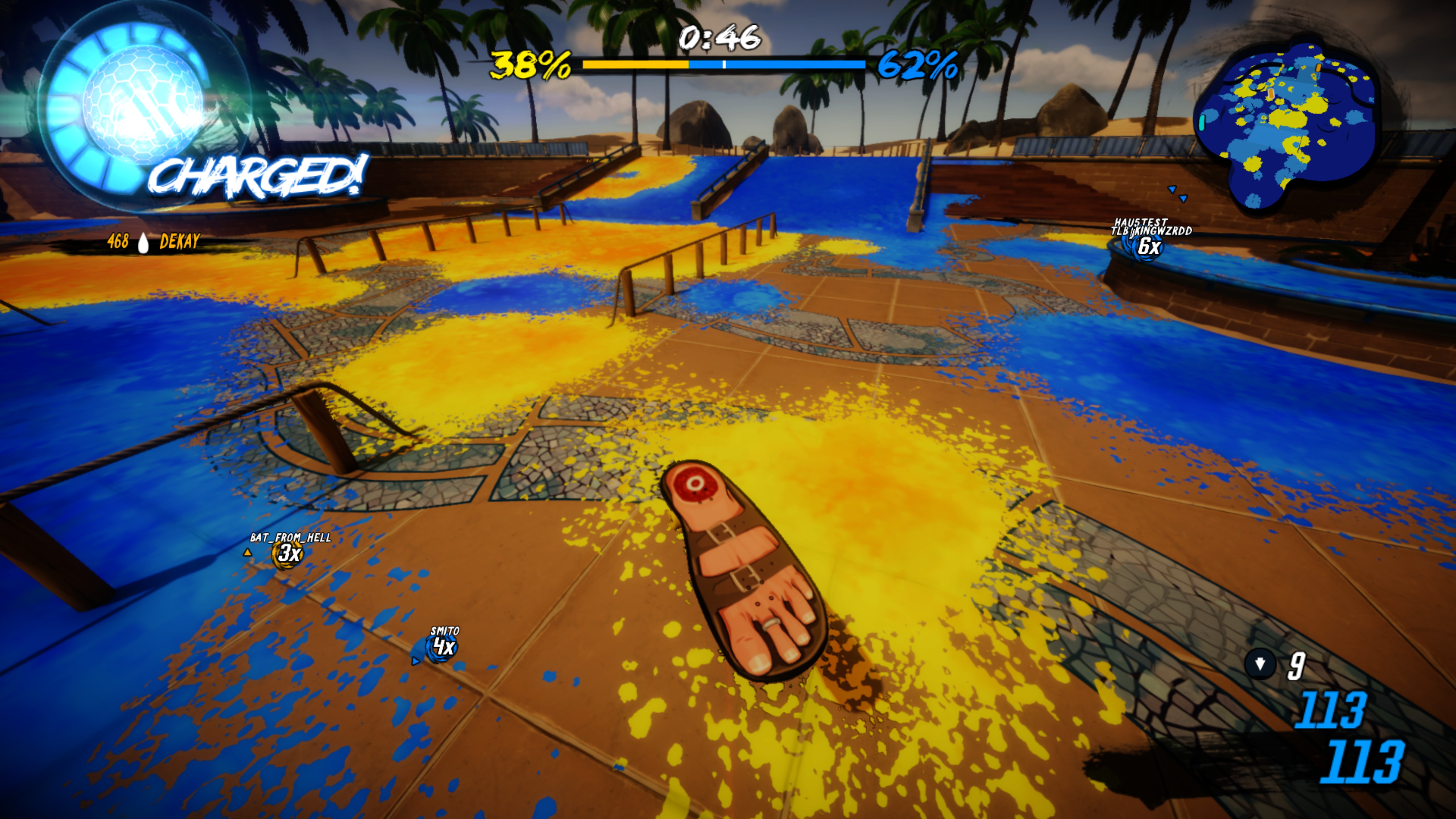
The main game, however, is where Splatoon comes in. In that game, two teams of four have to cover as much of the arena as possible in their own side’s paint. This transposes to Decksplash’s 3-on-3 mode in the form of bigger tricks landed equals more paint sploshed. It’s a little bit Grafitti mode from Tony Hawk’s, and works pretty well.

Unlike in Splatoon though, there’s no discernible effect on your team caused by the opposing team’s paint (other than area lost). In Nintendo’s title, it damages you, but here you appear to be able to scoot on through it without repercussions. Due to the speed and franticness of your board control, painting is far more erratic in Decksplash than in Splatoon too, and there are no (in the arena provided in the beta at least) advantageous areas of the level to command or defend.

decksplash

The boards are varied, but at this early stage there’s just one arena and only yellow and blue as opposing colours.

There isn’t, at this early stage at least, very much strategy. Your board seems unable to directly interact with other players’ boards, and splash sizes are vague at best. There’s a special move button which, once a bar has been built up, allows a bigger splash and possibly other effects that aren’t obvious. I also had a few clipping issues where I got stuck in trees. It feels unfinished.

Which is fair, I think. It is unfinished. There’s the twinkle of a gem here. The fun is in place, the basics are present and the endpoint is clear. Hopefully they can polish it some more before final release, tweaking the arena to put in some more skating lines and add some strategy to the proceedings. They also need to work on the lobby wait times, and maybe reconsider the controls (at the moment you have to use RT and RB on a 360 pad together, which isn’t ideal). With a bit more work, this could end up as something great.

Filed Under: Games Tagged With: pc, preview, steam

The Rocky Horror Picture Show: Let’s Do The Time Warp Again Review

25th October 2016 By deKay 1 Comment

I went into watching this new version of Richard O’Brien’s iconic musical with trepidation. As a massive fan of the original, I was worried this 2016 remake was going to taint my love of Rocky Horror, not least because most of the reviews I’d read really slated it. I’ll admit, I went in expecting the worst.

From a cold viewpoint, Fox’s 2016 take is the same film as the one from 1975. The plot, the setting, the songs, and even almost all of the dialogue are virtually identical. It’s set in the same time period, and the same events occur, but there is one main difference: There’s an on-screen audience who do some of the now traditional dialogue participation, usually performed by a real audience.

Rocky Horror Picture Show

Of course it isn’t quite the same. It’s a whole new cast, for starters, and it’s this cast that causes the biggest issue with the production. Now, much as I like the original film, and its cast, I’m not precious about it. I understand it’s a theatre musical as well as a film, and it’s only natural that over time many different people will fill the various roles. Who, specifically, have done so here is genuinely rather hit and miss.

To start with credit where it is due, Laverne Cox is excellent as Frank-n-Furter, both in style and voice. She’s a genuinely different take on Tim Curry’s Frank, and it works. Victoria Justice is a great Janet, and Ryan McCartan plays a bland Brad badly, although that’s keeping in character with the original role. Adam Lambert surprised by not trying to replicate Meatloaf’s Eddie, instead having more energy and making it his own, but Reeve Carney virtually channels Richard O’Brien’s Riff-Raff to the point where you wonder why they didn’t just hire O’Brien again. I’m torn on whether this makes Carney’s Riff-Raff good or bad. Columbia, played by Annaleigh Ashford, is almost Harley Quinn, but it works and she’s possibly even better than Nell Campbell. Possibly.

Rocky Horror Picture Show

Less impressive are the others. Christina Milian is a totally forgettable Magenta, Ben Vereen makes a terrible Dr. Scott (a role performed almost as if they wanted Morgan Freeman instead), and – probably due, sadly, to his stroke – Tim Curry really doesn’t make a good Criminologist. Curry’s delivery just isn’t there. The worst, by a long way, is Staz Nair as Rocky. Sure, Rocky is meant to be an airhead with a body builder’s physique, but he walks like a robot and isn’t exactly stacked in the muscle department to make up for it. He’s a very strange choice, and his entrance song – Sword of Damocles – is a dire rendition here.

Moving onto the Rocky Horror music, it’s generally great. A few songs are arranged differently, which changes the feel a little, but they’re mostly still wonderful. Rose Tint My World may perhaps surpass the original, and Dammit, Janet, Touch-A, Touch-A, Touch Me and Wild and Untamed Thing are all at least as good. Sadly, the best known and most loved track in the musical, The Time Warp (after which this remake takes its subtitle), sounds much less fun and the dancing isn’t anywhere near as tight as it should be. Come on, Fox! That’s the most important bit!

Despite the bad points, and really there aren’t that many, I’m relieved. My memory has not been tarnished, and although The Rocky Horror Picture Show: Let’s Do The Time Warp Again is far from perfect it’s perfectly watchable, enjoyable, and if it brings the show to a new audience with its sexy young talent (and Staz Nair), then that can’t be a bad thing. I’ll stick with the 1975 classic, but I’ll happily see this on the side every now and again.

Filed Under: Music, Reviews, TV & Film Tagged With: fox, musical, rocky horror

No Man’s Sky Review (PS4)

11th October 2016 By deKay 2 Comments

One hundred and fifty hours. It might not sound a lot, but consider this: it’s around the time it takes to drive from Edinburgh to London and back 10 times. Or approximately 20 sleeps. Or perhaps most fittingly, how long it would take Savage Garden to realise their dream of travelling to the moon and back. It is also, of course, how long it took me to reach the centre of the Euclid Galaxy in No Man’s Sky. And what a time it was.

If I may, I’d like to start by addressing all those people who complained to Valve, Hello Games, Sony, and the ASA about how No Man’s Sky is not the game presented to them before release. I don’t know exactly what you were expecting, but the game I downloaded is pretty much the same as what I was shown. Sure, I didn’t get the exact same animals or planets – why would I unless I visited the exact same locations – and I agree that the HUD was rearranged somewhat in the interim, but all the main points were there. All sorts of animals? Tick. Varied planets? Tick. Space battles? Tick. Billions of solar systems and planets? Tick. Certainly I would have welcomed more to do, but I can’t honestly say I was hoodwinked into purchasing the game and nor did I feel anything was missing.

No Man’s Sky

No Man’s Sky is a mostly passive, relaxing experience. Collecting resources, using them to patch up and improve your equipment, and discovering wacky creatures and following titbits of narratives as you zip around the galaxy. Honestly, I’d be happy if that’s all there was to it, but occasional boosts of excitement, like running into space pirates or finding a planet of high value, but heavily defended rare resources punctuate the gameplay with something a little different. Some may tire of wandering a mostly barren landscape looking for more zinc, but many times I happily ditched my ship and picked a random direction to wander off in until I reached a location from where I could summon my ship again, and offload or sell my scavenged treasures.

Ferrying high value contraband to shops might not sound like a lot of fun, but it is strangely entrancing. Landing on a planet and immediately seeing hundreds of verboten gravatino balls or sac venom gives a strange sort of thrill, and what might be seen as tedious inventory management by some is relished as a challenge by me, and a merry couple of hours is spent running from sentinels clutching mountains of forbidden goodies. Of course you can shoot the sentinels to get them off your tail, but then your pockets fill up with titanium extracted from their robot corpses – and nobody wants titanium when you’re saving the space for albumen pearls.

No Man’s Sky

No Man’s Sky is very much a game of make-your-own entertainment. Picking a fight with a space freighter, for example. Those hung up on, the admittedly somewhat tedious, mining of rocks for essential materials like gold and heridium aren’t helping themselves. Grab some, and when bored, move on. Most things are abundant enough to not need a search either, so when you need a load of a certain isotope and the planet you’re on doesn’t immediately have massive stores of it, take off and try somewhere else. There’s hardly a shortage of places to look. Even the frustrating task of rebuilding parts of your warp engine after a Black Hole traversal damages them need not be if you stop playing the game as a race to the end and slow down, take your time, and drink it all in.

I know it’s trite to say that if you’re not enjoying something then you’re doing it wrong, but I genuinely believe it for this game. The onus is on you to make it fun, and it’s understandable that some folk are adverse to that because they want constant excitement and wonder on a plate. If what you’re doing isn’t fun, stop doing it and do something else. Try to track down all the animals on the planet. Blow stuff up. Hunt down every last Gek ship and destroy it. Locate crashed ships and repair them to replace yours. Get lost, find stuff, make fun.

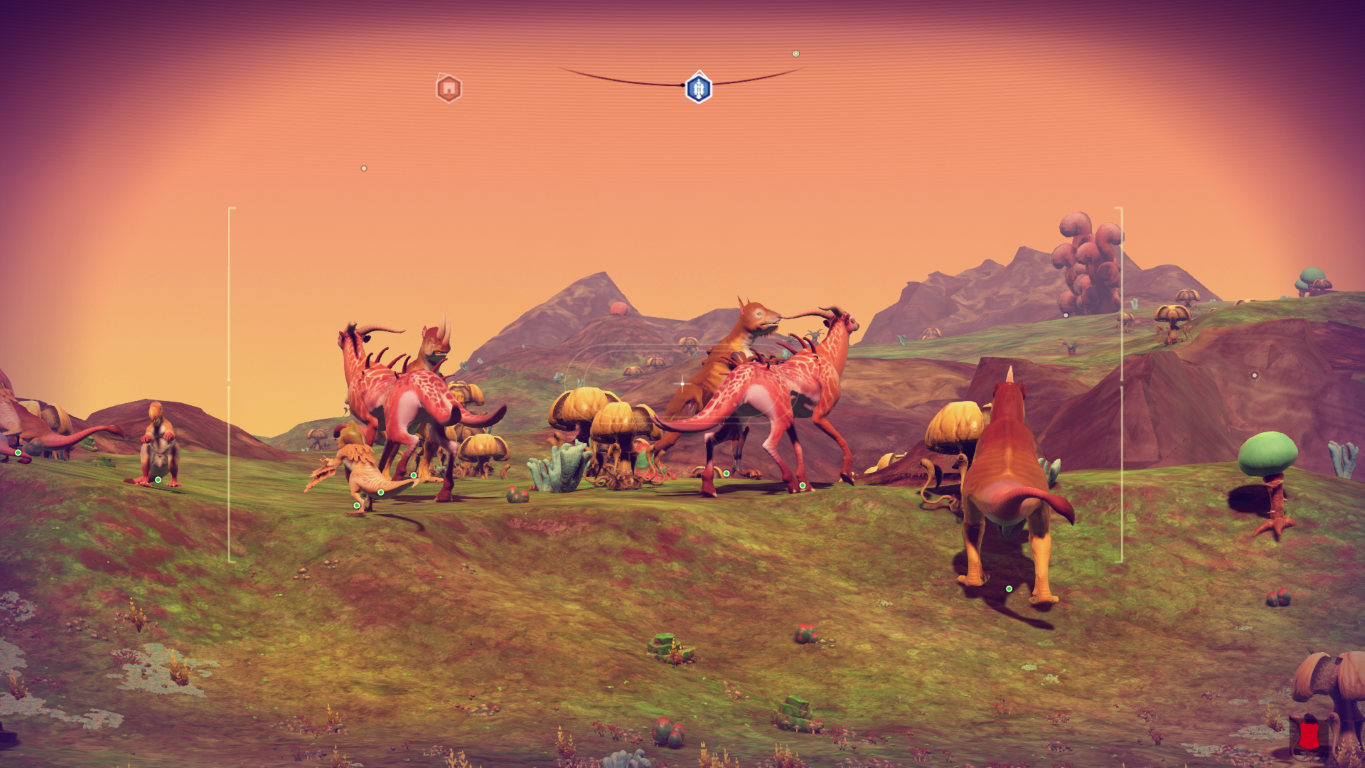
With everything said, the game is not all happy and roses. There are flaws, although for me most are minor. Interaction with aliens is laughably limited, with everything done by text description rather than animation or action. Every outpost is virtually identical, or at least one of a small set of similar designs. The variety in flora and fauna isn’t quite as radical between planets as one would perhaps have hoped (although there have been a few truly bizarre and unique creations), with most places playing host to similar instances of Fan Tree Thing, Mushroom Thing, Horseshoe Crab Spider Thing, Bat Thing and Mound of Earth With Tufts Thing.

No Man’s Sky

I suffered a few bugs of mostly the funny or benign variety (such as floating objects or animals stuck on or in stuff), although less funny was reaching the centre of the galaxy and having the game crash before I got to see what turned out to not be much of an ending. This happened twice, but thankfully my saved game remained intact and a third attempt allowed me to finish the game properly. At least, to one definition of finished anyway.

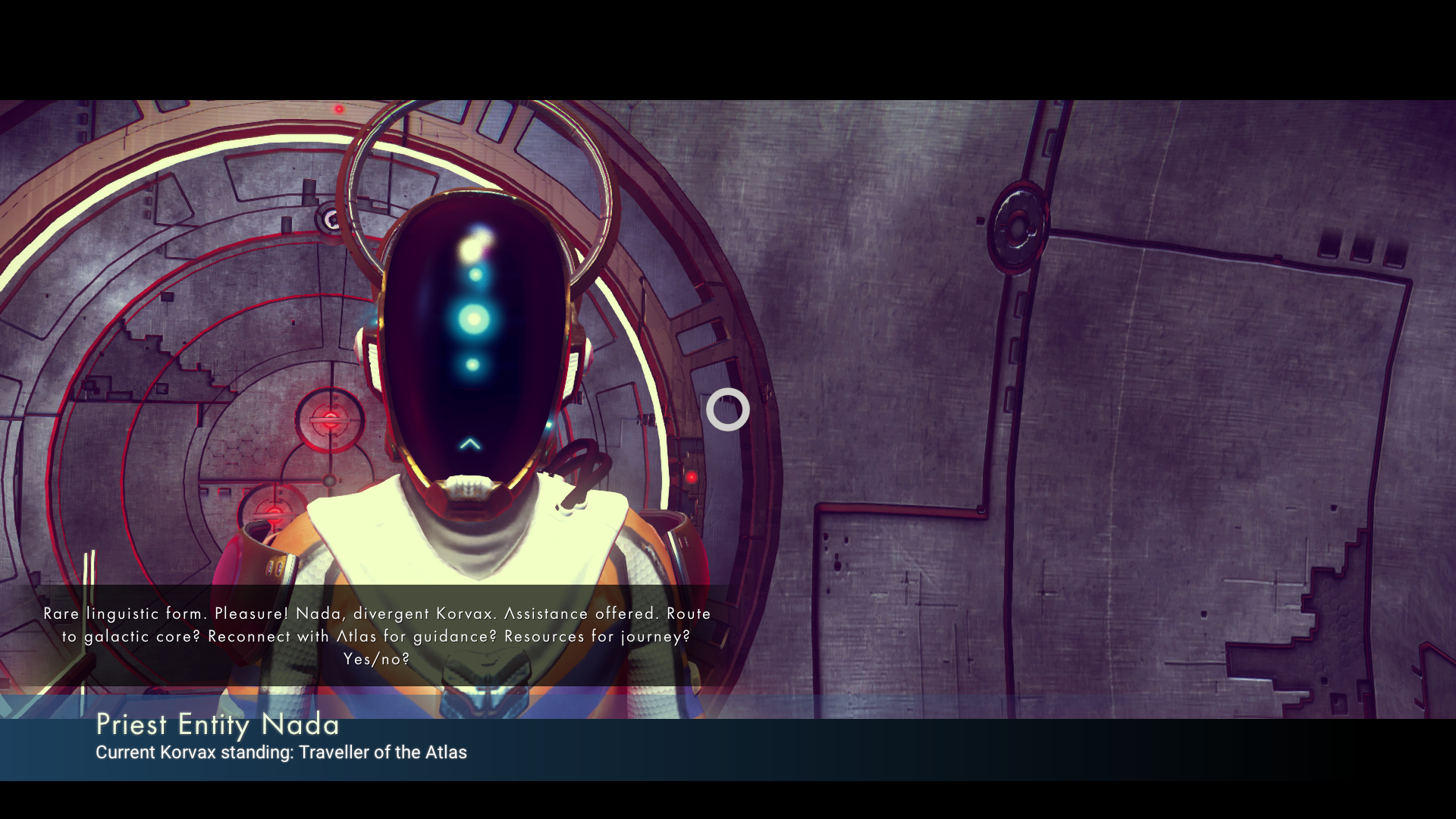
Another would be following the Atlas Path, which is Hello Games’ attempt at providing some sort of story mode for those who don’t have the imagination to just play – think of it as the instructions in a box of Lego – is ultimately unrewarding. You travel from system to system finding anomalies, each of which provides you with an Atlas Stone, and discovering some of the backstory to the universe you’ve found yourself in. Once you reach the end of the path, providing you have all ten Atlas Stones on hand (and you’ve not sold any, like I stupidly did – luckily some traders stock them for over 2 million units each) perhaps the most unsatisfying end to anything ever occurs. For me, it was just part of the whole experience and I was only mildly disappointed, but I expect many players exclaimed “Is that it?!” and smashed their PS4.

No Man’s Sky

Ultimately, No Man’s Sky is not a game that will suit everyone no matter how hard they try to play it to the title’s greatest strengths, but for those of us who want something low impact, expansive, beautiful and relaxing – with the bonus of offering OCD-levels of resource interaction if that appeals – there’s nothing better out there. The closest other game I can match it to isn’t Elite, which is probably the reason so many people think the game is underwhelming. They’re superficially similar in same way, say, Bioshock and Serious Sam are, but to expect Elite style gameplay in No Man’s Sky just backs up my argument that you are indeed “doing it wrong”. No, this fits more into the same category as Animal Crossing and Harvest Moon, just in first person and in space. If that sounds appealing, No Man’s Sky is for you.

Filed Under: Games, Reviews Tagged With: games, Hello Games, No Man's Sky, PS4

Pokémon Picross (3DS)

5th January 2016 By deKay 1 Comment

Picross e, then Picross e2. Picross e3, e4, e5 and – as you’d expect, e6. You’d be forgiven for thinking that developers Jupiter were stuck in a bit of a rut, but as a massive fan of the series of Japanese puzzles, you must understand that the inevitable e7 was high on my shopping list. Surprise! There’s no e7, as Jupiter have gone Pokémon, with Pokémon Picross.

Pokémon Picross: Can you tell what is is yit?

Can you tell what is is yit?

If you squint, it’s more of the same. Instead of the usual pixel art representations of toilets and anchors and chickens, they’re all Pokémon. You probably guessed that was coming. In itself, it’s not a bad thing as any more picross – to a picross aficionado – is always welcome. It doesn’t matter what the hidden picture actually is anyway, as it’s all about the journey. Snorlax or snooker table, who cares, right? Right. Especially since the game is free!

Only Nintendo stuffed the game full of IAPs, didn’t they. Artificial paywalls to progress, as already seen in other 3DS Pokémon games – Pokémon Rumble World and Pokémon Shuffle. In those games the in-app purchases merely served as ways of speeding up the game progress, and Shuffle at least was perfectly completable without ever busting out your eShop wallet. I was expecting the same here, and since I’d play only a handful of puzzles a day in the e-series games thought this would see me through. Sadly, this is not the case.

Pokémon Picross: The first one is always free

Liberally plying you early on with Picrites (the in-game currency) to show you how you can unlock more areas, puzzles and Pokémon slots, the flow soon slows to a trickle with each completed puzzle only rewarding you with 6 or 7. That’s a best-case scenario as in order to get the maximum number of Picrites from a puzzle you need to fulfill some requirements, such as use certain Pokémon. In turn, this leads to repeating the puzzles as you can’t always max them out on your first attempt. This might be fine in other types of games, but you really don’t want to be redoing picross puzzles. You wouldn’t redo a crossword, would you, and It’s the same here. To open up the next area of Pokémon, with each area home to around six or so beasties, you need a large number of Picrites. 70 or 80 for the earlier areas, and as you only get 6 or 7 per puzzle some quick maths shows there aren’t enough puzzles in each area to stump up the Picrites to unlock the next, and that’s before you start spending them on other in-game stuff. The solution: Pony up real actual money. Cunning Nintendo. A few more Picrites are handed out in the daily challenge puzzles, which are boring, randomly generated and pictureless, and you get a handful more for achievements, but it’s still not enough to get through without tedious repetition.

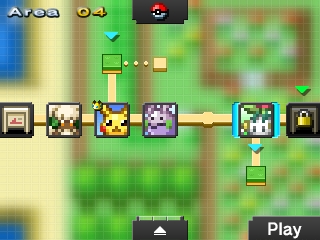
Pokémon Picross: It's a shame they missed a trick and didn't make the map itself a giant picross puzzle.

It’s a shame they missed a trick and didn’t make the map itself a giant picross puzzle.

The other changes to the standard e formula are less intrusive, with the puzzles themselves following the same style, right down to the same font, used in the older titles. Whereas before you had the option to automatically display one row and one column before you started, and had blue “number hinting” to help with determining if you had available moves, these features now manifest in the form of Pokémon moves. Collect the creatures by solving their puzzle, then set up to six of them (providing you stump up the precious Picrites necessary to open all the slots) at a time to be used during other puzzles. These moves can activate those traditional abilities as well as new ones, such as a “scattershot reveal” or a correction tool. Some have cooldowns meaning they can only be used once in a period of (real) time, and some only apply to certain puzzles sizes, so catching them all is once again on the cards. It’s actually quite good fun and a welcome twist. In fact, as you work through a single area you realise how much you’re enjoying it then BAM! You run out of energy.

Did I not say? I’m sorry. That’s right. Energy. Every tile you place in each puzzle drains one unit of energy, and you only have a finite amount. Before you even reach the paywall at the end of an area, you hit another paywall because you can’t play any more as your energy is depleted. You can wait until the next day for it to be replenished, of course, or you can splash out on some more of those naughty Picrites and bypass the forced pause in play. A double-whammy of painful penny pinching.

Pay ALL the money

One thing you can’t money your way out of is the control system. Although you’d expect that filling in picross puzzles with a stylus makes more sense than a d-pad and button combo, to someone who cut their picross teeth on Mario’s Super Picross on the SNES the stylus is An Unnecessary Item. In the e games, you can choose your input mechanism of choice, and in Pokémon Picross it would appear you have the same option. It’s a façade: You can only use buttons to solve the puzzles, and most of the rest of the UI requires a plastic stick or finger to operate. There’s no reason for it, it’s annoying, and it’s a thoroughly confusing design decision. It sounds a small complaint, but after you’ve pressed B for the n-teenth and “Use the stylus!” has flashed up yet again, it grates.

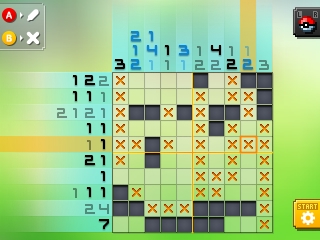
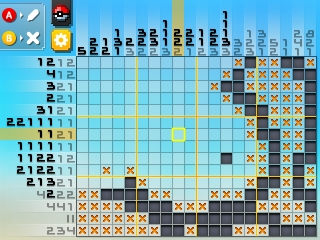
Pokémon Picross: Like previous games, puzzles vary in size.

Like previous games, puzzles vary in size.

As a free game it could get a lot of slack for things like this, but the game isn’t free. To get fun out of it you’ve no real choice but to buy some Picrites. When you look into the Picrite shop, you can see that if you spend enough money, they become free from then on, effectively buying the game outright. If you want to get onboard with this way of paying for your Picross game, it’ll set you back around £30. The older e titles are nearer a fiver. Just sticking Pokémon in it does not mean they’re worth an extra £25, especially since you can almost buy all six Picross e games for the cost of Pokémon Picross. And, frankly, that’s where your money should go instead.

Filed Under: Games, Reviews Tagged With: 3ds, picross, Pokemon, review

Batman: Arkham Knight Review (PS4)

11th October 2015 By deKay Leave a Comment

There’s a point just a few hours into Batman: Arkham Knight when you’re challenged to take the Batmobile onto a roof, and make it jump across the top of buildings to reach some kind of electrical panel. Even within the realms of a comic-book based game and the gadgets Bruce Wayne regularly employs, it’s a bit ridiculous. Even with the acrobatics of the Batmobile in recent films, it’s still not exactly what you’d expect. And makes you fear for the rest of the game.

BATMAN™: ARKHAM KNIGHT_20150927215726Thankfully it didn’t get any sillier. Sure, there were a few car-based acrobatics later on, but those – such as lowering it down the wall of a giant fan shaft – seemed to fit. By that point you’d come to accept that the Batmobile is essentially a tank capable of scurrying around like a spider. Rather than a bat.

BATMAN™: ARKHAM KNIGHT_20150914223231Gritty and weighty like previous Arkham games, but bigger in scope than the rest put together, going into Arkham Knight was a torn experience. As great as Arkham City was, it was too big, too dispersed and less focussed than Arkham Asylum. The core was the same, but fragmented over a wide area. More Batman, on a current gen console especially, was something to look forward to. The nagging doubt it would be spread even more thinly was a worry. Do you remember how many times you visited the same damn steelworks before, despite having a massive city to play in? Aside from Riddler trophies, much of Arkham City was empty. Not so here, which was a relief.

In common with past Bat-outings, the story progresses through set pieces: detective sections, brawls, predator take-downs, boss ba…oh wait. No boss battles? Perhaps Rocksteady realised those in City were almost universally rubbish and ditched them. You still have to confront and defeat major foes, but by other means instead. It actually works well and you don’t miss them.

BATMAN™: ARKHAM KNIGHT_20150919212246As you work towards taking down the Arkham Knight himself (finding his true identity along the way – I managed to guess before the game gives you a massive clue) and Scarecrow, the usual Batman events I’ve mentioned pop up. In addition there are now tank battles. The Batmobile, impossibly, is used to take out the Knight’s army of drones, rocket launchers, cannons, helicopters and what appear to be mechs. Of course it is. Surprisingly, these battles are actually a lot of fun, and there’s an entire side quest devoted solely to them. In fact, almost every one-off task in the main game has a side quest full of that sort of event. Take down a watchtower (Assassin’s Creed Borgia style), and there’s a load more if you want. Like detective work? Why not find out why a load of bodies are literally hanging around Gotham. And so on.

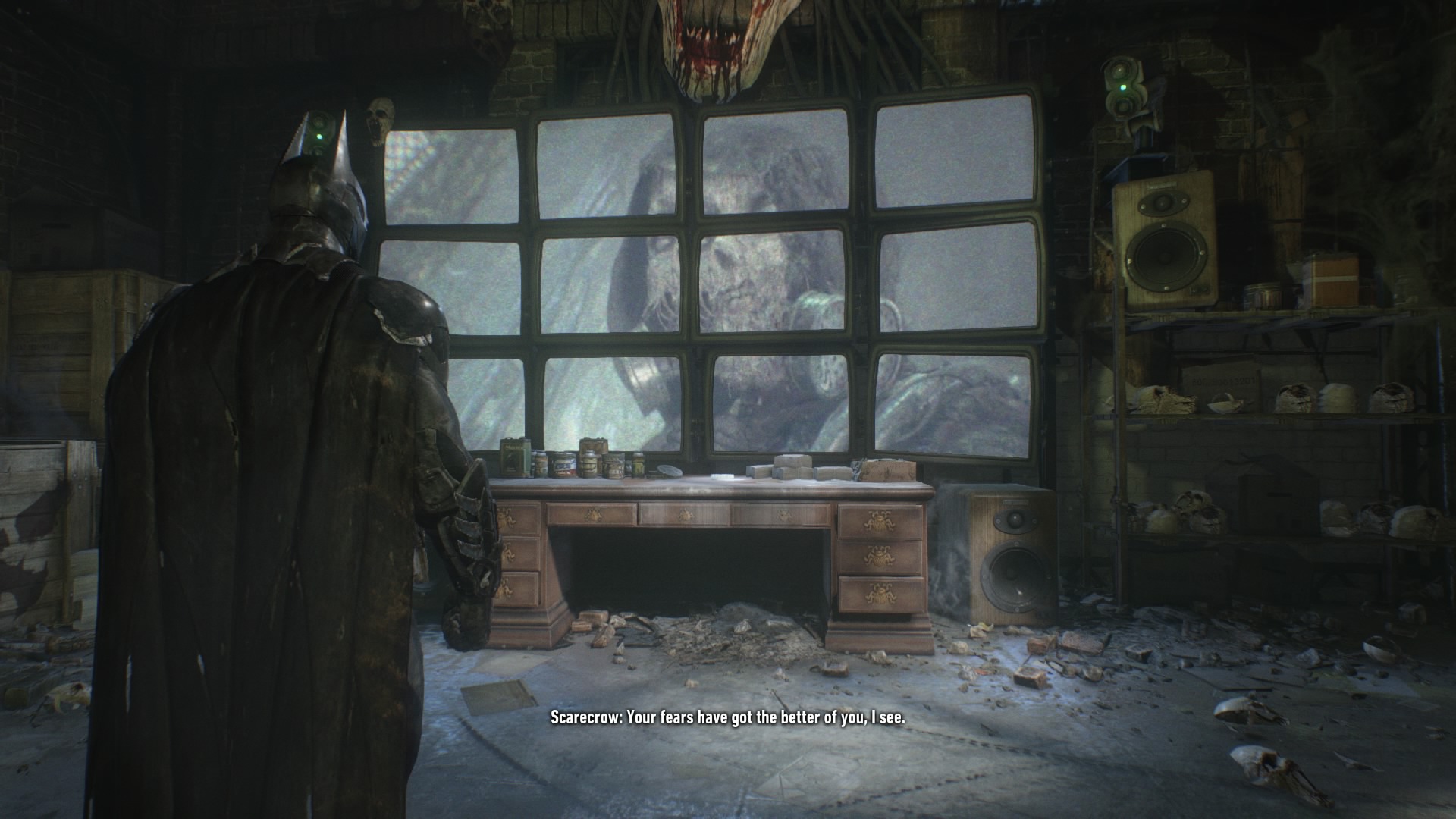
BATMAN™: ARKHAM KNIGHT_20150912211226These seemingly optional side quests turn out to be essential for completionists. In all, there are 14 or so of them, with many terminating in the capture of a major Batman foe (Penguin, Two-Face, etc.). Once you’ve finished the main story in the game, it turns out you haven’t actually finished the main story at all – you have to complete at least 7 of these “optional” quest lines. It felt like a bit of a letdown. The quests are mostly fun, some more than others, but it was disappointing to finally overcome Scarecrow only to be unable to finish the game because some lesser crimes haven’t been resolved.

In fact – when you beat Scarecrow the game just carries on. If you want the satisfaction of the end credits, then you need to complete at least 7 supposedly optional side quests. And to get the full-on, proper ending, you’ll need to complete all 14.

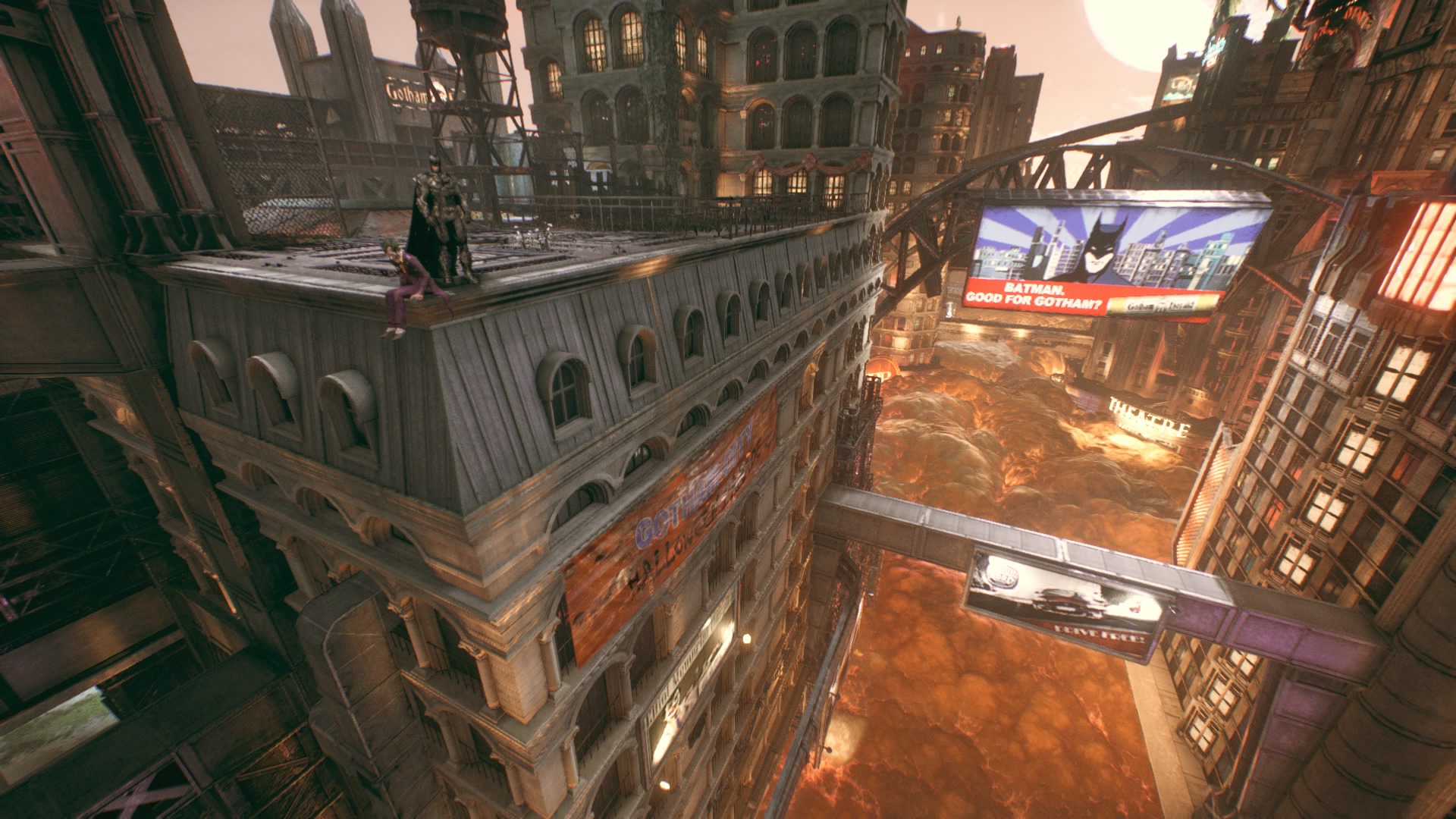
That’s the structure of the game, but how does it actually play? Gloriously. The combat is meaty. The driving is a welcome addition. Wiping out an entire room of armed guards without a single one spotting you is a fantastic as it ever was. Soaring over the city is never less than stunning. Batman’s array of gadgets are a joy to wield and integrating his car into some of the combat is a master stroke. Gotham feels so much more alive than in previous Arkham titles, with something happening on every corner and car chases going on all the time – which you can assist in, should you choose.

It must also be said that the voice acting is fantastic, especially Mark Hamill as The Joker: Yes, that’s a spoiler. No, Joker is still dead. Yes, it’s confusing. There’s a scene where Mr J does his karaoke routine which is hilarious and grim in a way only the Joker can be.

Despite the cast of potential allies, Arkham Knight is very much a solo Batman endeavour. Robin is constantly told to stay out of it and Batman reluctantly lets Nightwing actually do something as long as it’s nothing to do with the main story. Oracle is central to the plot, but Catwoman is now tucked away in a Riddler sub-story. Scarecrow is playing on Batman’s only fear – that revealing his identity will hurt his “family”, but in trying to protect his friends Bruce is only getting them in more trouble. Silly Bruce. Much of the game would have been avoided if he’d accepted help when offered. Still, that’s Batman for you.

With the story complete and enough side quests mopped up to see the ending, there was a little sadness. Rocksteady have already said this is their last Batman game, and as the end credit roll the montage of moments from all three Arkham games (Rocksteady don’t consider Origins or Blackgate canon it seems) retell the trilogy. It’s been a long road, but that’s it. No more Batman to look forward to from that corner, and it’s hard to see how any other Batman game can be as Goddamn Batman as Arkham Knight was. Arkham Asylum was purer, but Knight was truly an epic sendoff.

Filed Under: Games, Reviews Tagged With: Arkham Knight, Batman, PS4, review

Deus Ex Machina 2 (PC)

1st October 2015 By deKay Leave a Comment

2015-09-23_00006Way back in the primordial past, when games were made from rocks and cost as much as a family car to buy, there was a game called Deus Ex Machina. I’ve never played it. I’ve read a lot about it, none of which makes any sense. From what I can discern, it was more an experience than a game, and consisted of some minigames that you played while listening to an audio tape. Because, of course, voices in early 1980s computer games were limited to “HNNGHSLUMMMNDMUH” (“he slimed me”) in the Ghostbusters game.

2015-09-23_00010A couple of years ago, the creator of Deus Ex Machina (note the “Machina” bit – this has nothing to do with any cyberpunk first person shooters), Mel Croucher, Kickstarted Deus Ex Machina 2. I gather it’s actually more of a re-realisation of the first game than a real sequel, using today’s technology to create what he imagined the game to be in the first place. Probably.

This week, it was cheap enough to be virtually free on Steam, and since I had credit gained from selling trading cards, it actually was free to me, so I bought it. I had no idea what I was in for. Having completed it in just over an hour, I’m still not entirely sure.

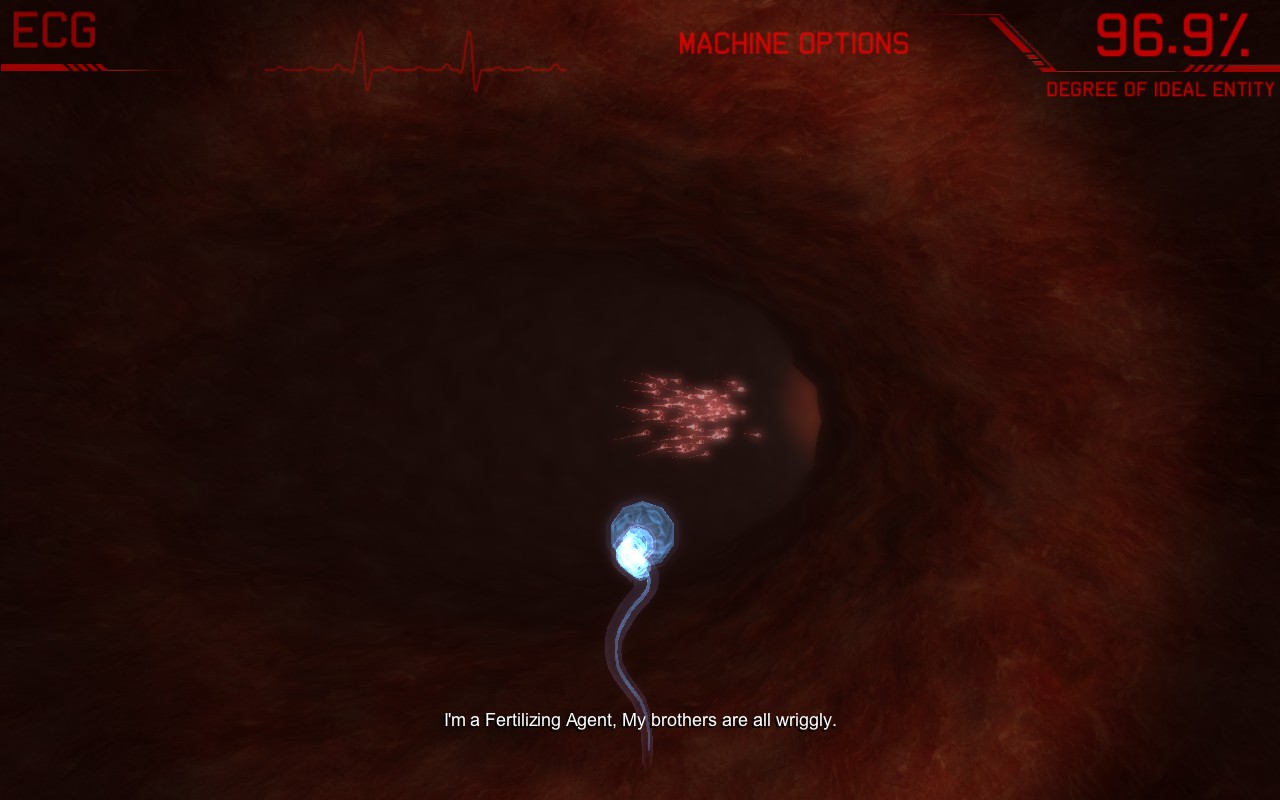
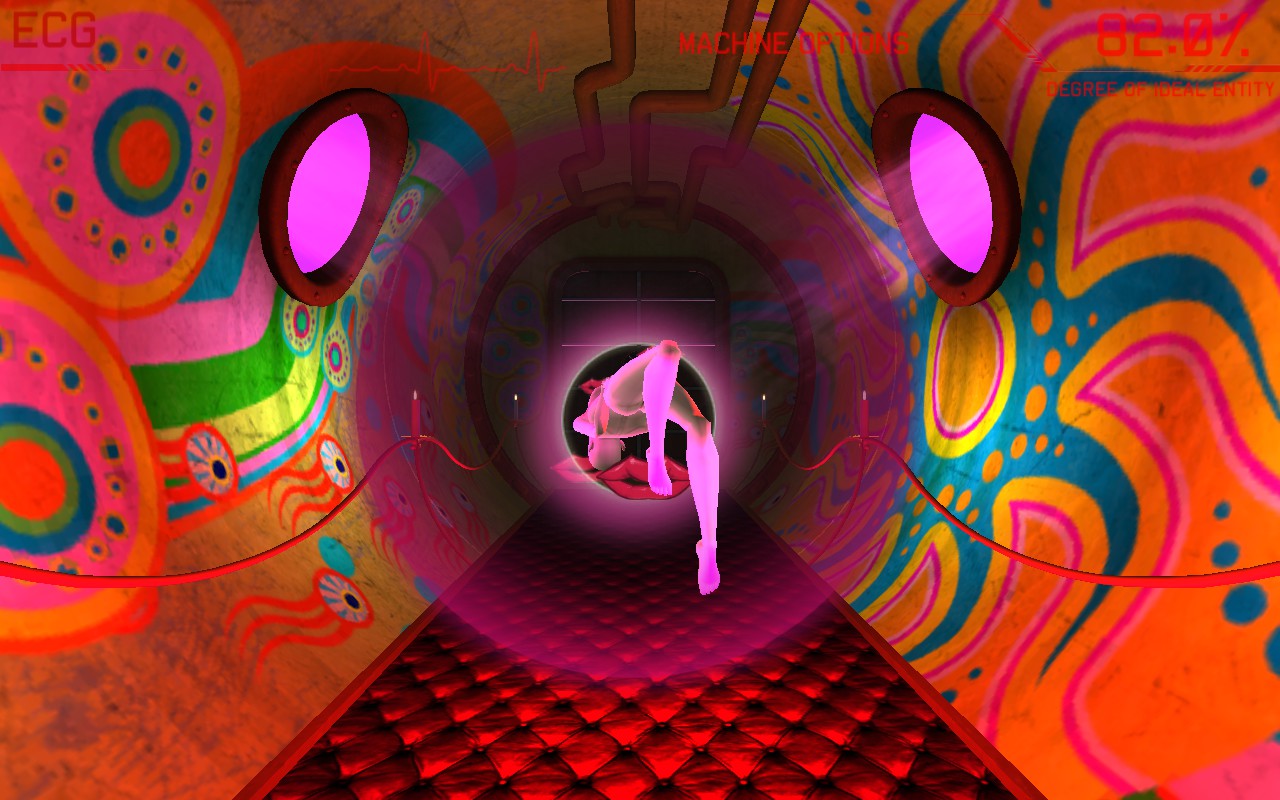
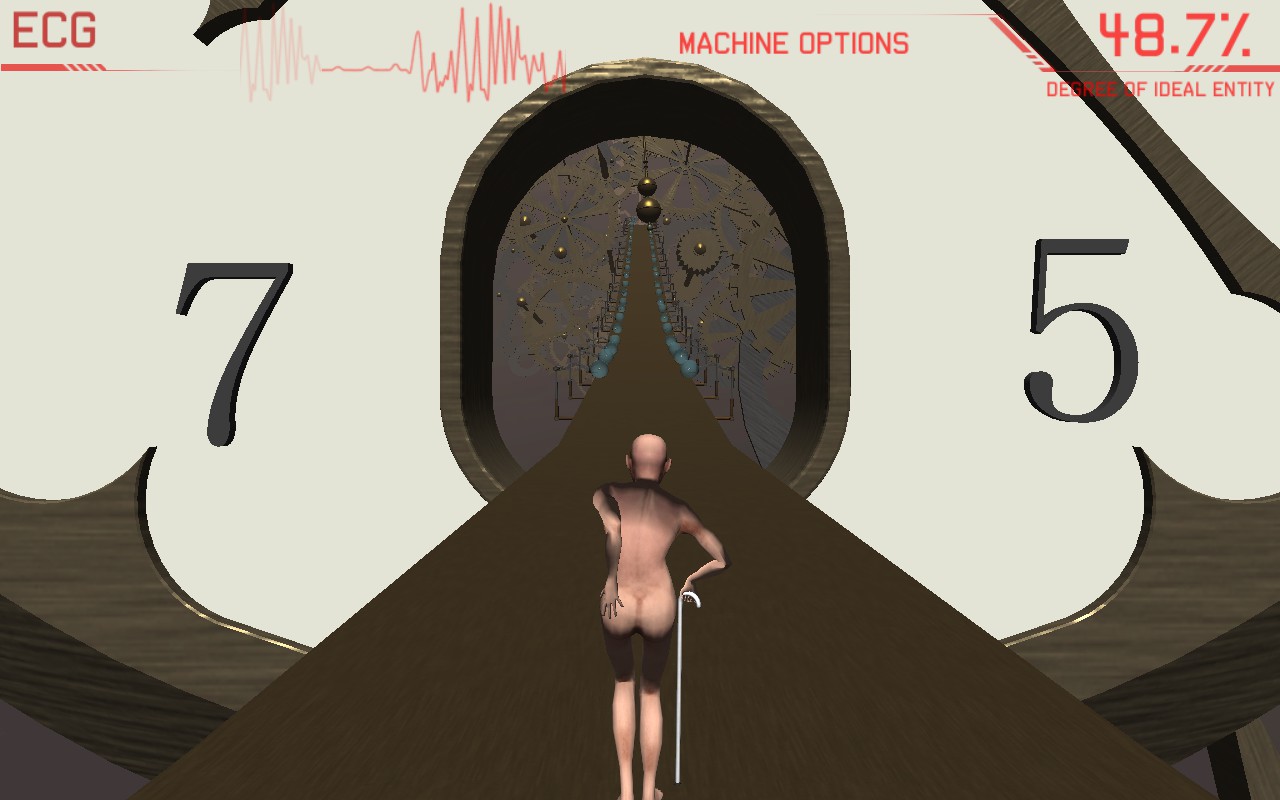
2015-09-23_00016There are several chapters, each covering a different stage in a person’s life. Conception, birth, growing up, puberty, and so on until (and past) death. Christopher Lee poetically narrates the story, and each chapter has a fantastic and differently styled musical track to accompany it. Notably, Ian Dury provides lyrics and voice to some of these, despite having been dead for over a decade. I suspect his recordings from the original game were reused.

It’s the music and narration that make Deus Ex Machina 2, as both are genuinely outstanding. Croucher’s clever verses make some great tracks, and the vocalists and musicians make music I’d happily buy on an album. Lee’s voice fits excellently as well. Unfortunately, the game doesn’t match up.

2015-09-23_00020Of course, I say game when I really mean experience. Each chapter mainly involves your naked avatar walking, floating, and sometimes running, into the screen. You can vaguely direct either him or something else on the screen in order to collect or avoid various things (kisses on one level, medicine on another). As you do so, your “degree of ideal entity” score goes up or down apparently in tune to what you’ve collected or avoided, although it is not always obvious which way it will go. I suspect it doesn’t matter; mine was bumped up to almost 100% through a successful egg fertilisation, but dropped heavily when I chose the non-warmongering options in a later section. Who knows what difference it makes to the ending.

As I said, your avatar is usually only vaguely directable so your impact on his path and ultimately his score feels disconnected. It’s clear you’re going to complete the game any way you play, even if you chose not to control your man at all. It seems a bit pointless, but it’s so worth playing. Sorry, experiencing. That music.

Filed Under: Games, Reviews Tagged With: deus ex machina, pc, steam

Gynophobia Review (PC)

22nd September 2015 By deKay 1 Comment

Being afraid of women is exactly the best reason to enter a sewer and shoot a load of zombies. Or so Gynophobia would have you believe, at least.

Mother!

We perversely meet our hero, Mark, in his mother’s bedroom, with her underwear scatted all over the place. Having referenced a classic serial killer stereotype about boys and their mothers, Mark decides to set off and explore his house (which mostly involves clicking on things with the pointer). Mark’s fear extends to visible distress at the sight of spiders, too. So he’s unable to enter his kitchen where one lurks harmlessly. And instead, ends up distracting himself by playing a terrible first-person shooter on his bedroom PC.

gynophobia | disposable media

Mise en abyme…

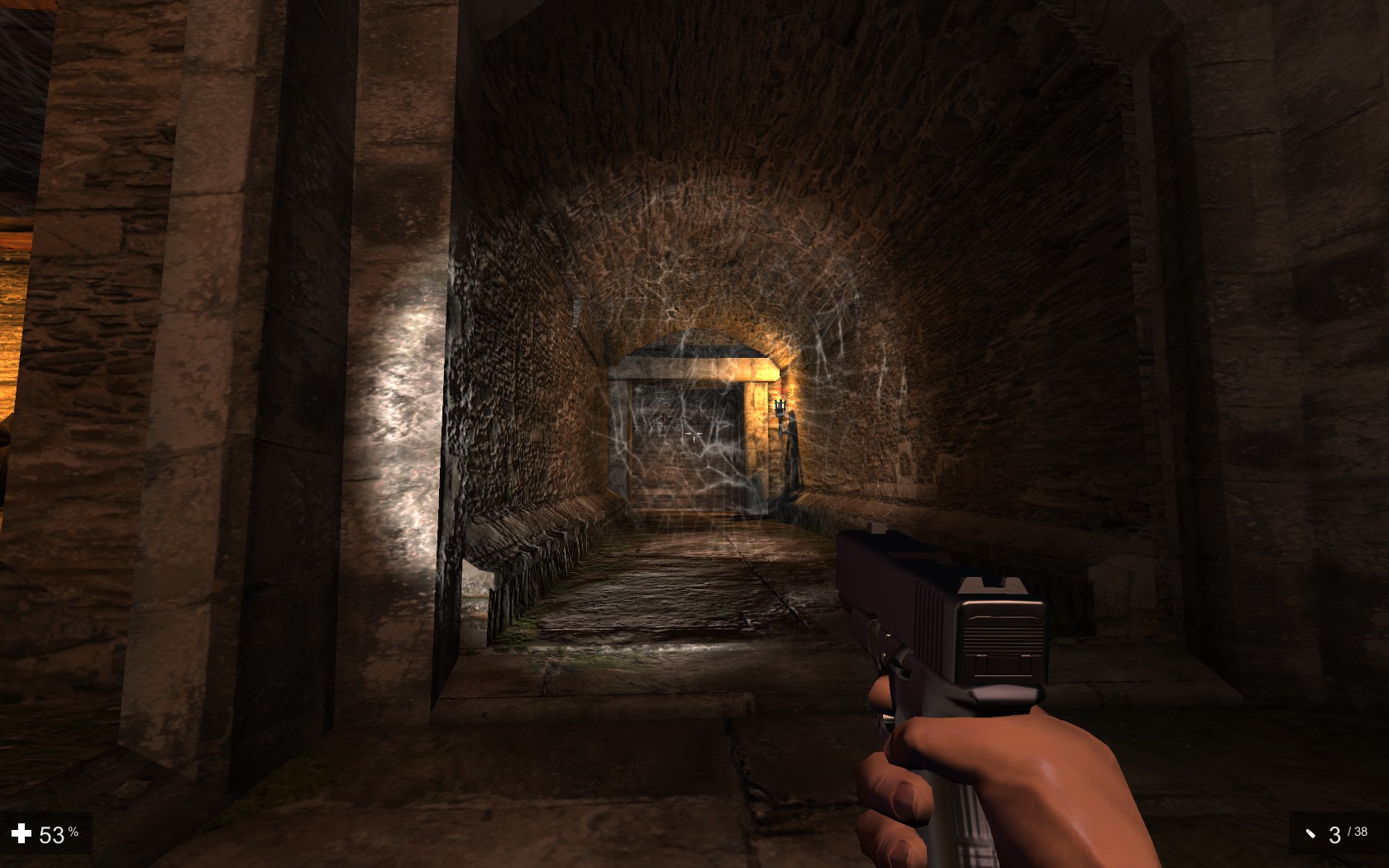
So begins the game-within-a-game. A short level set in a sewer, filled with zombies with poor AI and dodgy collision detection.

You can, and probably will, stand on their heads and come to no harm while their undead comrades flail at you unsuccessfully. Ammo for your pistol and what appear to be tins of tomatoes for ‘health’ unconvincingly litter the place but rather than stock up, the best course of action is to simply leg it for the exit ladder.

Exit found, you enter a car park in a town occupied by more zombies and for no explained reason, a massive guy with some sort of hammer. He’s not unlike one of the Bad Brothers from Golden Axe and follows you everywhere while you find some wheels and petrol for a van so you can escape. Exactly why Mark can’t just turn the game off is not explained!

Nobody actually cares…

Back in Mark’s house, you can explore some more as the spider has moved on. Eight-legged friend out of the way, you soon trigger the next level by way of a dream sequence. Or is it a dream? Maybe it’s real! Nobody actually cares.

Here, however, you finally confront Mark’s worst fear: women. Shoot them all! Evil women! And some giant spiders for good measure. And so it goes on.

gynophobia pc | disposable media

In 1996, Gynophobia would be near the peak of plot-based FPS action games. In that pre-Half-Life world, a meta story and this sort of action would impress. In 2015, a clumsy, generic Unity asset-based shooter is hardly going to stand out from the crowd – even if that crowd includes Devils Share.

It is clear there’s a vision here, an interesting psychological exploration into the mind of someone with a chronic discomposure of something; but the implementation shows the developer lacks the talent to fully represent this. Weak graphics and shocking AI could be glossed over with a great story or some genuine horror moments, yet Gynophobia lacks these too. What could be on a level with Eternal Darkness is instead a soulless gun game with clear baiting – why chose women as the literal target of the game if not to provoke? There are better ways of handling this, most of which don’t involve filling nurses full of bullets.

Although it is clear somebody – or some group of bodies – has spent a lot of time crafting this sub-par experience, it’s not a game that can be recommended.

If it turns out this was the hobby project of a 13 year-old boy (which this does feel like), then well done him. He’s made a great start in a career in game development. Perhaps once he’s had a bit of counselling, anyway!

If not, then no amount of polish is going to create an acceptable game from this as there is no single issue to repair. Everything needs serious attention and some sort of cohesion. It’s understandable that each section is thematically disparate, but the overarching ‘house exploration’ interludes don’t tie them all together in any defined or considered way. Vagueness and discovery can be used as excellent devices when implemented correctly, see Everybody’s Gone to the Rapture as proof of that, but Gynophobia is a limp collection of poorly realised levels replete with poorly realised gun play, bound together with a poorly realised (and poorly advised) premise.

Avoid.


Gynophobia is listed on Steam for £2.79 and is also currently available as part of a 12-game Indie Gala Hump Day bundle for $4 or more. The Hump Day offer ends at 11:30AM (10:30 CET) on Wednesday.

Filed Under: Games, Reviews Tagged With: anxiety, arachnophobia, fps, gynophobia, pc, steam

Get Social

  • Facebook
  • Instagram
  • LinkedIn
  • Medium
  • Pinterest
  • RSS
  • Twitter
  • YouTube

Top Posts & Pages

  • The thing that nobody tells you about Jet Set Radio
  • Persona 3 turns 10 in Japan
  • Heart Attack mode – a return to MvC2 in 2017
  • Aspire Zelos 50W Starter Kit Review

Ads

Join Us…

  • Facebook
  • Instagram
  • LinkedIn
  • Medium
  • Pinterest
  • RSS
  • Twitter
  • YouTube


Privacy Policy

Cookie Policy

© 2026 Hot Mod Media · Design & Marketing TWOTW

Disposable Media · FPSPrestige · OnlineRaceDriver · The Guitar List · Rescars · Rescogs

We use cookies to ensure that we give you the best experience on our website. If you continue to use this site we will assume that you are happy with it.