Disposable Media

Art, Music, Games, Life

  • Art And Literature
    • Comics
  • Music
  • TV & Film
  • Games
    • Tabletop Games
  • Technology
  • Life
  • Events
  • Magazine Downloads
You are here: Home / Archives for indie

Survived By: early access impressions

10th December 2018 By Qazimod Leave a Comment

Survived By is a game I stumbled upon after clicking my way through the discovery queues and “More Like This” lists you can find within the storefront of Steam. Described as a “free-to-play online bullet-hell style roguelite” on the Steam store’s product page, it seemed to cover a number of game genres I enjoy – okay, the “free-to-play” label sounded a few alarm bells… but the idea of running around with other players, shooting various foes and exploring a large map sounded interesting. I never really checked out Survived By in its alpha form, but after reading about the game’s premise, I added it to my Steam wish list so that I could be notified when the game was available, and on the 5th of December I received an email that told me Survived By could be played in early access form, so I had a little look at it last week.

Survived By: early gameplay

Survived By

Controlling the game with mouse and keys, you spawn into a central area with other players, and then you can set out to explore the world and fill out the map. In combat, you move with WSAD and aim and shoot with the mouse, and you can collect items and materials by walking over them. In the central area there are daily challenges that ask you to do x amount of damage or kill y number of enemies, and there are also “quests” that periodically occur whilst you are playing – usually these quests involve following a waypoint to a particular enemy and then defeating it. After playing for long enough and obtaining keys you eventually manage to unlock one of the dungeons (which has a suitably impressive name like “Monastery of the Rift”) – here, you enter a closed area such as a cave, move through winding paths that may lead to dead ends, collectibles or more enemies, and eventually you’ll reach and defeat a boss creature and gain items and gold as your reward before you head back to the public central area.

Survived By: exploration and pacing

Survived By

From my time playing, that central area was one of the more impressive aspects of Survived By – the shadowy incomplete map segments invite you to go further outside of the safer areas and find stronger enemies that may drop better rewards or give more experience, and my attempts to complete the map often lead to an early demise. Being a roguelite, death can see a player losing their character and having to create a new one that starts with no experience, so there’s always a certain amount of tension when venturing outward. That “bullet-hell” label might not result in Cave levels of insanity, but areas can get pretty busy with enemies and projectiles. The main concern I have at the moment is how the genre-blending could affect the pacing. In a multiplayer online game built around levelling and customisation, you want to find bigger and stronger challenges, but in a roguelite you don’t want to bite off more than you can chew. Survived By is both, and some players might find death somewhat punishing after they’ve gained a good number of levels. Although, that’s kind of the idea. I don’t know if it’s the kind of game that I could play for days on end, but it’s got enough going on to keep me curious, and I might drop back in on occasion to see how the game is developing. Right now, anyone can go onto the Steam store and take a look for themselves, but you will need to spend a few minutes registering and setting up a (free) account.

Survived By

You can play Survived By on Steam in its Early Access form here. You can read about more Steam news and opinions here

Filed Under: Games Tagged With: games, indie, pc, shoot 'em up, shooter, steam, survived by

Twin-stick indie title Shudder available today

31st August 2018 By Qazimod Leave a Comment

Innovation is hard. Merely coming up with a gameplay hook that makes your game stand out among the crowd is one thing, but even when you’ve discovered a winning formula, you still need to communicate to your audience and show them why your game is something special. Shudder is a masterclass in how to do this effectively – letting the player discover the game’s unique aspects through play, allowing them to understand what their avatar can do and how that affects the enemies on the field. There is a tutorial available, but the concepts explained in the tutorial really need to be witnessed through play. Essentially, you’re tasked with defending yourself against multi-coloured enemies named para-bugs whilst consuming collectibles dotted around the environment. (Even without the tutorial, the fact that the collectibles aren’t chasing you is a visual tutorial in itself.) As you pick up these collectibles a coloured hexagon grows at the top of the screen – fill this out and you can hit a button to “shudder” and stun all enemies of that colour, preventing them from moving and allowing you to move into them and “consume” them. However, there are several ranks of coloured hexagons and associated enemies, and every time you use your shudder you have to build up your coloured hexagons from the lowest rank again.

Voids and cubes in Shudder

Shudder

This is just the start, though. Continue to consume enemies and eventually an onscreen text will herald the appearance of a Vortex Cube – as enemies swarm around and collide into the cube, it will eventually begin changing colour. If the last coloured hexagon you filled out matches the colour of the cube, you can use your shudder ability to make the cube explode in a shower of bonus pickups, and bigger bonuses await those with more completed hexagons. Not only is this a great example of teaching the player through association – the cube’s own colour cycling invites the player to discover what happens if they shudder when their colour matches the cube – but it creates a unique tension; use the shudder early to eliminate foes, or continue progressing through the colours and destroy the cube later for a big bonus? Similarly, the Energy Void teaches players through experimental shudder usage as it draws in your collectibles and cycles through colours. Here, using your shudder ability when your last completed hexagon matches the Energy Void colour will cause an explosion that eliminates nearby enemies. The additional gameplay mechanics succeed in giving the player more to think about, and encourage priorities – is using the basic shudder ability more useful than taking advantage of the onscreen furniture? Should you capitalise on the Energy Void’s explosion or wait to gain pickups from a Vortex Cube? In addition, the game is also very thoughtful when maintaining an appropriate pace for experienced players – climbing the initial ranks seems slow at first, but as your run continues it seems quicker to progress through the early colours upon respawning.

The twin-stick success of Shudder

Shudder

What this results in is a satisfying loop of alternately feeling helpless and fleeing the incoming waves of foes…only to eventually decimate anyone unwise enough to still be chasing you. Of course, as the colour ranks increase you need to ensure that you can build yourself back up in time for another counter-attack, and so the loop continues – only getting more and more desperate as the crowds get bigger and the action intensifies. This escalation is judged expertly – you never feel like the waves are getting too strong too quickly, or that the hexagons are too slow to build up in time for the player to prepare a counter-offensive. Failure is always on you, and death leaves you wondering if you got too greedy or were too quick to use your shudder.

Beyond the core gameplay, a large range of unlockable ships is available to players who continue collecting the pickups from the exploded cubes, each with variations in their speed and multiplier behaviour and essential for those players keen to improve their high scores. Browsing the available ships and their costs, you can tell that this is where much of the longevity resides, but Shudder has a core gameplay loop that’s compelling enough to encourage continued replay even without the unlocks. During the rise of Xbox Live Arcade it seems like everyone was keen to put their own spin on the twin-stick genre, but Shudder proves that there’s still lots of room for innovation, and the £5.79 asking price gets you a game with more charm and replay value than most big-budget offerings.

Shudder

Shudder is available now on Steam here.

Filed Under: Games, Reviews Tagged With: games, indie, pc, saberphrog, shudder, steam

Shütshimi review (PS+)

14th April 2016 By Qazimod Leave a Comment

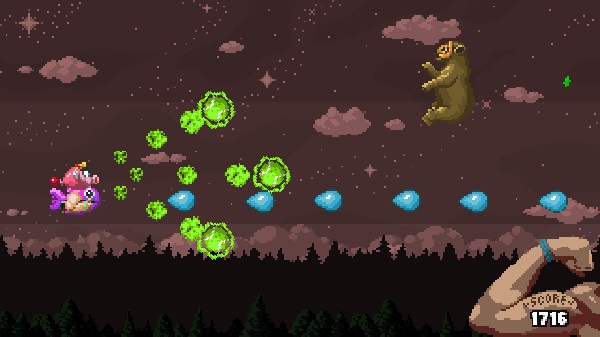
Shütshimi is both a game with a comforting level of familiarity and something with unique gameplay elements that set it apart from other titles in the genre. It’s a horizontally-scrolling shoot ’em up that started out on Xbox Live Indie Games but was recently made available for PS4 and Vita owners via the Instant Game Collection of PlayStation Plus. However, rather than presenting you with conventional levels that take between five and ten minutes to complete and have a natural sense of progression, Shütshimi is close to Wario Ware in terms of gameplay – it’s USP is that the player must survive ten-second “waves” of enemies broken up by shopping excursions between waves where the player picks a gameplay modifier from those on offer. Some of these modifiers are helpful, others can prove to be problematic, and the vast majority of them have text descriptions that are near-useless in telling the player what they do during waves. Even this shop has a timer that’s only a few seconds long, so you often find yourself picking the first thing that sounds like it might be useful and then hoping for the best.

The happy unpredictability of Shütshimi

Shutshimi

On paper, it sounds like it should be a recipe for disaster that results in a mess of a game, but the hopeless perk descriptions and variety of waves turn what would be a run-of-the-mill shoot ’em up into something that’s a lot less predictable. One perk taks about the opportunity to have “way more friends” in the next wave, and I thought that this might be a positive – maybe the description meant that I would have Gradius-style Options with me or something – instead, this perk ended up flooding the screen with even more enemies than usual. Other descriptions are a bit more blunt and easy to predict, particularly the ones that grant you traditional power-ups such as rapid fire, laser shots or a shotgun, and eventually if you play the game enough you start to see through some of the more misleading descriptions. However, even when you know what’s coming the shop timer forces you to make quick decisions and these can lead to mistakes when selecting modifiers – consequently, the gameplay rarely becomes stale. Outside of the shop items there is extra variety in the music, backdrops and enemies, but the overall style of the game is consistently charming and has a sense of humour that’s inclusive and rarely crass. (One modifier does replace the background and some items with “butts”, although even this is presented in a simple cartoon fashion and can’t really be considered overly offensive.)

Shütshimi – a chaotic novelty

Shutshimi

Shütshimi might sound chaotic and haphazard but there is some form of structure and progression in the game – every few waves you encounter a “boss” with a large health bar, but since you only have a few seconds to do damage, you sometimes have to wait for the boss stage to come around a few more times before you can drain the health bar completely. This makes “learning” the shop item descriptions valuable in the long-term, since you eventually learn to know when a boss encounter is coming and try to select high-damage or rapid-fire modifiers in anticipation of the encounter. Even when you’ve defeated all of the bosses there are extra difficulty modes to unlock and try out, so there’s a bit more depth to Shütshimi than the cheap and cheerful indie stylings might suggest. At the same time, I imagine that the novelty of the game will wear off quicker for some gamers, and anyone looking for more structure and progression in their shooters might be disappointed. For those people, there are games such as Velocity 2X and Resogun, but if you’re subscribed to PS+ there’s no harm in trying this out.

Shutshimi

Shütshimi is currently available for free during April for PlayStation Plus members

Filed Under: Games, Reviews Tagged With: games, indie, PS Plus, PS4, shmup, shoot 'em up, Shütshimi

Beat Da Beat review

15th March 2016 By Qazimod Leave a Comment

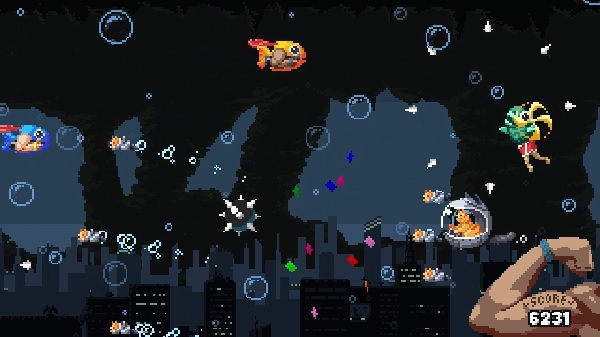
Beat Da Beat sounds like it should be the kind of thing that fans of scrolling shooters and rhythm-action games should instantly enjoy. Originally launched for mobile devices but released on Steam this month, it’s a shooter that features catchy electronic music and elaborate bullet patterns, but in Beat Da Beat the action is synchronised to the music, so you might have enemies moving in time with the beat, enemies appearing onscreen at the start of a bar in the music, notes being fired out in time with the main melody, and more besides. So whereas something like Rez would base rhythm on player actions – delaying shots slightly to fit in time with predetermined melodies, for instance – Beat Da Beat has a fixed rhythm to its gameplay that is influenced by the soundtrack. The interesting side-effect of this approach is that in order to learn a stage in Beat Da Beat, you almost have to learn the song. By failing and replaying the same stage repeatedly you begin to get used to the patterns, and you know that when those four bars finish, that large enemy is going to appear onscreen and attempt to ruin your day.

Beat Da Beat but Wait Out Da Miniboss

Beat Da Beat

The music in Beat Da Beat heavily leans towards electronica more than any other genre, so there are lots of melodic beeps, some pumping synthy sounds and contrasts between slow dubstep rhythms and faster beats. Considering that the aesthetic of the game is as traditional as you can get – spaceships and laser guns abound – the soundtrack suits the game really well, although if you’re not a fan of electronic music you might not warm to the tunes as easily. In order for the fusion of shooting and music to work well, stages often have timed set-pieces – for instance, you may have to defeat a miniboss during one phase of the song, or enemies may fly away if you haven’t destroyed them in the next few bars. This makes sense in a way, as the music isn’t going to wait around for you to finish destroying those enemies. That said, most of the enemies have some kind of health gauge that depletes as they take hits, and so when a miniboss arrives with no lifebar it’s not clear whether you actually have to deal damage or just survive the onslaught until the miniboss flies away and the music moves on.

Beat Da Beat and Buy Da Upgrades

Beat Da Beat

With a soundtrack of mostly enjoyable music and lots of satisfying bullet patterns to navigate, Beat Da Beat is one of the better examples of this kind of game. It may seem a bit simple at times and the mouse control is unusual, but the shooting is fun and the upgrade paths mean that even if you get stuck somewhere you can keep replaying and earning ingame currency for upgrades (and the costs are always reasonable, so there is never an absurd amount of grinding.) My only slight issue with Beat Da Beat is a purely aesthetic one – most of the time ships fly onscreen and attack in time with the music, and the effect is great. However, sometimes that effect is applied in lazier ways, with bullet patterns just appearing out of nowhere for the sake of accompanying the music. You can still have fun avoiding these bullet patterns, but you just wish they were coming out of something rather than merely “existing”, and it feels a tiny bit lazy. Nevertheless, Beat Da Beat offers plenty of fun for a reasonable price, and it’s a worthy addition to anyone’s shooter collection.

Beat Da Beat

Beat Da Beat is available now on iTunes, Google Play and Steam. More information on the game can be found at http://www.beat-da-beat.com/.

Filed Under: Games, Reviews Tagged With: beat da beat, games, indie, pc, shoot 'em up, shooter, steam

Radial Impact Review (Steam)

26th October 2015 By Qazimod Leave a Comment

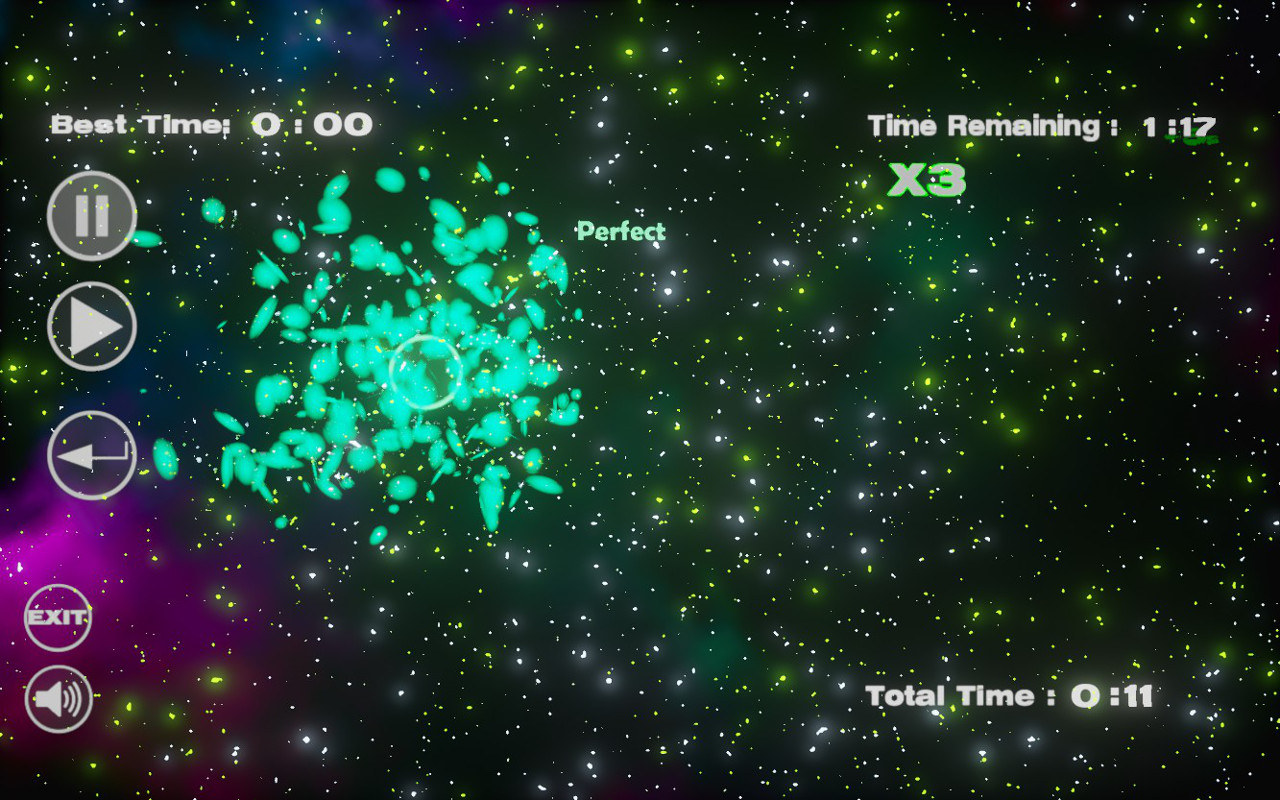
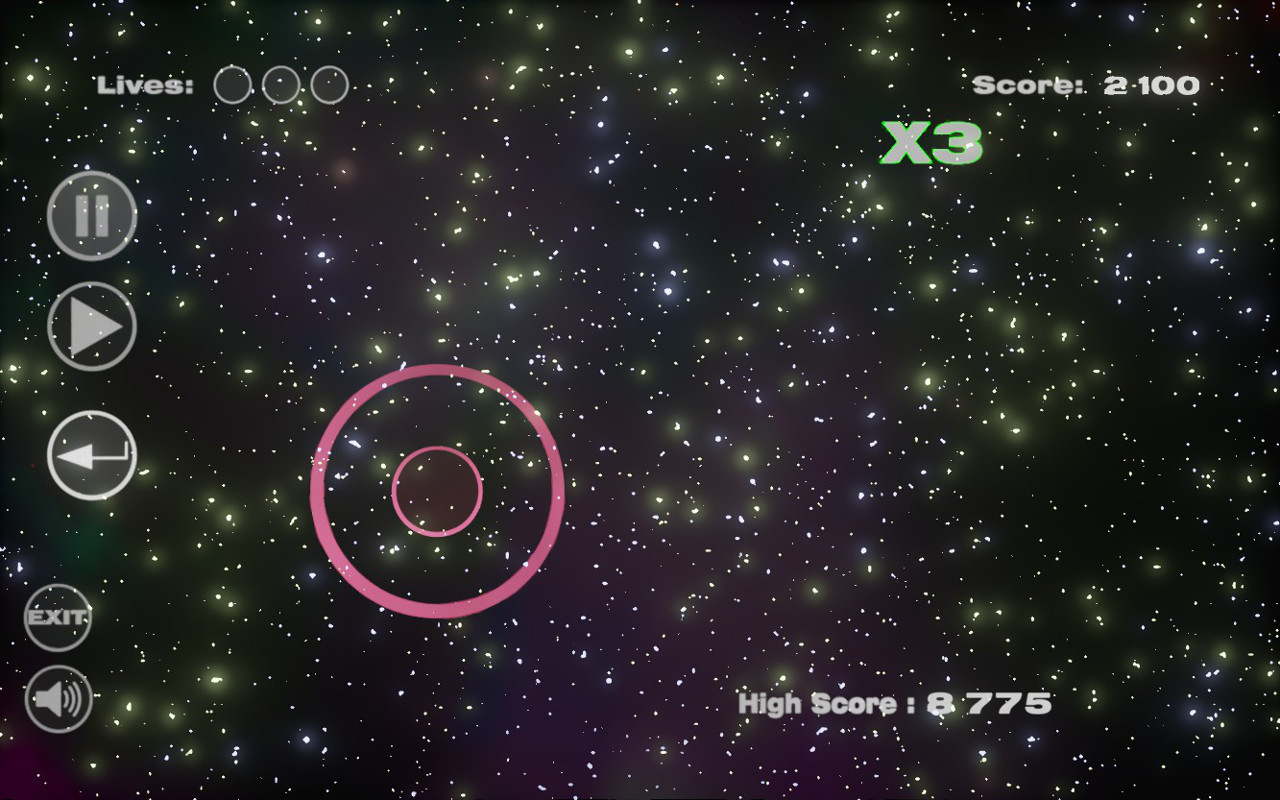
Released in late July of this year, Radial Impact is an arcade-style downloadable title that tests players’ reflexes by challenging them to click rapidly expanding or contracting circles as they come into contact with a second circle of a fixed size.

It’s a style of gameplay that sounds similar to rhythm-action games such as Elite Beat Agents or Technic Beat, but Radial Impact feels like a fairly hollow experience compared to those games. For one thing, Radial Impact isn’t really a rhythm-action game. Yes, there is background music and the timing of your clicks determines how successful you are, but when the circles grow or shrink to meet with the fixed circles, they do so with no regard to the game’s soundtrack. Far be it for anyone to criticise a game for what it’s not, but when you see that there’s no relationship between the gameplay and the music, what you’re left with is a reaction test. Consequently, the whole MO of the game is ‘click the circles when they meet for a high score’ and you end up feeling like you’re taking part in some kind of neurological exam.

radialimpact2

Depending on how good your timing is when you click, you are rated “Perfect”, “Excellent”, “Good”, “OK”, “Bad” and – if you mistime your clicks entirely – “Miss”. Consecutive perfect clicks will increase a score multiplier, whilst anything less than perfect resets the multiplier to x1. Meanwhile, a bad click or a missed click costs you one life and when three lives are lost, the game is over. There is also a special time-slowing ability that you receive after five perfect clicks in a row, but the varying speeds at which circles expand or contract mean that there’s never a good or bad time to use the ability.

Outside of the main game, There are a couple of other gameplay variants available. “Time Trials” mode sees you playing against the clock and earning extra seconds with well-timed clicks. In the other available mode, “Waves”, you are given a fixed number of circles to click and a score target to reach before you run out of circles to click.

Whilst the opportunity to play different game modes suggests that there’s some variety in Radial Impact, you’re actually doing exactly the same thing in all three modes – the ‘win’ condition is the only thing that’s changed. If there were game modes where the circles faded to become invisible before they met, or pairs of circles moved around the screen as they grew or shrunk together, or circles had randomised lengths and widths that made them look like skewed ovals… well, any of these hypothetical changes would make the moment-to-moment gameplay feel slightly more varied and interesting. Instead, the three available modes are more or less interchangeable. You could recreate the Time Trials and Waves modes are both variants without the game offering you to them, provide you have a stopwatch to hand and can count in your head.

radialimpact3

Maybe I’m expecting a little too much from what is essentially a 79p downloadable indie game, but low prices don’t make shallow games any more enjoyable. Whilst there’s nothing inherently flawed or frustrating about Radial Impact, it doesn’t have enough variety or substance to hold the attention of the player for too long. You can see most of what the game has to offer in a matter of minutes, and after that you’re only going to go back for higher scores. I struggled to see much variety in the visual presentation or the soundtrack as I played and so there isn’t even any kind of sensory reward for keeping a high-scoring combo going. It’s nice that Steam has enabled these kinds of abstract arcade-style games to sit alongside conventional shooters and strategy games but this style of game could be done so much better. Ultimately, Radial Impact feels like a missed opportunity.

Priced at £0.79, €0.99 and $0.99, Radial Impact is available now on Steam.

Filed Under: Games, Reviews Tagged With: casual, indie, pc, radial impact, steam

Glass Wing Review (PC)

24th September 2015 By Marcus Alcock 1 Comment

Creators FSS Software touted Steam indie title Glass Wing as a conscious homage to classic Nintendo 64 mainstays like Super Mario 64 and Banjo Kazooie. And on first impressions, the game certainly lives up to that billing.

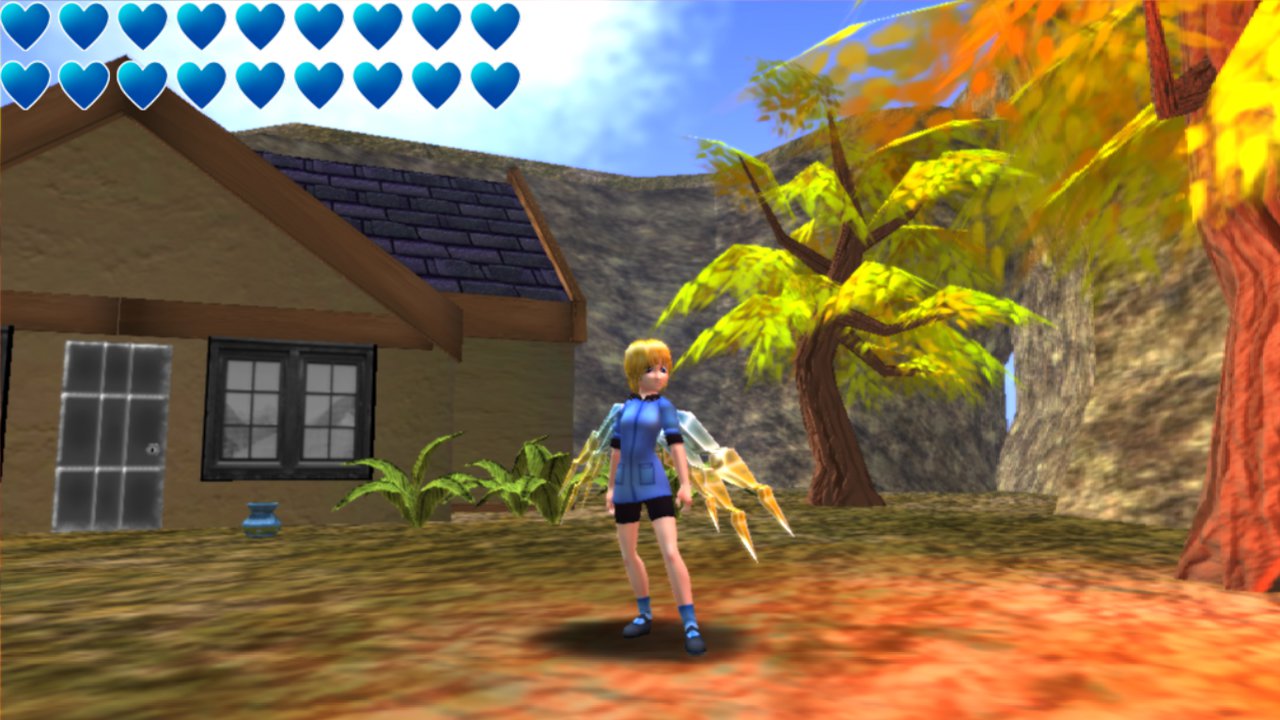
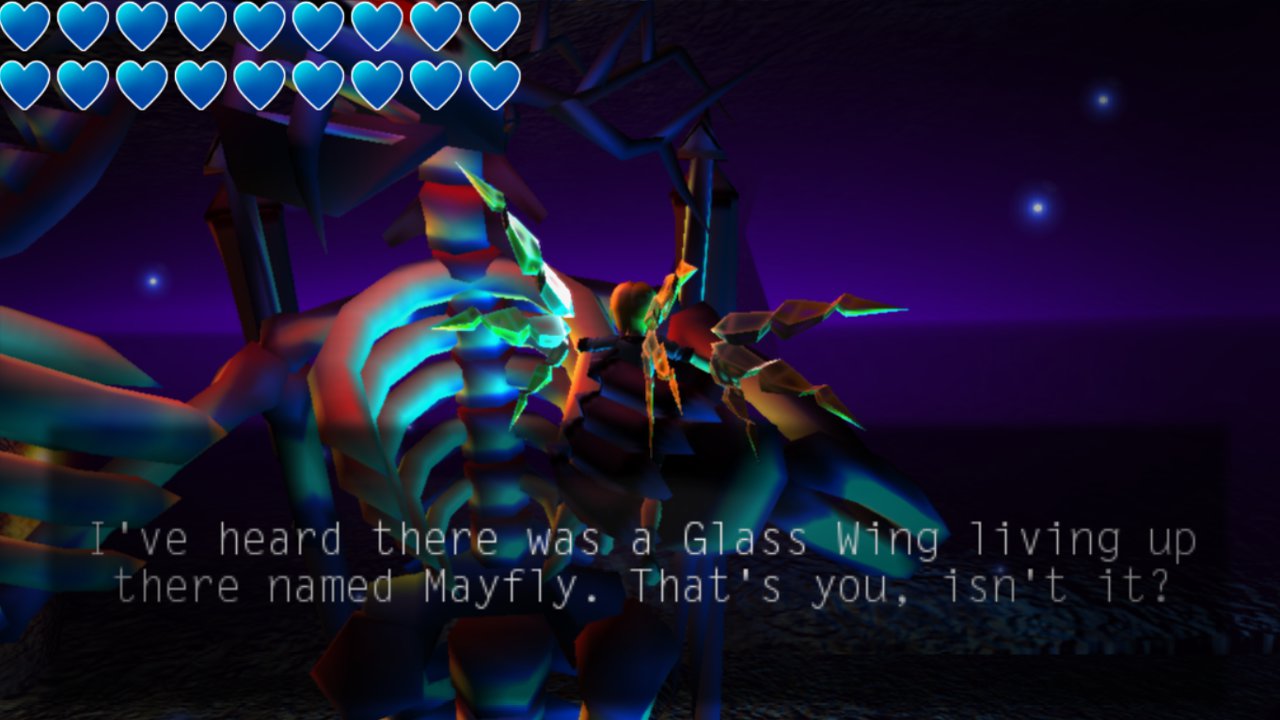
As with many of the N64 adventures, the player finds themselves inhabiting a peaceful, forested fantasy land. Controlling a fairy named Mayfly, it only takes a few minutes of leaping around the green pastures before a demon arrives, kidnaps Mayfly and makes off with her special powers. And so begins the quest to regain her abilities and defeat the bad guy. So far, so Nintendo. With its colourful mix of fairies, monsters and magic, Glass Wing certainly calls to mind the Japanese giant’s more fantastical output of the mid-to-late 1990s.

Glass Wing RPG PC

There’s even the usual 3D platformer pick n’ mix of stage backdrops; stereotypical forest, desert and snow levels are all present and correct. Coupled with familiar visual elements (e.g. warp pipes and Zelda hearts for health), the Nintendo vibe has been well and truly homaged.

Visually, the game sits somewhere between its cited N64 influence and early Dreamcast titles, while a surprisingly adept audio performance rounds out the package. Music-wise it’s a fitting mix of well-produced piano melodies and intense action beats, while the ambient audio cues (those of the enemies in particular) are genuinely effective.

Glass Wing RPG PC

The game itself mostly alternates between Super Mario Sunshine-style platforming void levels and more cerebral Zelda-like environmental puzzling involving item or ability usage. In fact, some of these tasks prove to be quietly ingenious in their implementation, especially for such a no-frills Indie release. The Metroid series also quickly proves to be another clear Nintendo influence with the slow drip feed of accumulated upgrades and abilities.

The game is not without some problems. Camera and control scheme issues plague much of the platforming, a deficiency not helped by the inclusion of an auto-jump feature. Unlike Nintendo’s smooth implementation in Zelda, Mayfly is only too happy to automatically throw herself off ledges and into the void below. Graphics and general presentation are also lacking, although that’s to be somewhat expected for an indie project.

Glass Wing RPG PC

Just like many N64 titles of the era, Glass Wing can be frugal in its dispensing of checkpoints. A possibly deliberate old school design decision, but one that means death often hurtles the player back numerous stages. This, coupled with the clunky controls and aforementioned auto-jump, quickly renders later levels a harsh lesson in abject frustration. A hand-holding modern blockbuster this is not, yet for all the exasperation it’s almost refreshing to return to the challenges of a bygone era. Indeed, the sense of reward upon clearing a particularly white knuckle section almost, almost justifies the preceding frustration.

That’s Glass Wing in a nutshell then; a charming and ambitious indie effort that can infuriate in its idiosyncrasies, but an experience that ultimately leaves a positive impression. Certainly one well worth considering next time it’s spotted in a Steam sale.


Available on Steam, the game’s standard price is £3.99/$4.99/€4.99 and a demo is available.

Glass Wing can be bought through ITCH.IO, where a 125MB free trial can be downloaded and the full-game price is $5.00 (USD).

Filed Under: Games, Reviews Tagged With: Glass Wing, indie, pc, platform, puzzle

Get Social

  • Facebook
  • Instagram
  • LinkedIn
  • Medium
  • Pinterest
  • RSS
  • Twitter
  • YouTube

Top Posts & Pages

  • Total War Adds Dynasty Mode and Chinese Distribution
  • The horrors of Double Dragon on C64: a retrospective
  • Total War Battles: Kingdom Viking Explorers Update
  • The Courteeners @ The Met Lounge, Thursday January 31, 2008
  • Total War: Three Kingdoms Adds Han Warlord Dong Zhuo
  • Best Ever Vanilla Cupcake Recipe
  • Noisia & The Upbeats: Dead Limit EP Review
  • Final Fantasy XII: The Zodiac Age review
  • Dragonball FighterZ full game impressions
  • Heading Beyond the Forbidden Forest once more

Ads

Join Us…

  • Facebook
  • Instagram
  • LinkedIn
  • Medium
  • Pinterest
  • RSS
  • Twitter
  • YouTube


Privacy Policy

Cookie Policy

© 2026 Hot Mod Media · Design & Marketing TWOTW

Disposable Media · FPSPrestige · OnlineRaceDriver · The Guitar List · Rescars · Rescogs

We use cookies to ensure that we give you the best experience on our website. If you continue to use this site we will assume that you are happy with it.