Disposable Media

Art, Music, Games, Life

  • Art And Literature
    • Comics
  • Music
  • TV & Film
  • Games
    • Tabletop Games
  • Technology
  • Life
  • Events
  • Magazine Downloads
You are here: Home / Archives for square enix

FFVII Rebirth – late impressions

11th March 2024 By Qazimod Leave a Comment

They didn’t need to do this. I said this at the start of my FFVII Remake late impressions, but the sentiment is true here also. Picking up directly where that game concluded, FFVII Rebirth is a another chunk of reimagined adventures with Cloud Strife and friends, and the second part of a planned trilogy of games based on the 1997 classic. Following the escape from Midgar and Destiny’s Crossroads, the game covers most of the rest of the first disc of the original game – from the flashback at Kalm to the Forgotten Capital. It’s kind of refreshing to see such an honest continuation that picks up almost exactly where you would expect and feels like a genuine extension of Remake’s adventure (the 2020 game came in at around 37 hours for me (plus around 5 hours for Intermission if you beeline the main story); my FFVII Rebirth save at the final boss was about 49 hours.) However – just like Remake, this is a game that fleshes out many of those story beats and battle encounters to something much more involved. Again: they didn’t need to commit to such elaborate new sequences, but it does turn this into a genuinely new adventure.

FFVII Rebirth – event square

FFVII Rebirth

Since I had already played the original game a bit, I had a vague memory about the general locations and events that a player goes through between Kalm and the capital, and so I could feel myself making a mental checklist of story beats and encounters that I wanted to see. And generally, I think that FFVII Rebirth manages to cover most of the memorable sequences. You still take part in the Junon parade, you still find time for fun at the Gold Saucer, you still go through some pivotal sequences at the Temple of the Ancients. The events won’t play out exactly like they did in the PS1 game, but most of the time the interpretations in Rebirth remain enjoyable. And even outside of the events, it’s hard not to appreciate the feeling of walking through what used to be a couple of screens of pre-rendered backdrops, or a handful of NPCs – the bustle and chatter that goes on as you move from one waypoint to the next adds a lot to locations such as Costa Del Sol. Some of those NPCs might have quests for you to pick up, but it’s more likely that they will be keen to play you in a game of Queen’s Blood. A new minigame added to FFVII Rebirth, this duel of card decks has a deceptively simple score-based goal but enough depth behind it to make each play satisfying, and is definitely worth getting to grips with (not that the story lets you ignore the minigame for long…)

2024’s new balance update

Rebirth does feel a lot more challenging than the 2020 game, but I don’t know if that’s because I’m more familiar with Remake’s battles. When you were taking Cloud on a journey to escape from Midgar, I felt like there were only a small handful of compulsory battles that really stretched your abilities and demanded that you make the most of the systems on offer. In FFVII Rebirth, it seems like every other forced miniboss encounter is doing that. I ended a lot of battles with my whole party in the red and near-death, and I’ve been playing both this and Remake on Normal difficulty with active battles. (I did try one or two battles on different difficulties, but generally I liked to reload and retry encounters on Normal difficulty.) The game regularly puts me in situations where I feel like I have eight things to “fix” on the party and only one or two ATB stocks that are ready. I admit that a lot of this may be due to my own knowledge and experience of the battles (I’m already planning to go back to older saves and take a second look at some of the late-game encounters), but the learning curve still felt gentler in the previous game. That being said, I loved taking the time to break down a battle encounter and determine exactly what I need to be looking out for in each of the enemy’s phases. Also, your own offense is supported by a new system of skill unlocks, comparable to a licence board in FFXII, or perhaps the weapon upgrade screen in Remake. Each party member can unlock anything from HP boosts and increased attack stats, to new unique elemental attacks that don’t cost MP – which are especially welcome after Remake had you entering boss battles with the wrong elements equipped.

FFVII Rebirth – environmental awareness

FFVII Rebirth

Whilst I can appreciate an increase in challenge with most of the encounters, I was more disappointed with the environments of the late game – and this stems from something that many Final Fantasy games suffer. When stakes are raised, environments shift from relatable towns and factories and beaches to epic fractured apocalypse backdrops, and even though there’s still another game planned for this trilogy, I already feel like I’m kind of done with it as a late-game staple. Some games have successfully delivered these kind of environments with less bombast – a purely narrative sequence in the Streets of Madness chapter of Final Fantasy XVI was particularly memorable – but I am concerned about what the third game will do to “one-up” the late-game of Remake and Rebirth.

Outside of pure environmental design, the engine sometimes struggles in places. With the previous game, the graphics had difficulty rendering detail in time, leading to memes such as That One Door. Here, the lighting is the most curious aspect of Rebirth. The party can sometimes walk forward into total darkness before the lighting “wakes up” a few seconds later, and some slight camera movements in the wrong place seem to turn the lighting on and off like a lightswitch. It’s never frequent enough to ruin the experience, but it still seems a bit silly whenever it happens.

Despite those observations, this is a great extension and expansion of what FFVII Remake originally set up, and I’m excited by the idea of a conclusion that could expand the hour count of the “trilogy” into triple-digits. If you didn’t like FFVII Remake then there probably isn’t much for you here – if you did, you probably already made up your mind about picking this up. They didn’t need to do this, but I still appreciate the ambition.

FFVII Rebirth is available now for PS5. You can find out more about the game here.

Filed Under: Games, Reviews Tagged With: FFVII, final fantasy, games, PS5, square enix

Opinion: Hire the experts

9th September 2023 By Qazimod Leave a Comment

Note: this article may loosely describe certain combat abilities unlocked in Final Fantasy XVI after a period of playing. If you have not played the game yet, please keep this in mind.

Prelude

Hire the experts - img 01

On June 3rd 2022, the X (formerly Twitter) account @finalfantasyxvi published a list of notable development staff who were working on Final Fantasy XVI. Much of it was as you would expect – Naoki Yoshida (FFXIV) was producing the game, Masayoshi Soken (FFXIV) was providing the soundtrack, and the full list included various other directors who’d previously had experience with the mainline RPG series in one way or another. However, there was one individual in the list who did not have Final Fantasy games credited to them. His entry on the tweeted list read:

Combat Director: Ryota Suzuki
Devil May Cry 5
Dragon’s Dogma
Marvel vs. Capcom 2

In any other series, this might have been a cause for concern – but after hearing other people talk about Final Fantasy XVI – and the trajectory of the mainline Final Fantasy series in general, many considered it a cause for celebration. More than a year later, having now completed the game myself, I have to commend the decision to bring Suzuki on board. Not for the first time, we find that when you hire the experts you can get fun action gameplay out of your RPG franchise.

Hire the experts – and make FFXVI a joy to play

Final Fantasy XVI has layers of RPG staples throughout – the experience points and levels, the unlockable skills, a lot of gear customisation, a job system (of sorts), chatty NPCs, vendors and a central hub, plenty of sidequests and areas to loot, and a story that takes place across an expansive world map with diverse regions to explore. Take away the combat and how it plays out, and what you’re left with is recognisable as a modern RPG template – and so I don’t think it’s strayed too far from its genre roots. Instead, the biggest change is felt when Clive swings his weapon. As we’ve seen modern Final Fantasy games lean towards action-oriented gameplay in Final Fantasy XV and Final Fantasy VII Remake, we’ve come to accept that traditional RPG combat is at risk of being left behind in this series. So when Final Fantasy XVI has action game talent informing its combat, we get to see this transformation in a form that immediately feels polished and satisfying.

Hire the experts - img 02

On the surface, nothing seems that extraordinary – there is a melee attack, a button to shoot projectiles (these have an elemental property based on the Eikon – this game’s equivalent of Espers or Summons – that is equipped), a lock-on, a jump. However, as Clive proceeds through the game he obtains more Eikons to “equip” – each of these Eikons has a unique action that can be performed at any time, a skill tree where more abilities can be unlocked, and two “slots” where those abilities can be bound to controller shortcuts. What makes this special is that a lot of the abilities don’t feel like the kind of commands you would select in a battle menu during a traditional RPG – instead, it feels more like the Eikons are fighting game characters and you’re unlocking special moves to bind to your shortcuts. Even as I played through the game, I found myself mentally referring to particular abilities as “the uppercut move” or “the gamma wave” – a special move from Marvel vs. Capcom 2. Just like special moves in 2D fighting games have applications for certain circumstances, there are a lot of combat abilities in Final Fantasy XVI that allow you to dictate the way these battles in 3D space are played out.

Hire the experts – but be sensible

RPGs have always enjoyed making the player feel powerful in new ways – every time you recruit a new party member in a modern Persona game, one of the first things you’re keen to know is what their persona’s full skill list looks like. In Final Fantasy XVI, it feels like each of the obtainable Eikons are as much of a party member as Jill, Torgal, or anyone else who might join Clive on his journey, and they definitely elicit the feeling of wonder as you’re keen to unlock each ability and work it into your combos somehow. When you hire the experts you can end up with memorable action experiences, but the gameplay structure is still sensible enough to stagger each Eikon acquisition so that you’re not overwhelmed with options. By the end of the game, you will have come up with some favourite abilities anyway (abilities can be upgraded for more potency, and even bound to ability slots of other Eikons) – consequently, you’ll already have decided what options are right for you.

So it’s taken this long for Square Enix to modernise the combat in one of its beloved RPGs? Not quite – because I feel like we have been here before. Just like Capcom talent revitalised combat in a new Final Fantasy, a lot of my time spent with Clive and co. led to me thinking about how Nier reinvented itself. The 2010 game had serviceable combat tied to some awkward pacing and dull sequences – several years later, another decision was made to seek action specialists (this time PlatinumGames) for Nier Automata, and it resulted in a spectacular 3D action vessel that still respected the roots of the original. And whilst it may simply be because Final Fantasy XVI is fresher in my mind, I daresay that it is even more accomplished than Automata was. Obviously we don’t need every 3D RPG to follow this evolution (Atlus is doing just fine with conventional turn-based combat, and even Yakuza managed to make it work for their own re-invention.) However, if real-time combat is a focus for an RPG developer, it helps to hire the experts.

Hire the experts - img 03

Final Fantasy XVI is available now for Xbox Series, PlayStation 5 and PC. Nier Automata is available now for PlayStation 4, Xbox One, PC and Nintendo Switch

Filed Under: Games Tagged With: FF16, FFXVI, Final Famtasy 16, final fantasy, Final Fantasy XVI, games, Nier Automata, Ryota Suzuki, square enix

FFV late impressions: the job centre

2nd May 2022 By Qazimod Leave a Comment

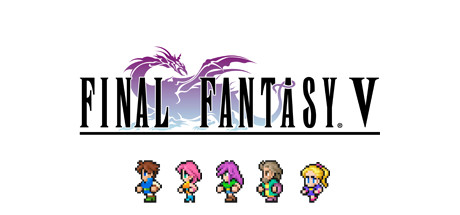
The further back we go, the less I know. I was one of those casual types who barely knew what Final Fantasy was before VII, and ever since then I’ve jumped around the series to see if there was anything else that I missed when I was interested in other games. At least when I think of publishing FFV late impressions, I realise that I kind of had an excuse at the time. It was first released on the SNES (sorry, Super Famicom) in 1992 in Japan, and Europe didn’t get to see it until the 00s and (in the case of PSN and mobile) the 10s. I got around to playing the Game Boy Advance release earlier this year – honestly, it’s not a game that I knew a lot about and so it’s not like I was choosing to play it based on its reputation (unlike my FFVI and Chrono Trigger playthroughs), but I had heard a few good things about it. The game centres around our heroes vowing to restore order after the villain Exdeath shatters the elemental crystals in a bid for power. It’s your typical JRPG format of going from new town to new dungeon, obtaining more abilities and encountering new opponents, culminating in a showdown with the antagonist. Dungeons have some light puzzling and locked-door scenarios, as well as hidden routes to rare treasures – generally, it’s a comfortable RPG template that you can quickly enjoy without being bombarded with too many strange gameplay systems.

FFV late impressions – jobs and abilities

That said, one thing I took away in my FFV late impressions was that the implementation of the job system was more flexible than I expected. I don’t always like job systems in RPGs, because they put a lot of pressure on me to create a sensible range of skills and abilities across my party. I’m not that guy who sets up a team of four white mages, admittedly, but I do feel a certain amount of artificial pressure to “get things right” and not screw myself over in the late game. With FFV’s job system, each job allows a party member to equip certain gear and use special abilities in the battle menu – a thief can steal items from enemies, black and white mages use spells that cause elemental damage or support the party, and so on. However, each party member has a “job” slot and an “ability” slot; after using a job for long enough, the skills associated with that job are unlocked as abilities. This means that you can assign a skill as an ability and then start learning something else in the job slot – creating a summoner who has the thief’s stealing command, or a monk with magic capabilities.

It may seem like a small thing, but it blows open your tactical options – your four party members have their two slots to play with, and at the end of my playthrough I had 21 jobs available as well as the Freelancer (who has two “ability” slots and can wield any gear.) It’s a very different vibe from FFVI (where nearly every character had one “job” throughout the game) and FFVII (where “jobs” are essentially materia and anything goes), but FFV’s own freedoms and restrictions make it satisfying to try different combinations of skills to see what works. By the end of the game (for those curious about the commitment: 38hrs on the clock, with all party members around Lv50), my party was using four different types of magic (blue, black, white, time), controlling enemies (beastmaster), defending against attacks (knight), using summons (summoner) and dealing huge physical damage (with the monk’s “barehanded” ability.) It’s like working with eight party members, but it adds a tactical edge because you still only have four “actions” in your turn.

The grind

The jobs don’t save the game from the usual RPG hurdles, however. I can’t summarise my FFV late impressions without saying that there is still grinding, there are still plenty of random battles, and there are some miserable encounters if you’re not suitably prepared. Towards the end of the game I was being battered by more status ailments than I could deal with in my turns, and so I had to train up someone with time magic to help myself. Also, the random battles can be a nuisance when you’re also finding your way around a dungeon (although gear such as the Chicken Knife – which makes the party auto-flee an encounter and will discharge powerful attacks after fleeing enough battles – make navigation a bit smoother.) As much as I like this game’s jobs and abilities, the later games excel in the moment-to-moment business of dungeon exploration.

FFV late impressions – where to go

FFV late impressions

In late 2021 Square Enix released the “Pixel Remaster” of Final Fantasy V – I don’t know if it’s a particularly good remaster, but there should at least be options if you’re keen to play this but only have modern hardware. I played the GBA game and it was generally fine, but I have no knowledge of the other versions to compare it against. I don’t know if I’ll look even further back through the series history another time, but I’ve enjoyed this entry. If you have any fond memories of Final Fantasy V, don’t forget to leave a comment below.

Filed Under: Games Tagged With: ffv, final fantasy, Game Boy Advance, games, GBA, mobile, playstation, PS1, psx, snes, Square, square enix, steam, super nintendo

Preview: Babylon’s Fall beta impressions

17th November 2021 By Qazimod Leave a Comment

Earlier this week I took part in the Babylon’s Fall beta that ran from November 15th to November 17th, giving me an opportunity to finally find out more about the nature of Platinum’s forthcoming action RPG. You may remember me talking about this game in my E3 2018 coverage, when it was first unveiled during Square Enix’s showcase. Since then, I haven’t seen a lot of information revealed about the game – we were treated to minor blog updates and a few images and gifs, but I don’t really feel like there was anything of substance to enjoy until Square Enix’s E3 2021 presentation, where they reminded us that the game still existed. I was still intrigued about the game in the years that passed, but I never felt like I was given enough information to really justify publishing any kind of “progress update” article on this site. Consequently, I was quite pleased to receive an invite to the recent Babylon’s Fall beta session – not least because it would finally give me a chance to understand what kind of gameplay Platinum would be going for, and whether or not it was even worth maintaining my interest in this title.

Beginning the Babylon’s Fall beta

Babylon's Fall beta

The experience I had with the missions in the Babylon’s Fall beta mainly reminded me of old 3D Phantasy Star games, but only if those missions were accessed via the kind of elaborate hub seen in some hunting games, or maybe certain F2P MMOs I tried many years ago. The hub here is known as the meeting area, and whilst it felt like a few parts of the meeting area were disabled for beta purposes, you were still able to buy and sell equipment at a vendor, visit a different character to see daily challenges (defeat 100 enemies, complete a quest using Quick Match, etc.), go and talk to someone who could change your character’s appearance, and find a chest which acts as storage for your character’s excess belongings. I had just set up my character and I didn’t exactly have currency to spend, so instead I found a billboard that I could interact with to start my first quest.

This is where the Phantasy Star comparison comes in. My memories of Phantasy Star Online: Blue Burst and Phantasy Star Portable 2 amount to recollections of time spent in walled arenas fending off waves of samey enemies – the Babylon’s Fall beta isn’t a massive improvement. You’ll step into an open area and then you’ll be locked in, as foes begin spawning in. You can attack with light and heavy swings (or bow shots, or whatever you’re using) to build up a meter, and then spend that meter casting magic projectiles (not unlike the magic seen in the original Nier.) The catch is that the magic attacks feel more effective than the regular weapons in terms of dealing damage, but you’re spending meter to use them. So I assume the intention is to alternate between building meter with your equipped weapons and casting magic to cause significant damage. It’s a nice idea in theory and it encourages a certain “rhythm” when playing, but (like Phantasy Star) you have to work through a lot of spawning enemies before you’re allowed to move forward. Consequently, what begins as a fun exercise can lead to your patience waning.

Sponge life

If the respawning enemies were the only disappointing aspect of the combat in the Babylon’s Fall beta, it might still be excused – after all, this is a Platinum game, so you’d expect some exciting combat. Unfortunately, I was kind of disappointed when it came to the moment-to-moment action as well. I found that health bars of regular enemies were long enough to make them feel like damage sponges – not only that, but a lot of enemies had “super armour” where their own animations couldn’t be interrupted with your attacks. I feel like this is another misstep in the general experience: if they were damage sponges that could be interrupted more, the player’s attacks would feel satisfying… and if they had super armour but could be dispatched quickly, they’d be less of a nuisance. However, the combination of these two things leads to a slightly dull experience, and this feeling is exacerbated by the amount of new enemy spawns that arrive before you’re allowed to move on.

Babylon’s Fall beta – room for change

Babylon's Fall beta

Things are made worse when you’re playing a beta and you can’t find enough available players to fill a party – leaving you slogging away on your own – so the game really wants you to go in with a full team. Completing a mission rewards you with new gear that can increase the stats and level of your character, allowing you to take on harder missions. However, if missions tuned for characters at the “intended” level are this much of an ordeal, I can’t imagine the core combat loop becoming that much more satisfying. Hopefully I’m proven wrong, but we’ll only know after more tuning and tweaking is done by the developers.

Find out more about Babylon’s Fall at Square Enix’s website

Filed Under: Games Tagged With: Babylon's Fall, games, platinum games, PS4, PS5, square enix

Chrono Trigger Revisited – a 2021 retro project

8th May 2021 By Qazimod Leave a Comment

Chrono Trigger Revisited? Well, my first visit was cut short in the end. Like Final Fantasy VI (or Final Fantasy III, if you will) this was a game that had been on my list for a while. I was one of the heretics who barely acknowledged JRPGs in the 16-bit era, and we grew up with a Sega Mega Drive rather than a SNES, so I was even more in the dark when it came to FFVI and CT. I’ve been aware of their impact ever since the 1990s, and I think at one point I even had a friend install both games onto a modded Xbox… but I was too distracted by Super Mario World and R-Type III to give Square’s RPGs any attention. Over the years I made a few half-hearted attempts to play through Chrono Trigger, but I often find the time investment for JRPGs somewhat intimidating. Even so, FFVI and CT are two games I’ve always wanted to play through, and I think that finishing FFVI last year motivated me into retrying the other game.

Chrono Trigger Revisited – a series in a single game

Chrono Trigger Revisited

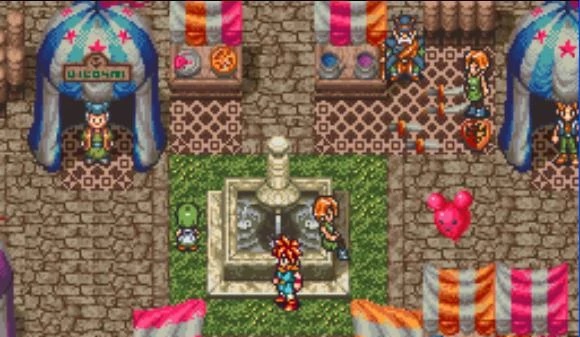
Chrono Trigger settles you in for a classic example of science going too far – as Lucca demonstrates a teleportation device at the Millennial Fair, the pendant of willing volunteer Marle interferes with the device and sends her through a time portal. This sets up the ensuing journey – going through the portal ourselves so that we can find Marle and get back to the present day safely. However, what makes CT so uniquely enjoyable is that this is just the first “quest” for our heroes. Before embarking on Chrono Trigger Revisited, I’m not even sure how much progress I made during my previous attempts… but I found that this wasn’t a simple “rescue the damsel” premise designed to set up the rest of the game. Instead, it was just one of the many adventures our party would have before the credits rolled. Like I said, the time investment needed for old JRPGs can be really off-putting for me, but CT’s structure and format is built in such a way that it feels less like an epic quest and more like around 20-25 “chapters” of an animated adventure series. What this means is that I ended up spending just under 32 hours playing through the game, and throughout that duration it rarely felt like a chore – the story was regularly going to different places, and whenever I spent an evening with the game I felt like I was ending one smaller adventure and beginning another. (Even at the end of the game, you have a series of optional sidequests to perform, but the game is very polite at arranging a to-do list for you; just speak to the old man at the End of Time.)

Chapters and spikes

Admittedly, this is nothing new – most classic JRPGs drop you into one location and establish a miniature quest as part of the main arc – but it lends itself so well to Chrono Trigger. It even extends to a system level as well. Not only are you travelling through time to resolve a problem and then moving on, but each miniature adventure is given its own name in the save files. Each time you save your data the text for the save file displays a chapter name; this is never shown during gameplay, but it has the effect of making your adventures feel self-contained. It’s a simple but effective way of reinforcing a sense of progress. Now, it’s still fair to say that you’ll be spending a lot of time in each of these chapters – there are minigames to complete, and plenty of battles and levelling to be done – but even then, your progress isn’t delayed for long. Over the course of the game your characters learn “techniques” that are your MP-governed skills used in battle, and these can be learned naturally through play or brute forced by grinding in areas – it’s up to you. As you’d expect, MP is only limited by the number of Ethers you can carry, and you’re continually making money as you battle. The game always finds a way to accommodate your time.

These chapters are also prolonged by certain bosses that can feel a bit like difficulty spikes at first, but I don’t think I really spent more than one play session where I was struggling against the same boss. At one point during the “Fated Hour” chapter I was so alarmed by my defeat at the hands of a boss (during the “Black Omen” sequence) that I levelled up my main party around ten times (the area leading up to the boss had lots of battles that rewarded generous levels of experience.) Admittedly, this may have been overkill, because I cruised through most of the rest of the game, but generally the difficulty spikes are few and far between, and you don’t need very many grinding sessions to overcome each obstacle. (Again, spending lots of money on support items – Mid Ethers, Revives – also helps.) At other times, it might feel like the dice rolls simply aren’t going in your favour; you’ll be trying to recover from a boss’ ultimate attack and they’re already charging it again… but perseverance, levelling and preparation helps. (Or if you just want to have more turns available, I found that having someone with the Haste skill was often beneficial.)

Chrono Trigger Revisited – wrapping up

Chrono Trigger Revisited

There were a couple of other nitpicks I had during my Chrono Trigger Revisited project – some of the minigames felt a little fiddly (visiting an ice world and avoiding strong wind currents by standing behind rocks sounds fine in theory, but the game is very particular about where you stand), and some exploration sequences had fairly dull gimmicks (guiding Robo through a maze of conveyor belts and switches in order to carry an electric current before it is lost.) However, the rest of the game makes up for these moments. I ended the game with my main character levels at between 67 and 69, and with between 31 and 32 hours on the clock, so it took me fewer hours to complete than FFVI. I’d rather not rate one game over the other, but I feel like CT has a much better structure, whilst FFVI has more potential for silly balance-breaking in a traditional structure. FFVI doesn’t let you tie a bow on a chapter, but it does let you annihilate enemies with Cyan’s Bushido and Sabin’s Blitz techniques, or cast Ultima on foes for 1MP with a relic you found on the world map. That being said, I think that more RPGs can benefit from looking at CT’s tidy, manageable structure. Oh, and both games have pretty great soundtracks – my main standouts in FFVI were the Gestahl Empire theme and the “Awakening” theme… in Chrono Trigger, the Undersea Palace theme stood out as a bold and atmospheric piece that immediately sets the tone in the areas where it’s used.

That’s pretty much all I have to say until my next mammoth retro game undertaking, although this and FFVI were the “big” ones on my personal bucket list. Thanks for indulging me, and let me know in the comments if you have any particularly fond Chrono Trigger memories.

Chrono Trigger was originally released on the Super Nintendo, and re-released through various updates on PSOne, Nintendo DS and Steam.

Filed Under: Games Tagged With: chrono trigger, games, nintendo ds, psone, Square, square enix, steam, super nintendo

FFVI late impressions: notes from a newbie

4th October 2020 By Qazimod 1 Comment

This article has been some time in the making. In the 16-bit era, I grew up with the Sega Mega Drive and missed out on a lot of SNES classics. Of course, that didn’t stop me from trying to emulate Final Fantasy VI and attempt to play it on PC, but a busy gaming schedule and a short attention span meant that I never gave it the time it deserved. I did “buy the game” years later via the SNES Classic Mini, but even after making a spirited effort to play it on that machine, I only ended up saving myself into a corner – stranded on the floating continent with an underlevelled party who wouldn’t be able to make it back to the world map. (In hindsight, I may have had a Warp command or item available and didn’t realise, but I’d have to check the save…) Honestly, I didn’t intend to write an FFVI late impressions article in early October because I didn’t know I’d be playing the game; however, I’ve had a pretty quiet gaming schedule and so it’s been a fun way to pass the time.

FFVI late impressions – the old

FFVI late impressions

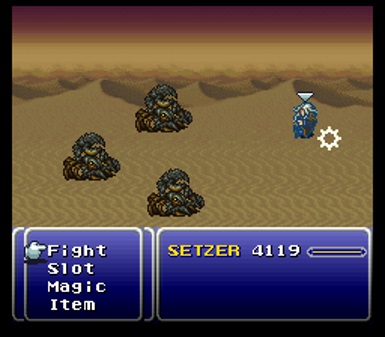
Final Fantasy VI has some novel and inventive moments, but its foundations are quite old-fashioned. You travel the overworld between towns and dungeons engaging in random battles until you’ve levelled up enough to take out the next thing that’s in your path. Random battles are frequent, and blasting through so much fodder might seem chorelike if I wasn’t already familiar with old-fashioned RPGs. To its credit, the character variety allows battles to remain interesting – each new party member that joins the cause has a unique skill that opens up more tactical options when they’re battling with your party. Early on in the game you might find that a few allies are struggling, but you’ll press on because you’re confident in nailing Sabin’s Blitz techniques, and so he can do a lot of the heavy lifting. Later on you’ll see Setzer’s slot-machine ability (which Cait Sith would later pinch in FFVII) and train yourself in reading the reels and making the most of their benefits. Elsewhere, Cyan has multiple special attacks available if you’re willing to wait before taking action – it’s not the most exciting tactic… but since enemies are still active as you wait, there’s an element of risk. However, not all of the techniques are that amazing – I got a few abilities for Gau on the Veldt but the ones I obtained stopped feeling useful in the later areas. Meanwhile, I think I got all of Mog’s “Dance” techniques, but he was in my tertiary party at the end and so he never got a look in – apologies to Mog fans reading this.

Setbacks

FFVI late impressions

The battles themselves aren’t too bad, but the setbacks can be offputting. After revisiting content that I knew from earlier playthrough attempts, I was playing pretty blind – and so I wasn’t always sure when I’d be underlevelled or overlevelled. I actually ended up using the three available save slots so that I wouldn’t have to go back too far if I was underlevelled. (Although once again, I could have used things like the Warp technique – or the equivalent item – a little more during my playthrough; it essentially whisks the party out of a dungeon safely, and I only really started using it in the final tower area.) One element of modern RPGs that I did miss was the concept of “passive” levelling; where the characters who aren’t in your active party still gain a fair amount of experience. I’ve heard that certain events allow party levels to become “averaged” so that nobody falls behind too much, but I still ended up with a few alarmingly under-levelled characters late in the game, and this became a bit of a problem during certain sequences in the final dungeon that involve your entire party. That said, this is still something that I’m guilty of in modern RPGs – many playthroughs of Persona 4 leave the likes of Kanji and Yosuke laughably underpowered. So whilst I enjoy passive levelling, I’m willing to accept that I could have made better decisions.

FFVI late impressions – perks

FFVI late impressions

Outside of the unique skills, some other fun events can come together that make things more manageable. One particular game changer in this playthrough came from the Economizer relic – I found this as a rare drop from a battle in a north-eastern region of the world map (I think online resources give it the nickname “Dinosaur Forest” or “Dinosaur Island”), and it reduced magic cost to 1MP for one ally. No big deal in the early game… but when used in conjunction with more expensive skills such as Ultima, it made certain encounters a pushover. (Another relic, the Gem Box, allows an ally to perform their action twice during the turn, so they’d spend 2MP and unload Ultima twice. As you can imagine, it got kind of silly.) When modern games are so determined to gate so much of the fun behind busywork and marketplaces, it’s refreshing to find overpowered nonsense that’s fun to use in a game such as this. And of course, this wouldn’t be a series of FFVI late impressions if I didn’t mention the Espers – powerhouses that can be summoned to provide invaluable abilities that help your party in battle… if you’re willing to spend the MP. To be honest, I spent a lot of the endgame using character-specific special techniques and basic magic attacks because Esper abilities always seemed pretty expensive, but I still took the time to unlock skills for the ones I had (The discovery of Ragnarok led to my cheap Ultima double-casting – I also found a shield that granted the same skill to another ally, but it seemed a waste when the Economizer, Gem Box and Ragnarok were so much more efficient) Again, that unlocking could sometimes lead to a bit of a grind, but at least there were world map areas that would make progress a little quicker.

Consequence and character

During my first draft of this article I didn’t really think about mentioning the story or characters too much because it’s all so well-known, but I was impressed by how compelling it all remained. Yes, some of the character traits can feel slightly one-dimensional, and since the post-FFVII explosion of games and spin-offs it’s easy to think that the story might just feel like another Final Fantasy story, but I can appreciate how interesting it would have been at the time. Themes of darkness and chaos exist, but there are still moments of levity and humour that don’t feel too jarring – small-scale silliness such as the recurring encounters with Ultros, and more infamous moments such as the Opera House scene, which manages to be charming, engrossing and funny without feeling like a mess. Also, despite the attention placed on Terra, it doesn’t feel like it’s forcing any one character to be the hero in the way that FFVII pushes Cloud. There’s always the possibility that people will have their favourite party members as the game goes on – whether for story or gameplay reasons – but most of the allies recruited to the cause are likeable enough.

FFVI late impressions – high scores

So where did my party end up during the finale? Most of the characters had levels in the low to mid-50s, with two in the high 50s, two in the 60s and one level 82 character (the Ultima double-caster who was involved in most of the damage-dealing late in the game.) My last save before finishing the game showed a playtime of 42 hours and 49 minutes, which apparently isn’t too bad: the time for “All Styles” on the website HowLongToBeat suggests that a typical playthrough is around 41.5 hours long. (As an aside, I also tweeted my progress when I reached the World of Ruin – back then, most of my party was level 29 or 30, and I had 20.5 hours on the clock… so the two worlds split the game length fairly equally.) I did find the final stretch a bit of a drag even without the perils of under-levelled allies – there’s a lot to do for what often feels like the smallest amount of progress, and whilst random battles quickly become a formality, the party management and navigation of the environment (coupled with occasional long stretches between save points, or long treks back and forth when I wanted to warp to the world map) slowed things down for a while.

Despite all of this, I’ve enjoyed my time with the game, and wouldn’t be averse to revisiting it in the future. If the unique abilities and techniques were all equally interesting, and there was a generous form of “passive” levelling (in addition to the averaging) for other characters, I’d have no trouble recommending it, but even with the caveats it’s not too bad. Outside of my general gameplay impressions, I think that the main characters are all likeable… and there are some fantastic pieces of music throughout the game, from the epic “Decisive Battle” tune that plays during boss encounters, to the moody “Awakening” theme that offers a slower and more intimate variation of the world map music. Since I personally have more history with FFVII, the adventures of Cloud and co. may still mean more to me, but I can definitely see why this is held in such high regard.

Final Fantasy VI was originally released for the Super Nintendo in 1994 – however, ports exist on PS1, GBA, Steam and mobile. You can also find the game on the SNES Classic Mini.

Filed Under: Games Tagged With: FFVI, final fantasy, Game Boy Advance, games, GBA, mobile, playstation, PS1, psx, snes, Square, square enix, steam, super nintendo

FFVII Remake – late impressions

9th May 2020 By Qazimod 1 Comment

They didn’t need to do this. It’s not a criticism of the product, but even after the credits rolled I couldn’t help thinking that this was above and beyond what certain Final Fantasy VII fans may have wanted from a “remake”. I would have settled for a few more polygons on the character models, a better display resolution and less of the soundtrack’s MIDI screeching… however, FFVII Remake represents an impressive amount of work, with full environments explored in third-person, numerous sidequests, expanded content, an entirely new battle system and more besides. It’s a surreal feeling when a game is tapping into your nostalgic memories from decades ago and – at the same time – playing in a way that can’t be compared to the older game. Structurally, the game isn’t too dissimilar; the world may be big but you’re still going to specific locations in a specific order (as indicated here with some helpful waypoints)… however, the original was every bit as linear. I played the 1997 game again in late February and there really weren’t many opportunities to deviate from the defined path, so this isn’t a bad thing. Besides, it’s a path worth taking – the environments look excellent, and when you combine that with some great character models it pushes all of the right nostalgia buttons. However, it’s the overhauled gameplay that may prove to be more divisive.

FFVII Remake – throwing down

FFVII Remake

Aside from your minigames, fetch quests and light puzzling, you’ll be spending a lot of time fighting. Characters in your party have default attacks that can be mashed out for easy combos but they can build up ATB to use other skills and spells. A stagger gauge builds with prolonged attacks on a single enemy, and when it’s full the party can inflict bonus damage for a limited amount of time. Meanwhile, status ailments return, and elemental weaknesses play a big part in defeating certain enemies. The “divisive” bit comes from the feeling that elemental weaknesses feel more important here… and in a game where all of your special abilities are governed by how many materia orbs you can slot in your gear, it’s easy to run into a battle with the wrong elements. In practice, it’s not too bad – one orb ability lets you “Assess” an enemy’s strengths and weaknesses, and once you’ve done this you can go in with the correct elements. I do have some other minor gripes about the combat – some arenas feel too small and fiddly, and the realtime moments can make it hard to keep an eye on what everyone is doing, but most sticking points were overcome after only a few attempts. On a more positive note, the stagger gauge is a great addition, and it’s fun to devise optimal combinations of moves between characters in order to quickly stagger the more problematic enemies.

Tonal expectations

I won’t speak about the story too much, but I will talk about the tone. After various spin-offs and associated media, it was easy to think that people would lose sight of FFVII’s beautifully jumbled mood, but there is so much that FFVII Remake gets right with regard to its tone. Take the Turks; they’re slick, cool and professional, but their presence also comes with an air of absurdity and comedic relief in certain scenes, and you know that they’ve nailed the Turks in this game as soon as you see Rude get his shades cracked by an attack, before throwing them away and pulling out an identical pair from his pocket. The zenith of the game’s tonal victories is seen in the Honey Bee Inn, where instead of watering down the notion of cross-dressing humour in today’s climate, they fully embrace Cloud’s transformation in a positive way that genuinely made me smile – and will probably end up being one of my standout gaming highlights of 2020. Everyone from the main party members to various side-characters behaves almost exactly how you want them to in this game, and even random bros such as Johnny end up becoming likeable in their own silly way.

FFVII Remake – a promising entry

FFVII Remake

Most importantly, this was a gameworld I honestly enjoyed coming back to, because I appreciated the characters, locations and the tone so much. I’ll admit that some of the sidequests were kind of forgettable, and the infamous Mysterious/Enigmatic Spectres feel like the dullest Arbiters of Fate around… but the combat and the events did enough to keep me coming back. I will challenge the notion that the remake needed to move away from the old combat style (Persona proves that classic turn-based combat is still relevant), but I’m open to new gameplay styles and appreciate what they went for here. (As a disclaimer, I played this on the Normal Difficulty – there is a “Classic” difficulty where you only need to choose ATB actions, but sometimes this feels too much like you’re letting the game play itself.) So that’s FFVII Remake – my own final play time was just under 37 hours so there’s plenty of RPG for your money, and I’m keen to see what the future of FFVII holds. Even if the rest of the story is never recreated, I feel like FFVII Remake has covered enough notable events to be a truly engaging experience in itself. They didn’t need to do this, but I welcome it all the same.

FFVII Remake is available now for PS4. You can find out more about the game here.

Filed Under: Games, Reviews Tagged With: FFVII, final fantasy, games, PS4, square enix

Square Enix announce a Nier Replicant remaster

29th March 2020 By Qazimod Leave a Comment

In the early hours of the morning (for us people in the UK, at least) we woke to discover news that a Nier Replicant remaster would be coming to PS4, Xbox One and PC. Here at Disposable Media, we covered Nier Automata once or twice when it was being released… but if you want to go back to the origins of the Nier story, you’d have to go all the way back to 2010. At the time, I wasn’t contributing to Disposable Media but the premise interested me enough to pick up Nier Gestalt, and whilst it wasn’t the most polished experience available on seventh-gen consoles, it stood out amongst a crowd of third-person action games and I admired the attempt to provide some kind of unique experience to players. The news that a Nier Replicant remaster is in the works, however, leaves us with some mixed feelings.

The fans’ desire for a Nier Replicant Remaster

Nier Replicant remaster

In 2010, the first Nier games to be released (if we exclude the Drakengard series which is connected to the games) were Nier Gestalt and Nier Replicant. Nier Replicant was an exclusive PS3 release for Japan, whilst Nier Gestalt was the game that most people reading this will have played. The name change wasn’t meaningless, as Gestalt told the tale of an older main character and his daughter, whilst Replicant recalled a story about a brother and sister. From what I understand, the events of the games were still pretty similar, but these character changes were the main difference. In any case, a Nier Replicant remaster should still be worth your time and attention; the game established a lot of the things you will have seen in Nier Automata – from the perspective shifts and the bullet hell, to the RPG sidequesting and the phenomenal music. I understand that Nier Automata left some Platinum fans disappointed because they were expecting a more streamlined character-action experience… but without the context provided by the older game, it’s easy to see why they would have mixed feelings. Indeed, ever since Nier Automata raised the profile of the Nier name, longtime fans were wondering if anyone would consider returning to the 2010 game.

The first details of the Nier Replicant remaster

Nier Replicant remaster

My own hopes were raised when a mini-site for Nier’s 10th anniversary was launched in early December of last year. There wasn’t much to see on the site at the time: only a logo, a news ticker and the option to listen to a piano rendition of the overworld theme (“Hills of Radiant Winds”), but fans were hopeful that the original Nier game may make a return in one way or another. Over time, the mini-site was updated with news of music concerts and miscellaneous livestreams, but there weren’t many hints of the game returning in any form. It’s only today that we have the first details of this Nier Replicant remaster – the game will be developed by Toylogic and apparently come with new and re-recorded music tracks, and new content. We understand that it will also be “fully voiced” – it’ll be interesting to see if that means every NPC in every town will have dialogue lines recorded, but that may be a little too optimistic.

Stay tuned

Here at my personal corner of Disposable Media HQ, I’ve just finished clearing out a bunch of old Xbox 360 games, including my copy of Nier Gestalt, so this news couldn’t be more welcome. It’s definitely a game packed with rough edges, but if you can play it without subconsciously comparing it to other games – and if you can appreciate that Nier 2010 is very much trying to do its own thing – you might appreciate why it has such a loyal following. Hopefully we’ll have more news on the Nier Replicant remaster soon.

Filed Under: Games Tagged With: games, Nier, square enix, Toylogic

Preview: World of Final Fantasy demo

17th October 2016 By Qazimod Leave a Comment

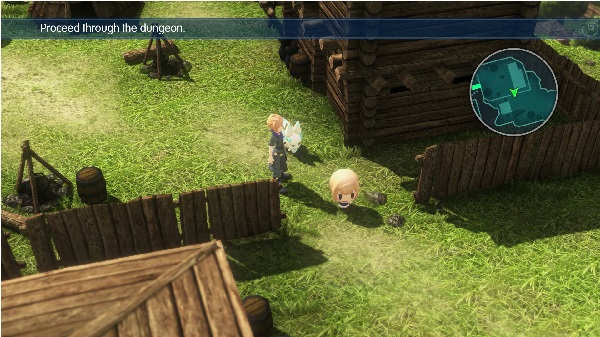
World of Final Fantasy certainly seems quite unusual based on what I know about it. If you recall, it’s the “other” Final Fantasy game that was announced alongside the long-anticipated Final Fantasy VII remake, and even though FFVII’s return is exciting news, I was still intrigued by WoFF. Final Fantasy has spun off in so many different directions that you’ll never know when you’ll get a rough gem (FFF: Chocobo Tales), a revered classic (FF Tactics Advance) or something that makes you wonder if there was ever a target audience planned in the first place (FFVII: Dirge of Cerberus.) In some ways, World of Final Fantasy doesn’t really make things that much easier – the World of Final Fantasy demo has a bunch of systems and mechanics and you might need the scope of a full game to fully understand how to get the most out of everything, but what’s been teased is still intriguing.

World of Final Fantasy demo

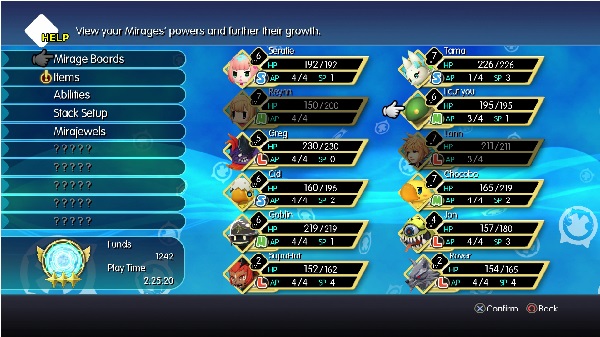
Nurturing Mirages in the World of Final Fantasy demo

The World of Final Fantasy demo is over within an hour but it shows you enough of everything to give you a general flavour of the game. World of Final Fantasy has a traditional turn-based battle format that’s given extra variety with Mirages and Stacks. Mirages are creatures you can encounter in battle and – if you’re lucky – capture for your own use. Like Pokémon and Persona, they act as summonable creatures with their own abilities; as you progress through battles and earn skill points you can unlock extra abilities on the skill trees for your mirages. For instance, in the World of Final Fantasy demo a Goblin mirage has a basic physical attack, but by spending skill points you can boost his stats or unlock extra moves, making them more effective in battle. You capture mirages by first encountering one in a battle (the game will happily announce the presence of mirages so that you know there’s a chance to capture one) and then fighting and ultimately “imprisming” it – that is, capturing it using the Prisms in your inventory. Once you have caught a number of Mirages, you can look into Stacks.

World of Final Fantasy demo

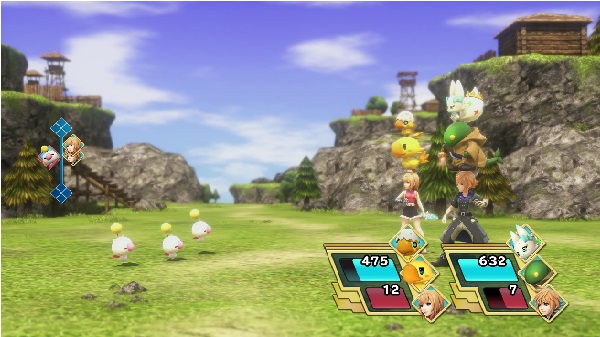
Building stacks in the World of Final Fantasy demo

Stacks are a feature in the World of Final Fantasy demo that allow you to put your character and its mirages in a stack of three. Each mirage and character has a size of (S)mall, (M)edium and (L)arge and you must stack the character and two mirages in S-M-L order. That said, why would you want to do this in the first place? Well, if you fight as a stack of three, your stack gets one turn, a combined HP/MP, and all the abilities of the mirages in that stack will be available to select from for that one turn. Meanwhile, if you unstack your three mirages, they all get separate turns; however, the individual HP and MP of each mirage is quite low. Essentially, you’re trading safety for turns, so you need to decide which is more beneficial based on the enemies on the field.

Knocking down stacks in the World of Final Fantasy demo

The general party status menu in the World of Final Fantasy demo is interesting in that you see stacks, rather than characters, so if you’re using a stack of three and select a potion from the inventory, the potion will heal the combined HP of the stack. Furthermore, if your stack of mirages is getting battered by attacks, it risks collapsing. At the end of the World of Final Fantasy demo you face off against an enemy stack, and the more you pummel it with attacks the less stable it becomes. Collapse the stack and you can target the individual foes, reducing the threat one enemy at a time.World of Final Fantasy demo

The strategies that could emerge from obtaining more mirages and making different stacks make me think that this could be a really fun game. That said, the recent acquisition of a PSVR headset means that I might not be in a hurry to spend even more money on games just yet…

World of Final Fantasy will be released on PlayStation 4 and PlayStation Vita at the end of October. For more information, visit http://worldoffinalfantasy.square-enix.com/ or why not try the World of Final Fantasy demo on the PlayStation Store today?

Save

Filed Under: Games Tagged With: final fantasy, games, square enix, world of final fantasy

Get Social

  • Facebook
  • Instagram
  • LinkedIn
  • Medium
  • Pinterest
  • RSS
  • Twitter
  • YouTube

Top Posts & Pages

  • Code Shifter revealed by Arc System Works
  • The Upbeats: De-Evolution Part 1 EP Review
  • Soul Calibur 2 Nightmare Statue from First4Figures
  • 2D Vertical Shooter Fast Striker Offers PS4 & Vita Action
  • Noisia & The Upbeats: Dead Limit EP Review
  • Deus Ex Machina 2 (PC)
  • Rocket League 2021 X Games Aspen Limited Edition Items
  • The worth of your entertainment
  • My Disposable 2016 - highlights from this year
  • Dan's Disposable 2025 - Highlights

Ads

Join Us…

  • Facebook
  • Instagram
  • LinkedIn
  • Medium
  • Pinterest
  • RSS
  • Twitter
  • YouTube


Privacy Policy

Cookie Policy

© 2026 Hot Mod Media · Design & Marketing TWOTW

Disposable Media · FPSPrestige · OnlineRaceDriver · The Guitar List · Rescars · Rescogs

We use cookies to ensure that we give you the best experience on our website. If you continue to use this site we will assume that you are happy with it.