Disposable Media

Art, Music, Games, Life

  • Art And Literature
    • Comics
  • Music
  • TV & Film
  • Games
    • Tabletop Games
  • Technology
  • Life
  • Events
  • Magazine Downloads
You are here: Home / Archives for Reviews

The Upbeats: Punks EP Review

24th November 2017 By Qazimod Leave a Comment

With the Punks EP, The Upbeats have released the first new music of theirs I’ve been looking forward to since the De-Evolution series (and Re-Evolution mix collection.) The three EPs that made up De-Evolution had some mixed quality, but the best tracks instantly became regular fixtures on my playlists, so I was always going to be looking forward to whatever they would release in the future. I first heard about the Punks EP around the start of November, and through the various Twitter announcements I was able to catch a few previews from the EP on the Critical Music Soundcloud page. Of course, I had also pre-ordered the digital release of the EP, and after a bit of initial confusion (weird broken downloads and release date uncertainty – iTunes had the release date down as the 27th, Critical Music maintained that it would be released on the 24th), I’ve been able to see how the Punks EP compares to the other releases by The Upbeats…

Punks EP – Hold Down

Punks EP

The opening track of the Punks EP is Hold Down – a track that begins with eerie effects and a menacing build up with rolling drum hits and escalating tones… this then culminates in a slick catchy snare rhythm that’s layered on to the melody as more fills come and go and the track gains a greater sense of urgency. It tends to stick to the main themes that it establishes at the start of the track, and whilst that may not be great news if you weren’t that enthralled by the tone that was set, it’s not a bad way to open the EP. Just over halfway through the track there’s a nice breakdown which builds the beat back up, and whilst the playful rhythms persist throughout, the track never runs the risk of dragging on.

Punks EP – Oddity and Punks

Punks EP

What follows this opener is Oddity, a track that has one of the slower openings of the Punks EP. A fantastic steady beat is joined by meandering wobbly synths, giving a track a lack of urgency and a groovy vibe that keeps the head nodding. Despite the fact that I generally go for tracks with faster tempos (at least when it comes to my favourite tracks by The Upbeats), this combination of slow beats and understated wobbles is a great fit, and the keys that come in later complement the atmosphere of the track extremely well. The title track Punks then follows, and whilst I kind of spoiled this for myself by catching a preview that was tweeted out, it’s lost none of its appeal. It’s a faster track than Oddity but the fast beat and meaty melody sound excellent, especially during the build-ups and the moments where the main hook is altered and played with at times. The only downside I might point out is that it could probably lose a few repeated bars and still be as good.

Punks EP – Ethers

Punks EP

At four tracks long, the Punks EP is somewhat shorter than the De-Evolution releases, and so Ethers is the closing tune; it begins with lingering synths and a low-key bass noise to create a catchy sound, before breaking down and building back up to some rapid beats that contrast the slower effects that fade in and out. It generates a mood unlike the other tracks on the EP, and even plays with a new house-style rhythm a little bit in the middle… before there’s another build-up and it reverts to the original vibe that it had established earlier. In general, the Punks EP doesn’t have as many instantly catchy tracks as the De-Evolution releases, but each track has something memorable about it. If you enjoy the other Upbeats EPs, this is worth listening to.

The Punks EP is out now and can be purchased digitally on iTunes or on Critical Music. You can also stream the album on Spotify.
Filed Under: Music, Reviews Tagged With: music, punks, The Upbeats, upbeats, vision, vision recordings

Pearl Jam Let’s Play Two Concert Film Review

5th October 2017 By Dan Thornton Leave a Comment

I liked Pearl Jam from the first time I heard Alive as a teenager. And like the best friendships and romances, that soon grew into a longlasting love. After 25 years, my relationship with Pearl Jam has lasted longer than many in my personal life. So it was an obvious choice to see the Pearl Jam Let’s Play Two concert film at the cinema.

In the early 1990s, there was a brief ‘rivalry’ with Nirvana, who seemed like the crazier, edgier choice. But while the Cobain story ended with tragedy, the members of Pearl Jam had come together to recover from one. As the central point of the music scene in Seattle, they came from Green River and Mother Love Bone, following the death of singer Andrew Wood. And Eddie Vedder first appeared alongside his bandmates (and Soundgarden) on the tribute album Temple of the Dog. Since their early days, Pearl jam has combined continually brilliant music with a commitment to doing things differently away from gigs (their activism against Ticketmaster, their political involvements, and plenty of interesting side projects). The brilliance of Pearl Jam was captured with the in-depth story of the band in the 2011 rockumentary Pearl Jam Twenty directed by Cameron Crowe.

And so to Let’s Play Two.

Pearl Jam Let's Play Two Concert Film Review

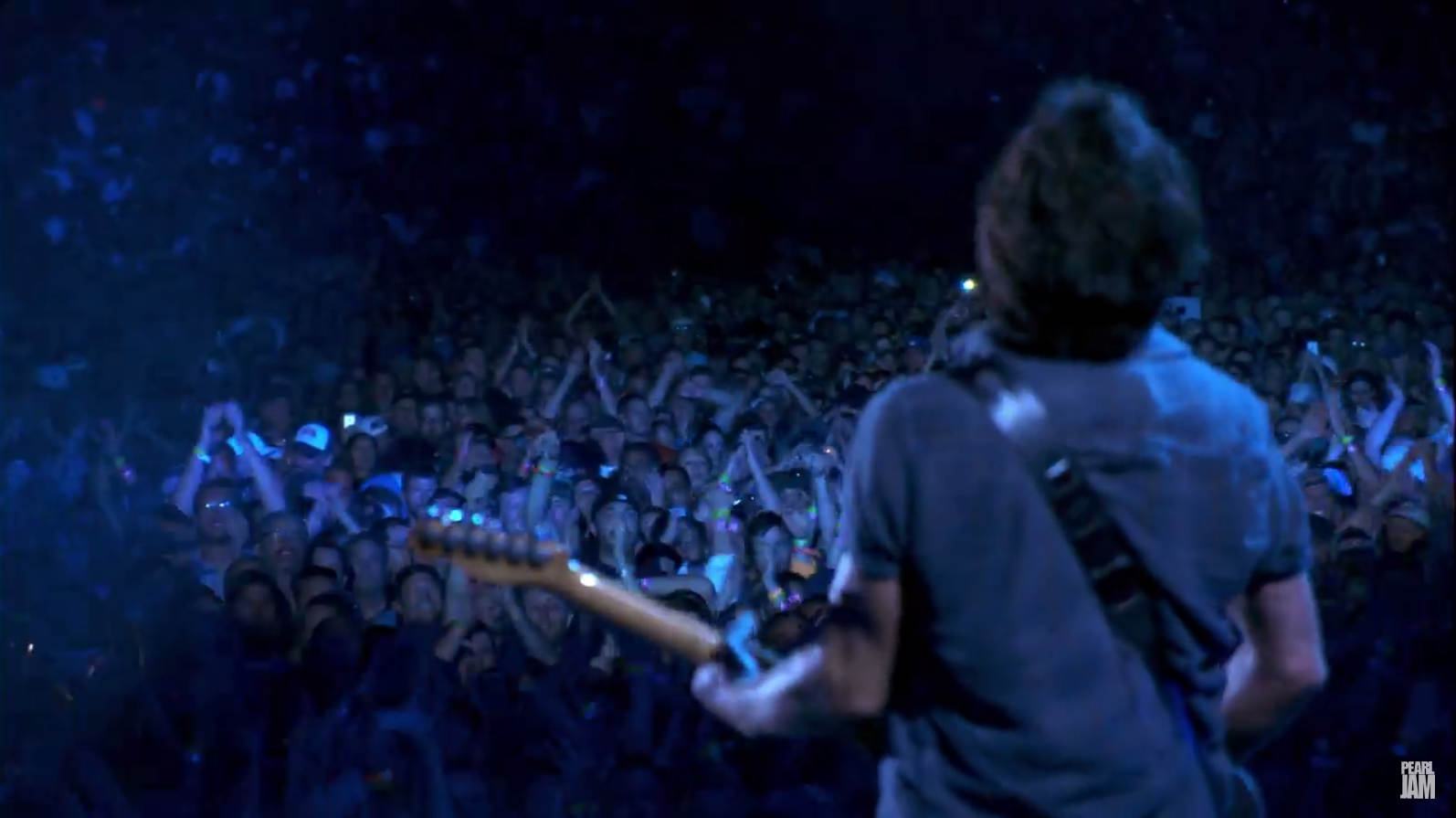
It’s a concert film. But as you might expect from Pearl Jam, it’s not just a straight performance. Instead it’s footage from two shows that took place at Wrigley Field on August 20th and 22nd, 2016. That’s notable as singer Eddie Vedder has been a lifelong fan of the Chicago Cubs, who were en route to a World Series for the first time in 108 years.

So it’s very much a split between concert footage from the two nights and conversations about both Pearl Jam and the Chicago Cubs.

I’ll be honest, I’ve never really understood baseball. It seems to appeal to an even more specific group of non-Americans than Nascar (which I get), and American Football (see my All or Nothing series 1 and 2 reviews) I suspect it’s a crowd who enjoy a flashier, more showbusiness equivalent to the equally incomprehensible sport of cricket. That’s backed up both by Eddie Vedder’s infectious, childlike enthusiasm, and seeing the singer of a legendary rock band fervently noting down the latest action on a score sheet. It seems bizarre to see a man famed for climbing lighting rigs and hurling himself into crowds during performances so focused on notating the action with a marker pen. Until you remember that attention and focus also goes into songwriting and everything else the band do collectively or individually.


So the baseball sections are potentially the least interesting, although any sports fan can identify with following their team (my own long obsession with Chelsea faded once they regularly became successful in the English Premier League). And there’s plenty to trigger armchair psychology as Vedder compares the Cubs to the band with their teamwork. Aside from his childhood memories of going to games with his uncle, is there stability which he didn’t have once he discovered he’d never met his real father? And is there a joy in simply being part of a crowd while others perform on the field?

Fortunately when the baseball starts to feel more like a sports documentary, the music kicks back in. And Pearl Jam are a band it’s almost impossible to listen to without wanting to jump up and down, even in a cinema.

Perhaps the most poignant moments are clips of the previous storm-interrupted 2013 performance at Wrigley Field, which saw legendary player Ernie Banks come on stage at the age of 81. He’d previously asked Eddie Vedder to write a song about the Cubs (All The Way), and passed away two years later. The film is named for his catchphrase “It’s a beatutiful day for a ballgame… Let’s play two!”. The death of Chris Cornell in 2017, whose Soundgarden bandmate Matt Cameron is also Pearl Jam’s drummer, occurred between filming and the release date. So it’s almost impossible to see the Cubs General Manager mention it as Banks farewell to Wrigley Field without thinking of the Soundgarden and Temple of the Dog singer.

The Pearl Jam Let’s Play Two concert film is one for true fans of the band. If you’re a casual listener, or trying to convert someone to become a fan, then Pearl Jam Twenty is a much better starting point. It’s also a great film for anyone wanting to understand the Grunge and Seattle sound of the 1990s. It was noticeable that some of my fellow audience in the cinema were either fans who had attended the Chicago gigs, or had tickets but weren’t able to make it.

For those fans, keen to see Pearl Jam play, and to get an additional insight into Eddie Vedder in particular, Let’s Play Two will be fun to watch, and a decent addition to their DVD collection. And watching the crowd in Chicago sing along to Better Man, Black or Jeremy, it’s almost impossible not to join in. If nothing else, it’ll keep you going since 2013’s Lightning Bolt. The DVD of the live concert will be released later in the year, but the album recording is already available to buy or download

Products from Amazon.co.uk

‹ ›


Pearl Jam Let’s Play Two Track Listing:

  • Low Light
  • Better Man
  • Elderly Woman Behind the Counter in a Small Town
  • Last Exit
  • Lightning Bolt
  • Black Red Yellow
  • Black
  • Corduroy
  • Given to Fly
  • Jeremy
  • Inside Job
  • Go
  • Crazy Mary
  • Release
  • Alive
  • All the Way
  • I’ve Got a Feeling

Save

Filed Under: Music, Reviews Tagged With: Chicago Cubs, Concert Film, Eddie Vedder, Grunge, Live Album, Pearl Jam, Wrigley Field

Taken TV Series Season One Review

27th September 2017 By Dan Thornton Leave a Comment

The Taken TV series is heading for a big change for the second season. Only main star Clive Standen and his on-screen boss played by Jennifer Beals will appear, as six of the regular cast have departed. That’s along with the first season showrunner, Alex Cary, who is being replaced by Greg Plageman and a new vision for the show. With that in mind, is it still worth catching up with the first 10 episodes, currently available on Amazon Prime?

Before looking at the television version, it’s worth reminding ourselves where the idea came from. Back in 2008, the first Taken film sparked a bit of a re-Neeson-ce in action films featuring slightly older heroes. Liam Neeson had played everyone from Oskar Schindler (Schindler’s List), Michael Collins (Michael Collins) and Alfred Kinsey (Kinsey), to Rob Roy McGregor (Rob Roy), Ra’s al Ghul (Batman Begins), and Qui-Gon Jinn (Star Wars: Episode 1 – The Phantom Menace). And of course, the superhero Darkman in the cult 1990 film.

So playing an action role in a fairly standard thriller wasn’t necessarily a stretch. But the fact that Neeson was older (56), and not a sterotypical gun-toting, musclebound action hero lifted what was a reasonable, but otherwise unexceptional film. So much so, that he originally thought it would be a direct to video side project rather than something which led to two sequels, and the likes of Unknown, The Grey (despite being a very different type of film), and the 2018 action thriller The Commuter. The later Taken films actually grossed slightly more from the box office for producer Luc Besson. Original director Pierre Morel since tried to add to the 50+ action hero stable with the Sean Penn film The Gunman. And we’ve seen the likes of Bruce Willis appear in both another Die Hard film, and the movie-adaptation of the comic Red, which featured a cast of veteran actors in action.

Meanwhile the Amazon-Netflix-HBO revolution has continued with medium-budget movies becoming television binge-watching, at which point the Taken TV series appears on NBC and then Amazon.


Taken By TV:

So this year saw the history of the Bryan Mills character played by Liam Neeson in the films explored on the small screen. Alongside the references to his famously ‘particular set of skills’ the younger Mills was played by Clive Standen, who like Neeson, was born in Northern Ireland, but grew up in England.

We discover that Mills is particularly unlucky, losing his sister as part of a revenge attack years before his daughter and ex-wife develop a strange habit of becoming kidnapped. And we learn that the ex Green Beret special forces soldier ends up being part of a shadowy Government department, led by Christina Hart (Jennifer Beals).

Part of the problem is that you can predict Mills will take time to integrate and be accepted by the special intelligence unit. But that he’ll eventually become a respected leader of the team as he overcomes the loss of his sister and the desire for revenge. And in the meantime, get involved in various other missions to hone his particular skill set.

Being slightly predictable isn’t necessarily a bad thing. After so many spy shows, it’s hard to imagine something which doesn’t have some of the genre traditions. And there a few interesting moments, whether it’s featuring the terrorist and drug lord Carlos Mejia, who murdered Mill’s sister in revenge for the death of his own son by Mills during a Colombian drug bust. Or with some of the side missions, involving other U.S agencies, Russian SVR agents, and a member of the Iranian Quds Force.

But it’s a little too formulaic. You can predict the personalities of the special intelligence team from the moment you meet them. And the same is true of Mill’s love interest, and most of the additional cast. You don’t need special intelligence to predict what’s going to happen. In fact, Taken has a strangely anaesthetic quality, as it dulls all your senses if you risk binge-watching more than one episodie at a time.

The other problem is also down to the cast. Clive Standen is a fine actor, and he has excelled as Rollo in the series Vikings. Having previously also appeared in Robin Hood for the BBC and as Sir Gawain in Camelot for the Starz network, you can understand he might want to be involved in something more modern. The problem is that he’s great at the action work, but despite being slightly shorter than Neeson in real life, he’s broader and more imposing. So as a special intelligence spy, he tends to stand out a fair bit in a crowd. The approach of Taken appears to have been to have him disguised by wearing some particularly crap jumpers.

Taken TV Series Season One Review

The loss of main cast members for the next series isn’t a particular susprise after the first season. Any of them could turn in a great performance with a bit more to work with. But every time they seemed to start showing some kind of investment and talent, they’re kneecapped with some cliched dialogue or a moment so implausible, you don’t even register the fact that Bryan Mills 20-year-old history appears to be taking place with 2017’s technology. Presumably the budget was a bit tight to recreate the vehicles, surroundings and old Nokia handsets.

It’s a shame, because in throwaway lines about the backgrounds of team members, there are some potentially interesting insights. One may have robbed banks. One has a family. One ends up helping out his brother by disrupting a local drug lord in a sub-plot which is now completely irrelevant as the character will vanish. Given that such a large part of the cinematic Taken was about family, surely that could have been reflected more? And given 10 hours for the first series will be expanded to 16 for the next, there’s more room to explore the psychological side of special intelligence?

Ironically one comparison is with the British TV series Spooks, which recently attempted a switch to the big screen. It also struggled to adapt what worked well in one format to the other. The typically low key British cast generally kept their muscles hidden under a suit or sensible wax cotton jacket and relied on brains as much as strength. And characters tended to have more interesting personalities and back stories. Despite having a fairly low survival rate, which many of the characters not making it through more than one or two seasons.

Taken Season Two might turn things around. At which point you might be intrigued to go back and watch the first series. But it’s hard to recommend spending almost 10 hours or your time on the initial season when it doesn’t reveal an awful lot, and six of the main characters aren’t going to be around any more.

Especially with so many other good crime and spy dramas on Amazon Prime right now. At the moment off the top of my head, there’s Prison Break, Bosch, Sherlock Season 3, before you get into the likes of Mr Robot, Ripper Street and more. And obviously there’s no shortage of great spy and crime series available on DVD. Plenty of people mention The Wire, but I’ll still pick The Shield first. Or head to Scandinavia for Wallander or The Bridge etc. And stick to watching The Vikings for Standen’s brilliant performance as the headstrong viking turned French Duke with the help of an equally stubborn wife.

When it comes to our Taken TV Series Season One review, it’s not kidnapped characters that are a problem, but the missing plot and excitement.

2/5


Filed Under: Reviews, TV & Film Tagged With: Clive Standen, Liam Neeson, Luc Besson, Taken, Vikings

The Upbeats: Re-Evolution review

16th September 2017 By Qazimod Leave a Comment

After listening to the three EPs that make up The Upbeats’ De-Evolution series, I found that each one had some average or good tracks and the occasional New Favourite Thing. Whether it was Elevator from the first, Mediums and Babylon from the second, or Veiled from the third, there was always something that I’d enjoy a lot. So when it was revealed that a new remix album – Re-Evolution – was coming in September, I was simultaneously excited and nervous. Seeing a new spin on an old favourite, or an outsider improved by remixing, is always nice… on the other hand, there’s always the risk that those old favourites can be ruined by someone else’s meddling.

Re-Evolution – familiar, but sometimes busy

Re-Evolution

The Malux remix of Dungeon doesn’t fall into this trap. It’s a little less subdued and a little more chaotic, but it still feels familiar enough to make you believe that the original spirit of the song is intact. The intro is slightly more menacing and it seems as though it gets into the action more quickly, but despite being busier and more effects-laden, the majority of the track still sounds as good as the original. Following on from this, Babylon’s Rockwell remix takes one of my favourites from the trilogy – an aggressive, fast, sweary number – and goes for a slightly more low-key approach with bloopy bass after the drop and lingering tones echoing through the intro. The new layers really add to what was already a great framework, and I’d have a hard time deciding whether or not I prefer it over the original.

The next track – Annix’s remix of Dr. Kink – is one that I caught a preview of when browsing Twitter feeds from Vision and The Upbeats. When I first heard the original track I thought that it did enough to hook the listener but lacked variety later on. This has a brand new stuttery rhythm replacing the slower, bigger hits, but still never really does enough with what it has to hold the interest for too long. After this we have Agressor Bunx’s take on Joyrider, which uses the same hooks but with more tuneful components delivering the melody. The beat is also a little busier than before, and much better for it.

Re-Evolution – DOOM is still good

Re-Evolution

The latter half of Re-Evolution opens with DOOM (Black Sun Empire Remix); I praised the original tune’s variety when covering De-Evolution Part 1, and again it seems to be an early favourite of mine when listening to Re-Evolution. The rhythmic high-pitched beeping in the intro is a curious substitute for the more incremental build-up that went before, but it’s not long before everything fades down to fizzling effects and a distant, deep drum about halfway through – and then the familiar tones creep back in and it’s every bit as powerful as before. Along with Babylon it’s one of my favourite remixes, and again it’s hard to say whether I like the remix or the original more.

Wrapping up Re-Evolution is a Memtrix remix of Say Go with a melodic bassy hook that seems to be more toned down from what went before – low rumbling tones replacing the haunting sounds of the original. The album then closes with Prism (Emperor remix), which deserves credit for getting through the intro a little faster and having a more interesting rhythm and hook than the “slow but steady” arrangement I mentioned in my coverage of the original track.

In any case, Re-Evolution does a lot with only seven tracks; the best original tunes have variations that are equally as good, and that alone almost makes up for things like the Dr. Kink remix. If you enjoyed the De-Evolution series, this is worth getting hold of.

Re-Evolution is out now and can be purchased digitally on iTunes or Vision Recordings. You can stream the album on Spotify here.

Filed Under: Music, Reviews Tagged With: music, Re-Evolution, The Upbeats, upbeats, vision, vision recordings

All or Nothing Season 2 Review

15th September 2017 By Dan Thornton Leave a Comment

Late last year we discovered the American Football documentary series All or Nothing on Amazon Prime. And as our review explained, it was a great series for new or lapsed fans to enjoy the stories behind the sport. It followed the Arizona Cardinals through the 2014/2015 season, and was enough to renew my interest in the sport of American handegg. Presumably it did pretty well (including winning an Emmy), as there’s now a follow -up. But does it fair as well in our All or Nothing Season 2 review?


All or Nothing Season 2:

As an NFL production, All or Nothing wasn’t exactly full of hard hitting shocks. But it revealed enough behind the scenes to feel like you were peeking behind the curtain a little bit.

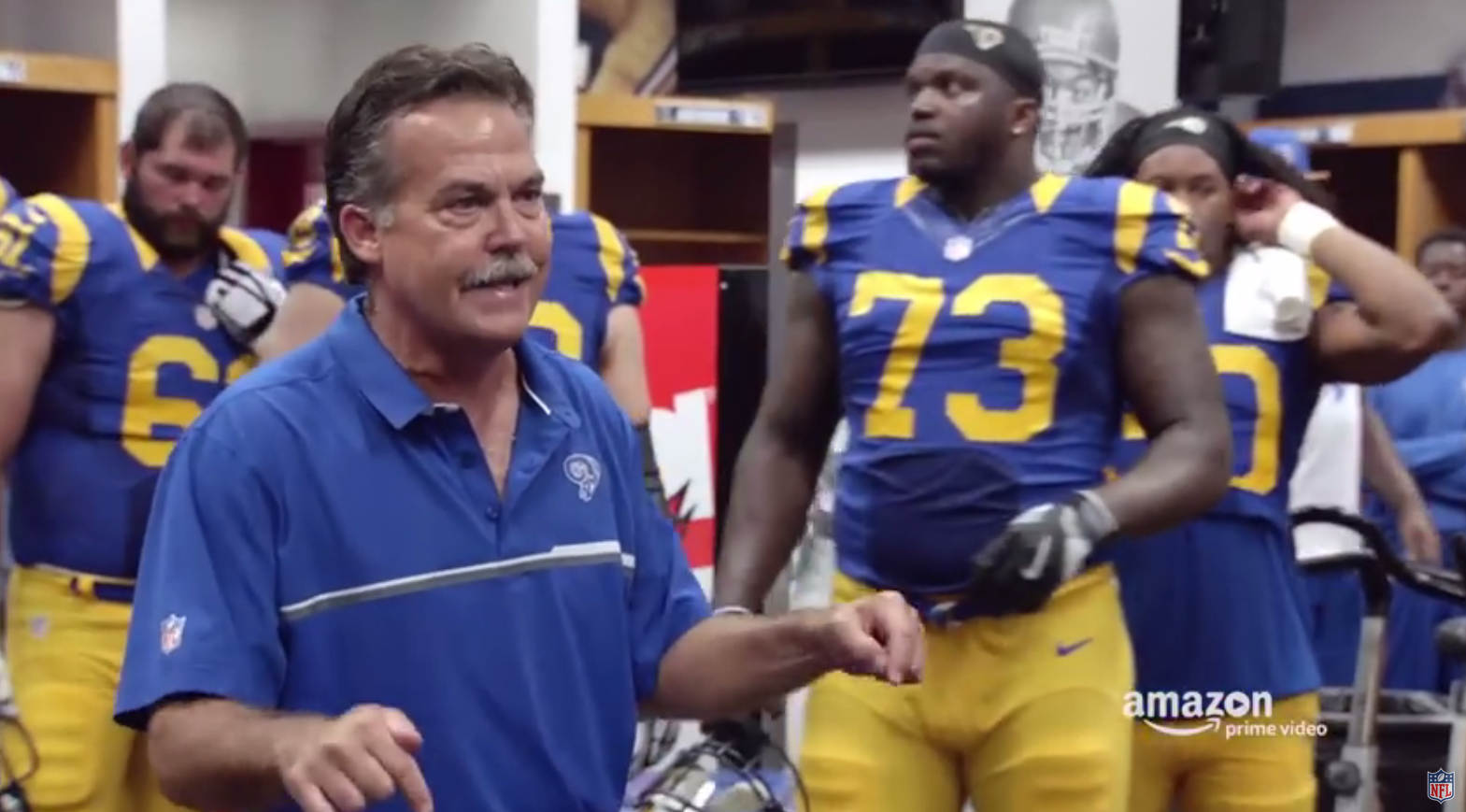
For the second season, covering 2016, the NFL chose to focus on the Los Angeles Rams. Obviously the NFL wants to seem fair by covering more than one team. And the LA Rams was a logical choice as this was the year they returned to California after 20 years St Louis. Plus the team traded their draft picks to be able to make the first selection, with young Californian quarterback Jared Goff being signed up.

Fair, logical and pretty dramatic.

The problem is that great entertainment is rarely fairly, and often not entirely logical. The series is an almost exact copy of the first, with the LA Rams replacing the Arizona Cardinals. So once again, you’re introduced to a roster of players at various stages in their career, and a coaching team. And those new introductions mean that the continuing narration by Jon Hamm never goes deeper into the game than it did in the initial collapse.

So if you watched the original episodes, it feels a little like a replay. That’s not to say there aren’t equally fascinating stories with the Rams. Particularly the veteran quarterback Case Keenum making way for the young Jared Goff, and the struggles of the team in the face of a losing streak. It famously features coach Jeff Fisher starting the season declaring they won’t settle for 8-8, and ending up fired before the end of the year after a 4-9 losing streak.

All or Nothing Season 2 Review

But having started to care about the players you watched in Season 1, you now have to double that number for Season 2. And worst of all, there’s no look back at what happened since to the Cardinals. There’s no reference to the coach and players from the previous year, even when the Rams and Cardinals play against each other, and mention an ongoing rivalry.

How often does any television series repeat itself year after year with a different cast? Even quiz and talent shows generally try to continue with the same judges to provide an ongoing storyline with new contestants. But All or Nothing ignores that in favour of presumably creating a carbon copy for every team in the NFL. Which is fair and logical. But it’s also fumbling what could have been a great ongoing series as it makes it pointless to watch unless it happens to be your favourite team, or you immediately ditch it to stream every NFL game instead.

Like the LA Rams in the 2016 season, it seems like the early promise might be falling apart sooner than anyone expected. We’ll have to wait and see whether they take the same approach to the newly announced documentary series from the same team covering college football, and initially featuring the University of Michigan.

You can watch the first episode of each season for free, or start a 30-day trail of Amazon Prime to be able to see the lot.

Filed Under: Reviews, TV & Film Tagged With: All or Nothing, Los Angeles Rams

Crying: Beyond The Fleeting Gales Album Review

14th September 2017 By Dan Thornton Leave a Comment

Beyond The Fleeting Gales is not a perfect debut album from Crying. But it’s a damn fine one which can be heard again and again, which bodes well for the future.

The first full length album from the New York trio following two LPs, it combines their previous chiptune and videogame influences with pop, indie, and most noticeably, 1980s stadium rock. Which sounds like it might have been created by combining most of my favourite things in life – especially as band has referenced the likes of Rush in interviews alongside the likes of Carly Rae Jepsen, the Cocteau Twins and more.

What this means is an album which veers between delicate emotional lyrics from singer Elaiza Santos, powerful drumming by former member Nick Corbo, and now current drummer Kynwyn Sterling, and anthemic guitar shredding by Ryan Galloway. At times it sounds like an obscure piece of indie electronica, and the next moment it’s the soundtrack to a special stage in a 3D Sonic game. Which is a far better thing than you might imagine – so many anthemic early videogame moments could have been made into great songs.

Crying Beyond The Fleeting Gales

One reason for the change is that the trio ditched the Game Boy approach of the first two EPs to record the guitar, vocals and drums before adding syths and game samples from the likes of Kingdom Hearts, and N64-era Kirby, Zelda and Banjo-Kazooie. Which helps to make the album feel more anthemic than a gimmick. Listen to their earlier work, and the new songs sound much more choesively constructed.

Standouts include album opener Premonitory Dream, featuring vocals and synths before breaking into AOR terrority with a hint of chiptune to lessen the Toto arena vibe.  Wool in the Wash follows with a more pop-led sound, before we go into full prog rock keyboard and guitar soloing on Patriot.

It’s not all perfect. Some of the songs do veer a little too far towards the sound of an old Sega Mega CD or Saturn game without quite enough to lift themselves up. But just as you worry, the almost Jacksoneque into of There Was a Door will wake you up before the unashamedly magnificient Revive.

Beyond The Fleeting Gales is an album to listen to as you cruise an American highway in a classic muscle car. Which has electric power, can fly, and probably turns into a mullet-sporting, air-guitar-playing robot when no-one is looking.  Which makes it pretty bloody good in my opinion.

4/5.

Listen via Spotify

Save

Save

Filed Under: Music, Reviews Tagged With: Beyond The Fleeting Gales, Chiptune, Crying

Sonic Mania Review (Switch)

17th August 2017 By deKay 3 Comments

The Sonic Cycle is well documented and understood: Sega announce a new Sonic game, fans are hopeful it’ll be a return to form, as release day nears more and more terrible decisions have been made, and finally, it’s out and as bad as it ever was. How could a new 2D Sonic game, made by fans rather than Sega, possibly push a stick in the cycle’s spokes?

Fan made Sonic clones, rom hacks and mods have been around for a long time. Where Nintendo are quick to stomp on any such thing for their IP, Sega have been more relaxed with these existing. When Christian Whitehead – who made excellent ports of the original Sonic and Sonic CD to various platforms – was joined by two teams who have built some of the best fan made Sonic titles, there was a glimmer of hope that something good could happen.

Between them, this combined team know everything about 2D Sonic games. How they work, how they play, what makes them great and what fans want from them. They’re probably closer to the subject matter, and understand it better, than the original Sega development staff. But still, the Sonic Cycle has never been defeated.

Until now.

Sonic Mania

Sonic Mania opens with a repeat of Sonic 3’s flight onto Angel Island. Instead of running into Knuckles as previously, Eggman’s henchmen are waiting. Using a Chaos Emerald, Sonic is transported to the original Sonic 1 Green Hill Zone Act 1. Only… things are a little different. Not far into the stage, changes become apparent: Items are gone or replaced, some routes have changed, there are bats from Marble Zone. Your layout knowledge will only get you so far.

And this is how much of the game goes. Zones from previous games appear. Some are mashed together (there are parts of Emerald Hill in Green Hill, Labyrinth permeates Hydrocity, Hill Top pops up in Lava Reef), some are new but are channeling old zones (Studiopolis is a little bit Carnival Night). Bosses are a mixture of old – but subverted – and new. There are so many nods to previous games it’s a wonder it doesn’t get a sore neck. A special mention must be made for the inspired Chemical Zone Act 2 boss. You’ll know when you get there.

Then there’s the music. Just like how the levels morph from their ancestors, so does the music. Tunes like the unmistakable Chemical Plant Zone music get remixed. Other tracks have snippets of similar zones weaved in, in the same way the levels do graphically. Everything sounds 16-bit, but meatier, bassier, thumpier. Again, just like the levels.

As with the original Sonic games, there’s the side mission of collecting all the Chaos Emeralds. Similar to Sonic 3, special stages are entered by discovering giant rings hidden (and hidden really well) throughout the zones. Each special stage is akin to the 3D Mode 7 style UFO catching stages from Sonic CD, but much better organised and implemented. The idea is to chase down a UFO as flies around a Mario Kart-like track. The time you have remaining is incremented by collecting rings, and your speed is increased by picking up blue balls. It’s hard. Very hard.

Sonic Mania

Back in the main stages, if you trigger any checkpoint lamppost with enough rings you’re taken to a bonus stage. Gone are the gumball and spinning spheres (although their ghosts haunt a level later), as they’re replaced with the Blue Sphere game. As before, you have to touch all the blue spheres to make them red, avoid the red spheres, and collect the rings. In Sonic Mania, if you get all the blue spheres you’re awarded a silver medal. Collect all the rings too, and it’s gold. As you rack up the medals, you unlock modes and features, such as a level select and Sonic’s “run on the spot” from Sonic CD. There’s also the from-the-internet “& Knuckles” mode, where you can play as Sonic & Knuckles, Tails & Knuckles, and ridiculously, Knuckles & Knuckles. Because of course you can.

All this sounds great, but the important thing is how Sonic Mania plays. After all, Sonic 4 (akin to swearing in some areas of Sonic fandom) initially looked the part, but see how that turned out. Incredibly, Sonic Mania makes that game look like a fan-led Game Maker project, irony abound considering how Sonic Mania came to be. Important lessons were learned from missteps in the past: The physics model is spot on. The level gimmicks work. It’s not “hold right to win”. No level outstays its welcome, and no level feels weirdly out of place. Sonic’s friends and foes are kept to a bare minimum.

It’s a little confused as to whether it’s a sequel or a remake, but the gameplay hits the mark exactly. As a bonus, the always stupid but fun two player mode from Sonic 2 returns, squashed screens and all. Nice, especially since with the Switch version you can play it wherever your mates are.

Sonic Mania

If there has to be a negative, it’s perhaps that the later zones are not as well designed as the earlier ones. The replacement for Scrap Brain/Death Egg is maybe not in the same league as those, for example. There are also a few bugs, mainly involving the fire shield or being squished where you shouldn’t be squished, but nothing to damage the experience.

It’s a greatest hits. A remix. A compilation. A remaster. Sonic Mania is new, it’s old, and feels just like Sonic should. After all these years of waiting, so many revolutions of the Sonic Cycle, it’s finally time to say: This is a good Sonic game. No, this is a bloody great Sonic game.

And all it took was for Sega to let someone else do it for them.

Sonic Mania is out now on the Switch, Xbox One and PlayStation 4 digital stores for £15.99. The PC version is due on the 29th August.

Filed Under: Games, Reviews Tagged With: sonic mania, Sonic The Hedgehog, Switch

Dunkirk Review

26th July 2017 By Dan Thornton Leave a Comment

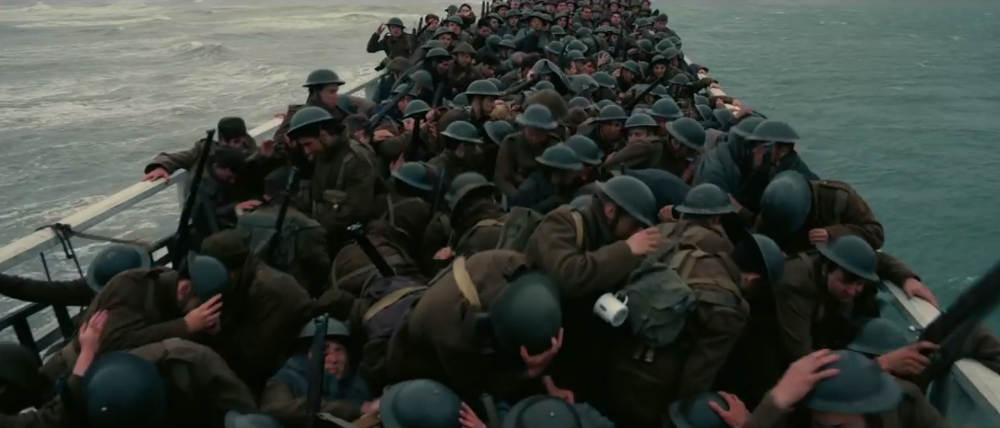
In Adventures in the Screen Trade, an essential book for anyone interested in the writing and making of films, William Goldman describes the challenge of adapting A Bridge Too Far into a screenplay as being what to leave out. For Dunkirk, Christopher Nolan focuses on a soldier, two pilots and one little ship as they go from moment to moment during the evacuation of more than 300,000 soldiers from an isolated and surrounded harbour.

The triptych begins with young British private Tommy heading towards the Dunkirk beach with several other soldiers. And switches in a non-linear fashion between his attempts to leave France with the other characters journeying towards it. As The Mole covers the events of the East Mole pier itself, The Sea concerns itself with the little ship owned by Mr Dawson and crewed by son Peter and deckhand George. Meanwhile The Air is the story of two Spitfire pilots flying towards the oncoming Luftwaffe fighters and bombers.

Dunkirk Review

It makes sense to focus on the immediacy of the evacuation and aerial battles. Dunkirk was a triumph of spirit and courage, but the events leading to it were described as a ‘colossal military disaster’ by Churchill as the Germans drove across Europe in just a couple of months. Unlike Operation Market Garden, however, the evacuation efforts are still celebrated today, particularly in the main little ships port of Ramsgate.

And Dunkirk is a successful film in many ways. The realism has been praised by many, including Dunkirk veterans. The cinematography by Hoyte van Hotema looks incredible, and helps to portray the horror of the events without the use of blood. Despite the Luftwaffe and U-Boat attacks on the beach and ships, the film manages to convey the chaos and deadliness of the situation whilst still falling into a 12A rating.

Both the Hans Zimmer score and the sound effects work wonderfully to provide a backdrop which captures the wonderous sound of the Rolls Royce Merlin engines of the Spitfires, the terrible foreboding of a dive bomber attack and the various explosions and crunching metal which occur.

But it’s not perfect. The decision to use a non-linear structure which stretches and plays around with time is something associated with Christopher Nolan since his breakthrough with Memento. And it’s harder to follow in the chaos of war. Cillian Murphy first appears as a shivering, shell-shocked soldier huddled on a mid-channel wreck, but later appears as a forceful boat commander earlier in proceedings elsewhere. And the sacrifice of one leading character is dragged out long enough for boats to have journeyed back from Dunkirk to England by the time it ends, which makes it feel much less climactic than it might have done.

The time motif also interferes slightly with the soundtrack. The script was written to include an auditory illusion known as a Shephard tone, which Nolan has used in The Prestige, The Dark Knight and The Dark Knight Returns. And while that works, it was coupled with the sound of Nolan’s own pocket watch, which occasionally appears as if the characters are on some kind of timer. It’s not only irritating, but given that the actual evacuation lasted from May 27th to June 4th, 1940, it also doesn’t really make much sense.

While the decision to focus on the immediate situation also makes sense to avoid bogging the film down in back story or the political and military decisions in London, it also risks making the characters too enigmatic to really care about. The casting of Harry Styles made the headlines, but none of the soldiers are required to portray much emotion in their roles, while pilots Collins and Farrier are mostly hidden behind their oxygen masks. As a result it’s Scottish actor Jack Lowden as Collins who the audience can sympathise with more than Tom Hardy as Farrier.

None of the actors turn in a bad performance, and there’s a hidden cameo by Michael Caine as the RAF officer on the radio to the Spitfire pilots. It’s just that you never really get much opportunity to know the likes of Fionn Whitehead as Tommy or Aneurin Barnard as Gibson. Which puts them at a bit of a disadvantage compared to the likes of Mark Rylance as Mr Dawson. And particularly Kenneth Branagh, who spends his time standing stoically at the end of the East Mole as Navy Commander Bolton, the pier-master of the evacuation.

One criticism that does seem valid is the portrayal of non-British forces. Nolan insisted on an almost entirely British cast, and the film obviously takes that perspective. The French are seen being refused access to British evacuation ships, or as a character pretending to be English, and there’s one lone Dutchman attempting a rescue. In reality, there were ships from Belgium, Holland, France and other European countries. And while many of the 100,000 Frenchmen eventually evacuated were redeployed to face battle a few weeks later  before the surrender of France, there’s no mention of the French forces who fought a delaying action to allow the evacuation to take place.

Overall, there’s a lot to praise about Dunkirk. It doesn’t use the war to convey a political message or risk becoming cloying with emotion. Instead, it has probably the best aerial dogfights captured since the 1930 Howard Hughes film Hell’s Angels. And rather than bloodshed or imposing a narrative, it relies on moments inspired by real experiences, such as men deciding to wade hopelessly into the sea, as some of the main characters look on impassively. It’s a wartime event delivered as an Impressionist study rather than a Boy’s Own tale of derring-do. And while it’s admirable for the range of technical brilliance on show, it still doesn’t distract you from the tragedy and horror at the core of Dunkirk.

Save

Filed Under: Reviews, TV & Film Tagged With: Christopher Nolan, Cillian Murphy, Dunkirk, Kenneth Branagh, Tom Hardy

Final Fantasy XII: The Zodiac Age review

23rd July 2017 By Qazimod Leave a Comment

There’s nothing like a well-timed impulse play – that moment where you’re looking for a way to kill time in a barren release schedule and pick up something in your collection that you never really clicked with, thinking “why not”. In May of last year I played through the original FFXII on PS2 for the first time, remarking on how different it felt when compared to classic FF games, and how interesting the various gameplay systems were. Less than a month later, FFXII: The Zodiac Age was announced – a modern remaster of the original for PS4. And today fans are realising that it’s everything they could have hoped for.

FFXII: The Zodiac Age – still fun

FFXII: The Zodiac Age

More than that, players are realising just how well the gameplay of FFXII holds up. Zodiac Age may boast sharper visuals, better load times and other little tweaks that we’ll get to later, but the core of the exploration and battling remains as it is, because why would you ever need to change it? Gambits may feel like a means to let a game play itself, but FFXII always varied encounters enough to ensure that you could never leave things on autopilot for too long. Even if you’re automatically healing and curing all of the bad things, you still have to be wary of your remaining MP and wait at the mercy of those cooldown timers. At worst the gambits result in less busywork, and at best they allow for multiple situations to be addressed on the fly, as if you have a dozen more pairs of hands that are holding controllers and issuing additional commands. Licences remain as they were – earn points by defeating enemies and use them to buy the “licence” for a magic skill or piece of equipment. However, when you recruit a new character to the party, Zodiac Age now lets you choose from one of twelve licence boards for that character, all categorised into general roles or “jobs”. Do you want a heavy-hitter, someone skilled with bows, a healer? Zodiac Age has a board for everyone.

It allows for a lot of freedom in customisation, and this was a game that already seemed quite customisable before the job system. As I had never played the “International” version of the PS2 game, I went into things slightly blind, but my Knight, Uhlan and White Mage selections comfortably carried the primary team through the game’s opening moments. Whilst my progress through Zodiac Age has been fairly smooth, I am still curious about how much of a risk there is of choosing a bad selection of jobs at the beginning. However, you gain new additions to the party at a steady enough rate to allow for any holes to be filled, and one moment later in the game opens up even more customisation…

FFXII: The Zodiac Age – high speed

FFXII: The Zodiac Age

Weirdly, the addition of the job system might not even feel like the most important change in Zodiac Age, as the experience is transformed with a push of the left shoulder button. This activates High Speed Mode (a feature that I believe was in the PS2 release of International but was hindered by the console performance) – and yes, it literally increases the speed of the action, with animation cycles flying by, allies and enemies ambling around more briskly, and actions being played out much more swiftly. In most other JRPGs, this kind of feature would be pointless as it would be impossible to play at such speeds. However, when gambits are automating the battles, you can hurry through the safe moments and dial things back when you need to do more manual work in the menus. The other controller buttons still work as expected in High Speed mode, so you can still pause the action by bringing up the command list, fixing any issues that gambits have overlooked. Admittedly, this mode is best used in old areas that are deemed “safe”, but it still makes those return visits more bearable.

Also welcome is an autosave feature, which will save the game as you progress through each area. There are very rare moments where an autosave happens moments before failure and there’s no chance of rescuing your team (I think I had one save in a boss room where I was massively underlevelled), but most of the time the saves are in sensible places and can come as a huge relief when you’ve done lots of walking since the last save crystal.

FFXII: The Zodiac Age – the freshness

FFXII: The Zodiac Age

As for the game itself? It’s still Final Fantasy XII; still as good as the game I played in May 2016… still as good as the game originally released in 2006. The story can be a bit corny with some of its drama, and some people might not get on with the real-time/paused-time/gambit nature of combat, but it’s remarkable that the game still feels so fresh after more than a decade. There are still some dodgy character moments and dialogue lines, but it plays like a dream. Too often people roll their eyes at RPG battle systems – random encounters, fiddly menus, no satisfaction… the reasons keep coming. It’s a rare treat to be able to praise the battle system in something like this; a system which only feels so good because of all of the other supporting elements – the gambits, the licences, the jobs. I’ve enjoyed three mammoth JRPGs already this year (Nier, Persona and this) and I’m genuinely pleased to be able to recommend them all – for different reasons, of course – as it’s another reminder that 2017, just like FFXII, is something that keeps on giving.

FFXII: The Zodiac Age is out now for PS4.

Filed Under: Games, Reviews Tagged With: ff12, ffxii, final fantasy 12, final fantasy xii, JRPG, Square, Zodiac Age

Aspire Zelos 50W Starter Kit Review

27th June 2017 By Dan Thornton Leave a Comment

Vaping and ecigarettes have become increasingly popular over recent years. Recent studies estimate around 2.8 million people in the UK are using them, including current and former tobacco smokers. They’re designed to deliver nicotine by heating a vapour solution that contains a mixture of nicotine, propylene glycal and/or glycerine and flavourings.Before I dive into this Aspire Zelos 50W Starter Kit review, there are 2 important things to note:

  1. I’m not a medical professional. Nor do I play one on the internet. While I might create a more in-depth article on my personal experience with vaping in the future, whether or not you decide to do it should be based on your own research. Here’s a handy NHS link to start with. I’m writing this review purely as a review of one particular product.
  2. The review is also being written from the perspective of a relatively new vaper. Those more experienced will already have opinions on the Aspire Zelos based on the specs etc, and can probably make up their own minds about it far better than I can!

So lets crack on with the review…


The Aspire Zelos 50W Starter Kit review

For context, I’m a former smoker of around 15 cigarettes per day for two decades. Inititally Marlboro Reds and then Marlboro Gold, for the record.

The Aspire Zelos 50W Starter Kit will set you back around £50 from a variety of online retailers, and slightly more if you buy from a local shop. There’s plenty of information online to help you get started, or the assistant at your local vape shop should be able to take you through the initial set-up in a couple of minutes. The kit includes:

  • 1 x Aspire Zelos 50W Mod Box (the handheld box which holds the battery and element)
  • 1 x Aspire Nautilus 2 Tank with a 0.70 ohm coil installed
  • 1 x Spare Drip Tip for the tank
  • 1 x Spare glass tube for the tank
  • 1 x Micro USB cable for charging
  • 1 x 1.8 ohm BVC Coil
  • 8 x O-rings

So with a 2500mAh battery in the mod box, you’ve got everything you need to get started aside from your liquid of choice.


Using the Aspire Zelos:

As a relatively new vaper, I’ve only had experience of a couple of mod boxes. But of the ones I’ve seen and used, the Aspire is one of the better looking. The simple case fits nicely in the hand, and is decently put together with some tiny hex screws holding it together on the outside. The rest of the case is closely fitted together, with a small OLED screen which will autorotate for whichever way you’re holding it.

It doesn’t give you quite the cyberpunk style of some kits, and you could claim it’s on the boring side. But in a simple choice of black, pink or silver, it’s a subtle and stylish vaping solution.

Overall it’s nice and solid, with the anodized finish which should hold up well for wear and tear.

There’s a ‘fire’ button which you click 5 times for on and off. And you either hold down or use the + and – buttons to access the menu, change the various options, and lock the device. Honestly, so far I’ve changed nothing much from the standard set-up and found it’s perfectly fine for what I needed. Rather than powering up to produce clouds of vapor, in fact, I’ve been reducing things slightly.

In terms of charging, it’s easy to plug the USB cable into my laptop, and I’ve only needed to charge it once every couple of days.

Aspire Zelos 50W Starter Kit Review With Nautilus 2 Tank

The Nautilus 2 tank can be used for Mouth to Lung (most similar to smoking), and Direct to Lung. And a sliding collar which allows you to select between one and five airflow holes. With them all open, you still get plenty of flavour, but it’s worth experimenting with to find the right setting.

But the best thing is that it’s very easy to fill. Just unsrew the top sheath, and fill into the tank without getting any into the central chimney. Wait a couple of minutes and you’re good to go. And you can fit other mouthpieces by using the supplied O-rings.

The tank has the 2ml capacity regulated by EU laws. Which isn’t a problem for mouth-to-lung vaping for me, as it’s enough to easily last around a day.

When you look at the reviews and feedback on any vape tanks, it appears that some people will always seem to encounter leaks. Like most technology, the Aspire is produced in Shenzhen in China, and it’s hard to know wether it’s down to manufacture, shipping or usage. The type of liquid you use and the thickness of it can all play a part. So far, I’ve yet to experience any leakage in everyday usage, and without taking any particular precaution.


Aspire Zelos 50W Starter Kit Review Verdict:

As a kit for beginner or intermediate vaping, it’s hard to fault the Zelos and Nautilus 2 combination. It’s very easy to use, and works well. The look of it is subtle enough that you won’t be mistaken for a cyberpunk festishist, and can use it in company without getting strange looks. And the weight and build of it is reassuring when you’re starting out and discovering the world of sub Ohm coils etc.

It’s competively priced with other mod kits. And as an idea, my 15 cigs per day habit means it’ll be saving me money within the first 10 days. You won’t necessarily be the king of your local vape cafe when you walk in, but you’ll be able to relax in the knowledge you’ve invested wisely. And if you want to move to Direct to Lung and experiment more with modifications, it’s a good place to start, and to keep as a backup.

Products from Amazon.co.uk

‹ ›

Filed Under: Life, Reviews Tagged With: Aspire, Aspire Nautilus 2, Aspire Zelos, Vaping

  • « Previous Page
  • 1
  • …
  • 3
  • 4
  • 5
  • 6
  • 7
  • …
  • 10
  • Next Page »

Get Social

  • Facebook
  • Instagram
  • LinkedIn
  • Medium
  • Pinterest
  • RSS
  • Twitter
  • YouTube

Top Posts & Pages

  • Nier Automata Piano Collections - impressions
  • Dan's Disposable 2020 - Highlights From The Year
  • Narcos Netflix Original Series Review
  • Save on Street Fighter T.N.C 04 Guile Figurine
  • Rogue One: A Star Wars Story Comes to VHS?
  • Backwards Dungeon Crawling – how not to play Metaphor

Ads

Join Us…

  • Facebook
  • Instagram
  • LinkedIn
  • Medium
  • Pinterest
  • RSS
  • Twitter
  • YouTube


Privacy Policy

Cookie Policy

© 2026 Hot Mod Media · Design & Marketing TWOTW

Disposable Media · FPSPrestige · OnlineRaceDriver · The Guitar List · Rescars · Rescogs

We use cookies to ensure that we give you the best experience on our website. If you continue to use this site we will assume that you are happy with it.