Disposable Media

Art, Music, Games, Life

  • Art And Literature
    • Comics
  • Music
  • TV & Film
  • Games
    • Tabletop Games
  • Technology
  • Life
  • Events
  • Magazine Downloads
You are here: Home / Archives for Reviews

My introduction to Playstation VR

13th October 2016 By Qazimod Leave a Comment

If you told an infant-sized Qazimod that he’d go from playing Contra – sorry, Gryzor – on Commodore 64 to having fully-fledged virtual reality in the house, he’d think that you were a liar or a magician. Here we are though, with a new headset ushering in an age of virtual reality for PS4 owners. My introduction to Playstation VR began around midday on October 13th, and the first thing that struck me was just how much stuff there was in the box. You have a headset you put on your head, a box that connects the headset’s two cables to a breakout box, HDMI cables that go from the PS4 to the breakout box and from the breakout box to the TV, a power supply unit connected with two more cables (to the mains plug and breakout box respectively), a USB cable connecting the breakout box to the PS4…and after the PSVR is connected you still have to plug the PlayStation Camera and DualShock 4 in somewhere.

My introduction to Playstation VR – the headset and cables My introduction to Playstation VR

Before my introduction to PlayStation VR, I was worried that my play space would be too small and that the distance from the PlayStation Camera and the headset would be too short for games to work effectively. However, the peripheral distance isn’t why you’ll need floor space; the mass of cables and boxes is a greater concern. At least when you have the headset on you don’t need to see the cables, but trying to tidy things away after each session could take some time to perfect. Additionally, the headset itself is comfortable and not too heavy. Beyond the visor, rubbery flaps shield your peripheral vision from the outside world, and padding on the top and at the back ensure that it feels good to wear. The plastic around the side looks thin and is a little flexible, but it’s not like the plastic is going to break easily. The mess of cables is a bit worrying but it’s not something you’ll ever see that often.

My introduction to Playstation VR – setting up My intro to Playstation VR
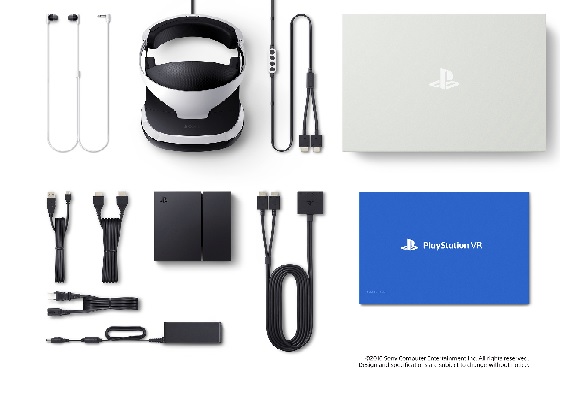
The included Quick Start guide has big clear diagrams and simple instructions so that you can get things up and running in no time, and once it’s all ready and calibrated you have an interesting virtual view of the PS4 dashboard. Looking at the tweets I was making during the release day hype, there was about an hour between receiving the package and getting my first look at the virtual dashboard, so the setup isn’t too painful (that said, making floor space beforehand helped.) Some important things to note in order to get comfortable – the button on the back of the headband helps you find the right fit for your head. Also, if you want to readjust your head and then refocus the view, you can hold the Options button on the joypad and this will be done. (I’m ashamed to admit that it took me a moment to get used to that, and I spent a while trying to navigate menus with my head permanently looking to one side.)

My introduction to Playstation VR – viewing and motion

My introduction to Playstation VR

The view inside the headset has a slightly fuzzy resolution but it does the job for what I’ve played. I had never tried modern VR – Oculus, Vive, Gear – before, and the best way I can think of to describe the VR view of the static, flat dashboard is that it was a little like seeing slides in a Viewmaster, with the image suspended in black space. Meanwhile, games such as Tumble VR amply demonstrate the 3D depth effect; as you bring blocks closer to you it feels less like looking at a screen and more like peering into a small room. It’s an impressive effect, and the simple concept of Tumble – use Move to pick up blocks and build a tower – make it a gentle introduction to PSVR.

Another thing worth noting is that I’m new to PSVR and VR generally – I’ve never used Rift, Vive, Gear et al, and I don’t remember trying that many older attempts at VR either. My introduction to PlayStation VR was one where I had no previous VR experience – a big gamble, but so far I haven’t really experienced motion sickness or other dizziness; the most discomfort came from me not centring the view properly or adjusting the headband enough. Admittedly, I’ve only tried a couple of games, so my experience may change with other titles, but my eyes and brain adjusted quickly and easily.

My introduction to Playstation VR – the games

My introduction to Playstation VR

Of those two games, Tumble VR was a perfect introduction to virtual reality – a traditional puzzle experience that takes place in a virtual space. Using Move to pick up and stack blocks isn’t something that really utilises VR in a special way, but it demonstrates how immersive the experience is. If you’re new to VR and want something simple to get started on, or if you ever wanted to feel like an observer in a pipe-filled chamber manipulating a floating controller, it’s worth a look.

Next up, I looked at Rez Infinite. For all intents and purposes it’s Rez with VR-based freelook and aiming, although direct DS4 control can be used as well. Like Tumble, it succeeds in dropping you into some abstract, otherworldly environment, and even though it’s one you’ve been through before on PS2, Dreamcast and 360, Rez Infinite instantly feels more immersive. For a game that is credited for its wireframe looks and energetic sounds, a PSVR headset and some good headphones make you feel like you’re playing Rez how Mizuguchi would have always wanted if the tech was available.

My introduction to Playstation VR – virtual reality for everyone?

My introduction to Playstation VR

If this hardware represents virtual reality for the mass market, my introduction to Playstation VR made a strong first impression. I had previously been criticised in online communities for buying into massmarket hype and ignoring other PSVR reviewers who had reported feelings of nausea, but the results on launch day have been pleasant and exciting. It’s too early to say if the technology will take off – certainly the announcement of PS4 Pro will help to facilitate development of further VR titles – but right now it succeeds in delivering VR experiences to those who can’t stretch to the requirements of Oculus or Vive.

PlayStation VR is available now for £349.99. All games require Playstation Camera and some may need PS3 Move Controllers.

Filed Under: Games, Reviews Tagged With: playstation, playstation vr, PS VR, PS4, psvr, sony

No Man’s Sky Review (PS4)

11th October 2016 By deKay 2 Comments

One hundred and fifty hours. It might not sound a lot, but consider this: it’s around the time it takes to drive from Edinburgh to London and back 10 times. Or approximately 20 sleeps. Or perhaps most fittingly, how long it would take Savage Garden to realise their dream of travelling to the moon and back. It is also, of course, how long it took me to reach the centre of the Euclid Galaxy in No Man’s Sky. And what a time it was.

If I may, I’d like to start by addressing all those people who complained to Valve, Hello Games, Sony, and the ASA about how No Man’s Sky is not the game presented to them before release. I don’t know exactly what you were expecting, but the game I downloaded is pretty much the same as what I was shown. Sure, I didn’t get the exact same animals or planets – why would I unless I visited the exact same locations – and I agree that the HUD was rearranged somewhat in the interim, but all the main points were there. All sorts of animals? Tick. Varied planets? Tick. Space battles? Tick. Billions of solar systems and planets? Tick. Certainly I would have welcomed more to do, but I can’t honestly say I was hoodwinked into purchasing the game and nor did I feel anything was missing.

No Man’s Sky

No Man’s Sky is a mostly passive, relaxing experience. Collecting resources, using them to patch up and improve your equipment, and discovering wacky creatures and following titbits of narratives as you zip around the galaxy. Honestly, I’d be happy if that’s all there was to it, but occasional boosts of excitement, like running into space pirates or finding a planet of high value, but heavily defended rare resources punctuate the gameplay with something a little different. Some may tire of wandering a mostly barren landscape looking for more zinc, but many times I happily ditched my ship and picked a random direction to wander off in until I reached a location from where I could summon my ship again, and offload or sell my scavenged treasures.

Ferrying high value contraband to shops might not sound like a lot of fun, but it is strangely entrancing. Landing on a planet and immediately seeing hundreds of verboten gravatino balls or sac venom gives a strange sort of thrill, and what might be seen as tedious inventory management by some is relished as a challenge by me, and a merry couple of hours is spent running from sentinels clutching mountains of forbidden goodies. Of course you can shoot the sentinels to get them off your tail, but then your pockets fill up with titanium extracted from their robot corpses – and nobody wants titanium when you’re saving the space for albumen pearls.

No Man’s Sky

No Man’s Sky is very much a game of make-your-own entertainment. Picking a fight with a space freighter, for example. Those hung up on, the admittedly somewhat tedious, mining of rocks for essential materials like gold and heridium aren’t helping themselves. Grab some, and when bored, move on. Most things are abundant enough to not need a search either, so when you need a load of a certain isotope and the planet you’re on doesn’t immediately have massive stores of it, take off and try somewhere else. There’s hardly a shortage of places to look. Even the frustrating task of rebuilding parts of your warp engine after a Black Hole traversal damages them need not be if you stop playing the game as a race to the end and slow down, take your time, and drink it all in.

I know it’s trite to say that if you’re not enjoying something then you’re doing it wrong, but I genuinely believe it for this game. The onus is on you to make it fun, and it’s understandable that some folk are adverse to that because they want constant excitement and wonder on a plate. If what you’re doing isn’t fun, stop doing it and do something else. Try to track down all the animals on the planet. Blow stuff up. Hunt down every last Gek ship and destroy it. Locate crashed ships and repair them to replace yours. Get lost, find stuff, make fun.

With everything said, the game is not all happy and roses. There are flaws, although for me most are minor. Interaction with aliens is laughably limited, with everything done by text description rather than animation or action. Every outpost is virtually identical, or at least one of a small set of similar designs. The variety in flora and fauna isn’t quite as radical between planets as one would perhaps have hoped (although there have been a few truly bizarre and unique creations), with most places playing host to similar instances of Fan Tree Thing, Mushroom Thing, Horseshoe Crab Spider Thing, Bat Thing and Mound of Earth With Tufts Thing.

No Man’s Sky

I suffered a few bugs of mostly the funny or benign variety (such as floating objects or animals stuck on or in stuff), although less funny was reaching the centre of the galaxy and having the game crash before I got to see what turned out to not be much of an ending. This happened twice, but thankfully my saved game remained intact and a third attempt allowed me to finish the game properly. At least, to one definition of finished anyway.

Another would be following the Atlas Path, which is Hello Games’ attempt at providing some sort of story mode for those who don’t have the imagination to just play – think of it as the instructions in a box of Lego – is ultimately unrewarding. You travel from system to system finding anomalies, each of which provides you with an Atlas Stone, and discovering some of the backstory to the universe you’ve found yourself in. Once you reach the end of the path, providing you have all ten Atlas Stones on hand (and you’ve not sold any, like I stupidly did – luckily some traders stock them for over 2 million units each) perhaps the most unsatisfying end to anything ever occurs. For me, it was just part of the whole experience and I was only mildly disappointed, but I expect many players exclaimed “Is that it?!” and smashed their PS4.

No Man’s Sky

Ultimately, No Man’s Sky is not a game that will suit everyone no matter how hard they try to play it to the title’s greatest strengths, but for those of us who want something low impact, expansive, beautiful and relaxing – with the bonus of offering OCD-levels of resource interaction if that appeals – there’s nothing better out there. The closest other game I can match it to isn’t Elite, which is probably the reason so many people think the game is underwhelming. They’re superficially similar in same way, say, Bioshock and Serious Sam are, but to expect Elite style gameplay in No Man’s Sky just backs up my argument that you are indeed “doing it wrong”. No, this fits more into the same category as Animal Crossing and Harvest Moon, just in first person and in space. If that sounds appealing, No Man’s Sky is for you.

Filed Under: Games, Reviews Tagged With: games, Hello Games, No Man's Sky, PS4

All or Nothing Amazon Sports Documentary Review

8th October 2016 By Dan Thornton Leave a Comment

You don’t have to be a fan of American Football to enjoy All or Nothing: A Season With The Arizona Cardinals. In fact, it’s probably more enjoyable following the ‘Cards’ through their 2014/2015 season if you’re not a gridiron obsessive. But that doesn’t mean it’s not hugely enjoyable for anyone who enjoys sport stories of any kind.

The best audience for the series would be new or lapsed American Football fans. And the Amazon documentary could well be the perfect conversion tool for dedicated fans to convert their spouse, partner or family.

It has all the essentials. An underdog team which has hasn’t won the Superbowl in 118 years, but did reach the playoffs in 2008/2009. A coach in Bruce Arians who has been around for many years and isn’t afraid to still take risks. A team comprising of talented young rookies, journeymen veterans making surprisingly successful returns to the game. And a quarterback who may be among the best to have never made if through the playoffs.

Apparently NFL films collected more than 1,000 hours of footage for the All or Nothing project. Condensed into a first season of just eight hours, it’s dramatic, exciting and well-polished. The narration is handled by Don Draper himself, Jon Hamm, emphasising the investment in the series.

But summarising a whole season of NFL football into 8 hours does mean that All or Nothing can be criticised for lacking a little depth. Particularly when it comes to the games themselves. We get to see the important moments, but All or Nothing assumes you probably have some understanding of what a Blitz or Hail Mary might entail – and if not, you need to pick up that knowledge yourself.

Where it excels is in pumping up the excitement around the matches. And in showing enough of the business, mechanics and characters in the Arizona Cardinals to make you want to find out more. As an occasional NFL watcher who peaked when Channel 4 first broadcast NFL shows in the 1980s, I found myself bingewatching the series and then considering to stay up through the night to watch a Cardinals game which was being streamed live via Twitter.

And the Cardinals are the perfect team to have kickstarted All or Nothing (although a second series has been confirmed, there’s no news on which team is being followed).

There’s the trio of leaders for the business, with president Michael Bidwill, General Manager Steve Keim, and coach Bruce Arians. In 2012, Arians moved from being a career offensive co-ordinator to becoming head coach at the Indianapolis Colts due to the longterm illness of friend and boss Chuck Pagano. And after successful season and the Coach of the Year award, when Pagano was well again, Arians stepped down.

And an American football team is a pretty big squad by sporting standards. Between offense, defense and special teams, there’s a large cast. And that’s before you include the co-ordinators, trainers, other staff, players’ families and fans.

As with any NFL team, the quarterback will always stand out. In this case it’s Carson Palmer. A supposedly washed up veteran who never quite made it to the Superbowl, Palmer has been rejuvenated in the desert. And another experienced player, Larry Fitzgerald, has had an even more impressive career without ever being in a team that reached the ultimate reward in American Football.

Then there are the veterans who are drafted in during the season to cover gaps, and end up giving their all. For instance, Red Bryant, who receives a phone call in Texas, jumps on a plane, and is playing for the first team within a week. Or the tight defensive unit including Tyrann Mathieu and Patrick Peterson. Even when the Cardinals struggle to draft the player they have picked out in advance, they end up getting someone who the series can follow from rookie to immediate sensation.

Ultimately, the series works due to Bruce Arians, who provides plenty of memorable lines as well as steering the team through success and failure.

Even though he knows and is realistic about the fact some of his team won’t be around by the end of the season, he can’t help becoming close to various members of his roster. And by the same token, he’s visibly shaken by the news of friends and former colleagues losing their jobs at other teams when the regular season ends. That doesn’t interrupt a flow of memorable, profane and generally inspiring quotes.

So if you fancy chilling out on a weekend and immersing yourself in a sports documentary series that can supply some inspiration alongside the happiness and sadness of a typical season in any discipline, it’s well worth checking out All or Nothing, available via Amazon Prime.

Filed Under: Reviews, TV & Film Tagged With: All or Nothing, Amazon Prime, Sports Documentary

Transformers Devastation review (PS+)

4th October 2016 By Qazimod Leave a Comment

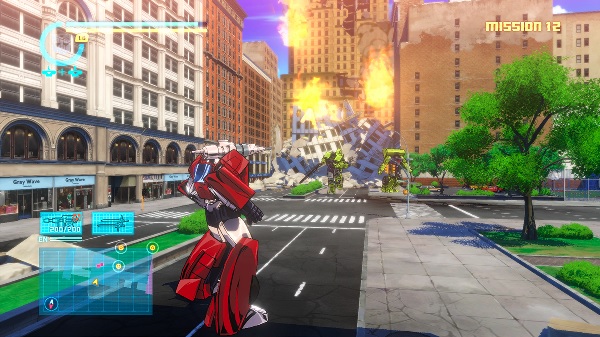
Transformers Devastation represented a unique kind of exciting moment for me. Generally I don’t tend to buy every home console and handheld as soon as it’s released, because I simply wouldn’t find the time for all of those games. Consequently, I’ve never owned a Wii U… and as a result it had been a long time since I had enjoyed anything from Platinum. Transformers Devastation might not appear to match the heights of Bayonetta or Vanquish, but it’s still representative of the uniquely entertaining character-action fun that only Platinum can produce, and even if you’ve come back to this kind of game after being distracted with other titles, it still feels comforting and familiar.

Transformers Devastation: strings and slow-motion

Transformers Devastation

For instance, if you’ve played Bayonetta and pick up Transformers Devastation, you’ll instantly recognise the way in which light and heavy attacks can be stringed together in a variety of ways. You’ll notice that enemy attacks are heralded by a glint of light on the incoming weapon (or limb), helping you to focus during the chaos, and you’ll find that a last-minute dodge delivers the resulting slow-motion payoff you would expect. The latter mechanic bathes the screen in a blue tint and allows you to pile on the damage – something that’s incredibly useful against bosses – and it never stops being satisfying. Also returning from Bayonetta is the panther run – in that game, Bayonetta would transform into a panther and run at speed if the right trigger was pressed twice. Here, it serves as the iconic car transformation and allows you to speed around the environment. Transformations aren’t just limited to this move, however; they also serve as enders for combos, named “Vehicle Attacks”. This makes for a unique way of using the heroes’ most recognisable ability as a signature Platinum gameplay trope.

Transformers Devastation: padded action?

Transformers Devastation

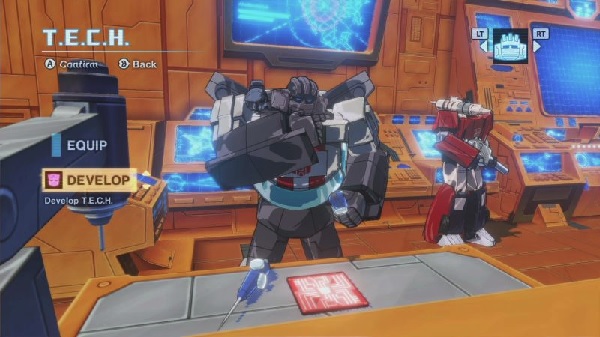
This tried and tested system of custom combos and satisfying dodges is as enjoyable as ever, and it’s just as well, because the game structure and progression can be slightly wearing. There are hidden verses and the maps branch out allowing you to explore other areas, but at times it feels like you’re going through the motions, waiting for the next moment of excitement from whatever boss is at the end of the chapter. For some people that’s not such a big deal – certainly, I could do the same battles against the same enemies for ages and still be having fun – but others might be looking for a little more substance. There is depth to be found outside of the main gameplay; tech can be crafted for random buffs, new weapons and moves can be obtained, certain weapons have status effects and elemental properties that you can see when arranging equipment. There are also multiple Autobots to play as, each with unique movesets. However, the missions themselves can sometimes feel a bit like padding, with recycled bosses or recycled areas.

Transformers Devastation: familiar fun

Transformers Devastation

As mentioned, however, that’s not always a bad thing. I welcomed more of the same because I was keen to try out new combos with the weapon I had just purchased, or find out if the unlockable parry ability is as satisfying as Bayonetta’s Moon of Mahaa-Kalaa (spoilers: it is.) If you like Platinum’s character action games and don’t mind going through another series of battle arenas with another satisfying combat system, there’s a lot to enjoy here. Even after you’re done, you can also try one of the other two available difficulty levels if you want further challenge, and there are more unlockable difficulties beyond the initial three. In summary, Disposable Media recommends Transformers: Devastation. For some people the cut corners may have been a bit disappointing in a £44.99 release, but on PlayStation Plus you can still have plenty of fun with it.

Filed Under: Games, Reviews Tagged With: games, platinum games, PS Plus, PS4, transformers: devastation

De La Soul: And The Anonymous Nobody album review

29th August 2016 By Qazimod Leave a Comment

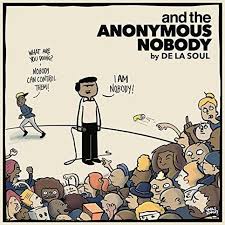
“…And The Anonymous Nobody” is the eighth studio album to be released by the American hip hop trio De La Soul. I can’t claim to be the biggest follower of their music – I think I heard a few of their earlier tracks on the radio before I knew who was behind the tracks, and I only really started paying attention when “Oooh” was aired on Radio 1 sometime in the early 00s. Nevertheless, their material has often impressed me with the catchy beats, smooth melodies and tight rhymes, and so I looked forward to checking out “…And The Anonymous Nobody”. This new album began life as a Kickstarter campaign in March of last year and the project easily surpassed the orignal funding goal. Even though I wasn’t able to personally back it – I didn’t know about the Kickstarter roots until after the campaign was over – I picked up a copy of the album on the day of release and have already found a few favourites sneaking into my playlists.

…And The Anonymous Nobody – good vibes

dela_anon1

With over an hour of content spread across seventeen tracks there’s a lot here to enjoy, and the slick grooves and tight rhymes of “…And The Anonymous Nobody” couldn’t have come at a better time. Released earlier in August, the smooth sounds make for great summertime listening, and many of the songs suit everything from an idle moment relaxing in the sun to a quiet evening drafting content for an entertainment website. Songs such as “Memory of… (Us)” or the opening track “Genesis” create a nice chilled mood – whether that’s achieved with silky vocals or gorgeous strings – whilst the likes of “Pain” and “Trainwreck” have a more conventional hip-hop flavour with their rhymes and beats, but they still maintain a good vibe that’s easy to get behind.

…And The Anonymous Nobody – collaborations and variety

dela_anon2

The collaborations found on “…And The Anonymous Nobody” also allow for a change of feel from the usual hip-hop template. The track “Lord Intended” features Justin Hawkins of The Darkness, and his vocal contributions are accompanied with interesting guitar noodlings. Similarly, a late track featuring Damon Albarn has lazy, dreamlike feel and the odd energetic twiddly guitar moment in the first half for good measure. Crucially, these deviations don’t feel out of place and the album doesn’t suffer or feel unfocused as a result. I imagine that many De La Soul fans will have appreciated a more “pure” hip-hop sound throughout, but that can still be found elsewhere on the album so I don’t think the variety is a bad thing.

…And The Anonymous Nobody – interludes

dela_anon3

One other thing to note is that the large track list also features a few shorter pieces that feel more like interludes and last around 80 to 90 seconds, but thankfully there are enough longer tracks to avoid the risk of feeling like the album has been padded out. Besides, we can’t forget that albums such as “3 Feet High and Rising” and “De La Soul Is Dead” boasted over 20 tracks, and many of them had a similar brevity, so the inclusion of these interludes is hardly surprising.

…And The Anonymous Nobody – a crowdfunding success?

And The Anonymous Nobody

As I said, I’m not the biggest follower of De La Soul, and I’m probably not even the biggest fan of rap and hip-hop – my CD collection contains a lot more dance and electronica than anything else. However, even as a casual listener I can appreciate the quality of content in “…And The Anonymous Nobody”. Some people have voiced concern over the trio’s decision to go to Kickstarter for funding, but listening to the end result I feel like it has been a worthwhile experiment in crowdfunding. It will be interesting to see if De La Soul decide to try this approach to funding again in the future.

Filed Under: Music, Reviews Tagged With: and the anonymous nobody, aoi records, de la soul, de la soul and the anonymous nobody, music

The Upbeats: De-Evolution Part 2 EP Review

6th August 2016 By Qazimod Leave a Comment

De-Evolution Part 2 is a new EP released by The Upbeats on August 5th. If you recall, Disposable Media covered De-Evolution Part 1 last April and concluded that even though some of the tracks were quite “safe”, it made for a generally satisfying whole and people will find at least one favourite track on there (Disposable Media still hasn’t got tired of listening to Elevator.) I wasn’t certain about when part 2 would be coming, but around the end of July I found news about the release. Lasting around 23 minutes, this five-track EP still has plenty to enjoy and moves at a frenetic pace; if you were a fan of part 1, this collection of tracks is pretty easy to recommend.

De-Evolution Part 2 – Mediums and Joyrider

De-Evolution Part 2

The opening track of De-Evolution Part 2 is Mediums, and it was one of the first tracks I heard after The Upbeats shared it on their soundcloud page so that fans could stream it. Mediums kind of picks up where the final track from De-Evolution Part 1 (Elevator) left off – in both tracks the pace is nice and fast, the rhythms are great, and there’s enough variety in the tracks that they never feels too repetitive. Mediums even has a quiet interlude some three minutes in that helps to break things up, and the track is over before you start to think it’s at risk of outstaying its welcome.

The next track – Joyrider – continues the theme of big beats and fat bass noise, but not before it eases the listener in with a rapid succession of gentle beeps, some distant orchestral hit-style sounds and then some intro noise before the first big build-up works its way up to the drop. It’s an impressive escalation, and the payoff comes in the form of hard and fast drums that are set to a rather unique rhythm that is nevertheless easy to get behind. Having said that, the track doesn’t go through as much change and variation as some might like – there’s a brief moment of respite where the drums are taken out, but afterwards it returns to the themes that had already been established before.

De-Evolution Part 2 – Say Go

De-Evolution Part 2

Say Go begins with distant chants, rich ambience and moody vocals from Mara Tk that continue to permeate the track after the beat drops. It makes for a pretty good sound, and the instruments do a good job of keeping things interesting as the main rhythm is taken out and brought back. That being said, it’s a track that shows everything it has to offer fairly quickly, and some might thing that it’s a little plain. I’m undecided myself, but there’s a chance that it’s the kind of thing that would improve with repeat listens.

De-Evolution Part 2 – Babylon and No Surprises

Just like Elevator turned out to be my favourite track from De-Evolution Part 1, I can’t help but feel that some of the best material in De-Evolution Part 2 can be found towards the end of the EP. Babylon has quite an unassuming intro that’s given some flavour thanks to the involvement of Orifice Vulgatron, but once the first vocal is over the track winds down a little before building up to one of the best beats on the EP. The fast rhythm and varied effects do enough to get heads nodding and as the track continues it never loses its momentum or gets too samey. There’s also a great shift in rhythm during the final minute or so of the track which is easy to appreciate.

De-Evolution Part 2

The final track of the album – No Surprises – may be the shortest track of the five, but it’s still pretty good. It begins with melodic beeps and a deep, steady rhythm that soon makes way for faster beats that settle into a good rhythm whilst the melodies and effects create a great atmosphere and bring the RP to a satisfying close. As I mentioned, this EP is well worth listening to if you enjoyed part 1, and at the time of writing it’s available on Spotify if you want to check a stream first.

Filed Under: Music, Reviews Tagged With: de-evolution, de-evolution part 2, music, The Upbeats, upbeats, vision, vision recordings

No Escape Movie Review

4th August 2016 By Dan Thornton Leave a Comment

No Escape is a rare excursion into serious drama for Owen Wilson, and it’s now available to stream or buy. It’s also offensive, tedious and a test of audience endurance despite being an average 103 minutes long.

The film follows American Jack Dwyer, wife Annie (Lake Bell), and daughters Lucy (Sterling Jerins) and Briegel Dwyer (Claire Geare) as they fly into an unnamed Asian country so that Jack can start a new job. Unfortunately for them, we know it’s doomed due to the B Movie film title, the fortuitous encounter with British passenger Hammond (Pierce Brosnan), and the fact director John Erick Dowdle has already shown the assassination of the Prime Minister of the aforementioned anonymous Asian country.

Director John Ericke Dowdle and brother Drew wrote the screenplay inspired by a non-violent coup in Thailand. But rather than any interesting historical relevance or insight, Dowdle tries to add gravitas by a seemingly endless succession of slow motion sequences. Every excuse is used, from a thoughtful Owen Wilson to anonymous Asian life.

And having established the entire personality of the Dwyer family in one quick exchanges asking why Annie Dwyer would bring a rice cooker when moving to Asia, there’s just enough time for another Brosnan encounter before an extremely violent coup begins.

By this point, you may already have a shopping list of questions about the plot. Why would Jack bring his entire family to a foreign country on his first work visit, for example? Why have none of the family taken a single lesson in whatever language the sterotypical Asian country speaks? How have they not picked up a single guide book or Googled where the hotel is, what city they’re in, or the fact that the first line of taxi drivers at an airport might be less than trustworthy?

But all of that pales into insignificance as the coup begins. Because Dowdle and his brother are better known for their horror films (Quarantine, Devil and As Above, So Below), it seems that they applied the same approach when dealing with the political and human motivation for a nation to rise in a coup d’etat.

So almost every Asian is portrayed as a senseless violent killer or occasionally as a benign bystander. That’s the sum total of insight into the coup itself, beyond a short Brosnan monologue in an oddly mangled Estuary accent which explains that actually the Asians are just trying to look after themselves and their families, and they’re alright really, but you should still shoot them to escape.

Then again, the film was shot in Thailand and is very loosely based on events in the country in 2006. And many of the extras are speaking to each other in Thai. Yet signage and other details suggest Cambodia with Khmer writing.

So it’s no surprise that a mangled mixture of Thai and Cambodian coups, details and language have been merged in service of an American director who wanted to create a serious drama, but ended up making a B-movie which could have used zombies instead of the Asian characters.

It’s a shame for the cast. Wilson does a reasonable job of portraying a relatively average family guy forced into action to save his family. He even keeps a straight face during the slow motion hurling of his children from a rooftop to apparent safety. The female Dwyers are very much the supporting cast, but they manage to add some character to the relatively meagre contributions they’re allowed to make. And you could possibly excuse Brosnan if you portrayed it as a quick cameo rather than an actual acting role.

But ultimately, it’s a bigger shame for the audience. If you wanted to actually understand the experience of Cambodia, the 1984 Academy and BAFTA Awards winning drama The Killing Fields is moving, masterful and features a survivor to the Khmer Rouge labour camps in a starring role.

And it’s also possible for Hollywood to create an interesting political thriller, even if the likes of Argo did take a few liberties with the facts for the sake of the story.

No Escape aims for the low road, and doesn’t even manage a good job of that. You’d have more fun watching Escape from New York, and Owen Wilson shared more insight into Asian culture when he co-starred with Jackie Chan in Shanghai Knights.

3/10


Filed Under: Reviews, TV & Film Tagged With: No Escape, Owen Wilson

Noisia: Outer Edges album review

3rd August 2016 By Qazimod 1 Comment

Outer Edges is the second studio album to be released by the Dutch electronic trio known as Noisia. The debut album “Split The Atom” was released around 2010 (unfortunately Disposable Media had yet to be relaunched so it was never covered) and delivered an energetic and inventive selection of drum and bass tunes, leaving fans eager for more. Whilst Noisia has kept itself busy with things like the special edition release of Split The Atom, collaborations with The Upbeats, music for DmC and more, the release of Outer Edges is a welcome reminder of why we found the debut album so enjoyable. Unfortunately, this new release has had a troubled launch – a leak of the album meant that Noisia had to act fast, and so they put the album up on their web store more than a month in advance of the planned September 16 release date. Their sadness and frustration over the situation was palpable when they sent out a message on Facebook detailing what had happened, but fans have shown support and sympathy on social media channels – Disposable Media itself appreciates that this is far from the launch they would have wanted, and respects the course of action taken.

Outer Edges – easing you in

Outer Edges contains a lot of what you would expect from a new Noisia release – there is plenty of energetic drum and bass in there, a few more low-key tracks, a few slower tracks, and a whole that seems varied in quality but contains a few standouts. The short intro track “The Approach” hardly goes anywhere but is a nice way of easing in to “Anomaly” – one of the tracks that had been previewed on Soundcloud and remains a standout with its shifts in rhythm and well-rounded structure. I had been listening to Anomaly repeatedly for quite some time whilst waiting for the album, and it still hasn’t lost any of its appeal. “Collider” then slows things down a bit but still has plenty of big beats and harsh effects that give it lots of flavour, as well as moments of calm amongst the noise. It could be said that a few core hooks are repeated too often and the song could be shorter and still find fans, but it’s still worth a listen. “Vigilantes” is a more curious track; slow beats, squelchy effects and warped samples create something that’s a welcome change of pace, but despite the catchy rhythms it still feels more like an interlude than something with any staying power.

Outer Edges

Outer Edges – momentum and missed opportunity

Moving on, the track “Tentacles” makes its identity known from the outset, with increasingly distorted repititions of the word “tentacles” before a steady beat comes in and is accompanied with wobbly effects. It’s one of the more forgettable tracks on the album, and like Vigilantes it feels a little bit like filler. The following track “Voodoo” starts off promisingly, with great drum rolls and build-ups, but the payoff is a little lacking to begin with; there are steady beats and washy effects that overstay their welcome a little bit, and just as you think the tune is starting to pick up again, there’s another slightly disappointing drop. A real missed opportunity. “Mantra” is a little more successful with its build-up in that the beat drop complements the layers that have already been built, rather than coming across as an anticlimax. Additionally, it maintains its sense of momentum throughout, and I think that it joins Anomaly as one of the more successful tracks. The short track “Surfaceless” also acts as a welcome interlude; it’s surprisingly chilled and doesn’t overstay its welcome. It would make a great contrast from something with fast pace and lots of noise, but sadly “Straight Hook” doesn’t take advantage of this possibility – the lack of structure and identity make it rather forgettable, and the slightly offbeat nature of certain elements doesn’t even save it with novelty value.

Outer Edges

Outer Edges – great intros and lack of character

“Stonewalled” makes a good effort at trying to save things with a simple but quick base rhythm in the beginning, and it kind of succeeds in doing more with less; it doesn’t sound like there’s a whole lot to the track, but what’s there makes for good listening and it’s over before you start to think it might drag on. “Motion Blur” follows and has a dreamy intro with no backbeat that transitions into a fairly simple bass and beat with some pleasing ambience. It’s not a particularly exciting track, but it’s not too offensive either. “The Entangled” has slow pseudo-dubstep rhythms complementing melodic beeps that have a pleasing, almost chiptune-style quality to them, and the drops and build-ups aren’t bad, but again it feels a little slow compared to the likes of “Mantra” and “Anomaly”. The following track “Exavolt” doesn’t do much to help the cause either; the unique rhythm and rich ambience don’t sit well with the sporadic beeps in other moments and it’s another track lacking in character. Meanwhile “Into Dust” spends far too long on its build-up to deliver anything of interest in time.

“Miniatures” and “Sinkhole” both have a weird, slow, low-key vibe that helps the two tracks to complement one another and create another interesting interlude, although the latter relies on its sampled chatter a little too much for my liking. “Miniatures” at least has a nice chilled vibe to it, even if that’s not what you might expect from the likes of Noisia. Anyway, as the album draws to a close there’s not much to say that hasn’t already been said; catchy beats that need a song with a stronger sense of structure and progression, tracks that could have ended a little sooner, build-ups that aren’t justified by the drops, chopped-up samples that don’t add enough to the mix of sounds, and occassional flashes of brilliance (the second half of “Get Deaded”)

Outer Edges

Outer Edges – difficult second album?

There’s no doubt that Outer Edges has a lot of good content and is at least worth a listen on streaming sites, but when Split The Atom had the great vocals and big drops of “My World”, or the superb structure of “Shellshock”, or the iconic sound of “Stigma”…you start to wonder what the equivalents are on Outer Edges. “Anomaly” has a lot of flavour and never gets old, and “The Entangled” may improve with repeat listens, but the standouts aren’t immediately evident… For the moment, we recommend giving this some time with streaming services before you commit to a purchase.

Filed Under: Music, Reviews Tagged With: music, Noisia, outer edges

The Avalanches: Wildflower Review

8th July 2016 By Qazimod Leave a Comment

There’s a certain group of writers for entertainment websites who wondered if they’d ever see this day. More than a decade after Since I Left You’s release, the second album from The Avalanches – Wildflower – is finally upon us. Even if people had forgotten about the group, they won’t have forgotten their music – many of the tracks from the debut are still in rotation on my playlists – and no matter how I feel about the content of Wildflower, it’s great to be able to talk about a new Avalanches release.

Wildflower – something for everyone

Wildflower

With a mammoth 21 tracks on the album, it would feel a bit too clinical to write out a track-by-track talkthrough of the Wildflower – suffice to say the range of moods and tempos throughout the album mean that there’s something for everyone to enjoy. At the same time, it doesn’t feel too unfocused as it moves from jaunty beats to dreamy ambience, but it’s too early to say whether it will be as memorable as Since I Left You. Also, just like the previous album, a few of the shorter tracks act like interludes more than anything, so it’s not as enormous as you might think.

Even though Frankie Sinatra sounded like one of the least Avalanches-style tracks around, other tracks on Wildflower do more to play with your expectations, such as The Noisy Eater – the lazy beats and slick raps contend with jingles and chants throughout the track, and noisy eating can certainly be established through some of the samples. One or two tracks on the album feel like they take a sample or hook and run with it for a while but don’t really do anything to the song structure or add any extra layers, and at times this makes you feel like some tracks are threatening to outstay their welcome. Even so, many of those hooks and beats are so catchy that you’ll quickly forget about it.

The broad range of Wildflower

Wildflower

The tracks that succeed the most in Wildflower are the upbeat and melodic tracks such as Subways and Because I’m Me. The tracks that feel at home on the album are the soothing and playful tracks such as Harmony and Colours. The tracks that don’t work quite so well are the ones that don’t feel like Avalanches tracks, such as Frankie Sinatra. Of course, you can’t be too hard on bands and artists for trying to broaden their range, but when juxtaposed with the tracks that *do* work, it stands out so much more. At times it feels like there is a weird emphasis on raps and rhymes that just wasn’t there in the debut (unless you want to count Avalanche Rock) although sometimes the raps are complemented by melodies that are good enough to make a track enjoyable.

I know that some of the 21 tracks on Wildflower are quick interludes (which is fine – again, see Avalanche Rock), but on occasion you feel like there are enough decent tracks to justify losing the weaker ones. Sometimes the variety in mood can be felt through a single song. For instance, The Wizard of Iz – previously teased in the “Since They Left Us” video – threatens to repeat the same loops over and over, but it quickly transitions to gentle vocals and then abrupt rapping. Conversely, tracks like Sunshine – with their smooth vocals and high strings – are much more pleasant, and the looping samples work because the other layers of the song are more progressive and complement the samples.

Wildflower – worth the wait?

Wildflower1

If you can take away anything from this album, it’s that it certainly feels like it’s been fifteen years in the making. It seems to avoid harsh criticism of the weaker tracks just by having so many tracks in total, and just when you start to shrug your shoulders at a less impressive beat, something else comes along and makes you think again. Also, the album definitely improves again as it draws to a close. (Oh, and to that group of people who like Frontier Psychiatrist more than any other track on Since I Left You – unfortunately there isn’t a record-scratching equivalent on Wildflower. Hopefully the better tracks on the album make up for it, but I understand the disappointment.)

Filed Under: Music, Reviews Tagged With: avalanches, music, the avalanches, wildflower

The Upbeats: De-Evolution Part 1 EP Review

26th April 2016 By Qazimod Leave a Comment

De-Evolution Part 1 is a new EP released by The Upbeats last Friday on Vision Recordings. You might remember Disposable Media featuring The Upbeats’ collaboration with Noisia – titled “Dead Limit” – in September of last year, and when I heard about De-Evolution Part 1 on Noisia’s Twitter feed I headed over to the nearest Spotify stream. Generally I’m more familiar with Noisia’s music than that of The Upbeats, but the quality of the material featured on Dead Limit piqued my interest enough to listen to De-Evolution Part 1 anyway. Happily, the five-track EP is 25 minutes of varied and energetic drum and bass, and you never get the feeling that any of the tracks really outstay their welcome.

De-Evolution Part 1 – Dr. Kink and Pharoah

De-Evolution Part 1

De-Evolution Part 1 opens with Dr. Kink and an almighty 45-second intro that is successful in building anticipation for the initial beat drop. Fast hi-hats, steady snares and escalating tones are then introduced and lead up to some vicious synths and big beats. The track isn’t insanely speedy or busy but it gets its hooks in fairly successfully and throws in more buildups and “epic intro” reuse later in the song. I admit that Dr. Kink doesn’t really have a huge amount of variety but it’s still catchy enough to serve as background music for whatever you happen to be doing.

The second track “Pharaoh” is a collaboration with electronic trio Ivy Lab and is definitely one of the less aggressive tracks on De-Evolution Part 1 – soothing sounds at the beginning of the song set the mood moments before the beat comes in, but it still doesn’t transition into madness, instead just offering steady build-ups and an almost hypnotic melodic hook that is transformed and tweaked in various ways throughout the song. It’s not the most creative track around but it’s still pretty inoffensive and provides a nice moment of calm before the noise that follows.

De-Evolution Part 1 – DOOM

DeEvolution2

De-Evolution Part 1 is quick to bring back the aggressive tones and big beats in “DOOM”, starting with weird effects amongst silence before bringing in an onslaught of drum and bass excellence – powerful kicks and snares set to a curious rhythm, plenty of distorted noise and layers of “cleaner” tones in places… it all creates a pretty satisfying whole, and there’s enough variety in the structure of the song that it never feels samey and is generally pretty interesting. Again, there’s another build up to a second drop about halfway through the song but it works well, and whilst it’s not my favourite track from De-Evolution Part 1 there’s lots to recommend here.

De-Evolution Part 1 – Dungeon and Elevator

The following track “Dungeon” wastes little time in setting the mood – curious reverb plinks, steady three-note melodies and chords fool you into thinking that there might not be much to this track but eventually everything gives way to another build-up sequence leading to big beats and dirty bass. Again, it’s not really paced at an insane tempo but there are some great fills and interludes that help to keep things interesting. By now I was starting to think that De-Evolution Part 1 had moments of greatness amongst a billion huge build-ups, but the final track “Elevator” turned out to be a surprise favourite.

DeEvolution1

Whilst it’s structurally fairly similar to the other tracks, the general tone and mood of the track is somewhat more – no pun intended – upbeat than everything else, and it stands out amongst other tracks that have more darkness, or strangeness, or aggression to them. I think De-Evolution Part 1 is varied enough that most fans of this type of music are likely to come away with at least one favourite, and if you have 25 minutes to spare it’s worth heading over to Spotify or checking the Soundcloud embed below so that you can make your own mind up.

Filed Under: Music, Reviews Tagged With: de-evolution, de-evolution part 1, music, The Upbeats, upbeats, vision, vision recordings

  • « Previous Page
  • 1
  • …
  • 5
  • 6
  • 7
  • 8
  • 9
  • 10
  • Next Page »

Get Social

  • Facebook
  • Instagram
  • LinkedIn
  • Medium
  • Pinterest
  • RSS
  • Twitter
  • YouTube

Top Posts & Pages

  • Narcos Netflix Original Series Review
  • Revisiting FFXII in 2016 - a retrospective
  • Rogue One: A Star Wars Story Comes to VHS?
  • Skies of Arcadia Retrospective
  • Late to the party: Dark Souls Remastered
  • Tekken 7 - King of the Iron Fist 2015 Highlights Video
  • Noisia: Outer Edges album review
  • New Nintendo Switch Wheel From Numskull
  • Save on Street Fighter T.N.C 04 Guile Figurine
  • Backwards Dungeon Crawling – how not to play Metaphor

Ads

Join Us…

  • Facebook
  • Instagram
  • LinkedIn
  • Medium
  • Pinterest
  • RSS
  • Twitter
  • YouTube


Privacy Policy

Cookie Policy

© 2026 Hot Mod Media · Design & Marketing TWOTW

Disposable Media · FPSPrestige · OnlineRaceDriver · The Guitar List · Rescars · Rescogs

We use cookies to ensure that we give you the best experience on our website. If you continue to use this site we will assume that you are happy with it.