Disposable Media

Art, Music, Games, Life

  • Art And Literature
    • Comics
  • Music
  • TV & Film
  • Games
    • Tabletop Games
  • Technology
  • Life
  • Events
  • Magazine Downloads
You are here: Home / Archives for Reviews

Guardians of the Galaxy Vol 2 Review

2nd May 2017 By Dan Thornton Leave a Comment

If you haven’t already committed to the opening weekend, then our Guardians of the Galaxy Vol 2 review might help you decide whether to spend more time with Peter Quill, Rocket Raccoon and the rest of the crew. The original film was well-received by critics and the public, although it did have some notable detractors. And after becoming the third highest-earning film for Marvel, the sequel was always going to have a similar feel.

The first Guardians of the Galaxy film established the team led by human Peter Quill. Adbucted by a group of alien space pirates known as the Ravagers, Quill steals an orb which can destory the universe. That leads him into being chased by assassin Gamora, the adopted daughter of Marvel uber-villain Thanos. And also encountering the cybertnetically modified raccon Rocket, the tree-like humanoid Groot,and socially-inept warrior Drax. The group band together due to the threat of both fanatical Kree villian Ronan and the other daughter of Thanos, Nebula.

In a sci-fi tradition since a Galaxy far, far away, the second film in the trilogy of Guardians films already confirmed sees a slight change of pace. The comedy is as present as ever, but it follows Peter Quill’s discovery that he is only half human. The revelation that Quill had non-human powers is expanded when his father turns up after 30-odd years to whisk him away for a weekend of getting to know each other. Obviously in any film sequel, the paternal relationship turns out to be a bit more complicated than it appears.

Around that core, other members of the Guardians some chance for screen time. Family is obviously also integral to the daughters of Thanos, and the source of their bitter sisterly rivalrly is explained. Meanwhile wise-cracking Rocket also gets the opportunity to bond with Ravagers leader Tondu Udonta.

Obviously there’s still a need for action, adventure and space battles, so the film introduces the Sovereign race. Due to the typical behaviour of Rocket, the Guardians go from hired heroes to thieves, which means war with a race of genetically-modified beings.


Guardians for the Young?

The recent boom in comicbook movies has followed a similar pattern to their print sources. Years ago, both ink and celluloid comic heroes were aimed at kids. But over the last 20-30 years, audiences and cash have come from adults who never stopped enjoying the genre.

Although that vacuum has allowed for new independent titles, and for comics based on various animated series, it’s created an interesting challenge within the Marvel Cinematic Universe. While many of the films range from 12A-15 ratings (with the obvious exception of Deadpool), they’re not always appropriate, or quite silly enough, for pre-teens.

Aside from possibly Ant-Man, the Guardians series are the most child-friendly of the Marvel films. There may be the occasional sexual innuendo, but after the inital death of Peter Quill’s mother in the first film, the losses are limited to aliens. Which I’m reliably informed is less of a deal-breaker for a young child than cuddly animals in Ant-Man, or relatable human characters in The Avengers for example.

And while it can be occasionally risque, most of the Guardians jokes are painted in broad, visual strokes. Particularly when it comes to the embodiment of a cute character in Baby Groot.

Guardians of the Galaxy Vol 2 Review

Baby Groot

Parental Guardians:

Having turned a large and powerful character into a twig for the sequel, it turns out Baby Groot (Vin Diesel) is one of the highlights of the film. Obviously he’s innocent, naive and cute. Which lends itself to a range of gags throughout the film. But he also provides more of the family dynamic for the Guardians which has been referenced in both films so far.

That’s in contrast to Rocket (Bradley Cooper) and Drax (Dave Bautista). The raccoon hero (played on set by stand in Sean Gunn, who appears in the film as Kraglin), is still great to watch in action, and generally his wisecracks continue to raise a laugh. But the attempt to give him more emotional depth and bond with Ravagers leader Yondu feels forced and unnecessary. The same can be said of Drax, whose tragic story in the first film is largely papered over with turd jokes and insults to new character Mantis. Rather than learning how to interact with the rest of the group, it’s almost as if Drax has regressed to become more one-dimensional.

Fortunately Chris Pratt continues to shine as Peter Quill/Star-Lord. The leader of the Guardians may have finally become known throughout the Galaxy, but he’s still a relatable character. As a fallible half-human, he’s someone we can identify with, but still manages to be just cool enough to be a superhero. And the film also benefits from more screen time for both Gamora (Zoe Saldana) and Nebula (Karen Gillan). After largely being relegated to villainous sidekick in Volume 1, now we can see that Nebula is much more of a force to be reckoned with.

Of the other characters in the film, Yondu (Michael Rooker) remains an interesting rogue, with more of his Ravager backstory and crew becoming apparent. That leads to a number of cameos, including the much-hyped Sylvester Stallone, and the uncredited Miley Cyrus, along with Ving Rhames, Michelle Yeoh, and distinctive Sons of Anarchy actor Tommy Flanagan.

The casting of Kurt Russell as Ego fits to some extent, although the younger CGI-version in the films 1980s flashback is a little disconcerting at best.  It’s not the most nuanced role, even as we discover more about the character, his motivations and the ultimate objective he has carried for years. And Russell’s comedic skills haven’t necessarily improved since Big Trouble in Little China. But he does the job adequately, which is also true of Pom Klementieff, whose time and role is limited in her initial outing as Mantis.

One flaw with the film is that with so many interesting characters, it does feel a little like there are too many people crammed into the running time. That’s true of Ayesha (Elizabeth Debicki), the leader of the Sovereign race, who seem to have been included purely as a plot mechanism to create three specific moments. They feel like a gold-painted version of the Nova Corps from the first film, without the benefit of Glenn Close, John C Reilly and Peter Serafinowicz.


A Guardian Not?

Writer and Director James Gunn has once again managed to cram in a lot of action and plenty of jokes. And largely it works, although there are some lowbrow misses (Generally involving Drax). As a sequel, the film does move the cast and storyline forwards, although by including so many characters Guardians Vol 2 does feel a little overblown. It’s still an enjoyable confection, but resembles a box of chocolates filled out with too many cheap treats.

Having said that, it’s still an extremely enjoyable film. The pace of the jokes mean the misses are soon forgotten in favour of some genuine belly laughs. And there are some very memorable moments, particularly including Rocket and Baby Groot.

It’s obvious to everyone involved that the true joy of the Guardians of the Galaxy is witnessing how the group bounce off one another. Hopefully the already confirmed Vol 3 will strip back a little of the expansive cast list (which is as true of the comic source material as Vol 2), and allow some of the characters to evolve a little more before they can become tired. With the likes of Thanos and plenty of other notable villains in the Marvel universe, perhaps we can ditch the likes of the Sovereign as deus ex machina to keep things going.

Overall, Guardians of the Galaxy Vol 2 is good enough to satisfy anyone who liked the original film, or fancies some superhero silliness without the limits that more serious comic films place on the rapid one-liners. It’s enough to keep the heroes in your heart until the next film, particularly Baby Groot, who will be going through his teenage years when we see him again.

7/10

Filed Under: Reviews, TV & Film Tagged With: baby groot, chris pratt, groot, Guardians of the Galaxy, james gunn, zoe saldana

Persona 5 review (PS4)

24th April 2017 By Qazimod Leave a Comment

It was an unenviable task. Persona 5 was released in April as the follow-up to one of the most finely crafted JRPGs of recent years: Persona 4 had tight dungeon design, a simple but likeable narrative and a collection of activities that never made the game feel limited or unfocused. From the outset, the fifth game wants to show you that it has bigger plans – you unlock a vast number of locations, there are several simple minigames to play, the narrative is denser, the world is more detailed and the dungeons are more elaborate. Together with your fellow phantom thieves, you must change the hearts of corrupt individuals by exploring “palaces” that represent their innermost perceptions of themselves and the world they’re in. For the most part, it’s business as usual – you study in the mornings, explore dungeons outside of school, and when there’s no target you can hang out with friends or indulge in stat-boosting activities. However, the dungeon crawling has seen the most significant overhaul, with changes both good and bad.

Persona 5 – fighting words

Persona 5

When you have a target and a palace, you navigate from room to room as you map out the palace, take out enemies, level up, and locate the “treasure” of someone’s mind. This is at its best when you’re doing the classic Persona thing – fighting battles and opening doors to new floors. Those battles still work with the same elemental weakness system that was so satisfying in the earlier games, but Persona 5 also overhauls the “negotiations” of the first game. Knock down opponents (by using elemental attacks the opponents are weak to) and instead of performing an all-out attack (a special move that damages all foes) you can talk to them. Depending on the foe and your responses, they could get angry and resume the battle, run away, give you an item or become a Persona that you can summon for your own use. With Shuffle Time gone, this is now the only way you gain new demons – each one offering skills (elemental attacks, physical hits, buffs, nerfs, status ailments, healing etc) that can be used in battle. It’s more satisfying than it was in the earlier games because each negotiation only has a small amount of multiple-choice questioning compared to the multitude of reactions and emotions in the first game.

Also satisfying is the planning of each change of heart. Find the treasure of someone’s palace (by battling through each floor to the end) and your team heads back to base to plan a proper infiltration. This lasts one in-game day and culminates in some of the most enjoyable boss battles in the game; most of these special battles have triggers in the arena that require party members to temporarily leave the main fight, but if the setup is successful then the battles get turned around and the party’s damage output ramps up. It’s a thrilling twist on the usual Persona boss format, and it’s great to see a JRPG where boss fights almost feel like a reward.

Persona 5 – locked doors

Persona 5

However, before you can face a boss you must negotiate the palace environment, and these are more complex layouts than the dungeons of previous games. Persona 4 sometimes turned a race to the stairs into a meandering backtrack to find a miniboss who would drop a key, and Persona 5 builds on this philosophy with more cunning locked door conundrums. Sometimes you’re just finding a switch to flick or a duct to crawl through, but other locked doors involve puzzles and minigames. Not all of these are that successful – a pitch-black maze in one area became a bit wearing and one later puzzle with weird transformative fog overstayed its welcome – but others have more enjoyable sequences. The successful implementation of these puzzles, locks and minigames isn’t necessarily down to how challenging they are, but more to do with how they suit the pace of the rest of the palace. If you weren’t a fan of P4’s locks or the gimmicky warp rooms in Yukiko’s Castle and Void Quest, you might not like P5’s offerings, but fortunately the lowlights are few and far between.

One returning feature that’s more successful is the scattering of save points within dungeons – P4 wasn’t very generous with its save points, but here you find “safe rooms” every few floors where you can manage the team, save, warp to other safe rooms (or out of the dungeon) and discuss your progress with the party. To begin with these feel like convenient checkpoints that save time, but later on the complex dungeons and trickier battles make every safe room discovery a welcome relief – when you’re deep in a palace and your resources are drying up, there’s nothing more satisfying than being informed that there’s a safe room nearby, allowing you to record your progress and leave the palace safely.

If the party has no target in the main story, Mementos fills any additional need for dungeon-crawling. A vast labyrinth of simpler rooms, it brings to mind the atmosphere of Persona 3’s Tartarus, and is a great way to build experience and do more negotiations to get a new Persona or two. Whilst it’s less of a priority than other activities in the game, you might well find yourself coming back to it if you’re between palaces and your dungeon-crawling itch can’t be scratched. Mementos does have occasional fixed boss encounters, but the world’s regions are somewhat less elaborate than the storyline palaces, making them a much snappier fix of dungeon crawling.

Persona 5 – too much of everything?

Persona 5

The more I played of Persona 5, the more I felt like it wanted to be the ultimate Persona experience – it wanted to be all things for all people. Do you miss the earlier games’ negotiations? Here are some negotiations. Do you want more minigames and places to travel to? Here they are. Did you like the eerie atmosphere of Tartarus? Welcome to Mementos. It’s as if the developers felt that the only way to expand upon P4 was to literally expand the game and offer more of everything. In some cases this results in more ideas that don’t quite work – certain puzzles felt like padding, and some minigames just felt clunky – but at the same time it results in a polished game with lots to do.

Critics have said that this feels more like iteration on a template as opposed to being a true refresh of Persona, and I can’t argue with that… but if you want more Persona, this is something you can pick up and try. If I were asked whether I like this more than P4, I’d have a hard time saying yes because of those slower exploration sequences – however, failing to match P4’s winning formula doesn’t stop P5 from being an utterly charming and engrossing experience, and if you’re after a deep, polished and varied JRPG, it’s well worth your time.

Persona 5 is out now for PS3 and PS4.

Filed Under: Games, Reviews Tagged With: Atlus, games, Persona, persona 5, PS3, PS4

Nier Automata review (PS4)

16th March 2017 By Qazimod Leave a Comment

As I finish the last of the three main campaigns of Nier Automata and chapter-select my way to the other conclusions (there are about 26 endings to the game but only a handful of them are “proper” endings) I was left with so many thoughts and feelings. The true ending wraps things up perfectly and is sublime from a gameplay, narrative, and emotional standpoint. When I realised what was going on, and the implications of what was going on, I was left speechless. And it almost makes up for the varying quality of the gameplay.

Nier Automata is a truer follow-up to the 2010 game than we could have ever hoped for; the gameplay is tightened, the combat is slick, but it hasn’t been streamlined into a character action game and instead retains the RPG tenets of the original. You’ll do fetch quests, gather materials, go from A to B and quick-travel across several unique regions. More notably, you’ll level up through play and face enemies that are at a much higher level than you; enemies that will decimate your health bar in one hit if you try your luck. Through levelling and player customisation, the typical skill barrier associated with character action now has a number of RPG elements to support you. Take plug-in chips for instance – they offer various buffs and effects but take up a certain amount of “storage” depending on how good they are. Certain chips offer typical buffs like increased damage, better healing effects etc, but other chips can turn it into a completely new game – there’s one that grants health after every enemy kill (think rally in Bloodborne) and another that slows down time whilst retaining character speed after a successful dodge (hello Bayonetta). It’s one of Platinum’s most rewarding systems yet, and it means that a bit of levelling or chip tweaking can turn defeat into victory.

Nier Automata – split personality

Nier Automata

Plug-in chips and levelling aren’t the only deviations from the character-action formula; Nier Automata has more of the classic shoot ‘em up action seen in the demo as well as a new gameplay feature introduced after the first playthrough that adds an interesting new dynamic to much of the rest of the game. (This isn’t the only time this happens as you go through the three campaigns, but I found that it was the biggest gameplay shift.) And even though the world and town may feel small-scale compared to other RPGs you play, there’s still enough going on to prevent you from feeling like you can’t progress. Enemy levels are displayed as you fight them (this may be optional based on interface plug-in chips; I’m not sure) and so you instantly know if you’re going into an area that will be too challenging, encouraging you to level up and do sidequests until you’re ready.

There’s also a lot of variety in the environments you’ll explore – the 2010 game had the likes of Façade, Seafront and the Aerie peppered around its central hub, and Automata has its own desert in addition to an amusement park, a forest and more abstract areas later on. Even though the shifts feel a bit disjointed as you speed from place to place, each one feels distinct in its culture and identity. And remember that a lot of time spent in the areas will involve a finely-tuned combat system that is satisfying in itself but transformative when plug-in chips are involved.

Nier Automata – rough moments

Nier Automata

It is, however, a Nier game. Even with Platinum at the helm there’s always the risk of some dodgy moments when Nier is involved, and Automata isn’t without its problems. Some platforming can be fiddly, camera shifts can come at the worst possible time, you can end up underlevelled if you hurry through things, and the 3D map – as good as it is – can still be hard to wrap your head around at first. At the same time, just like in the original Nier, you’ll forgive these blemishes just to see where the story takes you, and the underlevelling only happens if you try and treat it like a straight character-action game rather than embracing the RPG roots of the series. (On a personal note I’d also recommend rotating your saves and/or backing up saves to the cloud, just in case you over-use the manual saves and wind up in an impossible situation. Ahem.)

There is a risk that with all the genre-bending Nier Automata shows you all of its tricks too soon, and that certainly begins to ring true in the third playthrough. That said, even when you think it’s running out of ideas the gameplay is so satisfying that you’ll want to keep going anyway. Finish the three main routes and a chapter select opens up, allowing you to see alternate conclusions for the third route and, ultimately, one of the most majestic ways a game has been wrapped up in some time. In that moment, it’s easy to gloss over the flaws you noticed along the way – it’s easy to let emotion drown out cold analysis. At the same time, don’t we spend evenings with videogames for moments just like the gameplay and narrative highs of Nier: Automata? So yes, this is a recommendation. If you enjoyed the original Nier, you shouldn’t let the Platinum logo put you off. If you want to see character action in a more fleshed-out world, this is worthy of your attention. And I can only hope that this gains enough attention to make up for the first game’s niche status.

Nier Automata

Nier Automata is out now for PS4 and will be released on PC on March 17th

Filed Under: Games, Reviews Tagged With: games, Nier, Nier: Automata, pc, Platinum, platinum games, PS4

The Upbeats: De-Evolution Part 3 EP Review

6th March 2017 By Qazimod Leave a Comment

Back in September of 2015 I covered the collaborative album from Noisia and The Upbeats named Dead Limit – I had enjoyed a lot of Noisia tracks in the past but wasn’t so familiar with The Upbeats, but following the review I started keeping a closer eye on the electronic group from Kiwi. Through news on twitter lists I discovered The Upbeats’ De-Evolution series; I covered parts 1 and 2 here and here, finding that there were a few tracks that didn’t go anywhere but also some killer standout tracks that I still listen to if I’m out and library shuffles just aren’t doing it for me. It’s those standouts that have kept me interested in De-Evolution Part 3, said to be the final part of the series. My digital download became available on Friday afternoon (sadly the Vision Recordings store has no option to buy the trilogy on CD; the only options are digital and vinyl) and my early impressions are that it’s eager to impress but is a fitting close to the trilogy.

De-Evolution Part 3 – Cauldron and Prism


The opening track, Cauldron, is full of big bass, slick beats and great drops. The main bassy hook gets under your skin fairly easily whilst the tempo shifts from slow build-ups to quick snare rolls and steady but unrelenting beats. It’s definitely the kind of thing that you’d be able to annoy next-door neighbours with, and the as the lingering bass buzz makes way for warbly keys about two minutes in, the track transitions into another build up and drop before bringing everything back for the latter half. It might not be hugely inventive, but it’s a lot of fun, and a good start for the EP. The next track on De-Evolution Part 3, Prism, has gentle yet eerie effects easing you into the intro, as well as a distorted vocal that later gets lost in amplified synth effects just before a steady but catchy beat and bouncy melody come in. It’s definitely one of the slower tracks I’ve heard in the De-Evolution series, but it gets the head nodding, even if it’s not quite as exciting as those standouts I mentioned in the opening paragraph. It does slightly pick up the pace later on with a quicker and more playful drum track layered on to the rest of it, and it could be a great track to lose yourself in after a hectic day. Or something.

De-Evolution Part 3 – Veiled and De-Evolution

One track that certainly got the foot tapping was Veiled, an early contender for the highlight of De-Evolution Part 3 (in my personal opinion), sharing glory with Elevator from part 1 and Mediums from part 2. The echoes and wobbles at the start may not be that exciting, and it takes its time building up the track with pounding kicks and retro sounding synths but when it all comes together it’s haunting, catchy and amazing. Oh, and it finishes at a logical place too, rather than going around the build-ups and drops again or overstaying its welcome. I already got a chance to listen to the title track, as “De-Evolution” was revealed on the Bassrush website in late February – it’s a nice serving of multi-layered dirty bass amongst great beat loops and fills, transforming towards the end into something more low-key but still bursting with energy.

De-Evolution Part 3 – the end

The penultimate track, A Place For You, has a gorgeous vocal from Sylvee and a slower beat, but even though it’s not drum and bass mayhem it’s still nice to listen to – layering on plenty of echoed vocals, soft synth-y sounds and intentionally muffled beeps – and fits really well with the rest of De-Evolution Part 3. Things are brought to a close with Streetlight, which has very little bass noise but a busy rhythm and plenty of keys and melodies layered on to create a satisfying whole. In general, if you liked previous releases in the De-Evolution series you should definitely pick this up. And if you’re new to the series, each release has something on there to recommend, so look them up on Spotify today.

Filed Under: Music, Reviews Tagged With: de-evolution, De-Evolution Part 3, music, The Upbeats, upbeats, vision, vision recordings

Lumo Review (PS4)

24th February 2017 By deKay Leave a Comment

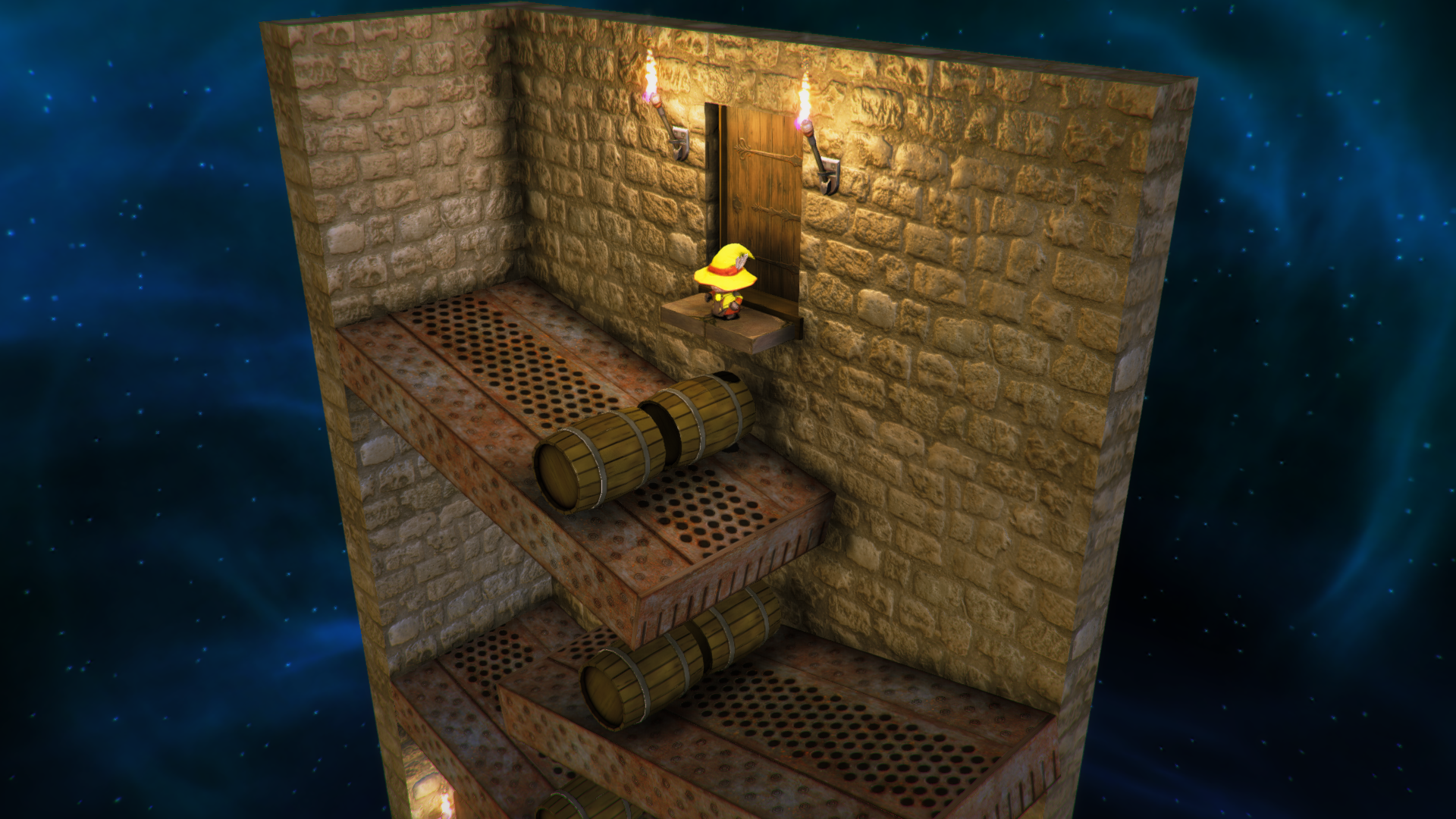
Lumo is how you remember old Spectrum isometric games played. You know the ones, like Batman and Head over Heels and Knightlore. Only you remember wrong. Because although we all loved them back then, they were a pig to control and the hardest things ever.

Take the idea of these games and view them through a rose-tinted lens, and you have Lumo; it both pays homage to and lampoons the 8-bit isometric arcade adventure genre.

You begin in “the real world”, visiting a small-time retro gaming event. One of the machines on display malfunctions, and you’re sucked into a world where you’ve become a super-deformed wizard and electrified floors and hidden cassette tapes are the order of the day. You move from room to room, overcoming platforming challenges or puzzles, collecting four artefacts. Collect them all and you just might return home.

Lumo

Where Lumo succeeds is in evoking the feeling of those old games. Not just in the viewpoint, but in the sort of objects, room layouts and traps you encounter. Several rooms are almost carbon copies of classic ones, triggering the retro glands. Some rooms contain more front-and-centre references, literally including sprites or screenshots. There are nods to 80s computer games and UK gaming culture of the time everywhere. In one section, you ride a lift and the music playing is Your Sinclair’s very own Whistlin’ Rick Wilson and his classic “Hold My Hand Very Tightly (Very Tightly)”. They played it on Radio 1 once, you know.

Sometimes the game will deviate from the Ritman/Drummond/Ultimate template into other areas. There’s a minecart section, and several bonus areas that ape Ballblazer, Zaxxon, Horace Goes Skiing and Nebulus amongst others. Some of these work well in isometric, some (*cough* Horace *cough*) do not.

Lumo

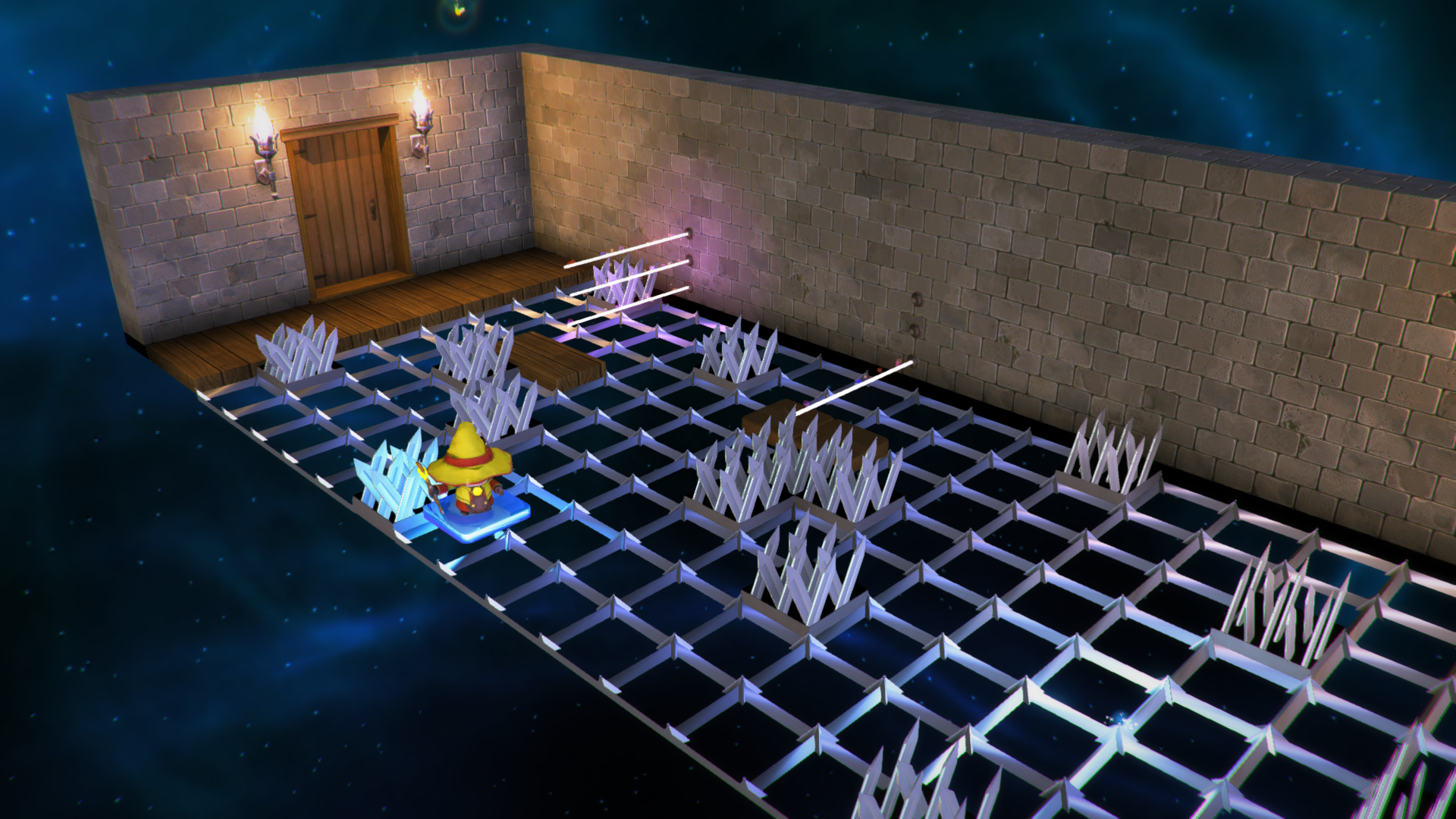
Where Lumo performs less well is mainly due to this 45 degree viewpoint. Also a complaint with many of the classic titles, seeing where you are in space relevant to platforms you need to land on can be a struggle. One particular section in a later area of the game has you navigating a bubble between spikes, and it’s near impossible to determine where it will actually pass. Failing a screen because your pixel-perfect jumping isn’t up to scratch is one thing, but because it looks like the landing area is in front of you when it’s actually up in the sky several squares away? Not great.

Thankfully, and unlike isometric titles of yore (unless you cheated!), infinite lives help stave off throwing your gaming device through a window. Some of the more tricky, long, or “perspectively challenged” areas still cause the red mist after several dozen deaths, but these are rare.

It’s definitely a game aimed at 80s Speccy kids, and is worth playing for the nostalgia if nothing else. In itself it’s pretty decent too. It may lack a little polish perhaps. And maybe a few rooms should have been tweaked to reduce the viewpoint issues a tad, but there’s a lot to like here anyway. Oh, just one more thing: Make sure you install the update before you play. There are nasty save game bugs otherwise!

Filed Under: Games, Reviews Tagged With: lumo, PS4, review

Induction review (PC/Mac/Linux)

7th February 2017 By Jim Miles 1 Comment

Bryan Gale‘s Induction is a discrete puzzle game that keeps its explanations to a drum tight minimum. Just deducing the rules can be challenging – especially later on – and that’s in addition to the actual puzzles of getting a little cube and its clones to the right places at the right times.

Induction Review Logo

“Right times” is a key concept here, as the levels involve manipulating objects across multiple timelines. It is geometrical Bill and Ted, copying, pasting, looping, rewinding, and replacing the very fabric of time itself, as casually as editing a mixtape.

Induction Review

Art design is minimalist but colourful, and Tim Shiel‘s soundtrack an unobtrusive ambient match.

The game takes a sufficiently different approach to 2008’s Braid, but that time-travel title is worth bringing up in a related context. The Zero Punctuation review of Braid contained an absolute clanger where Ben Croshaw criticised what he perceived as an arbitrary doors/keys interaction which, to the discerning player, was in fact not arbitrary but 100% consistent with the ruleset. That very same confusion and corresponding moment of “whoosh” can all-too-easily happen with Induction, where rigorously retracing the steps in a trial-and-error solution is just too much effort and it feels far more natural to blindly press on to the following level. Doing so always leads to being instantly stumped on the next rung of complexity and having to reduce everything right back down to first principles.

If “having to reduce everything right back down to first principles” sounds like a purgatorial process then Induction is not the puzzle game for you; just as last year Stephen’s Sausage Roll was not the puzzle game for many, who rushed to buy it on the strength of testimonial hype and were promptly offended by epiphanies of their own ineptitude.

However, if you are someone who enjoyed Stephen’s Sausage Roll, English Country Tune, et al – and especially if you thought games like Braid, The Witness, Portal, and The Talos Principle were too easy – then Induction is a confident slam dunk. The feeling of sitting for 15 minutes carefully thinking through a solution, progressively bolting down all aspects of the level – and how each must be implemented – before executing what you have just built in your head to conclusively solve it, receiving that satisfying 3-note melodic chirp, and having the cube vanish back to the game’s overworld (in itself an explanationless system with its own rules and patterns)…well…that feeling is among the most unique and enjoyable emotions a videogame can give.

Induction is available now on Steam and The Humble Store for Windows, Mac, and Linux.

Filed Under: Games, Reviews Tagged With: Humble Store, Induction, Linux, mac, pc, puzzle, steam, Time Travel

Not A Hero review (PlayStation Plus)

6th February 2017 By Qazimod Leave a Comment

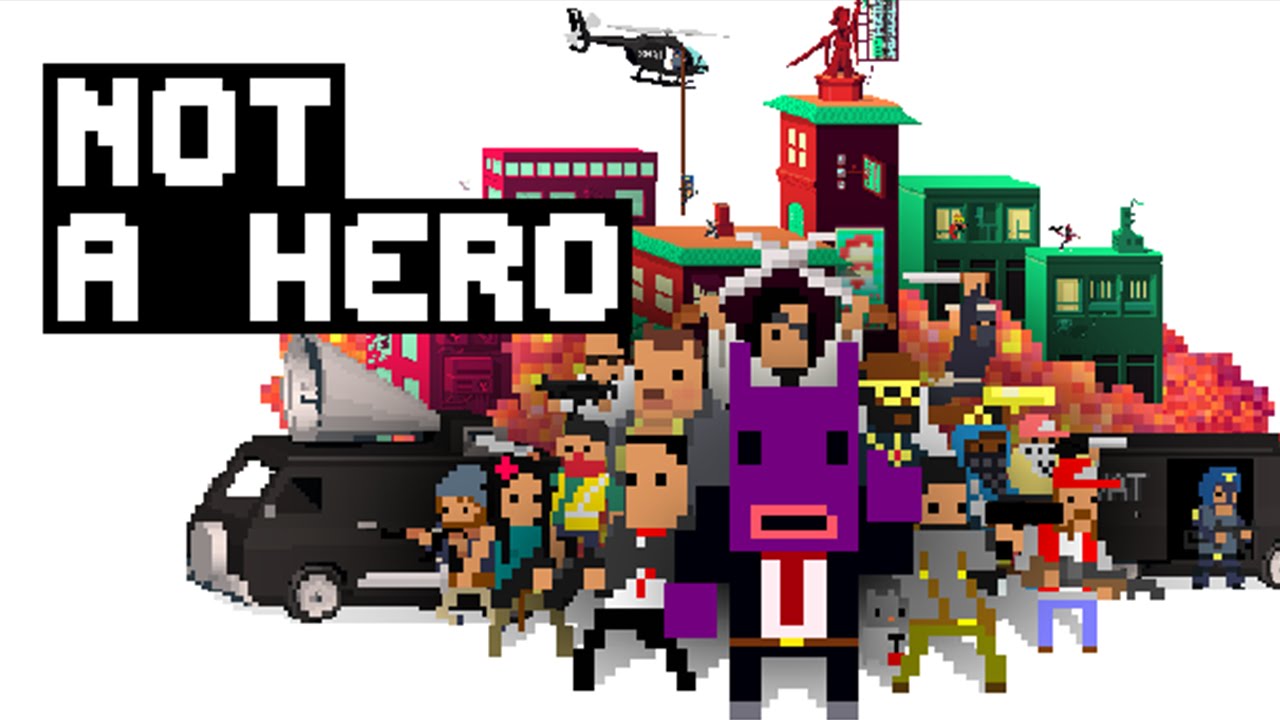
The title of Not A Hero seems more appropriate now than it ever did. A brightly-coloured objective-based 2D cover shooter developed by roll7 (of OlliOlli fame) and published by Devolver Digital (of, well, take your pick), it was a riot of gunfire, blood and action… but I feel like it only found favour amongst those in the know. Indeed, when rllmukforum (an online entertainment community and the birthplace of Disposable Media) polled people on their favourite games of 2015, Not A Hero fell somewhere outside of the top 100, and now it risks the Curse of the Instant Game Collection, where (certain) people inevitably play a game for ten minutes, make their minds up, and potentially remove it from their storage forever. It deserves better, not least from myself – by the time Disposable Media relaunched, Not A Hero had been out for a while on PC, and even though I bought and played it on Steam, my coverage here was hardly extensive – I gave a brief overview of the game following news of the PS4 port, but nothing since then.

Not A Hero

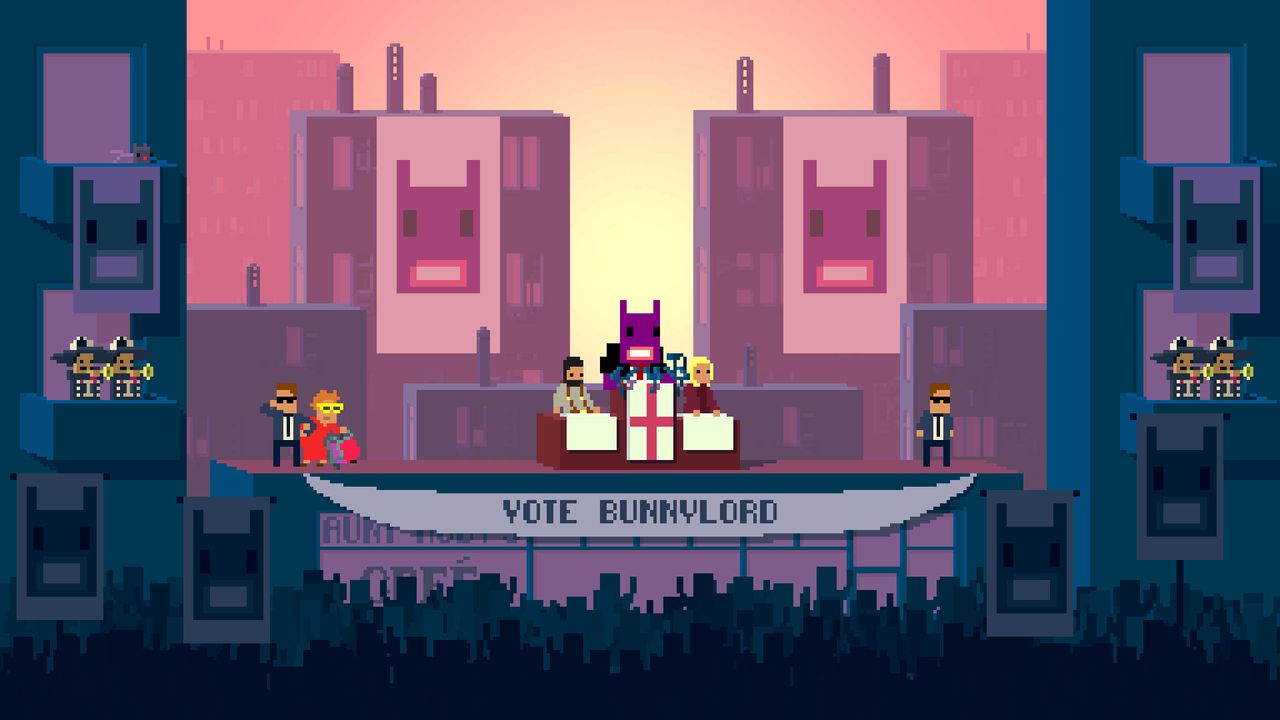
Not A Hero takes a simple premise – help a purple rabbit win an election by murdering people – and uses it as an excuse for tight action and explosive firefights. You move left and right through a building, changing floors either by crashing through windows, using lifts or taking the stairs, and carry out objectives such as saving hostages or tearing down rival campaign posters. Aiming to make your job harder are numerous trigger-happy goons, and whilst a few shots can deplete your health in seconds, you can take cover to protect yourself, firing back when your foes are vulnerable (which may be when they are reloading, facing the other way, etc.) Death comes swiftly and easily, even after you think you’ve started learning the building layout, and the loop of dying and restarting is every bit as compelling as the wipeouts and retries of OlliOlli.

Not A Hero is a game that owes a debt to classics such as Elevator Action, the 80s Taito game where you would move from floor to floor of a building, engaging in firefights with enemies and ultimately escaping to your car at the ground floor. Roll7’s game might have more complex environments, more depth, more speed, but it shares the feeling of systematically clearing out each area before making a safe getaway, and the modern tweaks make it a much more fleshed-out experience. Collectible secondary weapons always help you find a way out if things are getting out of hand, and unlockable characters offer different gameplay benefits (similar to the masks of the Hotline Miami games). There are even secondary objectives for each level; some ask for a certain target to be killed, others request that a particular item is found, and so on. It brings to mind the objective-based gameplay of OlliOlli, but the side-scrolling shooter format makes character control a lot more straightforward in this game.

Not A Hero

My only real caveat is that the final stretch of levels can get pretty intense, and you might find yourself attempting to get past one or two sticking points for a while. However, you’ll still have had plenty of fun in the preceding levels, and the level select screen clearly tracks your secondary objective progress so that you always have something to go back to. As a PlayStation Plus freebie, it’s certainly worth a look, and it’s so easy to jump in and out of 15-minute sessions that it can quickly find a slot in your gaming schedule amongst more time-consuming titles. What’s more, the pixel look works really well and the soundtrack is packed with lively chiptune music (the character voices might divide opinion, but they’re not that obnoxious.) Download it this week and try it for yourself.

Filed Under: Games, Reviews Tagged With: games, not a hero, PS Plus, PS4, roll7

Garou: Mark of the Wolves review (PS4)

9th December 2016 By Qazimod Leave a Comment

Possibly one of the best Neo-Geo beat ’em ups that doesn’t have King of Fighters in its name, Garou: Mark of the Wolves has maintained a strong legacy – even before this release there was an Xbox Live Arcade version of the game, and before that you could play with online colleagues using netplay-enabled emulators. The arcade and Neo-Geo releases arrived in late 1999 and early 2000, but even after so many years the gameplay is uniquely satisfying, and just recently I was still enjoying it through MAME on PC (with the help of USB fightpads and TV connectivity, of course.)

Garou: Mark of the Wolves – an overview

Garou: Mark of the Wolves
For the uninitiated, Garou: Mark of the Wolves is a one-on-one fighting game and a spin-off from the Fatal Fury series of side-scrolling action games. Like all games of the genre, you begin by selecting a character and then either brawl your way through a series of CPU opponents or play in versus mode against other players. On the surface, Garou: Mark of the Wolves can be enjoyed by just picking a favourite fighter with an easily understandable move list and hitting buttons until you come out victorious, or not. However, if you take the time to understand how to play you will find a deep and satisfying fighter.

Battles in Garou are fast and flashy but rarely feel too confusing or “spammy”. The fighters themselves are brilliantly animated and have lots of character, and the stage backgrounds and music have a charm all of their own. Special moves explode with flashes and sharp sound effects, and once your power gauge is full your Desperation Moves are heralded with a black background and quick glint of light before they’re executed. It succeeds in making the player feel good when they try and capitalise on an opportunity and it pays off, and you can have a lot of fun if you’re willing to learn how to play the game.

Garou: Mark of the Wolves – limitations?

Garou: Mark of the Wolves
Sadly, the PS4 game doesn’t exactly make this easy – there’s no way of reading information about the various gameplay systems (TOP mode, where a character gains perks once their lifebar reaches a certain percentage threshold, Just Defend, where blocking at the last moment can allow for a counter opportunity and life recovery, the application of rolls… I could go on) and so new players may have to go and scour wikis and forums to find out about these systems. That being said, if you’re willing to look into more information about the gameplay you’ll still find that Garou: Mark of the Wolves is as fun as it ever was, and the PS4 version is a joy to play.

Outside of the main event of characters fighting one another, there are a few extra modes and menus in this release – you have the standard story mode, a survival mode where certain perks (more life, more time, increased damage) spill onto the stage to be collected during each fight, local and online multiplayer, and a training mode where you can set gauges, counter states, dummy actions and more. In addition, there’s also a gallery of unlockable art and online rankings. For the price I wouldn’t expect much more, although the online multiplayer options are slightly limited – try to create a match and you will find yourself in a two-person room with the option to invite someone from your friends list or wait for a random player to join. Meanwhile Street Fighter III: 3rd Strike – Online Edition allowed for eight-player lobbies and provided weeks of fun, so Garou could have done a bit more here.

Additionally, the PS4 release of Garou has a number of interesting display options; you have scanline options of varying density (or you can turn them off altogether), there are view modes that enlarge the display or stretch it across the screen, and you can toggle filters for artificial flicker and pixel smoothing. Personally I prefer more pixels and less scanlines at an unstretched ratio for that “pure” experience, but the display options are still welcome.

Garou: Mark of the Wolves – fun and convenient

Garou: Mark of the Wolves
The gameplay modes are limited and the menus look a little simplistic, but the game is still fun, and as someone who was willing to go through the hassle of connecting my PC to a TV and configuring a controller every time I wanted to play games like this, I couldn’t ask for anything more. Generally, if you want to play Garou, this lets you enjoy the game without scouring dodgy emulation websites or finding additional HDMI cables to switch between. More importantly, it’s still as enjoyable as you remember. If you want something as polished as modern beat ‘em ups, you might be disappointed with the narrow range of gameplay modes, but if you find today’s fighters bloated and want to return to one of the classics, it’s worth a look.

Garou: Mark of the Wolves is available now on PS4 for £11.99

Filed Under: Games, Reviews Tagged With: games, garou, garou: mark of the wolves, garou: motw, garou:mark of the wolves, garou:motw, PS4, reviews

The Rocky Horror Picture Show: Let’s Do The Time Warp Again Review

25th October 2016 By deKay 1 Comment

I went into watching this new version of Richard O’Brien’s iconic musical with trepidation. As a massive fan of the original, I was worried this 2016 remake was going to taint my love of Rocky Horror, not least because most of the reviews I’d read really slated it. I’ll admit, I went in expecting the worst.

From a cold viewpoint, Fox’s 2016 take is the same film as the one from 1975. The plot, the setting, the songs, and even almost all of the dialogue are virtually identical. It’s set in the same time period, and the same events occur, but there is one main difference: There’s an on-screen audience who do some of the now traditional dialogue participation, usually performed by a real audience.

Rocky Horror Picture Show

Of course it isn’t quite the same. It’s a whole new cast, for starters, and it’s this cast that causes the biggest issue with the production. Now, much as I like the original film, and its cast, I’m not precious about it. I understand it’s a theatre musical as well as a film, and it’s only natural that over time many different people will fill the various roles. Who, specifically, have done so here is genuinely rather hit and miss.

To start with credit where it is due, Laverne Cox is excellent as Frank-n-Furter, both in style and voice. She’s a genuinely different take on Tim Curry’s Frank, and it works. Victoria Justice is a great Janet, and Ryan McCartan plays a bland Brad badly, although that’s keeping in character with the original role. Adam Lambert surprised by not trying to replicate Meatloaf’s Eddie, instead having more energy and making it his own, but Reeve Carney virtually channels Richard O’Brien’s Riff-Raff to the point where you wonder why they didn’t just hire O’Brien again. I’m torn on whether this makes Carney’s Riff-Raff good or bad. Columbia, played by Annaleigh Ashford, is almost Harley Quinn, but it works and she’s possibly even better than Nell Campbell. Possibly.

Rocky Horror Picture Show

Less impressive are the others. Christina Milian is a totally forgettable Magenta, Ben Vereen makes a terrible Dr. Scott (a role performed almost as if they wanted Morgan Freeman instead), and – probably due, sadly, to his stroke – Tim Curry really doesn’t make a good Criminologist. Curry’s delivery just isn’t there. The worst, by a long way, is Staz Nair as Rocky. Sure, Rocky is meant to be an airhead with a body builder’s physique, but he walks like a robot and isn’t exactly stacked in the muscle department to make up for it. He’s a very strange choice, and his entrance song – Sword of Damocles – is a dire rendition here.

Moving onto the Rocky Horror music, it’s generally great. A few songs are arranged differently, which changes the feel a little, but they’re mostly still wonderful. Rose Tint My World may perhaps surpass the original, and Dammit, Janet, Touch-A, Touch-A, Touch Me and Wild and Untamed Thing are all at least as good. Sadly, the best known and most loved track in the musical, The Time Warp (after which this remake takes its subtitle), sounds much less fun and the dancing isn’t anywhere near as tight as it should be. Come on, Fox! That’s the most important bit!

Despite the bad points, and really there aren’t that many, I’m relieved. My memory has not been tarnished, and although The Rocky Horror Picture Show: Let’s Do The Time Warp Again is far from perfect it’s perfectly watchable, enjoyable, and if it brings the show to a new audience with its sexy young talent (and Staz Nair), then that can’t be a bad thing. I’ll stick with the 1975 classic, but I’ll happily see this on the side every now and again.

Filed Under: Music, Reviews, TV & Film Tagged With: fox, musical, rocky horror

Rez Infinite Review (PS4, tested with PSVR)

15th October 2016 By Qazimod Leave a Comment

Rez has done it again then. It seems that with every iteration of the synesthetic on-rails shooter I change my stance and tell people that, no, this is the definitive version of the game; the one that surpasses all others. The Dreamcast game was an intriguing early attempt marred by framerate issues; these were less noticeable in the PS2 game but everything still looked a little too fuzzy for anyone to think that it was flawless. The release of Rez HD on seventh-generation machines cleaned up the crisp laser lines and kept everything super-smooth, but you still got the feeling that you were looking at a recollection of someone else’s journey through an abstract and fascinating landscape. Rez Infinite? It’s something else entirely. No longer do you feel like you’re gazing into an incredible wireframe environment from the outside; you’re finally a part of the game’s world, and the effect is astonishing.

Rez Infinite – familiarity and depthrezinfinite1

The skeleton of the game is still familiar to Rez veterans; you must lock on to and shoot down targets, collecting overdrives and progress nodes that act as smart bombs and health respectively. Each area is broken into ten layer levels, and at the end of the tenth layer level is a boss. Your journey through an area ends when you’ve either beaten the area boss or taken too many hits. However, in the confines of the PSVR helmet you are fully enveloped in the gameworld, and the sense of depth breathes new life into classic scenes. Reach the pre-boss sequence in Area 3 and those bouncing cubes and rippling shockwaves evoke an intensity that was only hinted at in previous iterations of the game. Meanwhile, the infamous “running man” boss of Area 4 is a rollercoaster ride through twisting tunnels, staged as an exhilarating chase against a boss that now seems to tower above your viewpoint at times. Make no mistake, if you’re a fan of Rez and buy into the idea of surrendering your senses to the game’s world, Infinite accomplishes that sensation better than anything before.

Rez Infinite – the party pieceRez Infinite

And then there’s Area X. A new area exclusive to Infinite, this is almost worth the entrance fee alone. Picking up where Child of Eden left off, this is a world inhabited not by Tron machines and vector shapes, but by particles, glass and organic life. The rails pull you forward but your view wraps around a 360 degree sphere, and subtle indicators on the reticule guide you towards where you should be focusing. The world itself is always glistening with particles and crisp bright lines, whilst the wraparound view and manual acceleration helps to make it feel like a genuine journey rather than a rollercoaster ride. It’s a spectacular feat of development and production, and it makes you feel like this is what Vibes, Rez and Child of Eden were always working towards.

Rez Infinite – a PSVR essentialRez Infinite

If you buy into VR for realism rather than abstraction, or if rail shooters leave you cold, Rez Infinite might not be the game for you. However, as someone who has seen this game develop and improve through several iterations, this feels like the vision for the game that Mizuguchi always had but could never fully realise. It’s hard to imagine where you could go from here; the transition from being a spectator of the world to becoming a VR-enabled inhabitant seemed like the next logical step, and Area X completes the experience and leaves you breathless. I still have a lot of other PSVR games to try in the future, so it’s too soon to say whether or not Rez Infinite is the pick of the bunch, but it sets a strong challenge for any self-proclaimed “killer apps” and is well worth experiencing.

PlayStation VR is available now for £349.99. All PSVR games require the PSVR hardware and a PlayStation Camera. Some games may need PS3 Move Controllers, but Rez Infinite was played on a DualShock 4 Controller.

Filed Under: Games, Reviews Tagged With: playstation, playstation vr, PS VR, PS4, psvr, Rez, Rez Infinite, sony

  • « Previous Page
  • 1
  • …
  • 4
  • 5
  • 6
  • 7
  • 8
  • …
  • 10
  • Next Page »

Get Social

  • Facebook
  • Instagram
  • LinkedIn
  • Medium
  • Pinterest
  • RSS
  • Twitter
  • YouTube

Top Posts & Pages

  • Narcos Netflix Original Series Review
  • Revisiting FFXII in 2016 - a retrospective
  • Rogue One: A Star Wars Story Comes to VHS?
  • Skies of Arcadia Retrospective
  • Late to the party: Dark Souls Remastered
  • Tekken 7 - King of the Iron Fist 2015 Highlights Video
  • Noisia: Outer Edges album review
  • New Nintendo Switch Wheel From Numskull
  • Save on Street Fighter T.N.C 04 Guile Figurine
  • Backwards Dungeon Crawling – how not to play Metaphor

Ads

Join Us…

  • Facebook
  • Instagram
  • LinkedIn
  • Medium
  • Pinterest
  • RSS
  • Twitter
  • YouTube


Privacy Policy

Cookie Policy

© 2026 Hot Mod Media · Design & Marketing TWOTW

Disposable Media · FPSPrestige · OnlineRaceDriver · The Guitar List · Rescars · Rescogs

We use cookies to ensure that we give you the best experience on our website. If you continue to use this site we will assume that you are happy with it.